
Ezidi sanctuaries can usually be recognized from afar by their white, ribbed conical dome. But not every holy place is a domed building. The sources distinguish several forms: the tomb or memorial building with a dome (Qub, Mezar), the open memorial building (Aqide) and the small place of light (Nîşan, Nîşangeh). Building forms, ground plans and numbers of ribs of the surviving buildings are in the section People & Culture: Sanctuaries and mausoleums in northern Iraq.
Qub and Mezar – tomb buildings with a dome
A Qub (qube, quba) is a building with a long, pointed, many-sided conical dome on a stepped base. It stands over the grave of a saint or is erected in his memory. Such a grave is called Mezar (mezargeh).
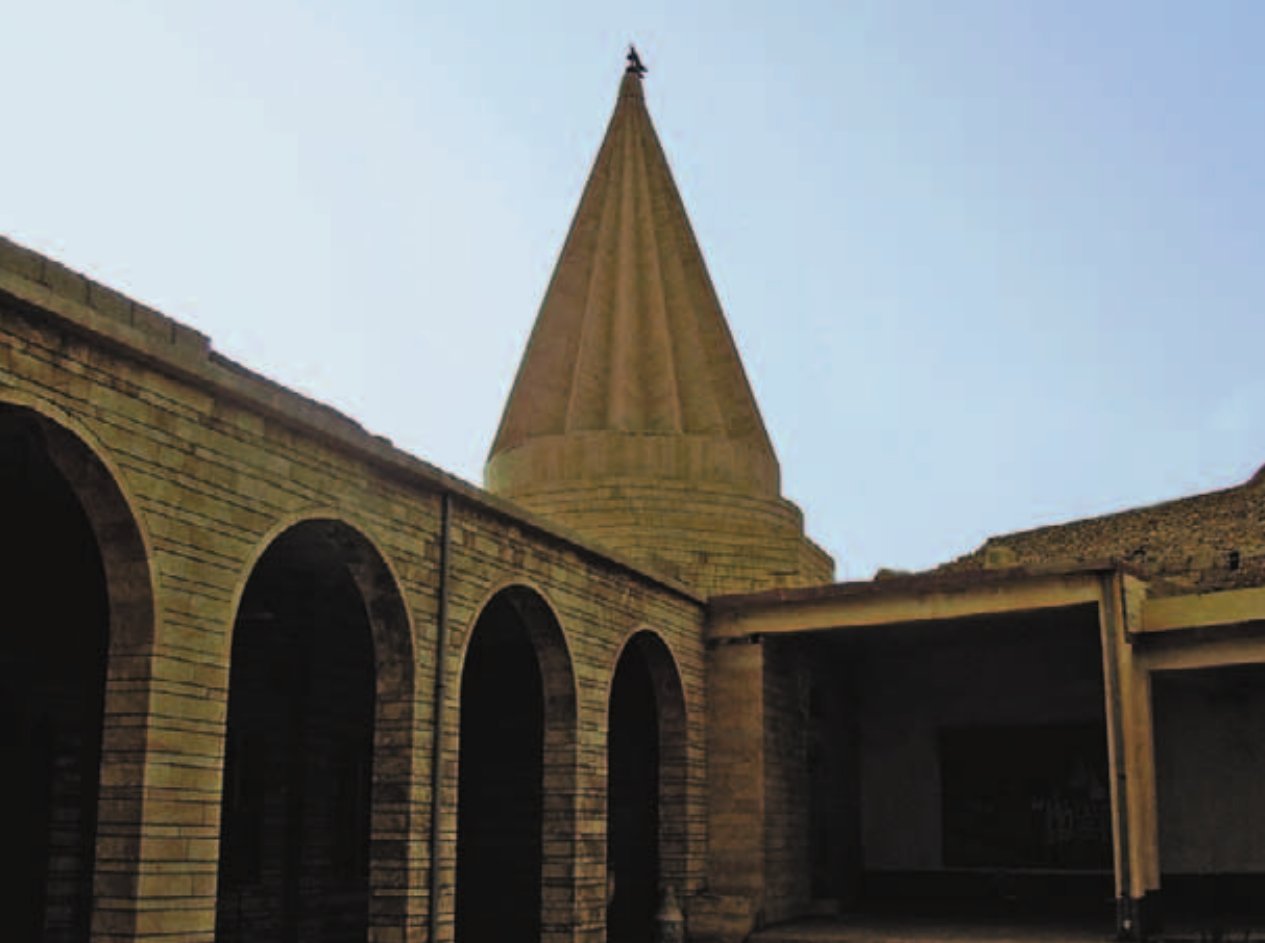
What the dome means
- According to Lalişa Nûranî, the domes represent the sun and its rays, which fall from heaven to earth; the building form, it says, is unique (pp. 30/31).
- According to a Qewl cited by Kreyenbroek, the towers of Lalîş reach up to the highest heaven, their roots down to the bottom of the sea (pp. 37–38). Balls sit on the tips (p. 217 n. 143).
- According to Şêx Mak’sîm, together with Lalîş the Helel was sent from paradise, the sign on the tip which testifies that the house belongs to God (p. 24).
The domes of Lalîş themselves are described in The domes of Lalîş.
Inside
Inside there is often the Sindrûk, the sarcophagus of the saint, covered with colorful cloths. The pilgrims tie and untie knots in the cloths and make a wish as they do so (Lalişa Nûranî, pp. 26/29). Oil lights burn in niches, and a lamp (qendîl) hangs under the dome.

Whitening the dome
The domes are regularly whitened with lime. In Lalîş the whitewashing was among the tasks of the servants (xilmetkar) (Lalişa Nûranî, p. 206). In the villages the whitening of the dome of the village sanctuary is celebrated with a festival (Kreyenbroek, p. 47); see Other festivals. At the autumn festival in Lalîş, pieces of cloth, the Perî, are also attached to the tips of the domes (Lalişa Nûranî, pp. 26/29; Omarkhali 2023, pp. 471–472).
Aqide – the open memorial building
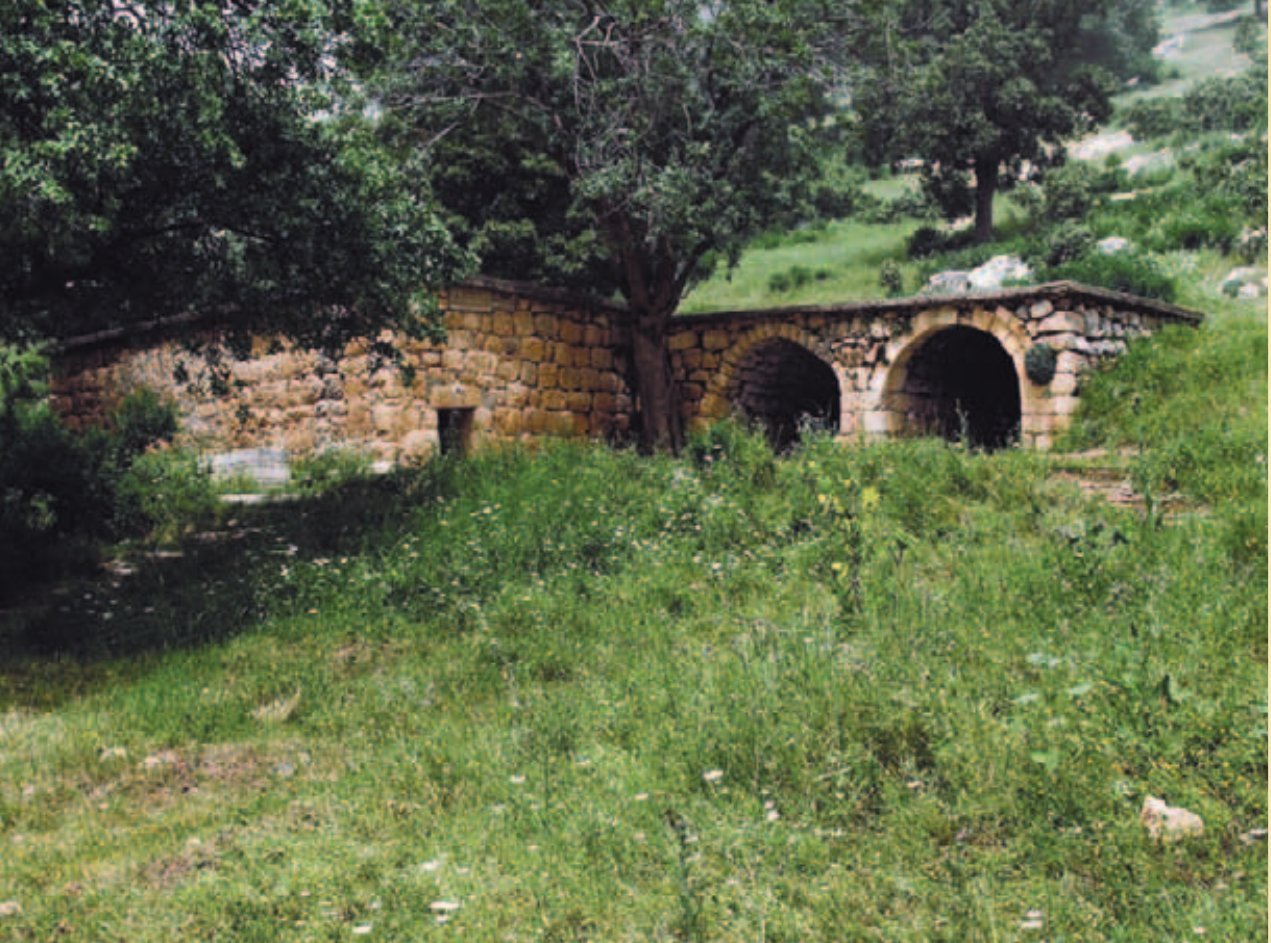
An Aqide is a memorial building without a dome, often with two open arches. In Lalîş there is, for example, the Aqide of Hecî Mihemed and of Alûbekir (Lalişa Nûranî, pp. 110–113).
Nîşan and Nîşangeh – the places of light
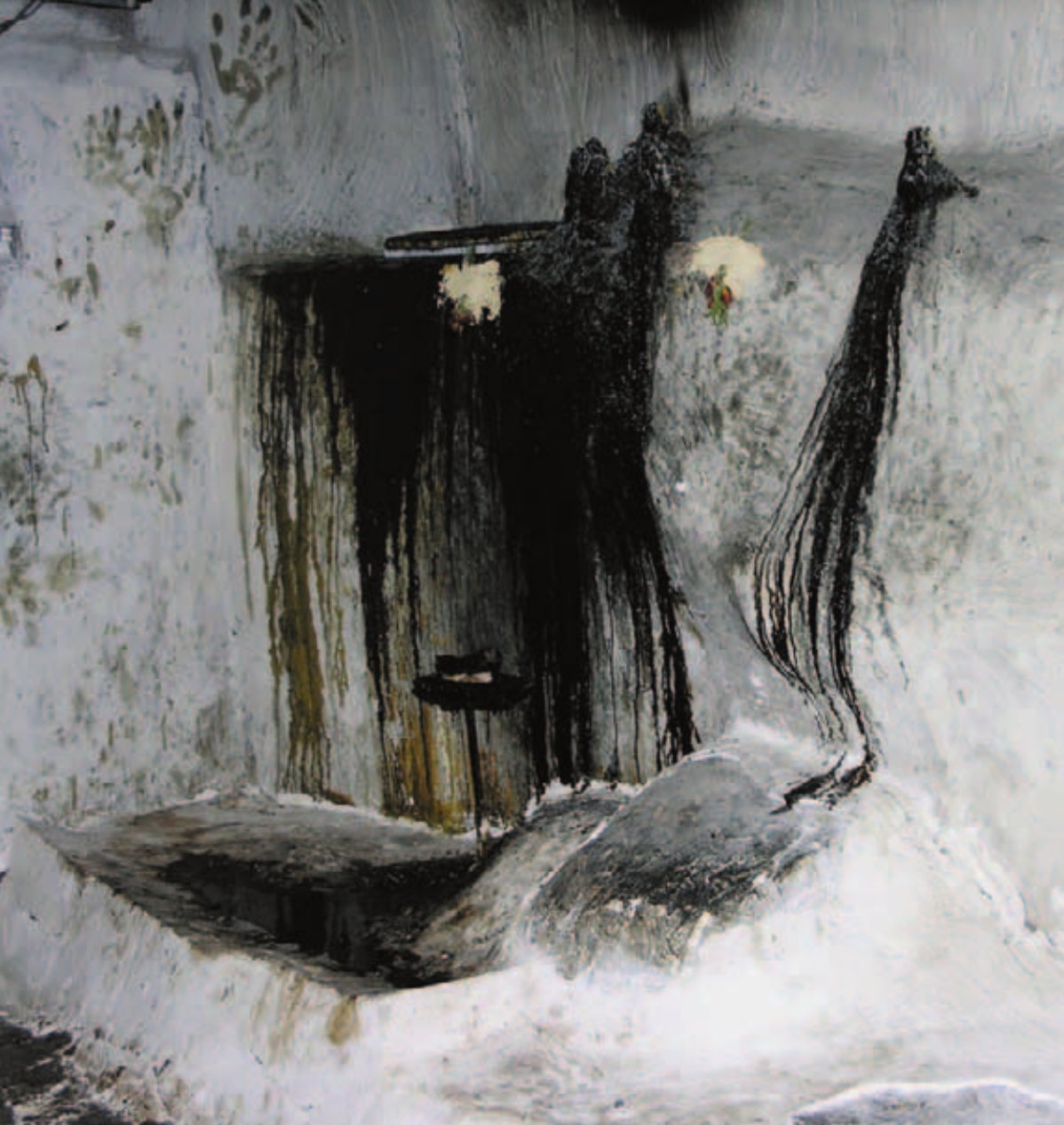
The most common form is the smallest. Kreyenbroek describes the Nîşan as small, whitewashed, tapering structures, square with a round top, usually under one meter high, with a niche for a small oil lamp. Each is connected with a holy being (p. 14).
According to Lalişa Nûranî, Nîşanga literally means "place of remembrance": a spot where a wick is lit in honor of a saint (Engl. p. 81). According to Şêx Mak’sîm, nîşan is the name for a sign that belongs to an angel, nîşange for one that belongs to him only at a certain place or for a certain time (p. 55).
A Nîşangeh can also be a rock niche, a whitewashed stone or even a small domed building. The Nîşangeha Pîr Mend in Lalîş looks like a small Qub, but is not one (Lalişa Nûranî, pp. 30/33, 55).
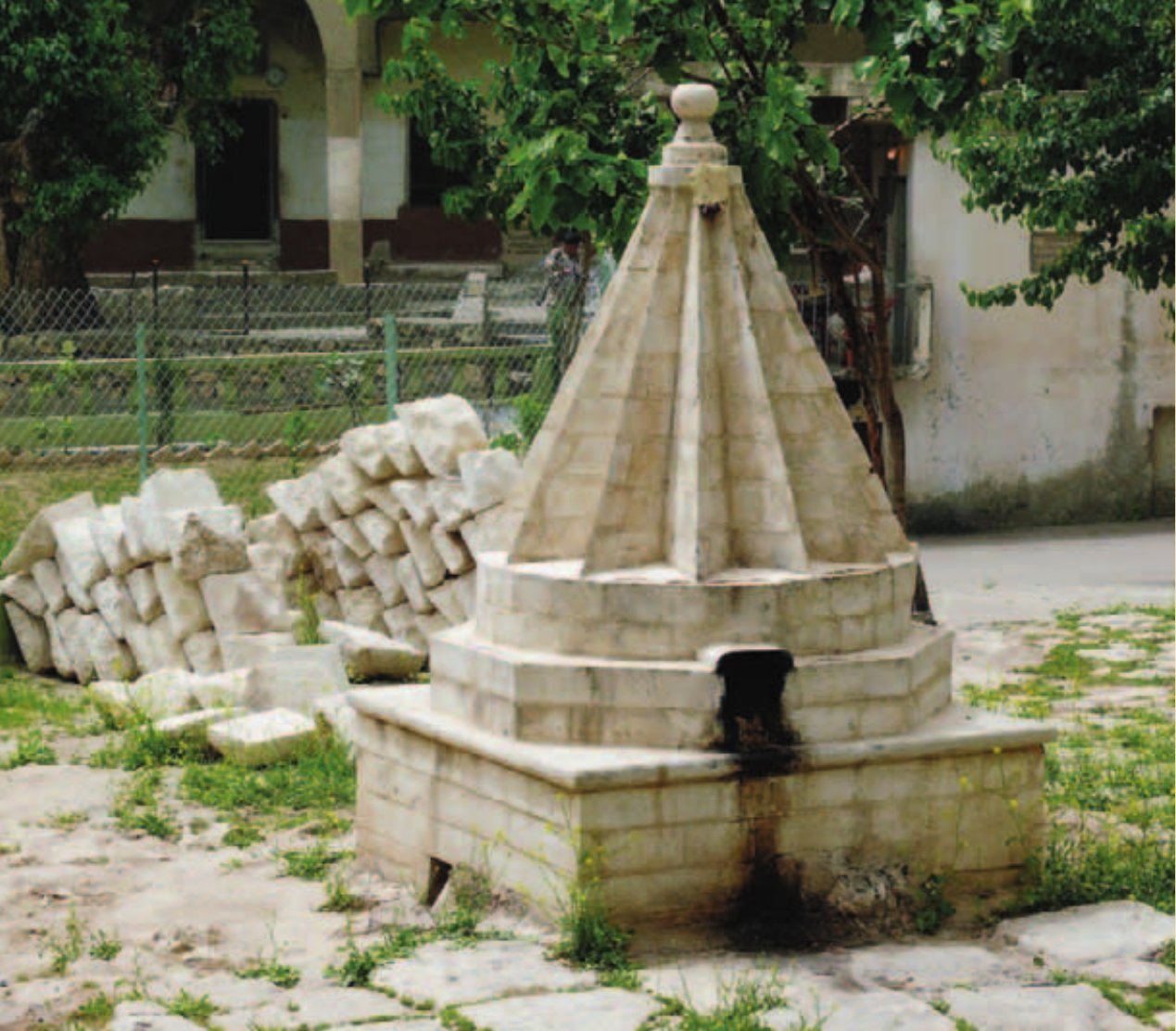
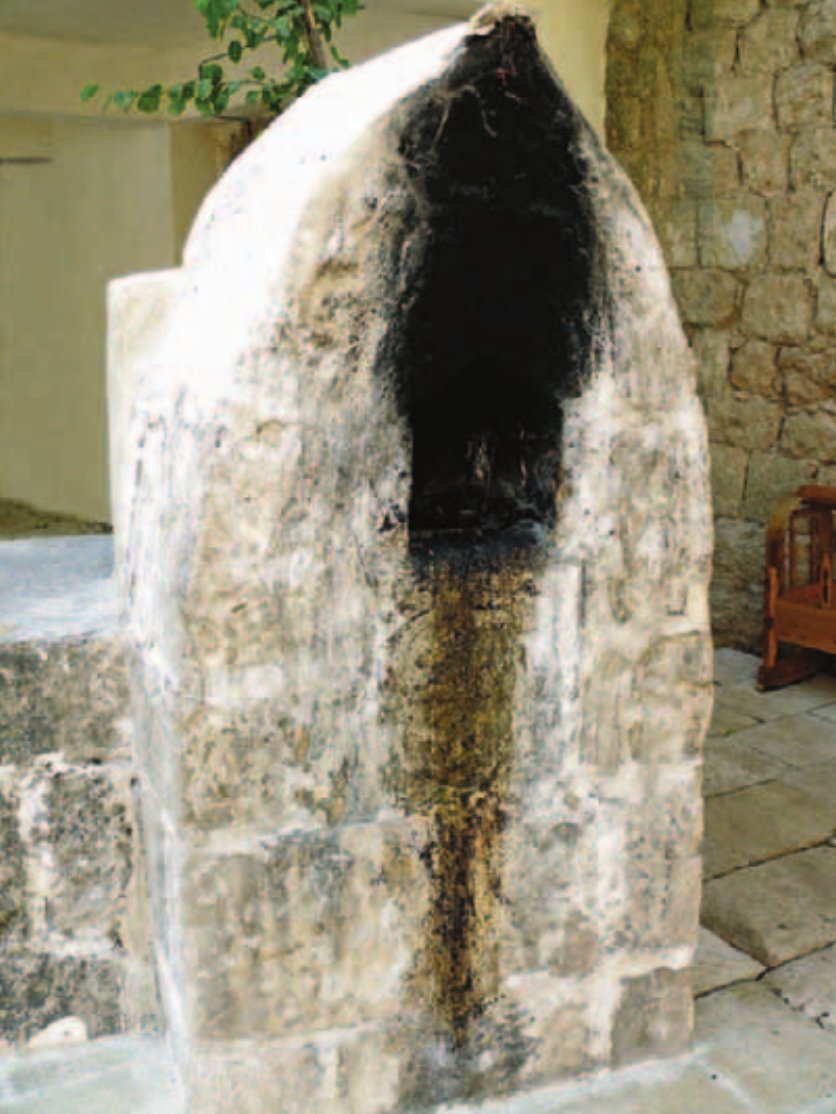
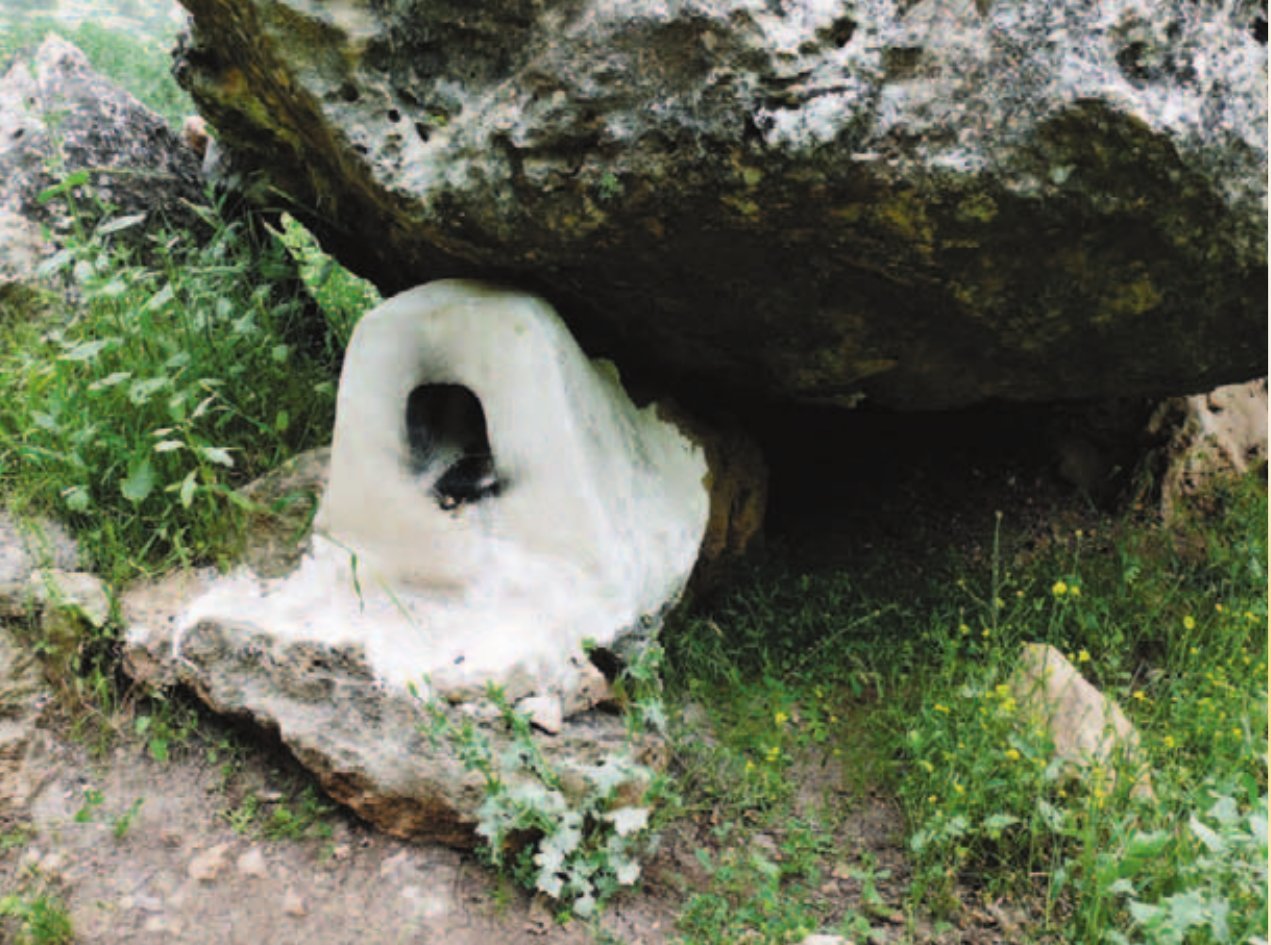
In Lalîş alone the photo book lists well over a hundred wick places – for angels, saints, P’îr families, springs, trees, but also for figures such as Noah (Nûh û Cûdî), the lovers Mem û Zîn or the ancestor of the Ezidis according to tradition, Şehîdê bin Cer (pp. 202–203).
Lighting the lights
According to Lalişa Nûranî, fire is a sign of the sun; because of its purity and holiness it is lit at the holy sites (p. 32):
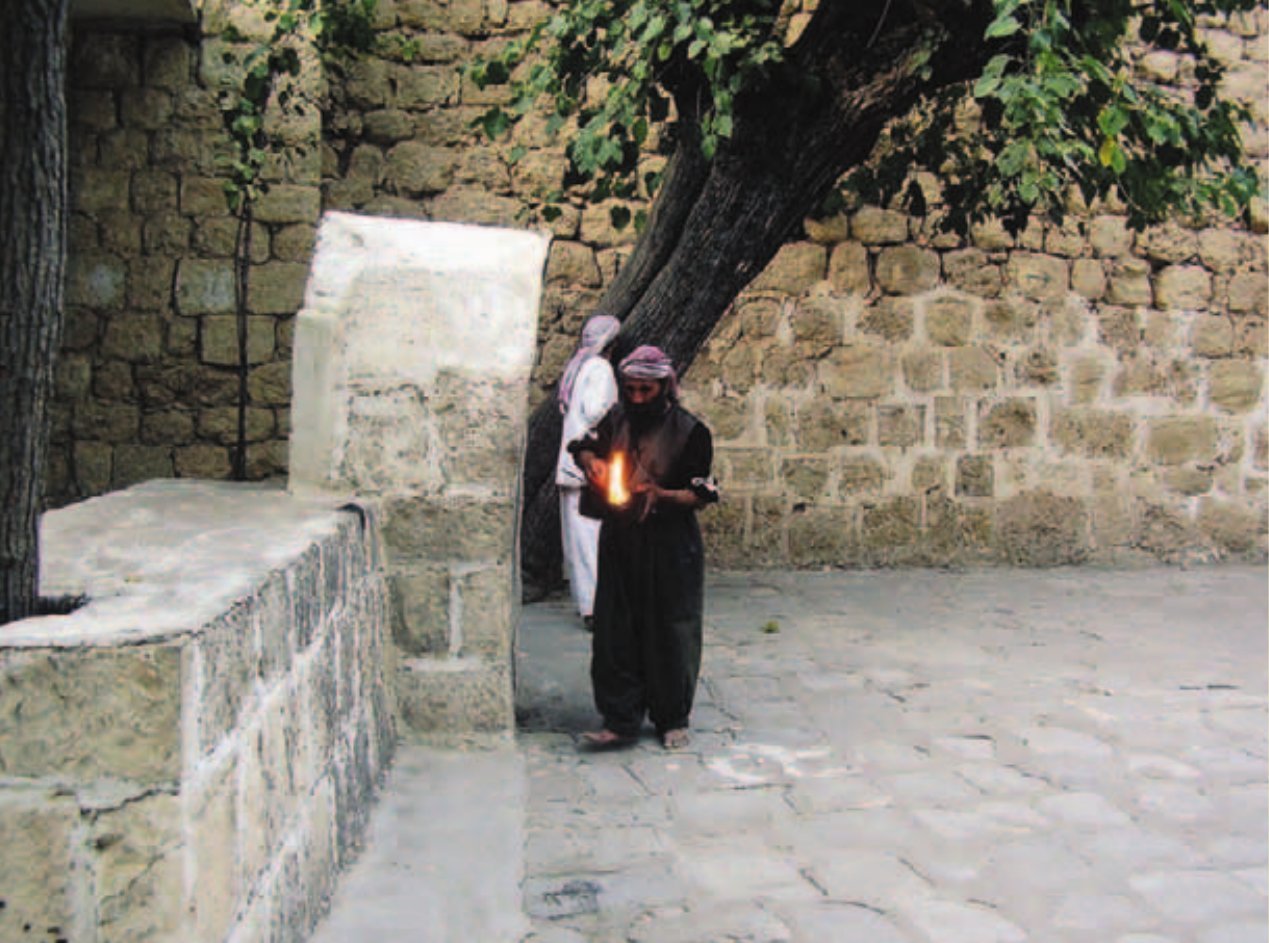
- The one who lights the lights is called Feraş. He fills the vessel Çeqeltû with olive oil, dips the wicks (fitîl) into it, sets them in the niches and lights them (pp. 32; 205).
- On Wednesday and Friday evenings wicks are lit at all holy spots; a female servant then carries embers and incense through the sanctuary (pp. 22, 32). Açıkyıldız also names Wednesday and Friday evenings (p. 110).
- On the evenings of all festivals lights burn at every Nîşangeh (p. 32).
Who looks after the sanctuaries
The Micêwir takes care of the sanctuaries in the villages; he is at the same time the overseer of the Nîşangeh in Lalîş (Lalişa Nûranî, p. 205; Kreyenbroek, p. 11). See Holy places – overview.
What to observe when visiting a sanctuary is in Ziyaret – visit and rules.
Sources
- S. A. Grigoriev, L. V. Ivasko, D. V. Pirbari (P’îr Dîma): Lalişa Nûranî / Святой Лалыш / Holy Lalish. Yekaterinburg: Basko 2008, p. pp. 22, 25–33, 55, 77–91, 110–113, 168–177, 202–206
- Philip G. Kreyenbroek, Khalil Jindy Rashow: God and Sheikh Adi Are Perfect. Sacred Poems and Religious Narratives from the Yezidi Tradition. Wiesbaden: Harrassowitz 2005, p. pp. 11, 13–14, 37–38, 47, 217 (n. 143)
- Şêx Mak’sîm (Maksim Ezdi): Grundpfeiler der Religion ScherfeDin, 2017 (on EZDIKI.COM in the Religion section and in the library), p. pp. 24, 55
- Birgül Açıkyıldız: The Yezidis. The History of a Community, Culture and Religion. London 2010, p. p. 110
- Khanna Omarkhali: The religious textual tradition of the Ezidis – from the oral to the written. Saint Petersburg 2023 (Russian translation of the English original, Wiesbaden 2017), p. pp. 471–472
Found a mistake?
Is something wrong – a fact, a spelling, a source, an image? Let us know: we check every report and correct the article.
Other spellings: Nisan · Nischan · Nishan · Nisangeh · Nischangeh · Nishangeh · Nisanga · Nischanga · Nishanga · Sindruk · Fitil · Feras · Ferasch · Ferash · Lidschhtstätte · Lijhtstätte · Lalish · Lalisch · Lalesh · Qawl