
Alongside the three hereditary estates of Şêx, P’îr and Mirîd (see Caste system), the Ezidis have a number of offices. Most are tied to the sanctuary of Lalîş, others to the communities. Khanna Omarkhali (2005) points out that many authors have confused the hereditary estates with these offices: the estate is determined by birth, whereas an office is a task that falls to certain families or persons. This article describes the offices as social functions.
Overview
| Office | From which estate or house | Task (according to the sources) |
|---|---|---|
| Mîr | Çol family (Şêx house Qatanî, Şêxûbekir) | secular and spiritual head of all Ezidis |
| Babê Şêx (Baba Şêx) | Şêx house Fexredîn (Şemsanî) | highest spiritual office; leads the rites, guards the tomb of Şêx Adî |
| Babê Çawîş (Baba Çawûş) | P’îr | gatekeeper of Lalîş, guardian of the tomb of Şêx Adî, daily rites |
| Pêşîmam | Şêx clan Şêx Hesen (Adanî) | supervision of weddings and marriage contracts; guardian of the knowledge of writing |
| Pêşmîr | – | assistant of the Mîr |
| Şêx el-Wezîr | Şêx Şems clan | – |
| Feqîr | Şêx, P’îr and many Mirîd | life in piety and asceticism; experts in the tradition |
| Micêwir | Feqîr or P’îr | service at the holy places of Lalîş |
| Qewal | Mirîd (Hekarî and Dumilî tribes) | singers and musicians; tours with the Sencaq; collection of dues |
| Koçek | from any estate | services in Lalîş; the gift of prophecy is attributed to them |
| Çawîş, Ferraş | – | temple servants; light the fire at the tomb of Şêx Adî |
| Feqray | women | female servants of the sanctuary; their head: Kebanî |
The Mîr
The Mîr (Emîr) is the head of all Ezidis, wherever they live, with secular and spiritual power. He comes from the Çol family, which traces its descent to Şêx Ebû Bekr. According to Guest the Mîr appoints the Babê Şêx, and according to Omarkhali (2005) also the Babê Çawîş. On the family see The Mîr family Çol, on the last long-serving office holder Mîr Tahsîn Beg.
Babê Şêx
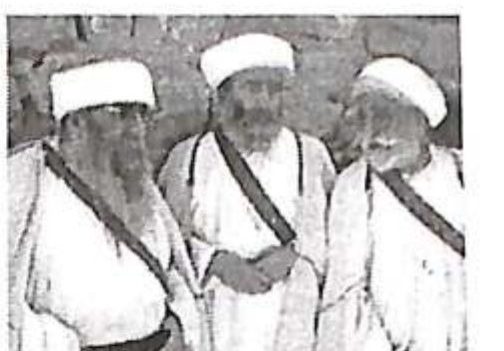
The Babê Şêx (“father of the Şêx”) is the most important person after the Mîr. According to Omarkhali (2005) he leads the rites on the instructions of the Mîr and guards the mausoleum of Şêx Adî; he wears white and always a black woolen belt about nine meters long. In Lalîş he receives guests in an arbor in the inner courtyard.
The office is hereditary in the Şêx house of Fexredîn (Şemsanî). Omarkhali (2023) notes, however, that in history Koçek from the lay estate also became Babê Şêx, for example Koçek Cem and Koçek Berim.
Well-known office holders:
- Şêx Nasir was Babê Şêx from the 1840s until 1889 (see Baba Şêx Şêx Nasir).
- In the 1970s a Babê Şêx for the first time permitted spiritual texts to be recorded for publication (see From the oral to the written).
- Şêx Hato (officially Xerto Hecî Îsmaîl, 1 July 1931 – 1 October 2020, died in Erbil) lived in E’yn Sifni. After 2014 a Babê Şêx introduced a new rite through which the women and girls who had returned from IS captivity were readmitted to the community (see Şengal 2007 and 2014).
Babê Çawîş
According to Omarkhali (2005), the Babê Çawîş is gatekeeper and assistant of the Babê Şêx; he leads a very pious, strict life and wears white with a black woolen belt. Omarkhali (2023) calls him the guardian of the tomb of Şêx Adî, responsible for the daily rites; the office lies with the P’îr clan Memê Reben. According to Guest, the Babê Çawîş is the most respected P’îr and must remain unmarried.
Pêşîmam and Pêşmîr
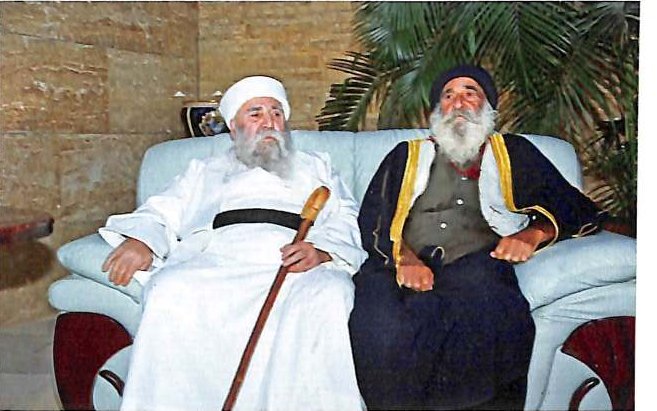
According to Omarkhali (2005) and Guest, the Pêşîmam (“the one who stands before the imam”) always comes from the Şêx clan Şêx Hesen (House of Adanî). According to Guest he supervises weddings and marriage contracts. Pirbari calls the family of the Pêşîmam the guardian of the knowledge of writing; its Şêx could read and write Arabic.
That the office always lay with this clan is not entirely certain: Omarkhali (2023) reports that once a very knowledgeable Mirîd, Koçek Bra’îm, became Pêşîmam.
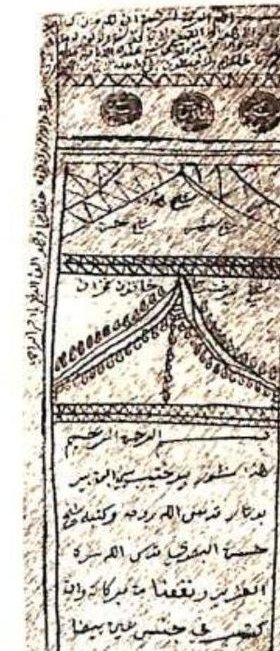
The Pêşmîr assists the Mîr; according to Omarkhali (2005), the Pêşmîr and Pêşîmam are less important today. In E’yn Sifni the house of a Pêşmîr keeps an old manuscript scroll.
Feqîr and Micêwir
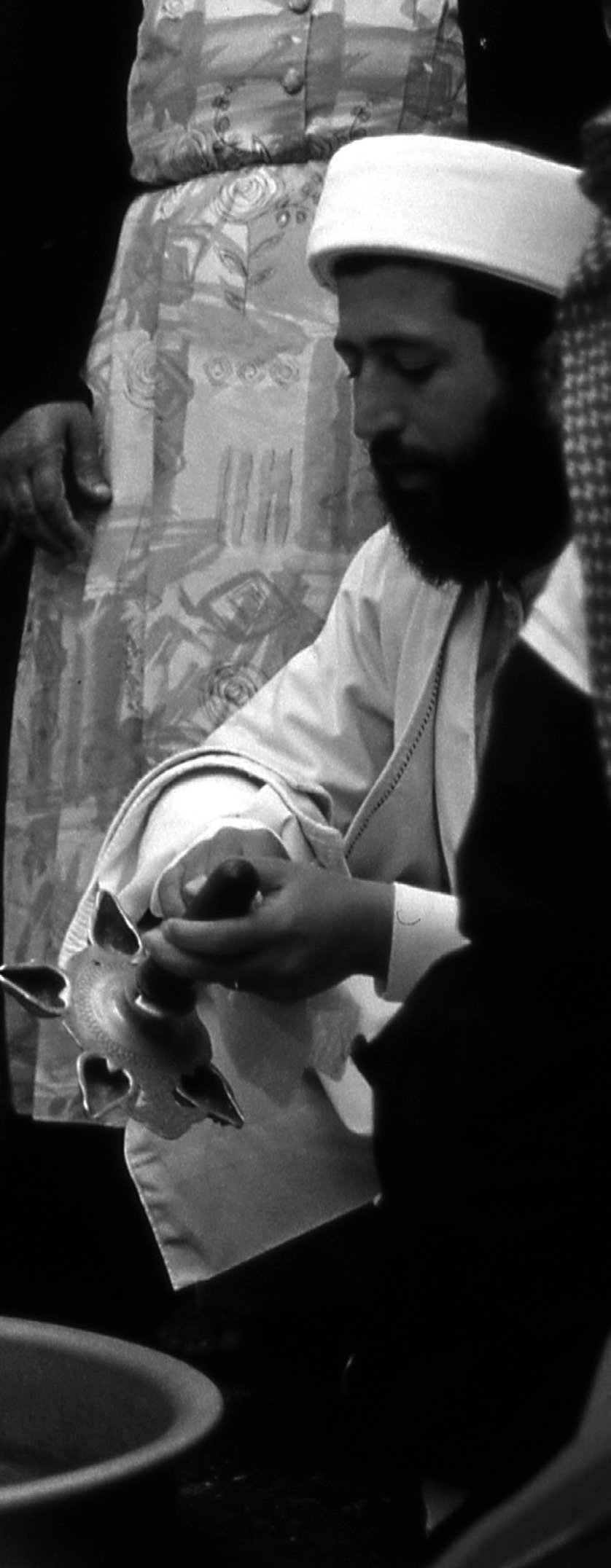
The Feqîr (“poor ones”) are regarded as a model of piety; they fast for long periods and live ascetically. Their distinguishing mark is the black woolen garment Xerqe (in Pirbari Xirqe). Guest describes their dress as a black smock with a red border, a red-and-white braided belt, a black turban and a red-and-black neck cord.
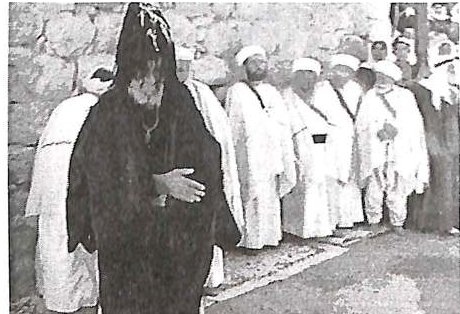
Feqîr can come from all three estates: from the Şêx, according to Omarkhali (2023), only from the houses of Qatanî and Adanî, from the P’îr only from the Omerxalî clan, and in addition many Mirîd. The Feqîr of Şengal in particular are regarded as great experts in the tradition; Guest names a whole tribe of Feqîran there. A well-known example of a Feqîr from the lay estate is Feqîr Hecî.
Offices of the Feqîr in Lalîş are, according to Omarkhali (2023):
- Feqîrê Serderî – Feqîr who live and serve permanently in Lalîş,
- Micêwir – Feqîr in the service of the sanctuary; the Micêwirê Lalişê lives in Lalîş,
- Micêwirê Kaniya Sipî – the guardian of the White Spring, a P’îr.
Qewal
The Qewal are the professional singers and musicians of the spiritual poetry. They come from the lay estate, traditionally from the Hekarî and Dumilî tribes, today also from the Mamûsî tribe; their center is Başîqa and Bahzanê. According to Guest, a branch of the Şêx clan Şêx Hesen in Bahzanê trains the Qewal. With the peacock image (Sencaq) they traveled through the communities and collected the dues for Lalîş. At their head stands a head of the Qewal; a well-known office holder of the 19th century was Qewal Yûsif. In detail: The Qewal and their training.

Koçek
According to Omarkhali (2005), the Koçek are called “hermits”; the gift of prophecy is attributed to them. A man from any estate can become a Koçek. According to Guest they were mostly pilgrims who settled around Lalîş, cut wood and performed services at the feasts. In the middle of the 18th century a Koçek is said to have proclaimed after a vision that indigo-blue shirts were not desired; since then many communities have worn white (a tradition according to Guest). One of Omarkhali’s informants names Koçek Sadiq as the “last Koçek”.
The word K’oçek has a second meaning as well: in the Destdamin rite this is the name for the person who receives his spiritual companions (see Caste system). Here the office in Lalîş is meant.
Female servants of the sanctuary
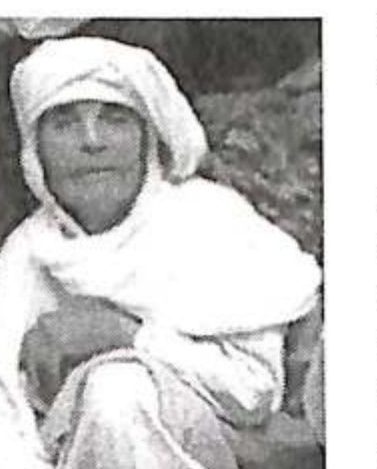
The Feqray (in Guest Feqrayat) are unmarried women and widows who serve in Lalîş dressed in white. They help the Koçek in caring for the sanctuary and twist the wicks for the lamps. Their head is called Kebanî (“mistress of the house”). According to Omarkhali (2005), female servants in Lalîş also form the small clay balls from the White Spring that pilgrims take with them (see Pilgrimage to Lalîş).
In the communities
Outside Lalîş, communal life is borne above all by the clerics of the families and by the experts:
- Ferz: every Ezidi has his Şêx and P’îr; Omarkhali (2023) counts among the five duties (pênc ferz) the P’îr, Şêx, Hosta (teacher), Merebî and the Brother of the hereafter. The position of Hosta and Merebî is, she says, less clearly defined today.
- Experts: whoever knows and explains the tradition particularly well is called Ulmdar (“bearer of knowledge”) or Qewlbêj (reciter of the Qewl). A Qewlbêj can become an authority and the leader of a local community. In Iraq Mirîd can also be experts and then enjoy the same respect as clerics; in Armenia this knowledge lies almost entirely with the clerical families.
- Gatherings: in Armenia people met in the ode, in Iraq in the dîwan; news, questions of the community and of the tradition were discussed there. In the Caucasus, far from Lalîş, the house gatherings at P’îr and Şêx families became an institution of their own that strengthened the local authority of the clerics.
- Women: in Iraq, adult women of the Şêx and P’îr estates have Dayê (“mother”) before their name instead of Şêx or P’îr. Ceremonies for women and children are performed almost exclusively by women.
Since the 1990s new institutions have been added: the Bingehê Laliş center in northern Iraq (1993), an administration for Ezidi affairs in northern Iraq and Spiritual Councils (Meclîsê Ruhanî) in Iraq, Germany, Georgia and Armenia. According to Omarkhali, many Ezidis see them as an authority, but not as spiritual leaders in the old sense.
Tradition of origin
A tradition that Pirbari reproduces from a spiritual text tells of the origin of the offices: God gave the P’îr the votive gifts, the manuscripts (mişûr) and the levy (zekat), and the Şêx “lock and scissors” – probably meaning their right in the rite of the first haircut (see Birth, Bisk and Sinet). The Xerqe is said to have been offended by this; thereupon it was decreed that all services be borne through the Xerqe, and the Feqîr were clothed in the Xerqe so that every Ezidi would honor them. Omarkhali (2023) also knows a similar allocation of lock, scissors, dues and manuscripts from another text. This is tradition, not a historical account.
Figures
According to Omarkhali (2023), the clerics (Şêx and P’îr) make up about 6–7 percent of the Ezidis, the Mirîd about 93–94 percent. Guest gives for the 1980s about 300 Şêx families and about 200 P’îr families.
Qewal tours and gifts around 1849 (according to Layard)
In 1849 A. H. Layard met Qewal on their tour in Redwan and had Qewal Yûsif explain the arrangement to him. His information concerns the organization; the religious significance of the Sencaq belongs to the field of religion.
- Mission: Mîr Huseyn Beg and Baba Şêx Şêx Nasir sent the Qewal out every year to instruct the Ezidis in their tradition and to collect the gifts for the Mîr and for the tomb of Şêx Adî. The same Qewal did not make the same round every year.
- Four districts: for the tours, the Ezidis were divided into four districts:
| District | Location |
|---|---|
| Şengal | mountains west of Mosul |
| Xerzan | area around Redwan on the eastern arm of the Tigris (see Redwan and Xerzan around 1849) |
| Pashalik of Aleppo | northern Syria |
| Northern Armenia | villages in northern Armenia on and beyond the Russian border |
- The Ezidis in the districts around Mosul always had the Qewal among them anyway.
- One Sencaq per district: according to Layard there were four Sencaq, one for each district. The Ezidis assured him that despite wars, massacres and the murder of Qewal on their travels, no Sencaq had ever fallen into Muslim hands. Şêx Nasir called the Sencaq a “banner” of the house of Huseyn Beg.
- Distribution of the gifts: half of what was collected went to the tomb of Şêx Adî. Of the other half, Huseyn Beg received half, i.e. a quarter of the whole; the rest, the last quarter, was divided in equal shares among the Qewal.
- The Qewal, according to Qewal Yûsif, were “all of one family” and were subordinate to the Mîr.
Further information from Layard on the offices in 1849:
- According to Layard, the Mîr was “the religious as well as political head of all Ezidis, wherever they live”; he was also called Kalifa (successor), and the position was hereditary. Because Huseyn Beg was young and inexperienced, he left the spiritual duties to Şêx Nasir.
- According to Layard, Şêx Nasir was by rank “only the head of the Şêx of the Şêxan district”.
- Layard names the Pêşnimêj (“prayer leader”) for 1849: Şêx Cindî, who led the procession at the feast.
- He describes the Koçek as Feqîr and Şêx in the special service of the sanctuary; at the feast they entertained the guests from the kitchens of Lalîş (see The feast in Lalîş 1849).
- The Feqîr wore dark, coarse clothing and red-and-black turbans; Layard counts them as the lowest rank of the clergy.
Compared with the 1920s (see below) it is striking that Layard names four Sencaq and four districts, Fuccaro for the 1920s seven Sencaq, of which only three still traveled after the First World War.
Offices, dues and Sencaq tours in the 1920s and 1930s
Nelida Fuccaro (1999) and Roger Lescot (1938) describe how the offices in Şêxan and Şengal functioned socially and economically in the mandate period. The religious significance of the Sencaq belongs to the field of religion; here the subject is organization and income.
The Sencaq tours
- In the 1920s, according to Fuccaro, there were seven Sencaq, which were kept in the Mîr’s palace in Bacidrê; each was assigned to a particular region. After the First World War only three still traveled: the Tawûsê Bizrab in Şêxan (three times a year), the Tawûsê Enzel to Şengal (twice a year) and a third to Syria and parts of eastern Turkey. Journeys to Turkey, Iran and the Caucasus were no longer possible.
- According to Lescot, the Qewal came to Şengal in spring and in autumn, to the Syrian region of Afrîn only every two to three years (most recently in October 1936). The last journey to Soviet Armenia took place in 1927. A family gave up to 25 Medjîdiyye (then about 100 francs).
- The Mîr leased the right to show a Sencaq in distant areas to the highest bidder against advance payment. According to one of Fuccaro’s informants, the Sencaq that traveled to Aleppo was maintained by the Şêx family Fexredîn.
- Şengal was the richest Ezidi district; the Sencaq donations from there brought in about 14,000 rupees a year. Who was allowed to keep the Sencaq of Şengal was fiercely disputed in 1925 and 1931/32 (see The Ezidis in Iraq 1914–1957 and Şengal under the British Mandate).
Administrators and dues
- The Mîr leased the donations at the sanctuary of Şêx Adî to a Feqîr, usually from the Ubakr family, who officiated as Mutawallî (administrator): for about 30 years until 1931 Feqîr Hesen, then for eight years his elder brother Huseyn. In 1927 the Mutawallî paid the Mîr 8,000 rupees. According to Fuccaro’s conjecture, the word Mutawallî came into use only in the 1920s.
- The donations at the sanctuary of Şêx Şems were leased to bidders of all spiritual estates (1927: 5,000 rupees).
- The Baba Şêx, residing in the village of Êsiyan, had to pay the Mîr 8,000 rupees annually at the end of the 1920s in order to keep his office.
- According to Lescot, the Mirîd paid their Şêx 5–20 Medjîdiyye annually, in Şengal in spring and autumn, when there was money from herds and figs; the P’îr about half as much. Distant Şêx sent an authorized representative (wekîl). In 1928 the British military chaplain McLeod estimated that an Ezidi peasant in Şêxan spent a quarter of his income on donations to Sencaq, sanctuaries and clerical families – in addition to taxes. That is his estimate.
Qewal, Pêşîmam and Micêwir
- According to Fuccaro, Qewal could only be appointed by the Mîr; they traditionally came from the Dimlî and Tazî families and, because of their small number, were allowed to marry Mirîd. From 1913 reading and writing increasingly became a prerequisite for the office. According to Lescot, Qewal lived only in Başîqa and Behzanê.
- Pêşîmam: Lescot names a Pêşîmam from the Şê Hesen family for each region: in Şêxan Şêx Nazir in Başîqa, in Şengal Şêx Elyas; a third is said to have existed near Mayafarqin. Lescot at the same time gives Şêx Nazir the title of Baba Şêx – this differs from the other sources, according to which the Baba Şêx comes from the House of Fexredîn.
- Micêwir: in Şengal Lescot knew of Micêwir only in the village of Piştkêr. They cared for the sanctuaries and every Tuesday evening lit the lamps, which burned until Wednesday morning.
Feqîre in Şengal
In Şengal the Feqîre formed their own tribes and villages. According to Fuccaro, at the end of the 19th century Feqîre there were increasingly admitted from the lay estate; admission was controlled by Hemo Şero. At the beginning of the 1930s, according to reports, almost any Mirîd could become a Feqîr. From this arose the Feqîran tribe, whose men were all Feqîre (see The tribes of Şengal according to Lescot). In the Syrian Djebel Sim'ân the Feqîre were called “Qara Baş” (black heads).
Offices around 1930–1945 according to the Şêxan Memorial and Edmonds
The Şêxan Memorial of 1930/31 – a petition by the Ezidi dignitaries to the Iraqi authorities – describes the offices from the perspective of their holders. The British official C. J. Edmonds published it in 1967 and added his own observations up to 1945, especially from the autumn feast of 1944 (see The feast in Lalîş 1944). His disparaging judgments about the clergy are not adopted.
Offices according to the Memorial
| Office | Appointment and task according to the Memorial |
|---|---|
| Mîr | supreme head; removable only by death; after his death the tribal leaders elect a member of the Mîr family |
| Baba Şêx | chosen by the Mîr from the family of the Baba Şêx or their blood relatives; removable only by death or apostasy; paid from the gifts in the name of Melek Fexredîn |
| Pêşîmam | appointed by the Mîr from the family of the same name; marriages and fixing of the bride gift before four witnesses |
| Qewal | religious teachers and preachers, bearers of the Sencaq |
| Feqîr | hermits and servants in the sanctuary under the administrator of the kitchen of Şêx Adî appointed by the Mîr |
| Koçek | “outer servants”: fetch wood and water under the Baba Şêx; receive no gifts |
| Çawîş | doorkeepers (ferraş) and servants of the Baba Şêx; appointed and dismissed by the Mîr |
Additions and persons according to Edmonds
- Baba Şêx: according to Edmonds, until the time of Seîd Beg the office passed from father to son for at least five generations: Şêx Hamir, Reşka, Nasir (Layard’s friend, see Baba Şêx Şêx Nasir), Elî and Îsmaîl. After Îsmaîl’s death his son Şêx Hecî and a cousin, also a third-generation descendant of Nasir, disputed the office; the Mîr thereupon appointed another Şêx Hecî from another branch of the family. A Şêx Hecî, son of Şêx Nasir, signed the Memorial as Baba Şêx; a Şêx Hecî accompanied Edmonds in Lalîş in 1944.
- Pêşîmam: according to Edmonds’ informants, the office is said to have existed only since the “Year of the General” (the campaign of Ömer Wehbî Pasha in 1892); others likewise considered it a more recent institution. In 1944 the Pêşîmam and two deputies lived in Bahzanê, Başîqa and Sireskî, a third deputy, a Feqîr of the Birahîm Xetnî line, in Simehestir in northern Şengal. To some his participation in the wedding seemed superfluous.
- Qewal: according to Edmonds they must be able to read and write and come from two families, which the other Ezidis call Tazhî: that of Bahzanê (Hekarî tribe, Şêx: Şêx Hesen) and that of Başîqa (Dumilî tribe, Şêx: Nasirdîn). In 1944 Silêman Xaçolê was head of the Qewal; the Memorial had been signed by Qewal Sewdîn, son of Qewal Silêman, as head. See Başîqa and Bahzanê.
- Feqîr: according to Edmonds, one becomes a Feqîr through initiation; only the son of a Feqîr may be initiated, and only as an adult man. Whoever transgresses can be expelled by the Mîr and falls back into his former estate. The Feqîr include Şêx of the Ebû Bekr families (all Ebû Bekr Şêx are Feqîr) and Birahîm Xetnî, P’îr of the Homar Xala division of the P’îr Jarwan, and Mirîd of the Dinadî and Şerqî tribes in Şengal and Rûbanişti in Şêxan. Feqîr are considered inviolable: if a Feqîr steps between two fighting groups, the fight must stop.
- Koçek: otherwise they live in their villages; in Lalîş they wear a stole as a sign of their service with the Baba Şêx.
- Baba Çawîş: according to Edmonds he can be chosen from any estate, must be single, lives all year in the sanctuary and administers the complex and the wood for the kitchen. In Edmonds’ time it was a P’îr of the Isibiya family; he wore an entirely orange stole. (According to Omarkhali the office lies with the P’îr clan Memê Reben, see above.)
- Feraş: in Edmonds’ experience this was the name of the administrator of the kitchen, not of the Çawîş, as the translation of the Memorial says. He must be a P’îr of the Homar Xala family.
- Feqra: the female servants of Şêx Adî numbered seven in 1944, under a superior with the title Dayê Kabanî. They dress like women of the Xuwêrkî, but without a shawl over the shoulder.
- Mîr Hec: title of the member of the Mîr family who directs the order and course of the autumn feast; in 1944 Selîm Beg, son of Çolo.
Administrators of the endowments
- Endowment of Şêx Adî: according to Edmonds, the administrator must be a Feqîr of the Ebû Bekr family; the office is in theory leased to the highest suitable bidder. Until 1944 it had been held for five years by Feqîr Cindî, before that for eight or nine years by his elder brother Feqîr Huseyn and before that for over thirty years by their father Feqîr Hesen. Feqîr Cindî, a grandson of Mîr Huseyn Beg through his mother Gulê, occupied the Mîr’s rooms when the latter was not there. The administrator supervised the hospitality for all pilgrims and guests except the Ezidis from Şêxan, who were entertained in the hostels of their respective affiliation.
- Endowment of Şêx Şems: the collection of the gifts can be auctioned to the highest bidder without restriction of estate; in 1944 there was no bid, and a Şêx of the Şems family collected for a commission.
- Mihemed Reşan: to his tomb on Mount Meqlûb every Ezidi family of the eight villages of the “Baskî” delivered wheat and barley at harvest time and three times a year the milk of a whole day.
- Endowment of Şerfedîn: half of the tithe of the roughly twelve villages of the Mala Xalitî in northern Şengal went to the administrator of the sanctuary in Rašîd; the other half was thrown into a pit in a cave in the mountain.
Discrepancies
- Administrator of Şêx Adî: according to Fuccaro Feqîr Hesen for about 30 years until 1931, then Huseyn for eight years; according to Edmonds Hesen for over thirty years, then Huseyn for eight or nine years, then Cindî for five years until 1944. The information roughly fits together; the years differ slightly.
- Baba Çawîş: from any estate, in Edmonds’ time P’îr Isibiya (Edmonds); P’îr clan Memê Reben (Omarkhali 2023); the most respected P’îr (Guest).
- Qewal and writing: obligatory (Edmonds); increasingly a prerequisite since 1913 (Fuccaro).
- Sencaq: four (Layard 1849), seven, of which three were on the road after the First World War (Fuccaro, Edmonds). On the names Enzel and Bizarb see Sencaq and Tawûs gêran.
Offices in 1846 according to Layard
In 1846 A. H. Layard spoke with Şêx Nasir and the Qewal (Nineveh and Its Remains, vol. 1, 1849). He records:
- There are four hereditary spiritual estates: P’îr, Şêx, Qewal and Feqîr. The offices also pass to women, who then enjoy the same respect; Layard considered this unique in the Orient.
- Baba Şêx: the office is hereditary, but the Ezidis choose the most suitable among the descendants, not according to primogeniture. Şêx Nasir’s father had already held the office. The Baba Şêx is the spiritual head of all Ezidis; in addition, each tribe or district has its own secular chief.
- P’îr Sino was Şêx Nasir’s deputy in 1846; in 1845 he had let himself be captured and tortured in his place (see Şêx Nasir).
- Şêx serve at the tomb of Şêx Adî: they guard it, maintain the holy fires and bring provisions and firewood into the valley. Several live permanently in Lalîş, receive the pilgrims and gifts in turn and sell the Berat pellets. As a sign of office they wear a red-and-yellow checked band around the body; the Şêx women wear the same band and perform the same services.
- Qewal are sent by the Baba Şêx from village to village. Only they play the flute and the frame drum, which are regarded as semi-sacred; they kiss the drum before and after playing and pass it on to be kissed. They learn singing from childhood and dance at the feasts (see The Qewal and their training).
- According to Layard, the Feqîr form the lowest estate; they perform the services at the tomb and fill and light the lamps.
- On the clothing of the estates in 1846 see The feast in Lalîş 1846.
Offices and estates around 1940 according to Drower
In 1940 E. S. Drower gives the following order of rank: Baba Şêx (residing in Êsiyan), Pêşîmam as a separate office holder, Şêx, P’îr, Qewal and Feqîr; in addition the non-hereditary Koçek (dressed in white, service at the sanctuaries) and the Feqraya (unmarried, in white). Further:
- Every lay family belongs to a particular Şêx family; the Şêx officiate at wedding, birth and death. Reading and writing used to be the business of the Şêx, especially of the Şêx Hesen line.
- The Qewal marry only within their estate and do not cut their hair and beard. The chants are passed on orally from father to son.
- The Koçek formerly proclaimed visions about the rebirth of the deceased; according to Qewal Sîvo they gave this up “out of fear of the government”.
- The Kannas (servant) of the sanctuary of Lalîş was appointed annually; the office went to the highest bidder (1940: Feqîr Reşo, 350 dinars to the Mîr; see Lalîş).
- The head of the Feqraya (Kebanî) in 1940 was Daya Qotê.
The Feqîr according to Feqîr Reşo (1940)
Feqîr Reşo described his estate to Drower:
- The estate is hereditary, but entry is voluntary. After instruction the candidate fasts for three days (formerly 40) and bathes; then his “brother of the hereafter” clothes him.
- The Xirqe is a black woolen shirt, worn directly on the skin, with a round neckline edged with red wool, reaching to the hip, slit at the sides and of equal length all round. It is made of lamb’s wool and dyed with leaves of zerxûd and terebinth.
- With it go a red woven belt (şutik), wound almost twice around the body, and a neck thread (meftûl) of red-and-black wool, which is never taken off. The Feqîr wears nothing white, does not cut his beard and shaves his head; in addition a turban (pûşî) and a black felt cap (kulik), in winter a vest (saxme) and a short red jacket with black cords (damirî).
- The Feqîr does not drink alcohol and does not smoke; coffee and tea are permitted. Formerly he did not slaughter.
- Privilege: in the presence of a Feqîr every quarrel must end immediately; even a hung-up Xirqe ends a fight. No one may strike a Feqîr.
Discrepancy: Layard (1846) describes the clothing of the Feqîr as coarse black or dark brown cloth down to the knee with a black turban and a red cloth over it; according to Feqîr Reşo the Xirqe reaches only to the hip. Drower herself emphasizes that Reşo’s information contradicts an older description (Lescot).
Offices and caste division according to the Ezidi schoolbooks of Armenia
Offices in Lalîş (schoolbook grade 8)
The glossary to a text by Bedelê Feqîr H’ecî in the 8th-grade schoolbook (T’amoyan et al., 2011) explains:
| Office | Origin according to the schoolbook | Details |
|---|---|---|
| Bavê Şêx (Extyarê mergehê) | Şêxê Şemsa, House of E’zîz Melek Ferxedîn | at that time Şêx Xeto |
| Pêşîmam | Adanî families (Şîxisin, Şerfedîn, Şêx Mûs, Birahîm Xet’mî) | two branches in Lalîş: from the House of Şêx H’esen the Pêşîmam of the Mergeh (the seat of the Mîr), from the House of Şêx Şerfedîn the Pêşîmam of the Bavê Şêx |
| Bavê Gavan | Şêx of the Amadîn (Amadîn is regarded as a son of Şêşims) | member of the council of the Bavê Şêx |
| Bavê Çawîş | usually from the P’îr | service in the sanctuary |
According to the same text, the Bavê Şêx, Pêşîmam, Bavê Gavan, Bavê Çawîş, Feqîr and others fast the Çil (forty days) in the Çilexane in summer and in winter.
Caste division (schoolbooks grade 1 and grade 11)
- Three main parts: Şêx, P’îr and Mirîd; marriage between them is forbidden. Şêx and P’îr together are called t’irêq (grade 1).
- The Şêx, according to the 11th-grade schoolbook, are divided into three groups that do not intermarry: Adanî (in the book “Vadanî”, Şêx of the Şîxisin), Zerzanî/Şemsanî (Şêx of the Şêşims) and Qat’anî (Şêx of the Şêxûbek’ir).
- The P’îr: some P’îr families may not intermarry, especially the P’îrê H’ezmeman, who are regarded as the “P’îr of the forty P’îr”. According to the book, in recent times the P’îr of the families Omerê Xala, Îsêbî and Melqewês intermarry.
- The Mirîd may marry freely among themselves, but not with Şêx or P’îr.
- Three basic rules: Derba Xerqe (whoever strikes a bearer of the Xerqe), Dîska denê (marriage with members of another people or faith) and Şelpkê zêr’în (marriage across caste boundaries) – whoever breaks them is no longer considered an Ezidi (see Three basic rules and five duties).
The 11th-grade schoolbook connects this information with an unsubstantiated thesis of origin (emergence of the P’îr and Mirîd in India); this is not adopted.
Sources
- Birgül Açıkyıldız: The Yezidis. The History of a Community, Culture and Religion. London 2010, p. illustrations
- Mirza Sloyan (Mirzoyê Çolo Siloyan): Дорога, ведущая в храм. Три года спустя (The road leading to the temple. Three years later). Yerevan 2015, p. p-375 (ill.)
- H’esenê Şêx-Me’mûdê (Hasan T’amoyan), E’zîzê E’mer (E’zîz T’amoyan): Elîfba êzdîkî (primer, grade 1). Yerevan: Spîka 2014 (approved by the Ministry of Education of Armenia), p. p-100
- E’zîzê E’mer, H’esenê Şêx-Me’mûdê: E’debyet û zimanê êzdîkî, grade 8. Yerevan: Spîka 2011, p. p-021–024
- E’zîzê E’mer, Omerê Şero (Omar Mamoyan), Xidirê Sûrên (Chidir Hadschojan): E’debyet û zimanê êzdîkî, grade 11. Yerevan: Spîka 2014, p. p-008–009
- Khanna Omarkhali (Ханна Омархали): Йезидизм. Из глубины тысячелетий (From the depths of the millennia). Saint Petersburg 2005, p. 84–89
- John S. Guest: The Yezidis. A Study in Survival. London/New York 1987, p. 50–54
- Khanna Omarkhali: The religious textual tradition of the Ezidis – from the oral to the written. Saint Petersburg 2023 (Russian translation of the English original, Wiesbaden 2017), p. 23–24, 124–126, 129, 137–139, 141–142, 248–250, 465, 510–514, 520
- Dimitri Pirbari (P’îr Dîma), A. Ščedrovickij: Тайна жемчужины (The secret of the pearl). Moscow/Tbilisi 2016, p. p-024, p-047, p-073, p-159
- Nelida Fuccaro: The Other Kurds. Yazidis in Colonial Iraq. London 1999, p. 17, 19, 21–23, 30, 139, 144–145
- Roger Lescot: Enquête sur les Yezidis de Syrie et du Djebel Sindjār (Study of the Ezidis of Syria and of the Şengal mountains). Beirut 1938, p. 74–75, 88–89, 91, 97
- Austen Henry Layard: Discoveries among the Ruins of Nineveh and Babylon (abridged edition). New York 1853, p. 45–47, 75–78, 82
- C. J. Edmonds: A Pilgrimage to Lalish. London (Royal Asiatic Society) 1967, p. p-016–019, p-040–041, p-045, p-048–053, p-085
- Austen Henry Layard: Nineveh and Its Remains, Vol. 1. London 1849, p. pp. 291, 302–304 (PDF 344, 355–357)
- E. S. Drower: Peacock Angel. Being some Account of Votaries of a Secret Cult and their Sanctuaries. London 1941, p. pp. 15–16, 24, 32, 144–146, 179–180 (PDF 26–27, 37, 47, 177–179, 218–219)
Found a mistake?
Is something wrong – a fact, a spelling, a source, an image? Let us know: we check every report and correct the article.
Other spellings: Babe Sex · Babe Sheikh · Babe Scheich · Bab Sheikh · Bab Scheich · Bab Sex · Babê Sheikh · Babê Scheich · Bab Şêx · Baba Sheikh · Baba Scheich · Baba Sex · Babe Cawis · Babe Tschawisch · Babe Chawish · Bab Cawis · Lalish · Lalisch · Lalesh · Sheikh