
At the beginning of the 19th century the Zuqurî lived in Ezidi villages northwest of Wan, partly together with Armenians and Muslims. Their villages included Çubuxlî, Hecelî, Dêrcemeda Jorîn and Jêrîn, Çirax, Kanîsark, Şemsedîn, Belîcan, Ûte, Anzav and others. The Mendika, Mendesora and Berava also belonged to the confederation. The Pîr of the tribe came from the Omerxan line, the Şêx from the Şemsanî line.
Leadership
At first the family of Simoyê Çeto (Simayîl Axa) led, which traced its descent to the Kok Axa. After that, the leadership passed to Xetîv Axa and his son Cihangîr Axa.
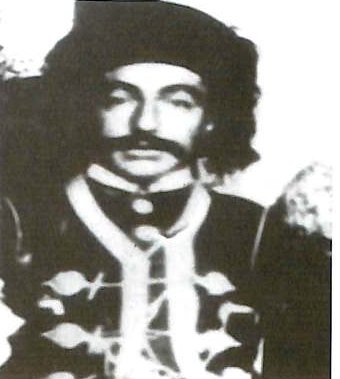
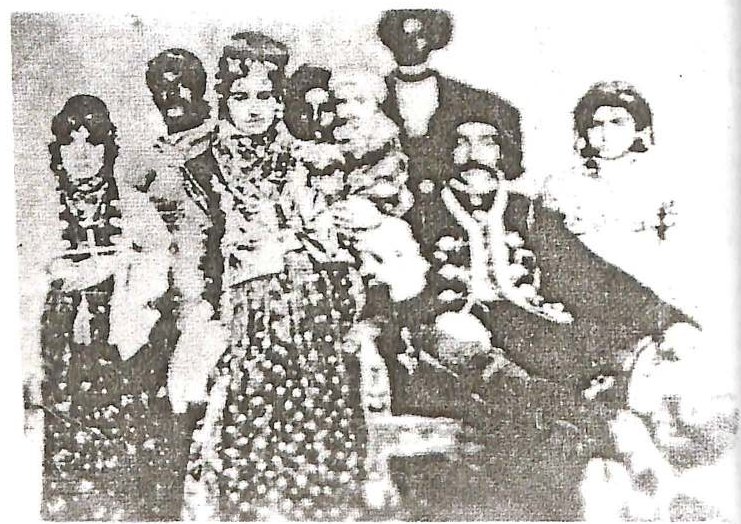
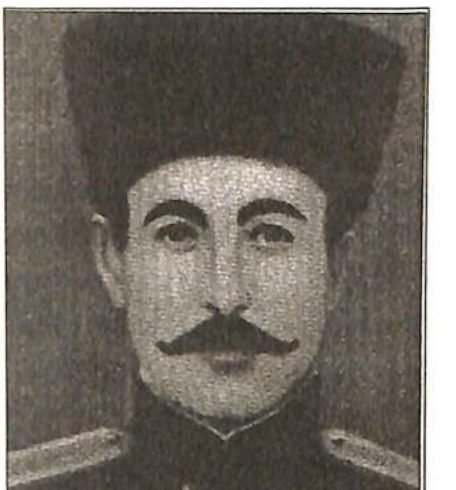
The Ferman of 1891/92
The Wali of Wan wanted to force the Ezidis to convert to Islam. They were told that the Mîr of Şêxan and all the Ezidis of Lalîş and Şengal had already converted. Three men were sent to Lalîş to check; on the way they were arrested. Pîr Hecî from the line of the Pîrs Barî refused to convert and was beheaded; Ezidis from Şengal retrieved his body and buried it. Through the Wali’s wife, Xetîv Axa achieved the revocation of the Ferman. Hence the saying that Xetîv Axa “bought the Êzdîtî with gold”.
Migration to Armenia
In 1914 the tribe moved to the Çuxur plain (Bazîd), with villages such as Remanqule, Tûtek, Qiyadîn, Karakend, Qizildiz and Sarîbex. In the First World War the Zuqurî under Cihangîr Axa fought on the side of the Armenians and Russians. In 1918 they crossed the Aras and settled in the Ararat plain (among other places Qamişlû, Bezik) and around Aştarak; one part fled to Tiflis.
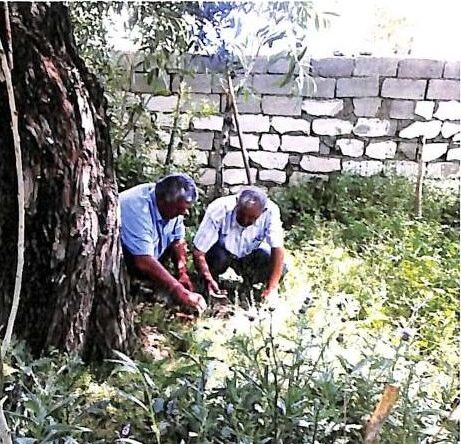
Differing tribal attribution in Sloyan
Mirza Sloyan (2015) calls Xetîv Axa, the father of Cihangîr Axa, the leader of the Mandikî tribe, not of the Zuqurî. Since, according to Boyîk, the Mendikî belonged to the confederation of the Zuqurî, this need not be a contradiction; the sources do not explain it. More on this under Xetîv Axa.
Cangîr Axa in the sources from 1915 to 1943
- In 1915 the Armenian governor of Wan appointed Cangîr, son of Xato, head of the “Ezdi-Xan” district (document in Mossaki and Pirbari 2024). According to Rzgoyan (2025), in 1915 he went over to the Russian side with his unit; in 1918 at Baş-Aparan his horsemen made up the bulk of the Armenian cavalry.
- In the tradition of the war over Zerîf Xatûn, the Kok Axa family calls on Xetîb Axa, the head of the Ezidis of the Karasu district from the village of Çibuxlî, for help (according to Mossaki and Pirbari). The sources do not say whether he is identical with Xetîv Axa; since the war is placed in the early 19th century, this is chronologically unlikely.
- In Soviet files Cangîr Axa is called Xatifov. His brother Seîd Xatifov was sentenced to camp imprisonment in 1936; Cangîr Axa himself was arrested in 1938 and sentenced in 1939 to ten years in a camp (see Repressions 1937–1939).
Date of death – differing information: According to the archive of the Saratov internal affairs authority (in Rzgoyan 2025), Cangîr Axa died of pellagra on 5 July 1943 in the Novo-Kamensk camp (Saratov region). According to the testimony of a fellow prisoner, he died in October 1943. Both statements stand side by side; the archival one is the official one.
Sources
- Eskerê Boyîk: Bi Kurtayî Dîroka Êzidiyên Ermenistanê (A short history of the Ezidis of Armenia). Diyarbakır 2016, p. 117–150, 166, 173
- Mirza Sloyan (Mirzoyê Çolo Siloyan): Дорога, ведущая в храм. Три года спустя (The road leading to the temple. Three years later). Yerevan 2015, p. 189, p-273 (ill.)
- Karam Ankosi: Племена езидов на Южном Кавказе и в Германии (The tribes of the Ezidis in the South Caucasus and in Germany). Tbilisi 2004, p. 90 (ill.)
- International Journal of Yezidi Studies, Vol. 1. Tbilisi 2024, p. pp. 133, 139–140
- International Journal of Yezidi Studies, Vol. 2. Tbilisi 2025, p. pp. 80, 126, 128–129, 134–136
Found a mistake?
Is something wrong – a fact, a spelling, a source, an image? Let us know: we check every report and correct the article.
Other spellings: Zuquri · Sheikh · Scheich · Shex · Firman · Fermans · Emir · Shekhan · Scheichan · Shaikhan · Lalish · Lalisch · Lalesh · Sinjar · Sindschar · Shingal · Shengal · Singal · Tbilisi · Tbilissi