
The oral poetry of the Ezidis in Armenia and Georgia was collected systematically in the 20th century. The best overview is given by the preface of the collection published in Moscow in 1978 by the brothers Ordîxanê and Celîlê Celîl (part 1). They themselves collected from 1954 to 1975. The account follows this preface; there the editors assign the Ezidis to another people, a classification that is not adopted here.
Forerunners up to 1926
Already in the 19th century researchers in the Russian Empire and in Western Europe recorded songs and stories in the language of the Ezidis and their neighbors, for example Peter Lerch (1856, among prisoners of war of the Crimean War) and the Russian consul in Erzurum Alexandre Jaba (edition 1860). In 1904 the Armenian composer Komitas set 13 melodies in notation for an ethnographic anthology. I. A. Orbeli recorded over 100 phonograph cylinders in the Moks area in 1911. Whether and to what extent these collections included Ezidi singers is not clear from the preface.
The expedition of 1931
In 1931 the People's Commissariat of Education of Armenia organized the first scholarly expedition to collect oral poetry. The participants were Cerdoyê Gênco, H’eciyê Cindî and the composer Karo Zakaryan; it was led by Prof. Asatur Xaçatryan. Villages of the districts of Aparan, Talin and Vagharshapat (today Etchmiadzin) were visited, as well as a company in Leninakan (Gyumri) in which native speakers served. What was new was that, besides native speakers and experts on the customs, specialists in folk music also took part for the first time.
The 1930s
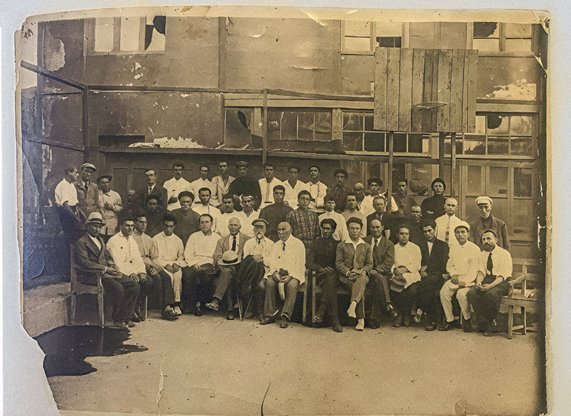
- The responsible section of the Institute of Cultural History of the Armenian SSR collected already in its first half year epic songs, several versions of the epic “Rustemê Zal”, lyric poetry, songs of custom, work and everyday life, proverbs, fairy tales and fables.
- In 1934, under Asatur Xaçatryan, a first volume of “Rustemê Zal” with introduction, commentary and dictionary was prepared but not printed; editions of “Mem û Zîn”, “Xanê Dimdim” and “Kerr û Kulik” were also planned. In the same year the section wanted to found small groups in the villages for collecting folk poetry and customs; the government of Armenia provided money for expeditions to Armenia, Azerbaijan and Georgia.
- On July 9, 1934 a first All-Union specialist conference on language and folk poetry began in Yerevan; it resolved on further collecting work. Works by I. Marogulov, Lazo, M. Mirakyan and R. Drampyan were purchased.
- Collecting then took place in the districts of Vedi and Artashat (Armenia), in Azerbaijan and in the districts of Akhaltsikhe and Akhalkalaki and in Adjara (Georgia).
- Students of a pedagogical technical college in Yerevan helped with the collecting and later, as village teachers, continued to send material.
The collections of 1936 and 1957
- In 1936 the first folklore collection appeared in Yerevan, prepared by H’eciyê Cindî and Emînê Evdal under the editorship of Casimê Celîl. It contained among other things 30 versions of “Kerr û Kulikê Silêmanê Silîvî”, three of “Mem û Zîn”, four of “Memê û Eyşê”, three of “Leylî û Mecnûn” and 12 songs of the Dengbêj Evdalê Zeynê. Proverbs, riddles and mourning songs were missing.
- Also in 1936, 127 folk songs with musical notation appeared in Yerevan for the first time.

- In 1957 a second collection in Cyrillic script followed in Yerevan. It contained for the first time in the language of the Ezidis a version of the Armenian epic “David of Sassoun” (“Dawidê Sasûnê”), recorded from the storyteller Ehmê Çolo. Hemê Memed, Werdê Şemo and E’tarê Şero are also named as professional storytellers.
The Celîl brothers criticized both collections for lacking dictionaries and exact information on the storytellers. Ehmê Çolo and Celîlê Reşo, both folk singers and storytellers, had been admitted to the Writers' Union of Armenia in 1938.
Female song collectors
The composers Cemîla Celîl and Nûra Cewarî, both graduates of the Yerevan Conservatory, collected folk songs with musical notation. Cemîla Celîl published four collections with over 400 songs in Moscow and Yerevan – round dance, religious, epic, historical, lyrical and humorous songs – and was the first to record instrumental melodies as well. Nûra Cewarî published collections in 1960 (round dance songs) and 1964.
The mourning songs
Mourning songs were the most difficult to record, because they are sung only at burials. The first 44 pieces were recorded by the orientalist Margarita Rudenko among Ezidis in Tiflis; they appeared in Leningrad in 1970. In 1975 the Celîl brothers recorded in Tiflis 96 mourning songs of the female lament singer Hizreta Heso (see Lament for the dead).
The collection of the Celîl brothers (1954–1975)
Ordîxanê and Celîlê Celîl collected from 1954 to 1975 in Armenia and Georgia as well as in Kazakhstan and Kyrgyzstan. Most of their informants in Armenia and Georgia were Ezidis. Part 1 of the collection (Moscow 1978) contains over 2200 pieces from 69 storytellers and singers. The work is divided into four main parts: poetry, epic, prose and paremiology; part 1 comprises only the poetry. One asterisk marks texts transcribed from tape; two asterisks additionally indicate musical notation recorded by Cemîla Celîl.
According to Khanna Omarkhali, the brothers also published Ezidi religious hymns in Moscow and Yerevan in 1978. Their content belongs to the section Religion.
Part 2 and the scholarly apparatus
Part 2 likewise appeared in 1978 with Nauka in Moscow (print run 2600). It contains numbers 711 to 2288 – among them 18 religious songs (Qewl and Beyt), poetry attributed to Feqiyê Teyran and to the Dengbêj Evdalê Zeynê, the Rustem cycle, legends, stories and fairy tales, proverbs, riddles, blessings and curses. At the end stands the scholarly apparatus for both volumes:
- Musical notations (Notanivîsar): 33 melodies for the round dance songs from part 1, with tempo markings such as Allegro, Allegretto and Moderato.
- Commentary (Nivîsarnasî) with place, month and year of the recording and the name of the performer for almost every number, plus explanations of words.
- Short biographies of about 70 storytellers and singers (see Singers and storytellers).
- Index of persons, places and tribes.
Among the proverbs, the sayings of Şêx Dewrêşê Şêx K’eleş are listed separately.
Places and years of recording
According to the commentary, the recordings were made between 1954 and 1976, mostly in Armenia and in Tiflis:
| Period | Place | Examples |
|---|---|---|
| 1954–1956 | Yerevan | Verses from E’t’arê Şero (1954), Dilok from Cerdoyê Esed (1956) |
| 1957 | Talin district (Siçanlû, Exçexala Jorîn, Eşnek), Çatgiran, Qamişlû; summer pasture on Mount Axmaxan on Lake Sevan | Dilok, verse epics, the historical song “Şêx Mirzo” |
| 1958–1959 | Tiflis, Gyelt’o, Yerevan | Dilok, verse epics, stories |
| 1960–1964 | Samiran, Sîpan (Pampa), Qulîbeglû, Yerevan, Tiflis | historical songs, verse epics, round dance songs |
| 1965–1972 | Hebilk’end, Arteni sovkhoz, Beroj, Gyelt’o, Oktemberyan, Sovkhoz No. 38 (Ashtarak), Qamişlû, Norakert | verse epics, Rustem epic, legends, stories |
| 1973 | Mûradt’epe, Tolk (Ciraşên), Quruerez, Etchmiadzin district; Kok-Jangak (Kyrgyzstan) | Qewl and Beyt, round dance songs |
| 1975 | Tiflis | 96 mourning songs from H’izreta H’eso |
| 1974–1976 | Çobanmaz (Aragats) | Stories from Çerkezê Eşir |
Some pieces had already been written down earlier: E’t’arê Şero, for example, had already written down a version of the verse epic “Zembîlfiroş” from memory in 1933. Ordîxanê Celîl had previously published many historical songs in a separate edition (Yerevan 1975) (see Historical songs).
On the genres see Genres of folk poetry.
Sources
- Ordîxanê Celîl, Celîlê Celîl: Zargotina K’urda, Part 1. Moscow 1978, p. 5–23, 24–44
- Ordîxanê Celîl, Celîlê Celîl: Zargotina K’urda, Part 2. Moscow 1978, p. 4, 465–512, 533–539
- Khanna Omarkhali (Ханна Омархали): Йезидизм. Из глубины тысячелетий (From the depths of the millennia). Saint Petersburg 2005, p. 25
- Eskerê Boyîk: Bi Kurtayî Dîroka Êzidiyên Ermenistanê (A short history of the Ezidis of Armenia). Diyarbakır 2016, p. 112 (ill.)
- International Journal of Yezidi Studies, Vol. 2. Tbilisi 2025, p. 77, 86 (ill.)
Found a mistake?
Is something wrong – a fact, a spelling, a source, an image? Let us know: we check every report and correct the article.
Other spellings: Echpedition 1931 · Ekhpedition 1931 · Abaran · Bash-Aparan · Jerewan · Eriwan · Erivan · Dengbedsch · Tbilisi · Tbilissi · Qawl · Qaul · Kewl · Sheikh · Scheich · Shex · Elegez · Alagyaz · Alagjas · Eziden