
Başîqa and Bahzanê (also Başîqe and Behzanê) are two large Ezidi localities northeast of Mosul. They lie close together at the foot of Mount Meqlûb (Cebel Maqlub), separated only by a mostly dry watercourse. The Ezidis of both places speak predominantly Arabic (see Arabic-speaking Ezidis); the families of the Qewal live here. The article relies mainly on the observations of the British official C. J. Edmonds in April 1945; his assessments are not adopted.
Location
- Edmonds counts the two places among the “Şêxan group” of the Ezidis, but names them separately: they lie further south in the plain than the villages of the Dihok, Elqoş and E’yn Sifnî districts, in the Nahiya of Hemdaniyya.
- According to the article Şêxan, A. H. Layard already described both places in 1849/50 as lying directly at the foot of the Meqlûb and Bahzanê as a large, predominantly Ezidi village.
- Around 1945 the neighbors were Christians and the Şebek, whose 17 villages, according to Edmonds, lay between the Mosul–Başîqa road and Nimrud (about 1,000 houses, 5,000 people).
Population
According to Edmonds’ village list (around 1945):
| Place | Ezidis | Tribes |
|---|---|---|
| Bahzanê | 1,800 | Hekarî, Heraqî, Xaltî, Mamûsî, Dumilî |
| Başîqa | 1,200 | Heraqî, Xetarî, Hekarî, Dumilî |
The figures are Edmonds’ estimates; the complete list is under Ezidi villages in Şêxan and Şengal in the 1940s.
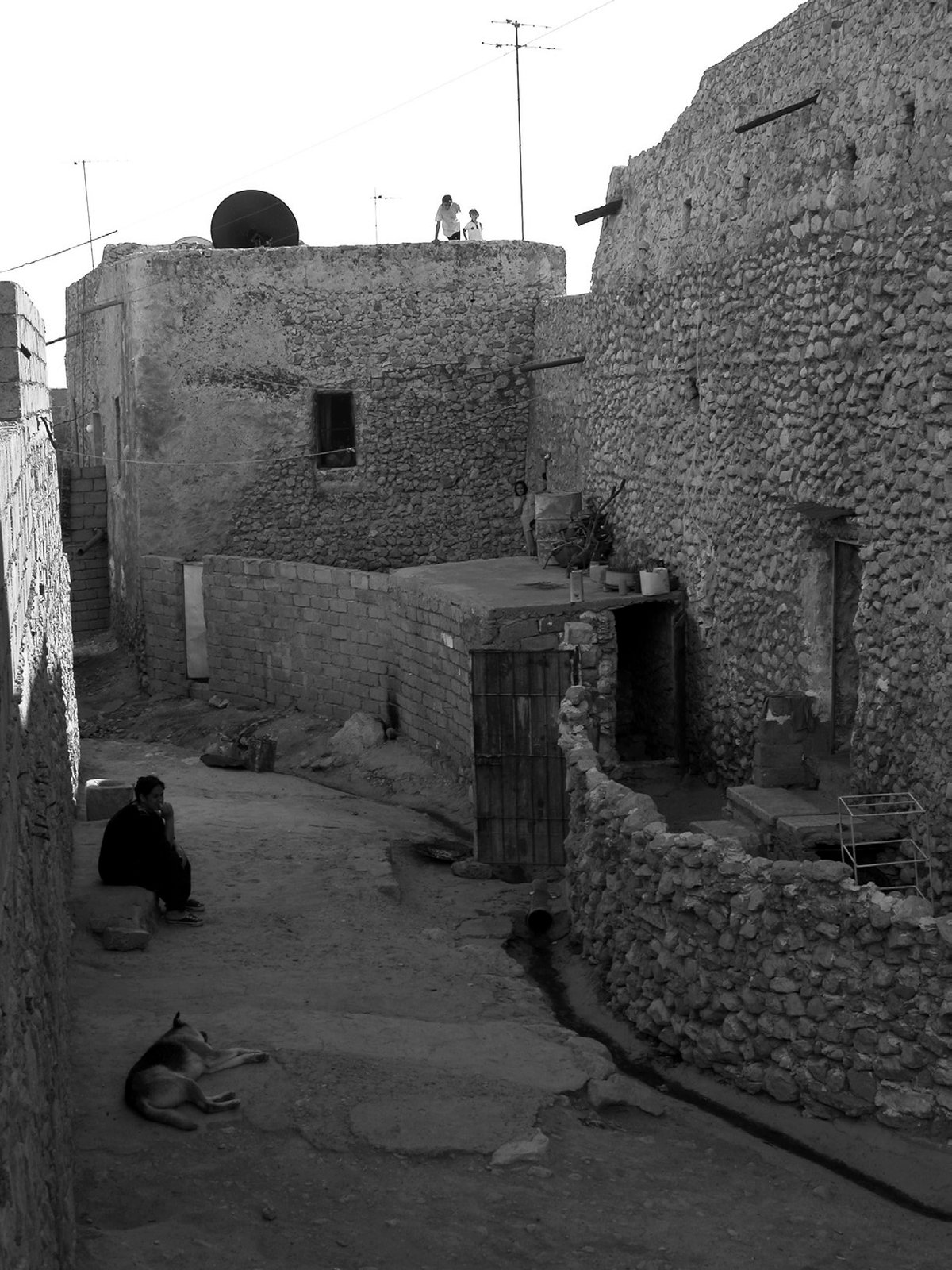
Qewal and clerics
- According to Edmonds, the Qewal must be able to read and write. They come from two families, which the other Ezidis call Tazhî – according to Edmonds “Arabs”. A Qewal’s son who does not learn to read is regarded as an ordinary Mirîd; a literate descendant can take up the profession again even after generations.
- According to Edmonds, the family of Bahzanê belongs to the Hekarî tribe and has Şêx Hesen as its Şêx; that of Başîqa belongs to the Dumilî and has Nasirdîn as its Şêx.
- According to one of Edmonds’ informants, the way women covered their heads showed whether a woman from Başîqa belonged to a Tazhî family.
- In 1944 the Pêşîmam and two of his deputies lived in Bahzanê, Başîqa and Sireskî.
- In 1944 Silêman Xaçolê was head of the Qewal; he was named after his mother because his father had died early.
On the training of the Qewal see The Qewal and their training, on the offices Spiritual offices.
Sanctuaries
Edmonds’ guide, the Ezidi teacher Şêx Huseyn from Bahzanê (Şêx Hesen family), showed him in 1945:
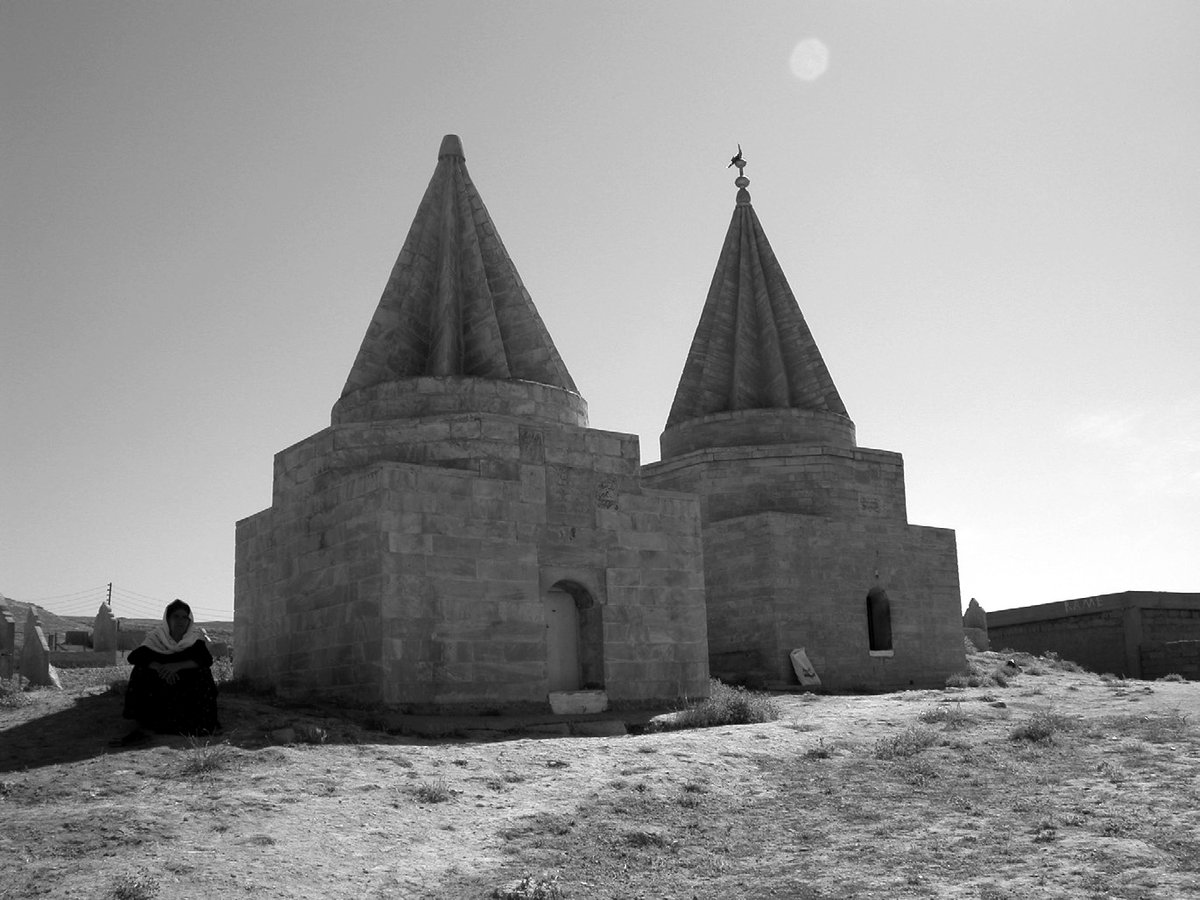
- the small tomb with a ribbed conical tower of Şahid bin Cerr;
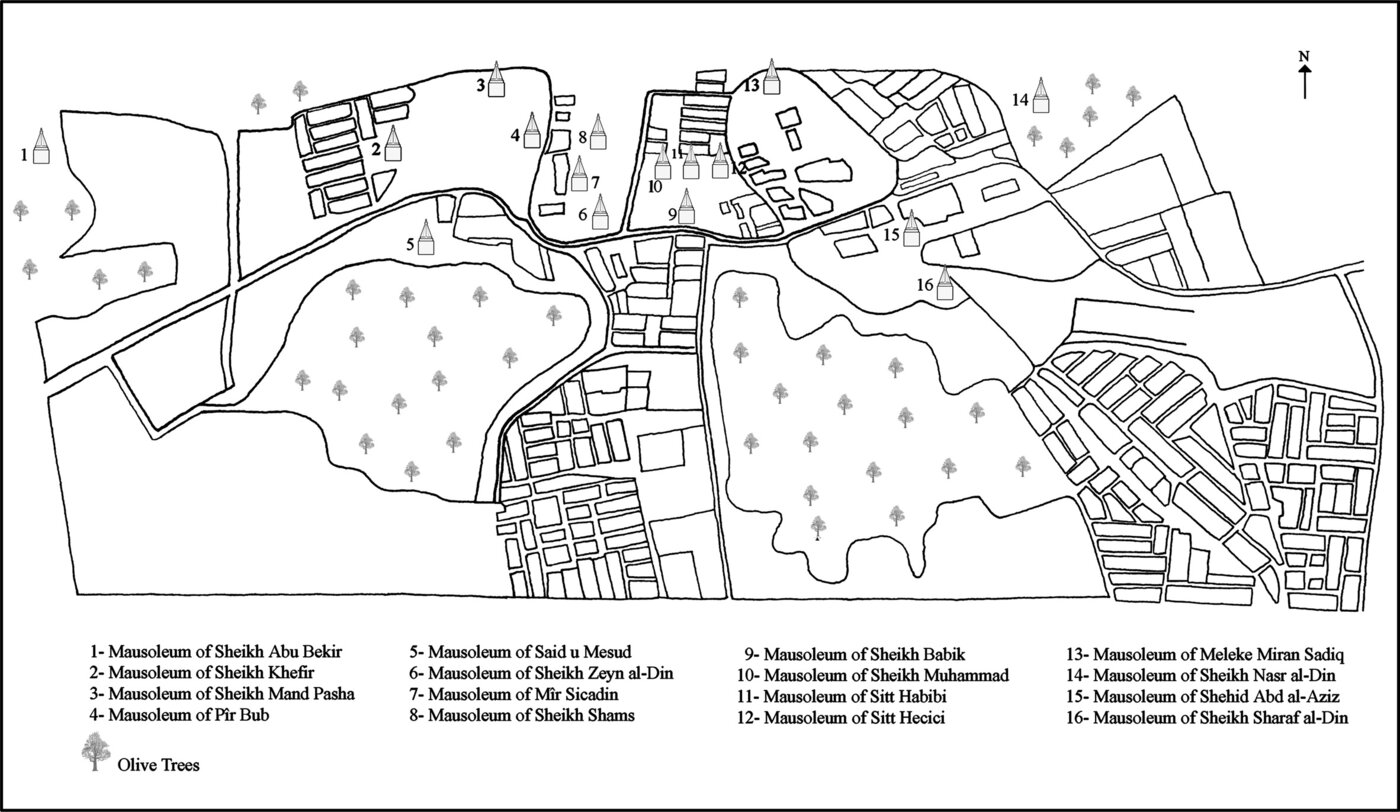
- the tombs of Şêx Mihemed of Xorasan, of Sitt Hebîba and of Sitt Xedîca;
- the great sanctuary of Melek Miran: according to an inscription above the entrance, Ömer Wehbî Pasha had devastated it, and in the year 1335 of the Hijra (1916/17) Şêx Huseyn’s father restored it. According to tradition, Melek Miran was born of a virgin mother named Horiyya.
- an olive tree in an enclosure, dedicated to Feqîra E’lî;
- an olive tree of Sitt Nefîsa of Xorasan, whose fruits are said to help against sleeplessness;
- in the stream below Melek Miran an oleander: whoever suffers from “wind” (rheumatism) fetches a handful of earth from the sanctuary, makes a mud cake from it, rubs it on his belly and ties a tassel of his headcloth to the bush.
Further healing places according to Edmonds: a spring in a grotto between Başîqa and Bahzanê (perhaps the same one that Layard describes near Bahzanê as the “cave of the Seven Sleepers”; the sources do not say so explicitly), the tomb of Weys el-Qeranî in Qesr Rast on the height to the north (against headache and eye ailments) and the tomb of Ebû Bekr (against fever).
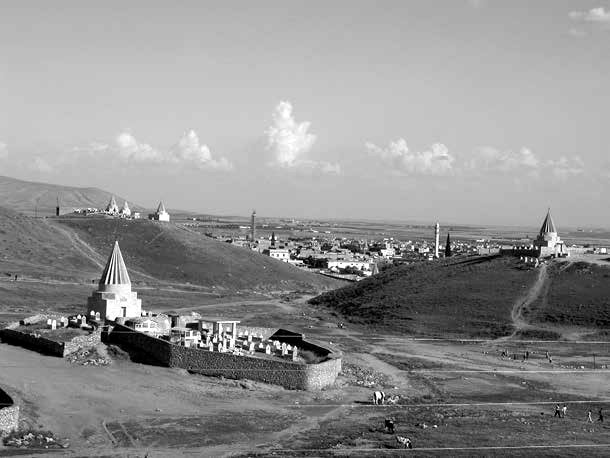
In 2002–2005 the art historian B. Açıkyıldız recorded 17 mausoleums in both places with ground plan and dating – see Sanctuaries and mausoleums in northern Iraq. She dates the mausoleum of Melekê Mîran to 1919; Edmonds’ inscription gives 1916/17. Açıkyıldız also mentions the healing mud against rheumatism made from the earth and water of this sanctuary.

A mourning custom
In the cemetery Edmonds heard flutes and drums at a funeral. According to his guide the melody was called mehter. It was usually played as a serenade on the morning after the consummation of a marriage, but also at the grave of a man who had died young.
New Year and Kermis 1945
New Year
In 1945 the first day of the Ezidi New Year festival fell on Wednesday, 18 April (Gregorian). Edmonds came on Thursday to Lalîş, which lies at about 3,500 feet: the trees were still bare, but on lintels and doorposts hung little bunches of red ranunculus as a sign of spring. There he visited the Baba Çawîş and the head of the female servants of the sanctuary. On the New Year in general see Feasts and fasting days.
Guests in Başîqa
In Başîqa Edmonds stayed with the Christian teacher. Many Ezidis visited him, among them Mayan Xatûn, Xêrî Beg, P’îr Derwêş Micêwir, Şêx Xelef, who had just returned from banishment, with his little son, and Saydo, a brother of Xudêda from Şengal, who had been murdered in 1944.
The Kermis
The highlight is the Kermis on the Friday of New Year week at a sanctuary known outwardly as the tomb of Şêx Mihemed (in Edmonds’ understanding Muhammad ibn el-Hanefiyya). According to one Ezidi informant, Şêx Hesen is actually honored there; according to another, the anniversary of a visit by the seven first Şêx from Lalîş to Başîqa is celebrated. Both are tradition.
The course in 1945 according to Edmonds:
- During the night the Ezidis held their ceremonies in the sanctuary; they were over by the morning.
- In the morning groups came from all the surrounding villages, many with flute and drum players.
- The forecourt of the sanctuary was about 15 yards square and surrounded by cloisters. People laid an offering on the threshold; in the inner room the tomb was covered with many offerings of red and green silk.
- Horse races took place on a field – not an organized event, but spontaneous challenges between two to four riders.
- The dancing began with the solemn Govend in the forecourt, danced only by Ezidi men.
- Afterwards large circles of Ezidis, Christians, Şebek and Muslims, men and women, formed on the open space in front of the sanctuary to flute and drum. The dancing went on until about sunset.
Hundreds of country people from the surrounding area – Christians, Şebek and Muslims – celebrated with the Ezidis. In the years before 1945 the Kermis had become a kind of attraction: the Mutesarrif of Mosul had a large tent with refreshments set up for consuls and other guests, and the police kept order.
Clothing
- The Ezidis wore a lot of white, along with colorful Zouave jackets.
- According to Edmonds, the most splendidly dressed were the Şebek girls, for example: a blue-and-silver gown over a red-and-violet skirt, a cream-colored silver-embroidered shawl, a turban of black and colored silk scarves with silver coins, gold spirals over the ears, silver plates on the upper arms and heavy bracelets. After them came the Christian women.
That the largest New Year celebrations with horse races take place in Başîqa and Bahzanê is also mentioned in the article Şêxan.
The Sencaq in Başîqa and Bahzanê
According to Peter Nicolaus (2024), the Mergeh Sencaq begins its tour with the sanctuaries of P’îr Bûb in Bahzanê and Melek Şêx Sin in Başîqa; since the early 2000s it has been shown here in large sanctuaries instead of private houses. See Sencaq and Tawûs gêran.
After 2014
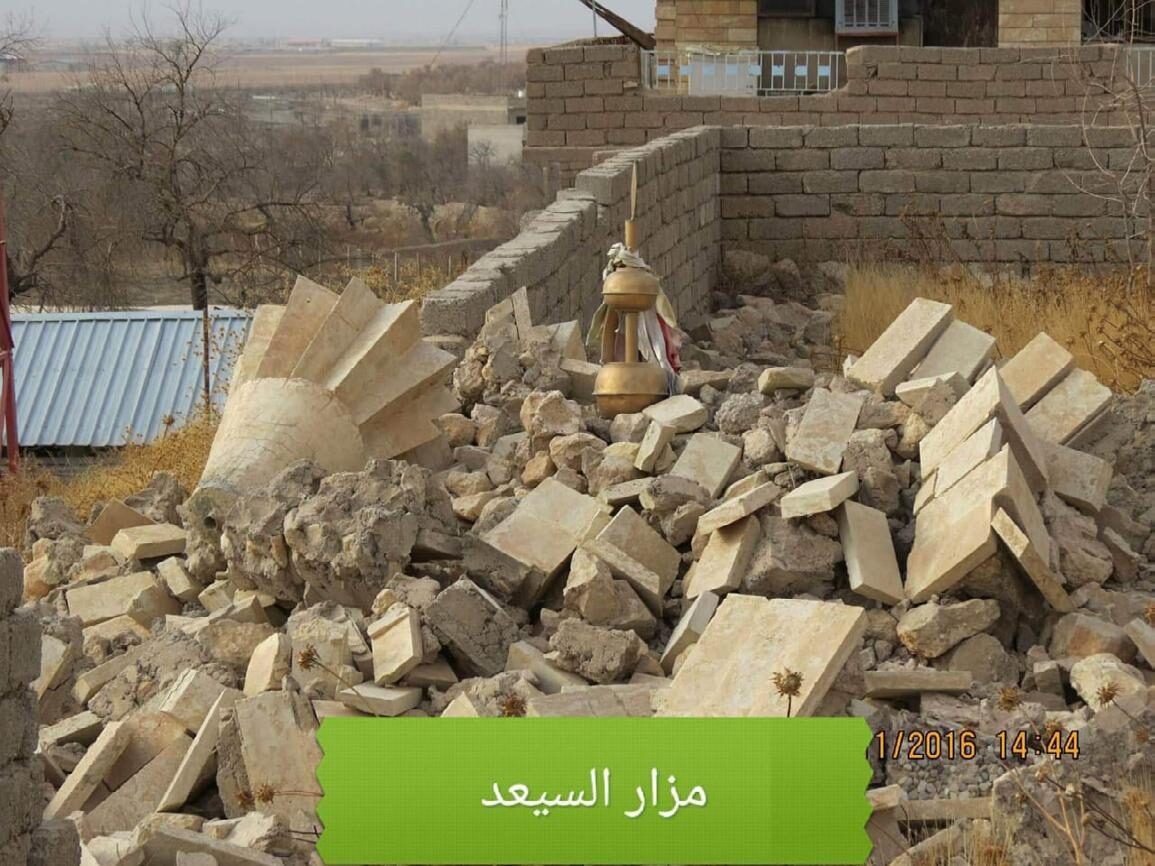
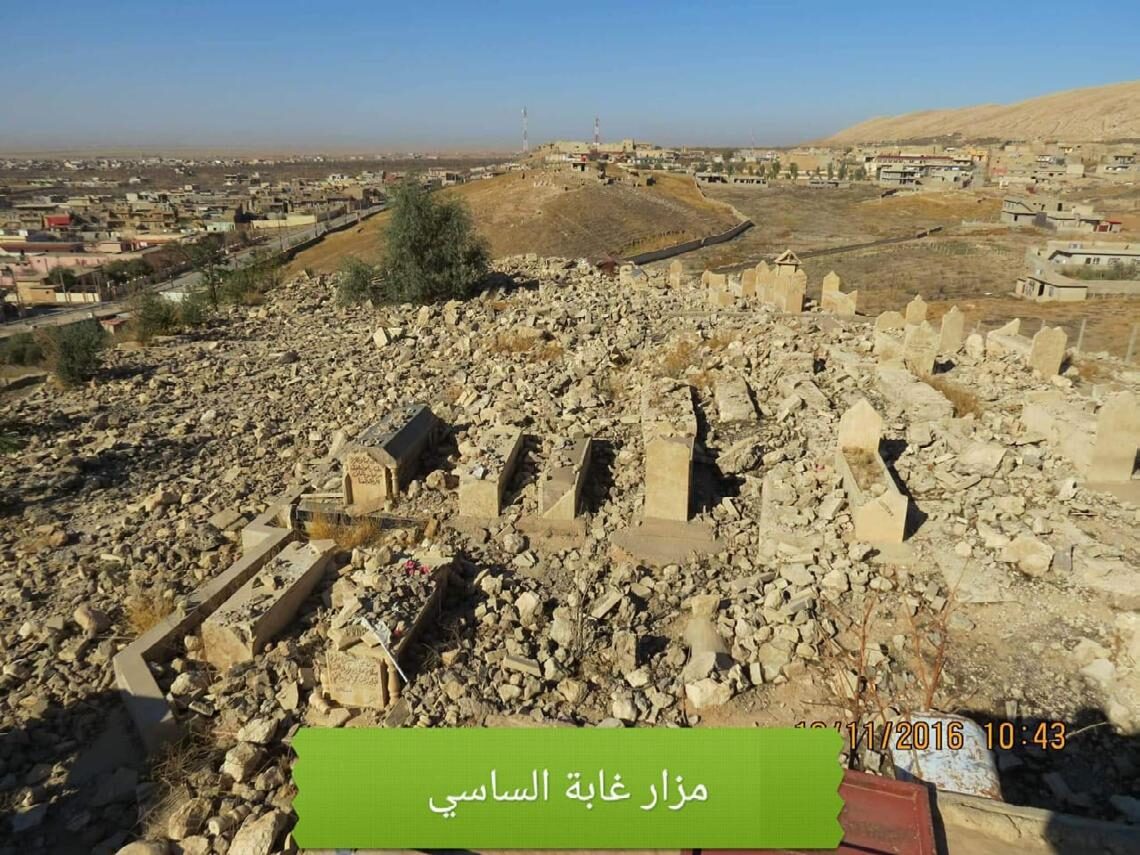
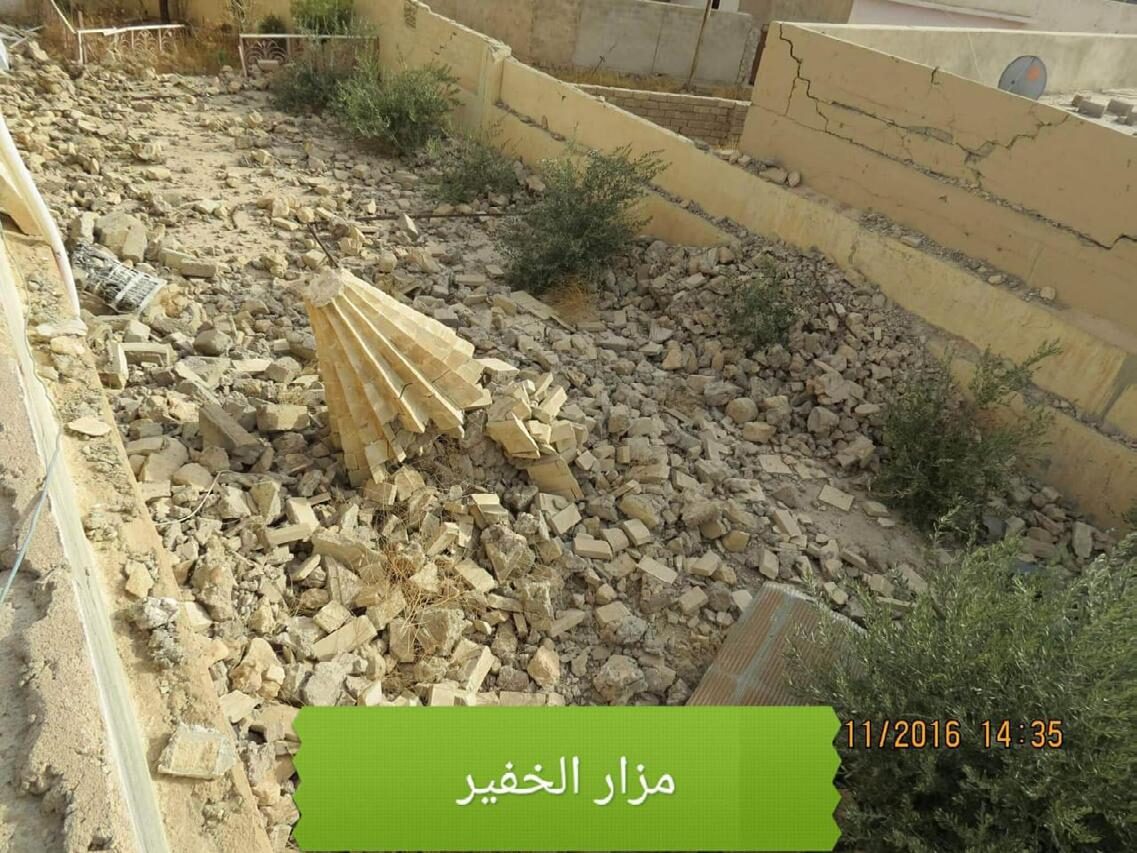
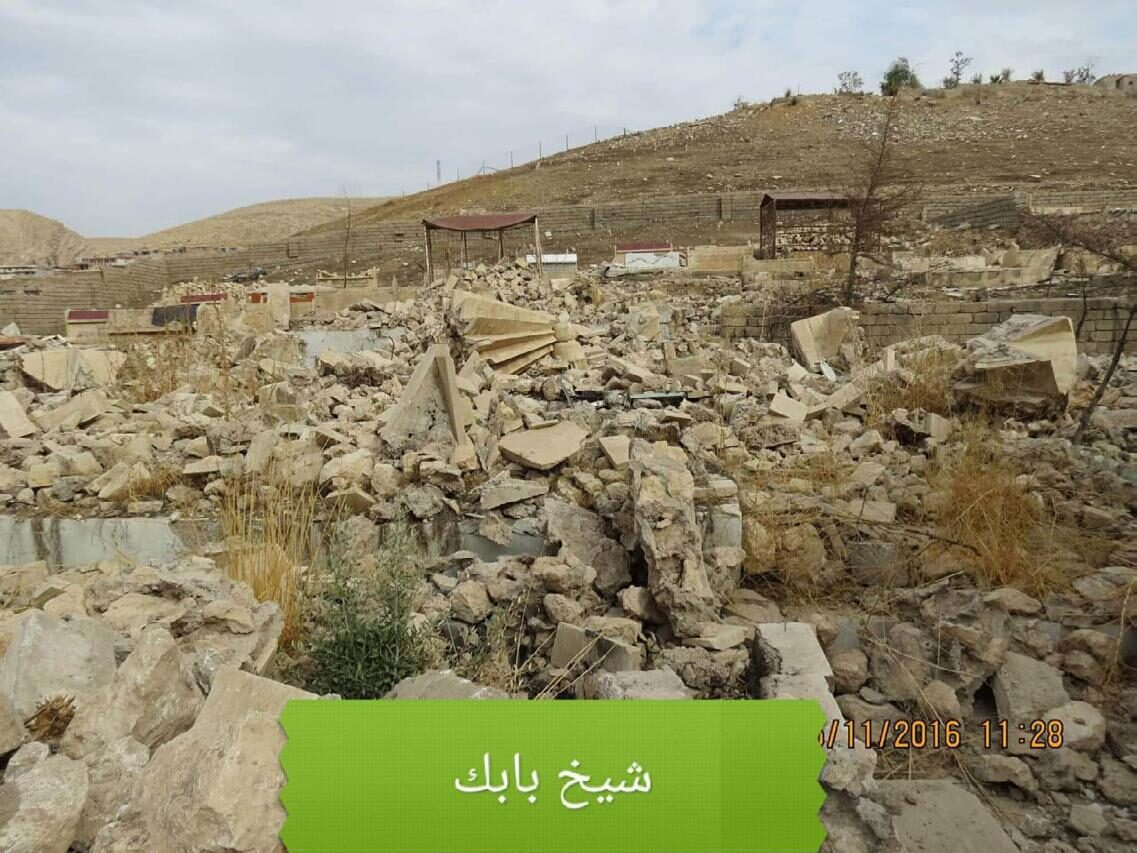
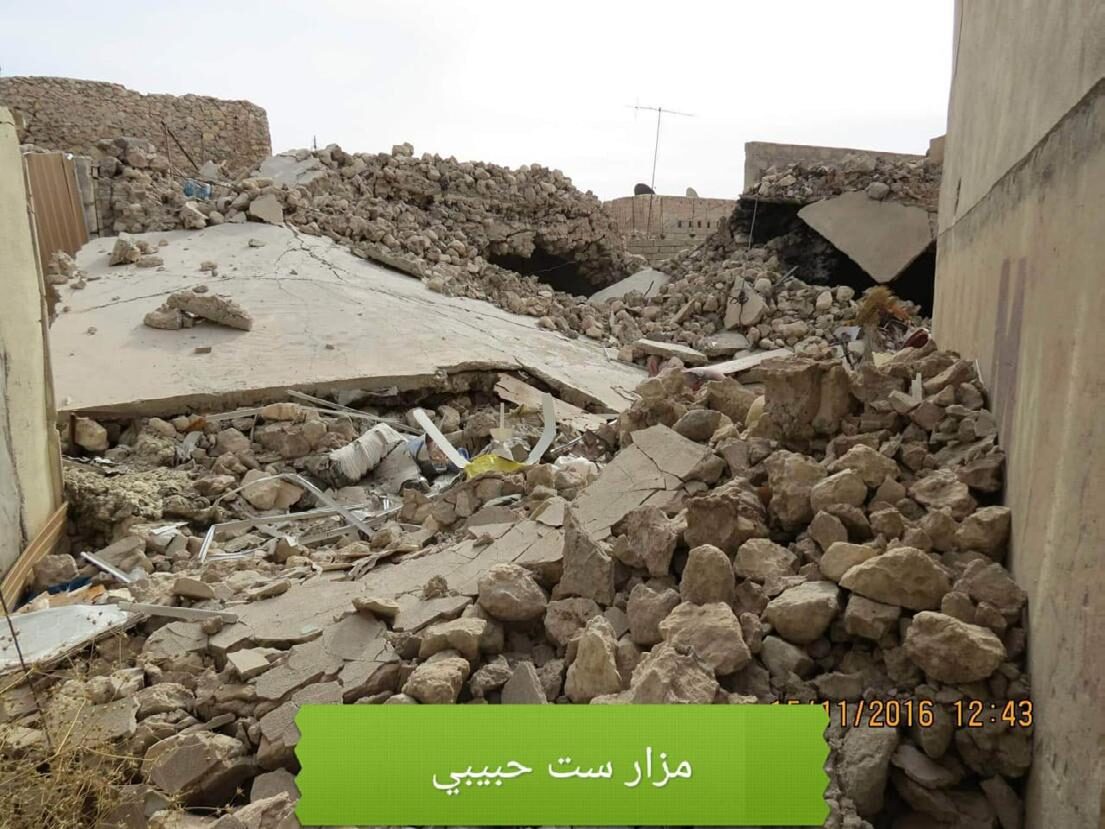
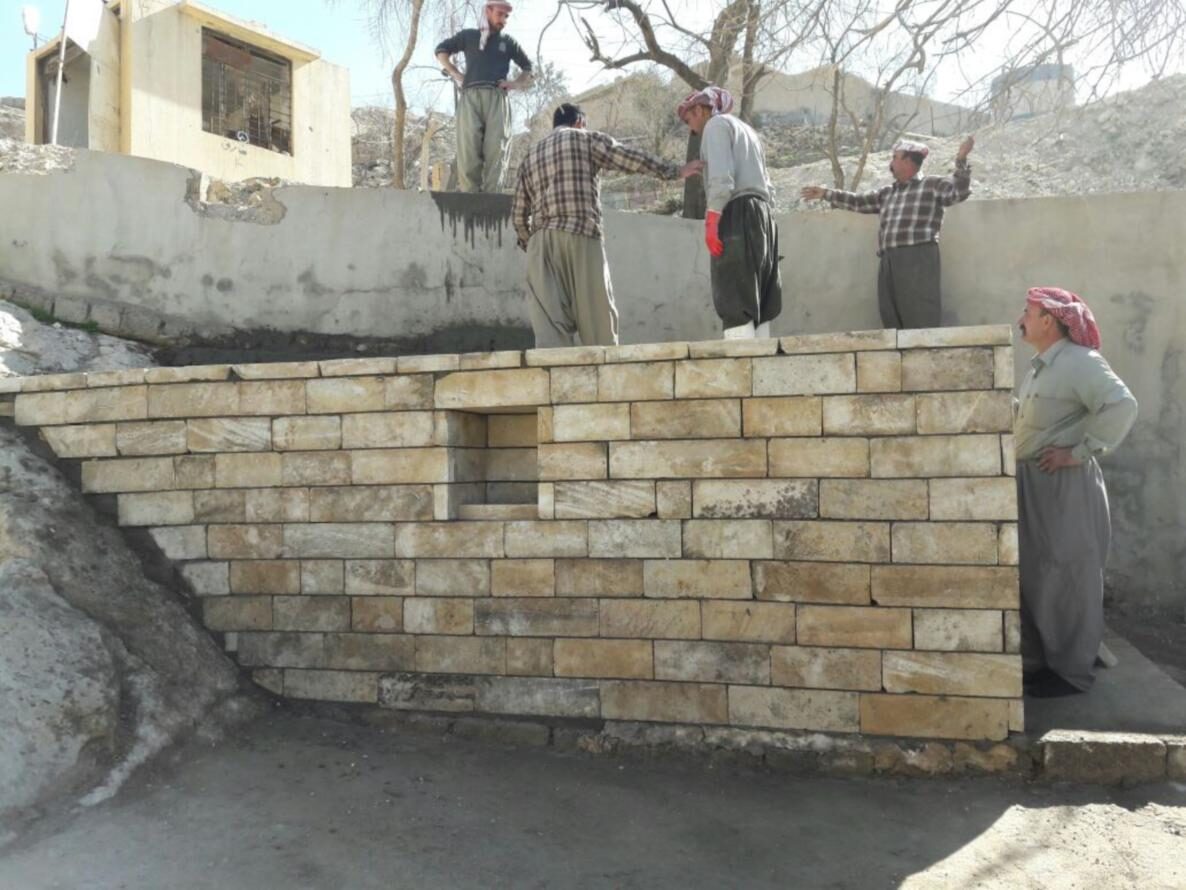
During the attack of the “Islamic State” in 2014, the Ezidis of Başîqa and Bahzanê had to flee; many holy sites were destroyed in 2014–2015 (see Arabic-speaking Ezidis).
Discrepancies
The information from Omarkhali and Fuccaro is documented with its sources in the article Spiritual offices.
| Point | Source A | Source B |
|---|---|---|
| Restoration of Melek Miran | 1335 AH = 1916/17 (inscription, according to Edmonds) | 1919 (Açıkyıldız) |
| Origin of the Qewal | two families (“Tazhî”), Hekarî (Bahzanê) and Dumilî (Başîqa) tribes (Edmonds) | Hekarî and Dumilî tribes, today also Mamûsî (Omarkhali); families “Dimlî and Tazî” (Fuccaro) |
| Reading and writing | obligatory for every Qewal (Edmonds) | increasingly a prerequisite since 1913 (Fuccaro) |
Başîqa and Bahzanê in 1940 according to Drower
The British orientalist E. S. Drower lived in Başîqa for about ten days in April 1940 (see Sersal in Başîqa 1940). She describes:
Başîqa
- The village lay at the foot of the hills, surrounded by olive groves, with the white conical towers of the sanctuaries. Ezidis, Jacobites (Syriac Orthodox) and Latin (Catholic) Christians lived there; the latter were just building a new church.
- The village was very clean. The authorities had piped spring water from Ras el-‘Eyn into the village. There was neither radio nor newspaper, telephone or daily post.
- On the stream of Ras el-‘Eyn stood a mill; on the slope lay lime kilns and gypsum pits (cus). Wheat, barley, beans and onions were grown.
- The women washed at the springs and beat the laundry with wooden clubs; they used homemade olive oil soap. The washing places were the women’s meeting points.
- On the mountain above the village lies the ruin of Qel‘at Esfer with wells and shafts, around which treasure legends are woven.
- Drower’s host Reşîd, son of Sadiq, came from a landowning family with estates also in Şengal. He worked as foreman and guard at the American excavation of Tell Billa (directed by E. A. Speiser). He could not read himself, but had his children taught and was interested in modern beekeeping. His father Sadiq had had the sanctuary of Şêx Mihemed rebuilt; the Baba Şêx was his guest at the feast of 1940.
- The chief Qewal of Başîqa was Qewal Sîvo. Another Qewal, Reşo, had served in the British Levies and had been allowed to keep his beard, because Qewal do not cut their hair and beard. Formerly the Qewal traveled with the Sencaq as far as Russia and India; in 1940 this was no longer possible because of the war and the passport regulations.
- An older woman worked as midwife (dapîr), delivering about 30 children a year.
Bahzanê
- Bahzanê lies on a hill; the paved lanes with a gutter in the middle are so narrow that one can almost touch the houses on both sides. Bahzanê, too, was very clean.
- According to Drower, people in Bahzanê held more strongly to old customs than in Başîqa.
- Oil presses in the rock above the village: a man trod a sack of olives barefoot and poured hot water over it; the oil collected in a cistern.
- Most of the Qewal lived in Başîqa and Bahzanê. In Bahzanê lived Qewal Selman and his son Xidir. The guardian of the sanctuary of Şêx Mend built himself a Tembûr of mulberry wood (see Instruments and dance).
Sanctuaries
Drower names numerous places of pilgrimage (Mezar) around both villages – see Sanctuaries and mausoleums in northern Iraq.
Language
In Başîqa and Bahzanê Arabic is the first language of the Ezidis (Ayhan; Ali calls the dialect Bahzanî); see Arabic-speaking Ezidis.
Sources
- Qader Saleem Shammo: From Fatwā to Genocide. Historic and Contemporary Manifestations of the Islamic Genocide against the Yezidis (Yezidi Studies 5). Berlin 2026, p. 298 (ill.)
- C. J. Edmonds: A Pilgrimage to Lalish. London (Royal Asiatic Society) 1967, p. p-017, p-048, p-050, p-058, p-090–093, p-104
- Birgül Açıkyıldız: The Yezidis. The History of a Community, Culture and Religion. London 2010, p. catalogue nos. 39–55
- International Journal of Yezidi Studies, Vol. 1. Tbilisi 2024, p. pp. 81–108
- E. S. Drower: Peacock Angel. Being some Account of Votaries of a Secret Cult and their Sanctuaries. London 1941, p. pp. 4, 7–8, 11–16, 24–29, 33–38, 42–46, 73, 99–100, 108, 116–117 (PDF 15, 18–29, 37–53, 57–63, 94, 124–125, 133, 143–144)
- Güneş Murat Tezcür (ed.): Kurds and Yezidis in the Middle East. Shifting Identities, Borders, and the Experience of Minority Communities. London: I.B. Tauris 2021, p. 47 (Ali), 169 (Ayhan)
Found a mistake?
Is something wrong – a fact, a spelling, a source, an image? Let us know: we check every report and correct the article.
Other spellings: Basiqa and Bahzane · Baschiqa and Bahzane · Bashiqa and Bahzane · Basiqe · Baschiqe · Bashiqe · Behzane · Basiqa · Bazan · Kermis von Basiqa · Kermis von Baschiqa · Kermis von Bashiqa · Baschika · Bahzane · Mossul · Mûsil · Qawwal · Kawal · Kewal · Shekhan