
Şengal is a mountain range and district in northwestern Iraq, west of Mosul. Alongside Şêxan it is the most important area of settlement of the Ezidis in their homeland.
Places
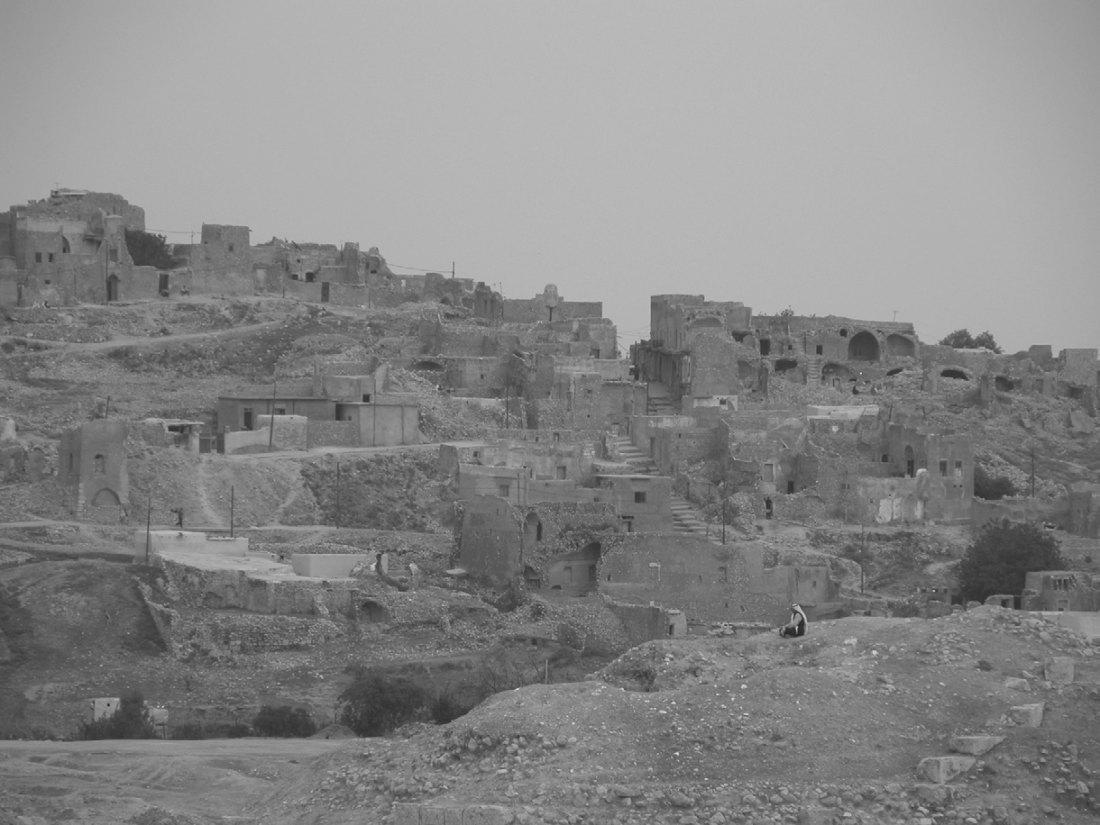
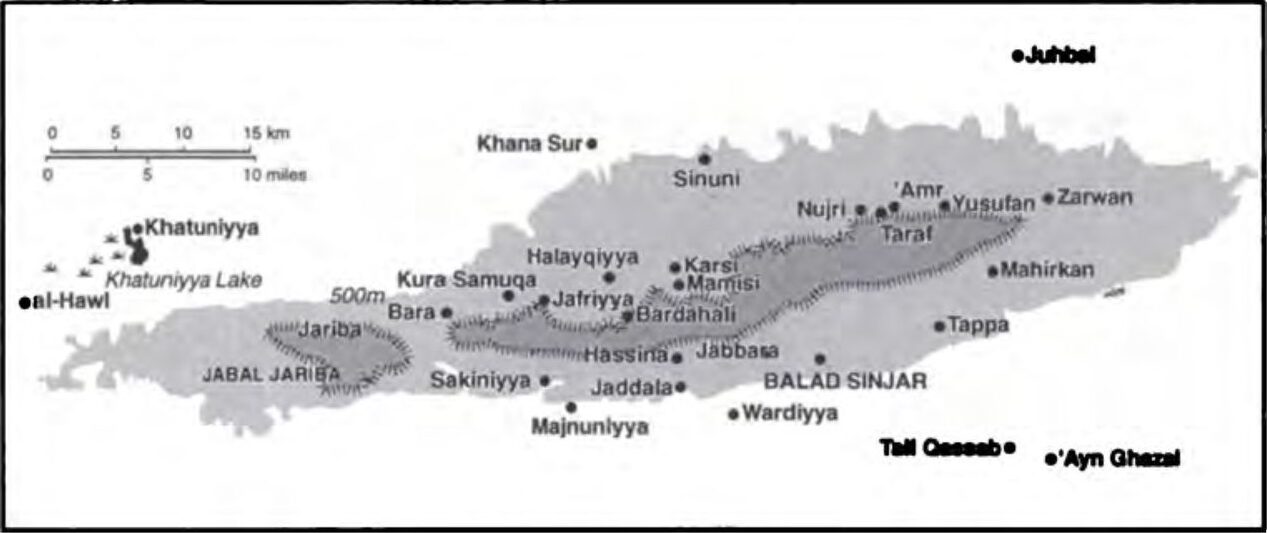
Among the places in Şengal named in the sources are Balad, Mihirkan, Minkar, Mikran, Til Ezer and Siba Şêx Xidir. During persecutions the inhabitants withdrew to the Xetûnîya area or into the caves of the mountains.
History
- Between 1715 and 1838 Şengal was repeatedly the target of campaigns by the governors of Mosul and Baghdad – see Ferman in the Ottoman period. The mountains offered protection: in 1838 the Ezidis repulsed an Ottoman army from an ambush.
- On 14 August 2007 over 700 people were killed in attacks in Til Ezer and Siba Şêx Xidir.
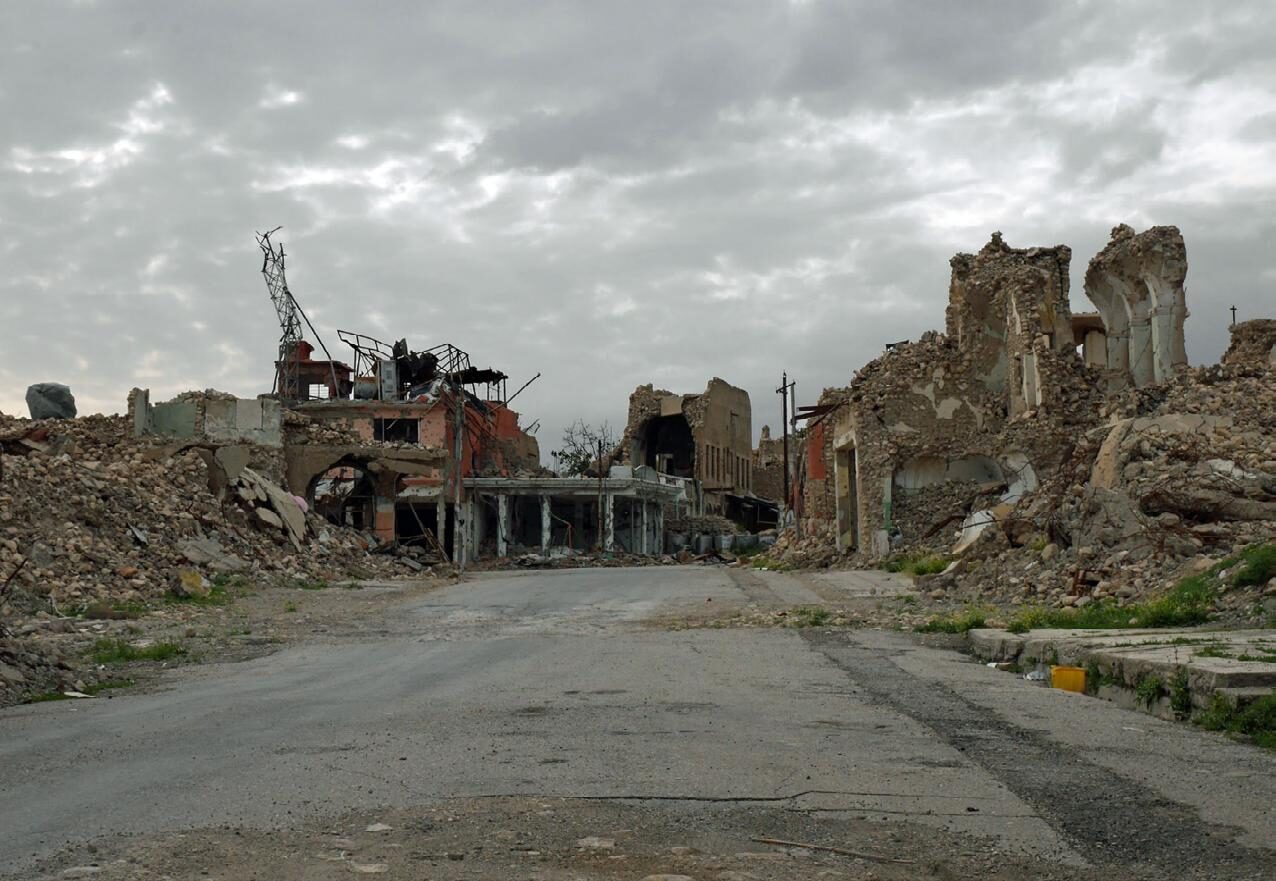
- From 3 August 2014 the “Islamic State” committed a genocide against the Ezidis in Şengal – the 74th Ferman. See Şengal 2007 and 2014.
Landscape (according to Guest)
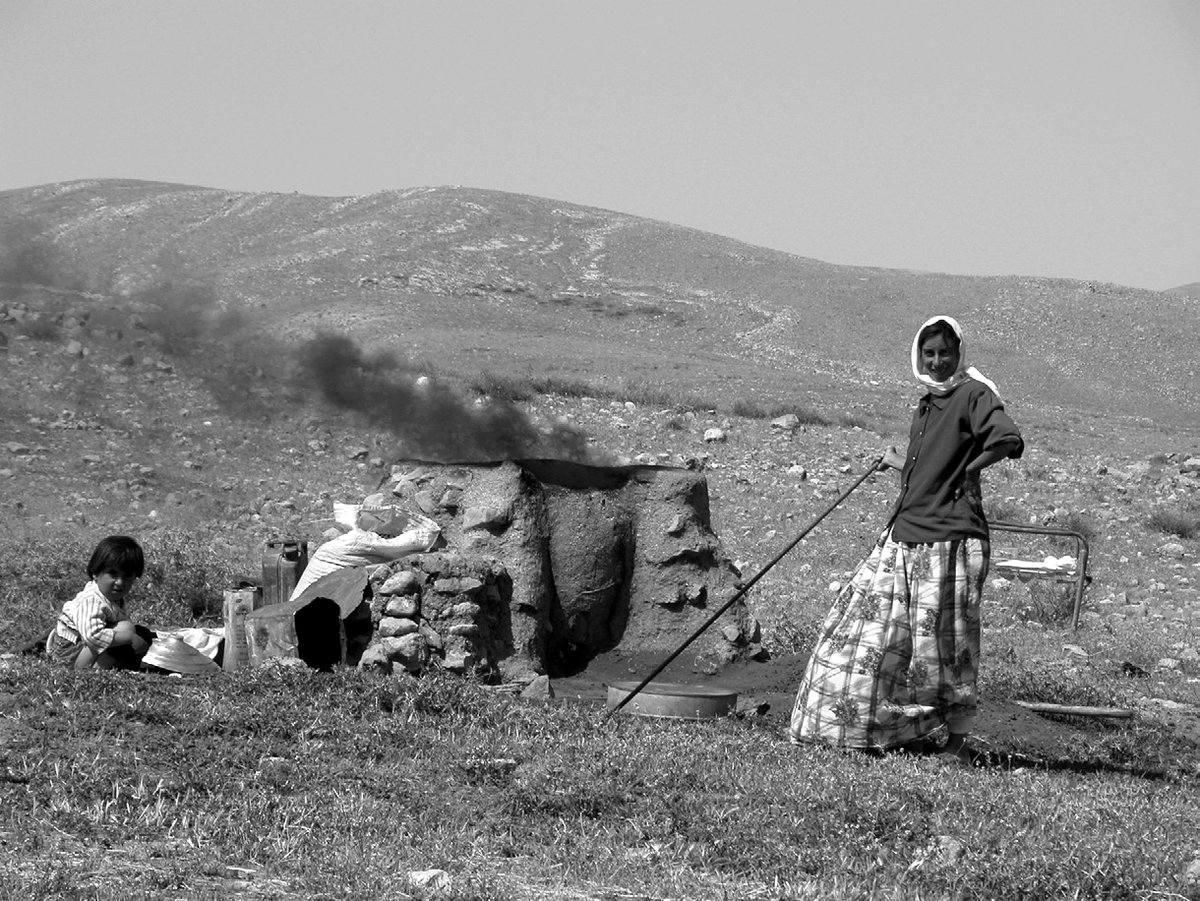
According to John S. Guest, the mountain range is about 60 miles (some 100 km) long and just under 1,500 m high; in winter there is snow. The northern slope falls away steeply, with gorges, oak forests that yield manna, and terraced gardens with grapes, figs and pomegranates. On the southern side streams flow down to the plain near the main town of Beled Sinjar. At the foot of the mountains ran the old caravan route from Aleppo to Mosul – this shaped the relationship of the mountain dwellers with their neighbors for centuries.
A place of refuge
The Ottomans were never able to subdue the mountains completely. As early as the early 17th century the Ezidis of Şengal defeated General Nasuh Pasha, and in 1674 Kaplan Pasha. On the campaigns against Şengal see the Chronicle of the Ferman according to Guest and Campaigns 1836–1847.
Şengal in travel accounts
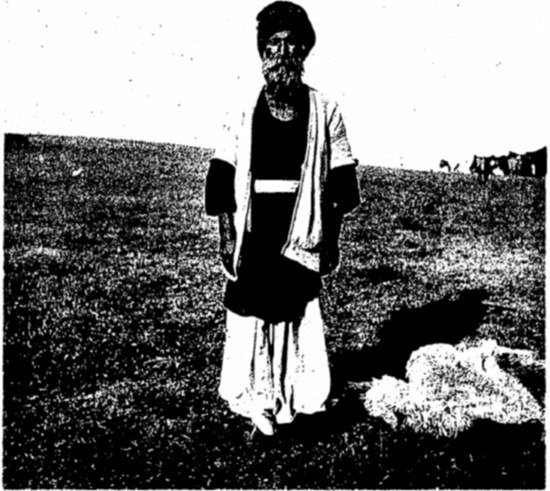
- In 1655 Evliya Çelebi called the mountains a “paradise of the lawless” with 70 springs. The men wore colorful woolen clothes, silk belts and turbans; dogs, mostly black ones, were highly valued. People lived on millet bread and mutton and sold manna, honey, grapes, raisins and silk to Mardin and Baghdad.
- The Dominican Campanile (in Mosul 1803–1815) counted 16,000 people in 13 villages. He names gallnuts, walnuts, hazelnuts, rice, raisins, honey, wax and particularly large dried figs as products.
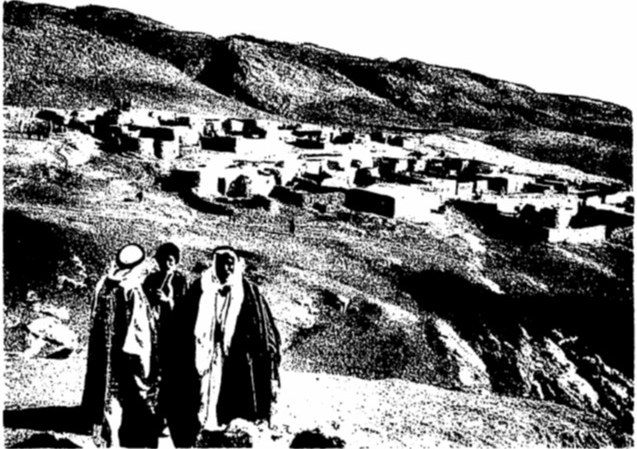
- In 1816 Claudius Rich met in Mosul four chiefs from Şengal in white waistcoats and coats, with red fezzes and red cloaks; they never cut their hair. They swore to an agreement by sticking a dagger into the ground, throwing a white cloth over it and laying their right hand on it.
- In 1850 A. H. Layard traveled through the mountains twice (see below: Layard’s journey of 1850).
- After the campaigns of 1845 Christian Rassam estimated only 11 villages with about 1,500 men able to bear arms.
- In 1885 the French vice-consul Siouffi counted 8,360 Ezidis and 540 Muslims in 18 villages.
- In 1906 Mark Sykes described the dress: a tall brown conical cap with a black or red turban, a long white shirt with a square neckline, a short brown leather coat and pointed, upturned shoes.
Layard’s journey of 1850
At the end of March 1850 the British archaeologist Austen Henry Layard set out west from Mosul with a large caravan; Mîr Huseyn Beg accompanied him part of the way. Qewal Yûsif traveled with him, with Ezidi companions. Layard wanted to visit the villages, end the bloodshed between them and reconcile them with the district governor. His account is an eyewitness report; his judgments about the appearance and religion of the inhabitants are not adopted here.
The situation
- At the foot of the mountains the Şengal tribe Hendka was encamped under a chief who was called the “Efendî” and who, according to Layard, had considerable influence.
- In Beled Sinjar the Ottoman district governor resided in a small new castle on the slope, with about 20 Albanian soldiers. He complained about the difficulty of collecting taxes.
- According to Layard, his predecessor was to blame for this: he had treacherously seized the two chief headmen Mahmud and Murad when the inhabitants were quiet, and brought them in chains to Mosul. At Layard’s intercession with Kamil Pasha they were released.
- According to Layard, the Ezidis of Şengal were “now very poor”: almost all the women’s jewelry had fallen into the hands of Turkish soldiers or had been sold for taxes and arbitrary fines.
The villages of the northern side (Şimal)
| Village | In Layard | Chief | Observation 1850 |
|---|---|---|---|
| Mîrkan | Mirkan | Esso (Esau) | destroyed by Tayyar Pasha at the time of Layard’s first visit; partly rebuilt in 1850, but still full of ruins and charred beams; in open revolt, refused taxes; at war with the villages of the northern side |
| Bekira | Bukra | – | the best house was prepared for the guests; the houses clean, “as the houses of the Ezidis usually are”; the elders accepted the reconciliation |
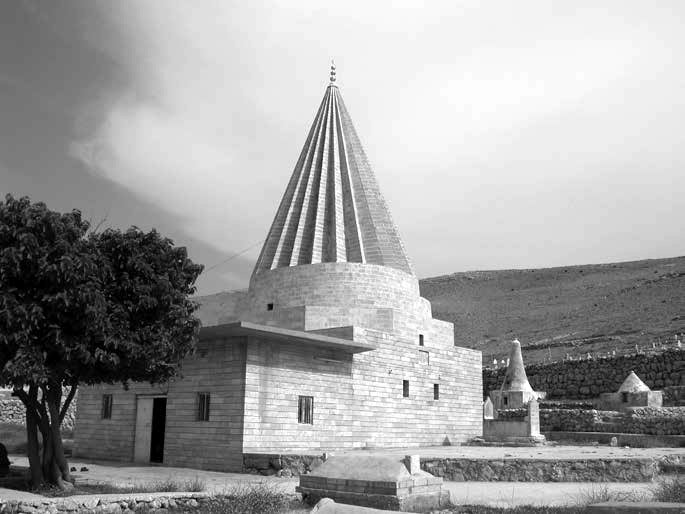
| Ûsifa | Ossofa, Usifa | Pulo | picturesquely situated on the edge of a deep gorge with caves; on the rocks above it two Ziyaret with white ribbed conical roofs |
| Eldîna | Aldina | Murad | below it a Ziyaret with a huge wall; in the plain the tomb of Qewal Huseyn |
| Nogray, Ameera | Nogray, Ameera | – | visited |
| Semoka, Jafri | Semoka, Jafri | – | the two other larger villages, not visited |
Between Mîrkan and the northern side, on the pass in a grove of trees, lay the white conical tomb of a respected Qewal, the father of Qewal Murad from Yûsif’s company; he had died of the plague a few years earlier. The walls were hung with the horns of sheep that pilgrims had sacrificed there.
Peace agreements
- Mîrkan and Bekira: with the support of Qewal Yûsif, Layard persuaded Esso to accompany him to Bekira, with which Mîrkan was at war. The elders of Bekira received the hostile chief without hesitation.
- Ûsifa: according to Layard, Ûsifa was one of the main centers of the unrest and at enmity with its neighbors. In Pulo’s house the chiefs of Mîrkan and Bekira offered peace. In a large assembly the terms were accepted after long deliberation and confirmed by general consent; sheep were slaughtered in celebration.
- Kerranîye and the Bedouins: on the southern side, where the villages likewise lie high up on the slope, Layard camped below the village of Jedaila. The Ezidi chiefs of Kerranîye (the village was also known as Sekkiniye) were in feud with the Bedouins; both sides swore “by Layard’s hospitality” no longer to rob each other.
- The Kerranî tribe: the western part of the mountains was inhabited by the Ezidi Kerranî tribe (Kherraniyah). Its men brought Layard sheep, flour and figs. They were at war with the Bedouins and with the northern side. Layard extracted from them the promise to meet with the other tribes at the next great feast in Lalîş and in future to leave disputes to the decision of Mîr Huseyn Beg, Şêx Nasir and the Qewal instead of taking up arms. In the morning about 100 Ezidi horsemen accompanied him.
On dispute settlement and customary law see Law and custom in Şengal.
Strength against the Şammar
According to Layard, the inhabitants of Şengal were too powerful and independent to pay the Şammar Bedouins Xuwe (“strength money”, a protection payment); the Şammar even feared their Ezidi enemies. Smaller tribes and villages on the edge of the desert, by contrast, had to pay protection money.
The tax farm
On parting it was agreed that Qewal Yûsif should buy the tax farm (Mukhatta) of Şengal at the annual auction, in order to protect the inhabitants from the Ottoman tax collectors; Layard wrote letters of recommendation to the authorities in Mosul for this. Qewal Yûsif did indeed become tax farmer, for hardly more than 350 pounds. According to Layard, the inhabitants were pleased at this concession to one of their own and were encouraged to cultivate their fields and to let the feuds rest.
Language and clothing
The inhabitants of Şengal spoke Êzdîkî; according to Layard, only a few spoke Arabic. Women received the guests unveiled. The men wore shirt, wide trousers and coat entirely in white and a black turban; the shirt was closed up to the neck – according to Layard a mark by which one recognized Ezidis at first glance. In detail: Traditional clothing.
The second visit in May 1850
- On 4 May 1850 Layard passed Xersa (Khersa) at the southern foot; the inhabitants had left the old village and built anew further up the slope.
- In Eldîna the chief Murad was back from captivity. He had married shortly before his capture, and his wife had given birth to a child during his absence. Out of gratitude he brought Layard sheep; at his request Layard helped persuade the inhabitants to pay the dues to the tax collector who happened to be present.
- Şengal was famous for its falcons. In Eldîna the Şammar sheikh Suttum bought young falcons from Ezidis, the largest for five Gazee (according to Layard about one pound), the others for three and a half.
- According to Layard, the inhabitants of the small town of Xetuniye (Khatouniyah), an Arab tribe, had fallen out among themselves; one part joined the Tai near Nusaybin, the other the Ezidis of Kerranîye.
Tribes
Guest names in Şengal, among others, the tribes Mihirkan, Feqîran (to which Hemo Şero belonged), Musqora and Dunbelî; in the 17th century the Sêçalî. The inhabitants of the eastern slopes traditionally wear their hair long in braids. In the mountains, on the summit of Çilmêran, lies a small sanctuary of Şerfedîn, the patron saint of Şengal, where New Year is celebrated.

The 20th century up to 1935
- After 1918 the British installed Hemo Şero as “head of the mountain”; in Beled Sinjar the first school for Ezidi children was established.
- In 1933 the border between Syria and Iraq was drawn in such a way that the whole range came to Iraq.
- In 1935 an Iraqi brigade occupied the mountains after the Ezidis had resisted conscription. See The Ezidis in Iraq 1914–1957.
Landscape according to Lescot (1936)
Roger Lescot describes the mountain range (in the language of the Ezidis Çiyayê Şîngalê) somewhat differently from Guest:
- about 80 km long and 10 km wide, stretching from west to east, some 50 miles west of Mosul; highest peak Çêl Mêra at 1,460 m. Guest gives about 100 km in length.
- To the west adjoins the Cerîba massif (905 m), separated by the Derê Silo gorge, through which ran the only passable track from Xatûnîyê to Balad.
- The northern slope is steep, with valleys and year-round streams (Bara, Çerse, Derê Bîrî) that feed gardens and mills; almost all the villages lay here. On the southern slope the torrents collect in the Nahr Sikêniya.
- On the plateau of Mîhîrkan grow pines, terebinths and holm oaks, in the valleys figs and tobacco, in the plain wheat and barley.
Settlement
- According to Nelida Fuccaro (1999), Ezidis came in two phases: gradually from the 13th to the 17th century, as refugees from the plain of Mosul and from Şêxan, and thereafter in greater numbers under Ottoman rule. In the 15th century there were at least 30 villages with Ezidis; in the 16th century the north was called “Sachlu Dagh” after Ezidi nomads (cf. the Sêçalî in Guest).
- In older times Nestorian Christians lived in the mountains; Beled Sinjar was a bishop’s see. In 1660 Christian notables from Şengal asked the patriarch for priests; this Syriac source mentions Ezidi clerics in Şengal for the first time.
- According to a tradition reproduced by Lescot and Fuccaro, the hero Elîyê Şêr drove out the earlier population. This is a legend.
- On the origin of the individual tribes see The tribes of Şengal according to Lescot.
Population in figures
| Year | Number | Source |
|---|---|---|
| 1830s | 6,200 inhabitants (after the campaign of Hafız Pasha) | British observer, according to Fuccaro |
| 1921 | 20,000 Ezidis (probably including Muslim members of Ezidi tribes) | British estimate, according to Fuccaro |
| 1932 | 28,775 tribesmen, of whom about 17,500 Ezidis | Frontier Commission, according to Fuccaro |
| 1936 | about 23,000 Ezidis | Lescot’s estimate |
| around 1930–1945 | northern Şengal about 10,000 people in 38 villages, almost only Ezidis | Edmonds |
| 1945 | district about 20,000 inhabitants, about half of them Ezidis | Edmonds’ estimate (text) |
| around 1945 | 22,350 Ezidis (north 10,165, south 12,185; south including up to 2,000 converted tribesmen) | Edmonds’ village list |
Edmonds’ complete village list is under Ezidi villages in Şêxan and Şengal in the 1940s.
Beled Sinjar was almost deserted in 1835, had about 2,000 inhabitants in 1903 and 3,840 at the beginning of the 1930s: 1,950 Sunnis, 476 Shiites, 660 Christians and Armenians, 485 Ezidis and 15 Jews. The Ezidis lived on the edge of the town. The villages in the mountainous north were almost purely Ezidi; in the plain in the south Ezidis lived with Muslims and Christians (Fuccaro).
Economy
- The main exports were figs, cotton, wool and meat. Fig trees bear fruit after three to four years and then for 45–50 years; the area around Karsî was almost entirely given over to fig cultivation. The tobacco from Çerse was particularly prized (Fuccaro, Lescot).
- In exchange people obtained sugar, coffee, dates and fabrics, often on credit until the harvest or shearing. Trade went through Balad. The Hebbabat in Balad made pipes of stone and red clay, which they sold to the tribes of the Cezîre (Lescot).
- At the end of the 1920s six of the seven large mills in Beled belonged to Muslim merchants from Mosul; in 1932 they also owned most of the inns, shops and houses (Fuccaro).
- People ate mainly dairy products, vegetables, bulgur (sevar) and in spring truffles; meat was a luxury. Tea and coffee were popular (Lescot).
- On herding contracts, water distribution and customary law see Law and custom in Şengal, on tent and house House and tent.
The mandate period in detail
The period from 1918 to 1936 – Hemo Şero as Hakim, the land dispute over Jaddala, the bombings of 1925, the border question and the uprising against conscription – is described in Şengal under the British Mandate (1918–1936). On the drawing of the border: Guest gives the year 1933; according to Fuccaro, the Frontier Commission submitted its report in October 1932, and the League of Nations awarded all of Şengal to Iraq. On the refugees from Şengal in Syria see Ezidis in Syria.
Şengal 1926–1945 according to Edmonds
The British official C. J. Edmonds, who worked in the Iraqi Ministry of the Interior, often came to Şengal between 1926 and 1945; he also prepared the Iraqi submission in the border dispute with Syria. His account of 1967 describes the events from the perspective of the administration; but he himself criticizes punishments and officials. His disparaging judgments about the inhabitants are not adopted here.
Land and administration
- According to Edmonds, the mountain range consists of the main massif and a lower extension in the west, the Jarîba (in Lescot Cerîba). It projects “like a densely populated peninsula” about 50 miles into the desert.
- To the north the plain slopes down to the depression of Radd, called Gomal by the Ezidis, 20–25 miles away: marshy in winter and spring, an important watering place in summer and autumn. In practice the Radd was regarded as the border; the iron boundary posts set in 1933 had largely been removed by 1945.
- The district (Qada) had two subdistricts, “North” (seat Mamîsê) and “Center/South”.
- The highest point is Şerfedîn’s chapel Çilmêra at about 4,780 feet (some 1,460 m, likewise Lescot). The second highest point is Sinê Kilûb about 18 miles to the west (sin = summit). According to tradition, Noah’s Ark first struck it there; because the summit would not bow, Noah sailed on to the Cûdî.
Tribes
| Area | Main tribes from west to east (according to Edmonds) |
|---|---|
| Northern Şengal | Samoqa, Aldaxî, Feqîran, Haskan, Mala Xalitî (Musqora and Aldin), Bekran, Mahirkan |
| Southern Şengal | Qîran, Feqîran, Çelkan, Korkorka, Hebabat, Mendikan, Mahirkan |
Toward the east on the southern side lived many Babawî (according to Edmonds adherents of a Qizilbaş-Bektaşî movement), some Turkmen and a compact block of Arab villages of the Albu Mutaywit. With the exception of the Feqîran, a small clan and some tent dwellers, the tribes belonged to one of the two confederations Juwana and Xuwêrkî. Juwana men, following a commandment of Şerfedîn, wore long hair, often in thin braids (goşke) on both sides of the face; Xuwêrkî women wore large white turbans, a widow a black one for four to five months.
Beled Şengal
- The small town lies on the slopes of a single hill in a broad gorge. Edmonds estimated about 4,000 inhabitants: half of them Sunni Muslims from Mosul, then Babawî, Christians and Ezidis as well as three Jewish families. Most of the senior officials of the district were Christians. (Fuccaro gives 3,840 inhabitants for the beginning of the 1930s, see above.)
- Two sanctuaries of the town were looked after by Babawî guardians and also venerated by Ezidis: Sitt Zubeyda at the top of the hill – an octagonal stone column (about 6 feet high) that women wishing for children embrace – and P’îr Zakar in the gardens below the town.
Economy and pasture
- The most important activity was sheep breeding. In the mountain villages the Ezidis laid out terraced gardens on the slopes. Wool, hides, dried figs, for which Şengal was famous, and cotton were exported.
- Grazing extended north as far as the Radd and south about as far into the desert of the Cezîre. The westernmost tribe, the Samoqa, lived in tents for three quarters of the year. Arab herders of the Tayy and Jubur from Syria sometimes camped with the Ezidis.
Places in April 1945
On his last visit in April 1945 Edmonds rode westward from the Aldin village of Rašîd on the northern side:
- Rašîd: in the plain near the mouth of the gorge lies the sanctuary of Şerfedîn with a walled precinct, a tall tree, the tower of the main tomb, a smaller tower and three larger buildings; its administrator was Şêx Behrî. Half of the tithe of the roughly twelve villages of the Mala Xalitî goes here.
- Çilmêra: ascent via Wusifan in just over two hours; a small building of rammed earth with a dome instead of a conical tower, an anteroom of dry-stone masonry and an open courtyard. Pieces of plaster that have fallen off are made into Berat, which in Şengal are valued almost as highly as those from Lalîş.
- Further west: terraced, walled vineyards; the hollow of Serê Deştê with cornfields; Bardahlî, a group of seven villages (Feqîran above, Aldaxî below), the highest of which, Kolkan, formerly belonged to the Korkorka – they moved to Gabara on the southern side because of a feud with the Aldaxî.
- Sinûnî (Samoqa): a large village with much agriculture and shallow hand-dug wells; in addition artesian wells, which Edmonds had had drilled on both sides of the mountain; a new police post in Tirbika.
- Through the gorge of Babê Şîlo between the Jarîba and the main massif, where Çelkan lived in caves. A craftsman from these caves made coffee pots and cups of soft stone.
- Near the Qîran village of Mecnûniyya a sanctuary of Şêx E’bd el-Qadir el-Gîlanî; according to the Ezidis his true tomb is here.
- Near the Musqora settlement of Girêzerka lies the tomb of Şêx Rûmî with a group of trees; below the Sinê Kilûb near the village of Jafriyya a chapel of Şêx Şems.
- In the far south Edmonds met Mendikan at the wells of el-Ba’ac, 20 miles from their village of Tell Qesab; Şêx Xidir was camping with the Qîran near Tell Hecer.
Rambûsî 1941
- On 5 September 1941 the Qaimaqam (district head) was killed in the Hebabat village of Rambûsî in southern Şengal. The Mutesarrif of Mosul reported an uprising. A cavalry regiment immediately advanced to Beled Şengal; within hours the Şammar and other Arab tribes moved to the mountain “in aid of the government” and plundered several Ezidi villages, including Guhbal.
- Edmonds investigated the case with Interior Minister Mustafa el-Umarî. Throughout the summer the police had repeatedly raided villages and arrested headmen. On the day in question the Qaimaqam had attacked Rambûsî at dawn with four armored cars; according to the Ezidis he himself opened fire with a machine gun. Edmonds came to the conclusion that it was not premeditated murder.
- Negotiations took place for a week in Barana, in the house of Dawûdê Dawûd, with Xudêda, Şêx Xelef, Şêx Xidir, Dawûd and two Hebabat headmen. At the same time there were public demands in Mosul “to solve the Ezidi problem once and for all”.
- Result: the Hebabat paid a fine of 1,500 pounds for three dead and cut telegraph lines; the other tribes helped with loans. The remaining disputes between tribes were settled according to the tribal dispute rules (Tribal Criminal and Civil Disputes Regulations). The troops withdrew after the first of three installments. In October 1941 the Mutesarrif was transferred; after that it was quiet for three years.
- According to Edmonds, as early as 1881 an Ottoman Qaimaqam had been killed under similar circumstances, at that time by Mahirkan of Îsa Axa.
The murder of Xudêda in 1944
In the summer of 1944 Xudêda, son of Hemo Şero and leader of the Feqîran group Êl Hemo, was murdered by a rival group of the Feqîran, the Êl Cindo – according to Edmonds a breach of the code of the Feqîr, who were regarded as inviolable. Retaliation and mutual raids by the allied tribes followed. Dawûdê Dawûd, Şêx Xelef and Şêx Xidir had to live outside the Liwa of Mosul, Xelef and Xidir in Ramadi. In spring 1945 they were sent back to Mosul to settle their cases according to the tribal rules; the murder cases of the Feqîran were still open when Edmonds left in 1945.
Peace settlement with blood money (1945)
After mutual raids by the Haskan and Aldaxî (1944/45), according to Edmonds, peace was concluded as follows:
- Blood money: 52 pounds per dead person – an amount fixed by tradition for a long time.
- All booty was returned; for missing animals 2–9 pounds were paid depending on kind and age, for a good rifle 75 pounds (the market price).
- Six mediators – among them P’îr Derwêş Micêwir, Dawûd’s son Emer and a son of Hemo Şero – led the two main leaders (for the Haskan, Şêx Xelef) into the village in which the Qewal with the Sencaq of Şengal happened to be.
- The Qewal gave each side a Berat from Lalîş. The sides exchanged them and swore that all claims had been settled and the enmity buried.
- Finally each side ate as guests in the village of the other.
Petitioners during Edmonds’ visit in 1945 included Xudêda’s eldest brother Derwêş and Amşa, the mother of three Aldaxî who had been killed in a raid by the Haskan. On dispute settlement in general see Law and custom in Şengal.
Discrepancies
- Length of the mountain range: about 100 km (Guest), 80 km (Lescot), “about 50 miles” into the desert (Edmonds).
- Inhabitants of Beled: about 4,000 (Edmonds, 1940s); 3,840 at the beginning of the 1930s (Fuccaro).
- Number of Ezidis in 1945: 22,350 according to Edmonds’ village list, but only about 10,000 according to his estimate for the district (half of 20,000) – Edmonds explains the difference in part by converts who are counted in the tribal lists.
Şengal in 1846 according to Layard
Layard came to Şengal in October 1846 with the army of Tayyar Pasha (on the campaign see Campaigns 1836–1847). He describes:
- Villages and houses: all the villages were built according to the same plan: houses on the slopes, surrounded by terraces of piled-up stones with olive and fig trees, vineyards near some villages. The houses had flat roofs and often several rooms and were very clean; the white interior walls were full of small niches for household goods and decorated with red and black spots of color (see House and tent). In Mîrkan the white houses stood one above the other on the slope.
- Economy: the most important and almost the only trade good was dried figs, which were famous in all the markets of the neighboring provinces; they were also sold at the feast in Lalîş in 1846. The soil was fertile, but the land had been so impoverished by misrule that hardly enough grain was grown for people’s own needs.
- Beled Sinjar: seat of the district governor near a small mud castle on the ruin mound; about 200 families. Unlike in the other villages, Ezidis and Muslims lived mixed together here; they hardly differed in clothing.
- According to Layard, only one European, Dr. Forbes, had visited Şengal before him.
The villages in Şêx Nasir’s letter (1846)
For the journey Şêx Nasir gave Layard a letter of recommendation to the heads of the villages; it was delivered by Qewal Murad. Layard translates it in full. The places and persons greeted (Layard’s spelling in brackets; the assignment to present-day names is partly uncertain):
| Place or tribe | Persons named |
|---|---|
| Bekira (Bukrah) | Îso Osso (Esau Osso), Ghurah, Hesen the Feqîr |
| Mîrkan (Mirkan) | Elî, Xalto, Dawud son of Evdil |
| Ûsifa (Osafah) | Kolow, Şêx Elî |
| Dîna tribe (Deenah) | Murad |
| Emra (Amrah) | Turkartou, Qasim Axa |
| Smoqiya (As-smookeeyah) and Qîranî (Al-Keraneeah) | – |
| Koulkah | Feqîr Rizo |
| Town of Sinjar and the mountains | all the inhabitants |
The letter is one of the earliest lists of villages and village heads of Şengal. On Bekira and Mîrkan four years later see above (Layard’s journey of 1850).
Additions according to Drower (1941) and Tezcür (ed., 2021)
- Sanctuaries: in 1940 Drower heard of the sanctuary of Şêx Ebû l-Qasim in Şengal (whoever abstains from meat there for seven days will have a wish fulfilled) and of a holy spring without a tree called Pira Hayî.
- School: in 1940 there was already an Ezidi teacher in Şengal, a brother of her informant Reşîd from Başîqa.
- Banishment: families of the Şêx line Şêx Sicadîn had been banished from Şengal to Başîqa after the resistance to conscription (1935) (Drower).
- Trade in the 17th century: according to Evliya Çelebi, grapes, honey and raisins from Şengal were sought after in the markets of Baghdad, Basra and al-Hasa (according to Kerborani) – see The Ezidis in the 16th and 17th centuries.
- Uprisings: from 1925 to 1935 Ezidis under Dawûdê Dawûd and Hemo Şero rose up against the settlement of Arab tribes and for the return of Ezidi land. In March 1966 there followed an uprising under Seydo Hemo Şero, head of the Feqîran, and Murad Atto, head of the Hebabat, likewise against the settlement of Arab tribes (Majid Hassan Ali).
- Collective settlements: under the Ba‘th government the mountain villages were destroyed and the inhabitants resettled in eleven collective settlements (mujamma‘at) in the plain, surrounded by favored Arab villages (Tezcür et al.). Most Şengalî had possessed no land titles for their land since Ottoman times. Formerly many lived from livestock breeding on the mountain and from truck transport (Ayhan).
- After 2003: the district received its first Ezidi district governor (Qaimaqam). In the elections of December 2005 the list of the Kurdish Alliance received 44,224 votes (about 60%), the Ezidi Movement for Reform and Progress 17,055 (about 22%); in January 2009 the Kurdish Alliance received 101,606 (about 78%), two Ezidi parties together 7,787 (about 6%). Because of the sharply increased number of voters there were allegations of electoral fraud (Tezcür et al.).
- Population before 2014: according to UN-Habitat (2015), the Şengal district had 339,000 inhabitants, of whom about 74% were Ezidis.
- Language: according to Ayhan, the Şengalî speak with a clearly recognizable accent of their own; as a regional self-designation Ali gives Şingalî.
Şengal in the 6th-grade schoolbook
The Ezidi 6th-grade schoolbook (T’amoyan et al., 2014) describes the mountain and its sanctuaries as follows:
- Dimensions: length about 96 km, width about 20 km, height up to 1,900 m. The Ezidi area of settlement, it says, extends about 80 km on both sides of the mountain and covers about 10,000 km². The height given is considerably above that of Edmonds and Lescot for Çilmêra (about 1,460 m, see above); the sources contradict each other.
- Cultivation: orchards and tobacco; the water of the K’êrs valley and of the Sûlax river irrigates date, pomegranate and fig gardens.
- Refuge: according to the book, many inhabitants descended from refugees from the north and west who saved themselves on the mountain from the Ferman.
- Sanctuaries: Çil mêra on the summit, according to the book once the meeting place of the religious leadership; Şêbilqasim at the entrance to the K’êrs valley, where Feqîr and Qewal live; Amadîn opposite Sûlax; Şerfedîn opposite Gobel with a three-day feast (cimh’a Şerfedîn); in addition the conical buildings (qub) of Sicadîn and Êzî.
- Şerfedîn: citing John S. Guest, the book states that Şerfedîn fell in 1259 as the leader of a tribe from Hakkari in the fight against the Mongol Hülegü (between the Ç’e’vr’eş mountains and the K’emax gorge near Erzincan); this is why he is venerated as a defender of the faith. The passage in Guest has not been checked here.
Sources
- Qader Saleem Shammo: From Fatwā to Genocide. Historic and Contemporary Manifestations of the Islamic Genocide against the Yezidis (Yezidi Studies 5). Berlin 2026, p. 307 (ill.)
- E’zîzê E’mer, H’esenê Şêx-Me’mûdê: E’debyet û zimanê êzdîkî, grade 6. Yerevan: Spîka 2014, p. p-063–065
- Birgül Açıkyıldız: The Yezidis. The History of a Community, Culture and Religion. London 2010, p. illustrations
- International Journal of Yezidi Studies, Vol. 1. Tbilisi 2024, p. 95 (map)
- A. V. Perminov: Езиды – древний народ Адаби (The Ezidis – the ancient people Adabi). Sharya 2016, p. 62–66, 73–74
- John S. Guest: The Yezidis. A Study in Survival. London/New York 1987, p. 16–17, 20–21, 64–66, 71–78, 89, 111, 166–172, 187, 224–227
- Roger Lescot: Enquête sur les Yezidis de Syrie et du Djebel Sindjār (Study of the Ezidis of Syria and of the Şengal mountains). Beirut 1938, p. 131–147, 185–188
- Nelida Fuccaro: The Other Kurds. Yazidis in Colonial Iraq. London 1999, p. 45–48, 51, 70–78
- Austen Henry Layard: Discoveries among the Ruins of Nineveh and Babylon (abridged edition). New York 1853, p. 198–221, 270, 276–277
- C. J. Edmonds: A Pilgrimage to Lalish. London (Royal Asiatic Society) 1967, p. p-016–017, p-059, p-071–090, p-099–101
- Austen Henry Layard: Nineveh and Its Remains, Vol. 1. London 1849, p. pp. 307–308, 315, 321–323 (PDF 360–361, 370, 376–378)
- E. S. Drower: Peacock Angel. Being some Account of Votaries of a Secret Cult and their Sanctuaries. London 1941, p. pp. 3, 14, 28, 41, 50 (PDF 14, 24, 41, 56, 67)
- Güneş Murat Tezcür (ed.): Kurds and Yezidis in the Middle East. Shifting Identities, Borders, and the Experience of Minority Communities. London: I.B. Tauris 2021, p. 46–49 (Ali), 83–84, 93 (Tezcür et al.), 106 (Kerborani), 169–173 (Ayhan)
Found a mistake?
Is something wrong – a fact, a spelling, a source, an image? Let us know: we check every report and correct the article.
Other spellings: Sengal · Schengal · Shengal · Sindsdschhar · Sindsjhar · Ciyaye Sengale · Tschiyaye Schengale · Chiyaye Shengale · Ciyay Sengale · Shingal · Singal · Mossul · Mûsil · Shekhan · Scheichan · Shaikhan · Sheikh · Scheich · Shex · Firman