
In the years after the massacre of 1832, the Ottoman Empire restored its rule over the semi-autonomous Kurdish principalities in northern Mesopotamia. For the Ezidis this meant a series of campaigns: Ottoman commanders marched against Şengal and Şêxan to collect taxes and subdue the mountains; Kurdish princes such as Bedirxan Beg additionally persecuted the Ezidis. The account follows John S. Guest, who relies above all on reports by British eyewitnesses.
Reşid Pasha: Cizre and Şengal (1836)
In the spring of 1836, the Ottoman commander Reşid Pasha bombarded the town of Cizre (Jezira ibn Omar) for months. Afterwards the town lay in ruins; its largely Ezidi population was massacred or enslaved. On the way back Reşid Pasha attacked the Ezidis of Şengal and inflicted heavy losses on them. Already in 1834/35 Mîrza Axa of Redwan had submitted to him. In the 1830s Ezidis fled from Reşid Pasha across the border into Russia.
Hafız Pasha against Şengal (1837)
At that time the Ezidis of Şengal regularly raided caravans; around 1830 two Britons lost their lives in a raid near Tel Kocher, among them James Taylor, the brother of the British Resident in Baghdad. Among other things, the mountain dwellers seized a shipment of military uniforms.
- In the spring and summer of 1837, Hafız Pasha advanced against Şengal from the west; troops from Mosul under İnce Bayraktar stormed Tel Afar – the trading point for the booty from the mountains – and came from the east.
- The Mihirkan tribe resisted and took the non-combatants into caves. Fighting went on for three months, with heavy losses on both sides.
- When the ammunition ran out, the Ezidi leader Lalu surrendered unconditionally. From a single cave came 516 people.
- The victors seized the uniforms, 20 courier saddles and 30,000 sheep. Captured women were sold at the slave market of Mardin.
- The Ezidis were allowed to remain on the mountain and keep their religion, their law and their customs, but were entered in the tax registers. A garrison was stationed in Nisibin.
After the death of Reşid Pasha (1837), Hafız Pasha lured Mîrza Axa of Redwan to him and had him executed.
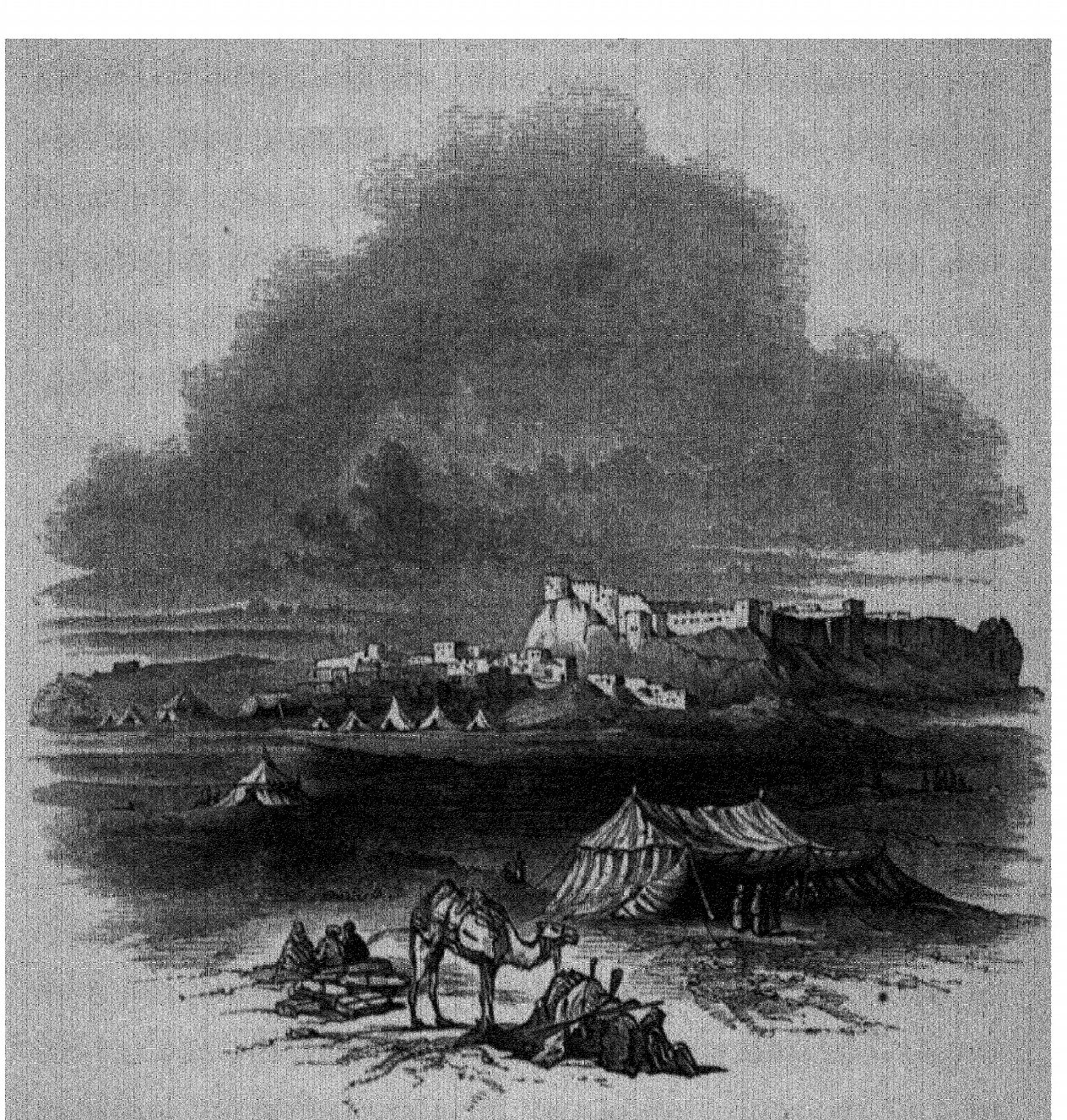
İnce Bayraktar against Şengal (1842)
In 1842 the principality of Amadiya was dissolved; Şêxan was now directly subordinate to the governor of Mosul, Mehmed Pasha İnce Bayraktar. At the end of 1842 he marched against the Ezidis of Şengal, who were in arrears with their taxes. An Ezidi delegation that came with peace offerings was slaughtered. The head of their chief and 60 pairs of ears were hung up at the river gate of Mosul.
Bedirxan Beg of Botan (1840s)
Bedirxan Beg, Kurdish emir of Cizre and Botan, persecuted the Ezidis, who were without protection under Islamic law, particularly harshly. According to the British vice-consul Christian Rassam, he had Ezidis rounded up for the Feast of Sacrifice; whoever rejected Islam was killed, whoever remained silent out of fear was regarded as converted and came into his household. In 1846 a mission doctor saw 40–50 forcibly converted Ezidis in his castle Derguleh. At the slave market, captured Christian women and children were falsely passed off as Ezidis.
By order of the Kurdish emir of Bitlis, moreover, Ezidi Qewal (reciters) who were bringing donations from the communities were murdered and robbed.
In 1847 Ottoman troops, with the help of an Ezidi contingent, defeated Bedirxan Beg’s allies at Tilleh on the Tigris; in July 1847 Bedirxan Beg capitulated and was exiled to Crete.
Kiritli Oğlu Mehmed Pasha (1845)
- In 1845 the new governor of Mosul, Kiritli Oğlu Mehmed Pasha, marched against Şengal. Men of the Mihirkan tribe were lured into the Ottoman camp and beheaded, women and children enslaved. About 400 donkeys, 10,000 sheep, cattle and many tents were seized.
- Afterwards Christian Rassam estimated that only 11 villages with about 1,500 men able to bear arms remained on the mountain.
- In mid-1845 the pasha demanded higher taxes from Şêxan. Soldiers arrested a man whom they took for the Baba Şêx Şêx Nasir. In fact his deputy P’îr Sino had let himself be arrested and tortured in his place without betraying the deception. Rassam bought his release – see Şêx Nasir.
Tayyar Pasha against Mihirkan (1846)
On October 8, 1846, Tayyar Pasha marched to Şengal, officially to examine the taxes; the British researcher Austen Henry Layard accompanied him.
- All the tribes except the Mihirkan sent delegations; the tax was halved.
- The Mihirkan under their chief Îsa Axa fired on a reconnaissance party; two soldiers died.
- The village of Mihirkan was stormed and set on fire. Fighting went on for three days; the defenders escaped into caves.
- Afterwards the army plundered Ezidi and Arab villages on the way to Mardin.
Consequences
The campaigns decimated the Ezidis of Şengal and Şêxan. With the help of British intermediaries, the Ezidi leaders obtained a decree in 1849 which, among other things, prohibited the sale of their children as slaves – see The Mîrs of Şêxan 1832–1913.
Divergent information
The chronicle according to Perminov (Ferman in the Ottoman period) records for 1838 campaigns “of the governor of Diyarbakır and Tayyar Pasha of Mosul” against Şengal, during which the Ezidis withdrew into caves. In Guest, the corresponding events fall in the years 1837 (Hafız Pasha, commander in Diyarbakır) and 1846 (Tayyar Pasha). Possibly two campaigns are combined in the chronicle.
Additions according to Shammo (2026)
Qader Saleem Shammo (Berlin 2026) supplements Guest’s account with further eyewitnesses and sources:
- Caves in Şengal (1836/1837): During the campaigns of Reşid Pasha and Hafız Pasha, Ezidis who had taken refuge in caves suffocated in the smoke of fires in front of the entrances or were fired on with cannons. According to Shammo, the sources mix up the two campaigns.
- Enslavement in 1837: During Hafız Pasha’s campaign, according to Forbes and Parry, thousands of women and girls were captured and sold in Mosul and its surroundings; according to Guest they cost 4.50 to 30 dollars at the slave market of Mardin.
- Moltke in 1838: In May 1838 the Prussian officer Helmuth von Moltke, then adviser to the Ottoman army, stayed in Cizre. He reports that after Reşid Pasha’s campaign almost all Ezidi men had been killed and women and children led into slavery – solely because of their religion.
- Reclus in 1838: According to the French geographer Élisée Reclus, women were sold into slavery in Şengal in 1838; since then the Ezidis of Şengal had no longer possessed political independence.
- A stolen Sencaq: According to the British author Empson (1928), Reşid Pasha in 1837 stole a peacock-shaped Sencaq, which was sold through an antiques dealer in Baghdad.
- Fatwa of 1842: In the same year as İnce Bayraktar’s campaign, the mufti of Mardin, Abd as-Salam al-Mardini, wrote in his history of Mardin a fatwa that declared the blood and property of the Ezidis permitted to the sultan until they repented (see Fatwas against the Ezidis). A direct connection with the campaign is not documented.
- Bedirxan Beg in 1844: Bedirxan Beg attacked Ezidi villages in the Tur Abdin and enforced conversions; whoever refused was killed. According to the missionary Thomas Laurie, he left the Ezidis “no choice but the Koran or the sword”. Ezidi children were captured and sold in the towns of the region (according to Layard and Badger).
- 1845: Shammo confirms Kiritli Oğlu Mehmed Pasha’s campaign against Şengal with the abduction of women and children.
- Tayyar Pasha in 1846: According to Shammo, on the campaign against Şengal Tayyar Pasha carried with him the fatwa of the Şeyhülislam Abu s-Suud (16th c.), which declared war against the Ezidis permitted.
An overview of all known abductions is provided by the article Abduction and enslavement of Ezidis.
Additions according to Layard (eyewitness account, 1849)
In the first volume of Nineveh and Its Remains (London 1849), Austen Henry Layard describes the situation of 1846 from his own observation. He was well disposed toward the Ezidis, but uses disparaging external designations and interprets their religion speculatively; only his observations and the facts he names are adopted here.
Slave hunts as a source of income
- According to Layard, the Ezidis had long been persecuted because they were not regarded as “People of the Book”. The governors of the provinces undertook annual campaigns against them: men and women were killed, children of both sexes carried off and offered for sale in the large towns.
- According to Layard, these hunts were a source of income of the Kurdish emir Bedirxan Beg of Botan. The pashas of Baghdad and Mosul set irregular troops loose on the Ezidis in order to settle arrears of pay with the booty. According to Layard, the system existed until a few months before he wrote (1848).
- According to Layard, Şengal had been subdued twice, by Mehmed Reşid Pasha and by Hafız Pasha, both times with massacres. Ezidis who had fled into caves suffocated in the smoke of fires in front of the entrances or were fired on with cannons. Layard estimates that the population of the mountains declined as a result by about three quarters.
Kiritli Oğlu Mehmed Pasha and Şêxan (1845)
Layard confirms that Mehmed Pasha had Şêx Nasir’s deputy taken prisoner and tortured and that the British vice-consul Rassam paid a large sum for him. He adds: the inhabitants of Şêxan punctually repaid Rassam the money from the yield of their fields.
Tel Afar
The town of Tel Afar on the edge of Şengal had formerly been almost independent, with its own hereditary chief, and cooperated with Bedouins and the Ezidis of Şengal in raids on caravans. According to Layard, it was besieged three times – by Elî Pasha of Baghdad, by Hafız Pasha and by İnce Bayraktar Mehmed Pasha. When it was stormed by Mehmed Pasha, more than two thirds of the inhabitants were killed. According to Layard the inhabitants were of Turkmen origin.
Tayyar Pasha’s campaign and the fight for Mîrkan (1846)
- Before the campaign, a delegation from Şengal had been in Mosul and had asked for a reduction of taxes. Tayyar Pasha set out on October 8, 1846; according to Layard without hostile intent, to inspect the land laid waste by his predecessor. On the way the troops plundered Tel Afar against the pasha’s prohibition.
- At the southern end of the mountains all the chiefs received the pasha – except those of the small district of Mîrkan (in Guest Mihirkan). Its inhabitants had experienced extortion and executions under Mehmed Pasha and expected the same treatment; they declared that they would defend their village.
- The pasha sent an officer of his household with a few irregulars up to reassure them; Layard rode along. On entering, shots were fired; two horsemen who had ridden ahead fell dead to the ground, several were wounded.
- Thereupon the pasha had the irregular troops (Hayta) and Arab irregulars advance. The inhabitants had already left the village and withdrawn into a narrow gorge with caves. The troops plundered the houses. Old men and women who had been too weak to flee were murdered and beheaded, and the village burned down; the pasha himself helped to set fires. In the evening the heads were displayed around the camp, and the soldiers demanded rewards. Layard prevailed upon the pasha to have them buried.
- The Ezidis successfully defended the gorge for three days against all attacks; the troops suffered heavy losses. On the second day, right at the beginning, the two companions of a leader of the irregulars, Osman Axa from Lazistan, fell. On the third day the pasha himself sat down in the gorge to spur on his men.
- The qadi of the army camp encouraged the fighters with the promise of paradise. Asked by the pasha, he declared that an oath sworn to the Ezidis was not binding; one might, indeed must, kill them even after a surrender in good faith. The pasha afterwards distanced himself from this teaching toward Layard. Layard describes the qadi as of half Kurdish, half Arab origin (see Fatwas against the Ezidis).
- In the third night the Ezidis escaped by a path known only to them. In the morning the soldiers found the caves empty. In them lay small figures of people and goats made of dried figs on sticks; the soldiers carried them in triumph through the camp as alleged “idols”, and the pasha sent them by express messenger to Istanbul. Dried figs were the most important trade good of Şengal; according to Guest, in 1850 in Şengal Layard received figs shaped into figures and strung together as a guest gift.
- While the camp remained at Mîrkan, Layard visited Beled Sinjar (see Şengal).
Discrepancies between Layard and Guest
| Point | Guest (above) | Layard (eyewitness) |
|---|---|---|
| Leader of Mîrkan | chief Îsa Axa | names no name |
| The first dead | two soldiers of a reconnaissance party | two horsemen from the escort of the officer with whom Layard rode |
| Outcome | the defenders escaped into caves | the inhabitants had already withdrawn into the caves before the entry and escaped after three days of fighting at night by a secret path |
| Tax | the tax was halved | mentions only the request for a reduction before the campaign |
The duration of three days agrees. Layard does not name Îsa Axa in 1846; Guest also knows Îsa Axa as chief of the Mihirkan from Layard’s second journey in 1850 (according to Guest, Îsa Axa was the grandfather of the later Mihirkan chief Dawûdê Dawûd). In a letter from Şêx Nasir of the same year, Layard gives for Mîrkan the names Elî, Xalto and Dawud, son of Evdil (see The festival in Lalîş 1846). It remains open whether one of them is to be identified with Îsa Axa.
The murdered envoys and the “two horsemen” of 1846
Above it says that by order of the emir of Bitlis Ezidi Qewal were murdered. Layard reports on this: the Ezidis of Şêxan had earlier sent a delegation to their fellow believers in Russian territory to ask for money for the clergy and the repair of the tomb of Şêx Adî; the envoys fell into the hands of the chief of Bitlis and were murdered. In the summer of 1846, in Bacidrê, two horsemen returned from a new journey there, with torn clothes but with a large donation. Layard calls them only “two horsemen”; that they were Qewal is stated thus in other articles of this encyclopedia (according to Guest), not in Layard. The question remains open.
Sources
- John S. Guest: The Yezidis. A Study in Survival. London/New York 1987, p. 81, 87–90, 96, 103, 110–111, 115–116
- Qader Saleem Shammo: From Fatwā to Genocide. Historic and Contemporary Manifestations of the Islamic Genocide against the Yezidis (Yezidi Studies 5). Berlin 2026, p. 54, 70–71, 98–99, 156, 172–173
- Austen Henry Layard: Nineveh and Its Remains, Vol. 1. London 1849, p. p. 270–271, 276–279, 309–321 (PDF 323–332, 362–376)
Found a mistake?
Is something wrong – a fact, a spelling, a source, an image? Let us know: we check every report and correct the article.
Other spellings: Resid Pascha · Reschid Pasdschha · Reshid Pasjha · Hafız Pasdschha · Hafız Pasjha · Ince Bayraktar · Indsche Bayraktar · Inje Bayraktar · Inc Bayraktar · Bedirxan Bek · Bedirxan Bey · Bedirchan Beg · Bedirchan Bek · Tayyar Pasdschha · Tayyar Pasjha · Sindschar · Shingal · Shengal · Singal · Shekhan