
Tawûsî Melek – literally "Angel-Peacock" – is the most important holy figure of the Ezidis after God himself. He is the head of the seven angels, to whom God handed over the governance of the world after the creation (Omarkhali 2023, pp. 23, 102). Omarkhali calls him the "lord of this world" (p. 22). His sign is the peacock. Tawûsî Melek is not an evil being – in the Ezidi faith there is no adversary of God (p. 23, n. 31).
The name
Melek means "angel", tawûs "peacock". Correctly translated, the name means "Angel-Peacock", not "Peacock King" (Omarkhali 2005, pp. 50–51). Other spellings are Melekî Tawis, Tawisî Melek or Melekî Tawus.
Head of the angels
According to tradition, even before this world God created seven divine beings and made Tawûsî Melek their head (Omarkhali 2023, pp. 23, 102). The Lalîş photo book describes him as created before everything else, as the "lord of the angels" (serwerê melekan) and as the "angel of sun and shadow": he embodies light and darkness, because everything happens according to God's will (Grigoriev et al. 2008, pp. 4–5). A Qewl line calls him leader and ruler, the primordial angel who knows how much earth, water, wind, fire and stone the world contains (p. 87).
Hesenê Şêx Kelaşê writes: "Melekî Tawis is our angel" (Hesenyan 1995, p. 3). According to Omarkhali (2005), the declaration of faith says: "Siltan Êzîd is my lord, Tawûsî Melek my testimony and faith" (Omarkhali 2005, p. 48).
In the creation narrative he appears in several roles: as one of the two birds on the world tree (Kreyenbroek/Rashow 2005, p. 29); in one version he fetches the earth for Adam's body (Omarkhali 2023, pp. 112–114); in a folk narrative he creates an opening in Adam's body (Kreyenbroek/Rashow 2005, pp. 30–31). According to a Qewl, the eternal paradise belongs to Tawûsî Melek (p. 27).
Hardly named in the hymns
In the learned hymns the name Tawûsî Melek is mentioned much less often than in folk narratives; the hymns mostly only allude to him (Kreyenbroek/Rashow 2005, p. 31, n. 34; p. 49, n. 31). He is often hidden behind epithets such as "the prince" (Mîr) (p. 26). The epithet Melek Fexredîn can likewise mean Tawûsî Melek (Omarkhali 2023, p. 71). The expert Feqîr Hecî said: "Melkê Fexir is Tawûsî Melek" (Omarkhali, article, pp. 150–151). In one song, according to a commentary, Tawûsî Melek is called Enqer, a bird (p. 194).
The Qewlê Tawûsî Melek (also Du’aya Tawûsî Melek) is not a prayer to Tawûsî Melek, but his own praise of God; before the performance, those who know tell how Tawûsî Melek himself spoke it. Because many researchers misunderstood the title, they gave him epithets that do not belong to him – this has distorted his image (Omarkhali 2023, p. 90, n. 133; pp. 482–483).
The peacock and the Sencaq
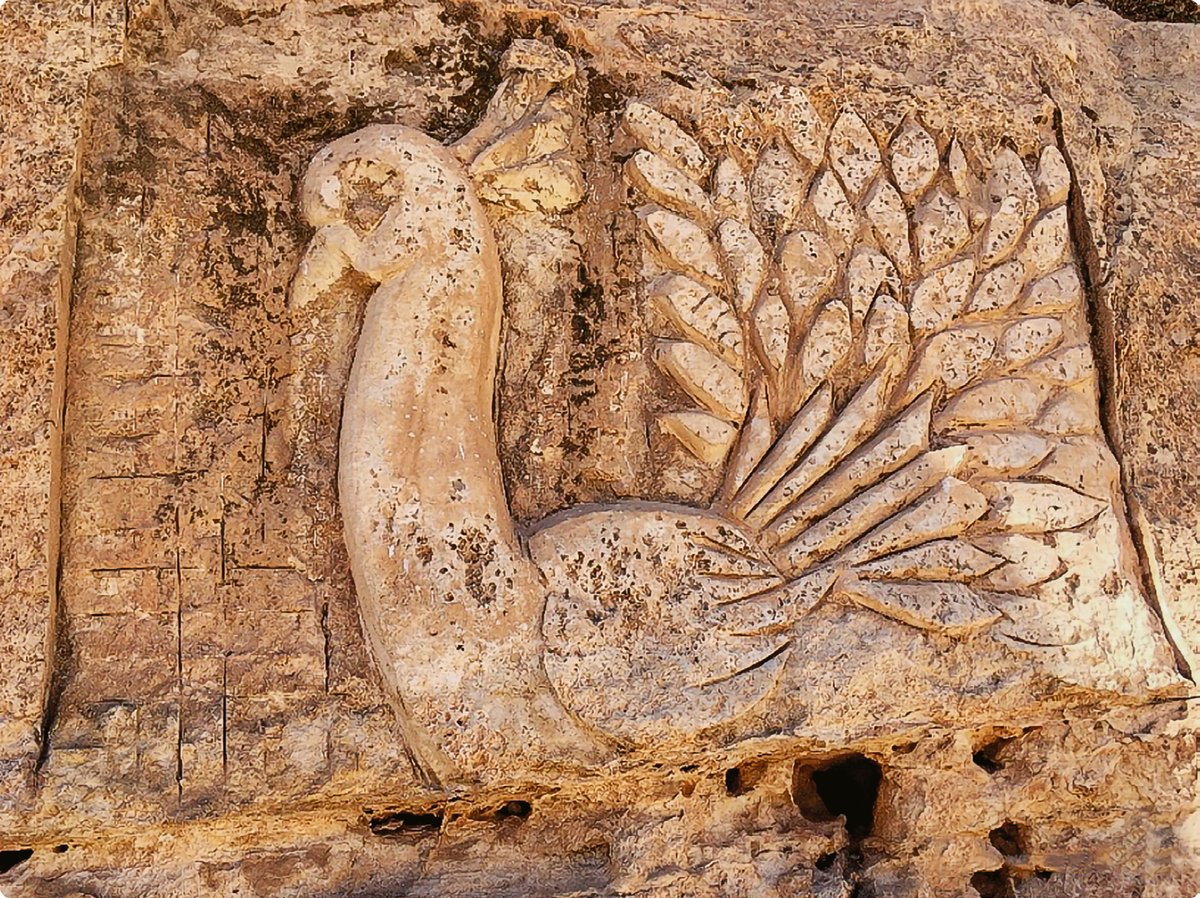
The sign of Tawûsî Melek is the peacock (Kreyenbroek/Rashow 2005, p. 38). He is depicted as a peacock, more rarely as a rooster (Omarkhali 2005, pp. 50–51). The holiest image is the Sencaq (also Tawûs): a metal peacock figure on a stand (Pirbari 2016, p-255; ill. p-071). The Qewal, the performers of the sacred hymns, traveled through the villages with the Sencaq – the Tawûs gêran ("carrying the peacock around"). They opened the image, performed hymns, taught and collected gifts for Lalîş (Omarkhali 2023, pp. 137–138). The figure is regarded as a sign of the unity of the Ezidis (Pirbari 2016, p-255). More on this under Sencaq and Tawûs.
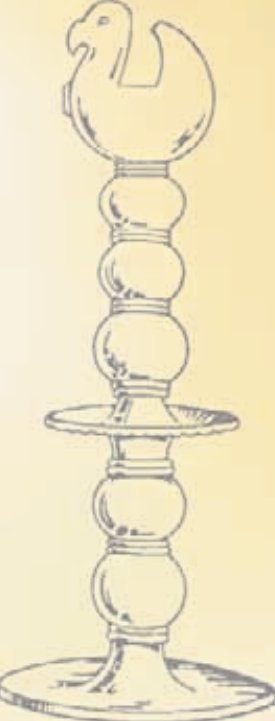
According to the Lalîş photo book, the peacock is a symbol of the angels, especially of Tawûsî Melek, and of the diversity of the world. The authors interpret two peacocks facing each other at a tree as a sign of the holy trinity (Grigoriev et al. 2008, p. 183).
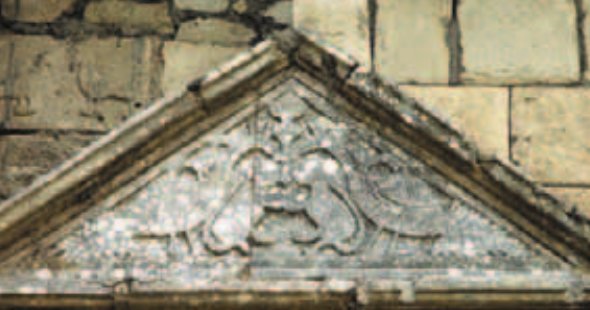
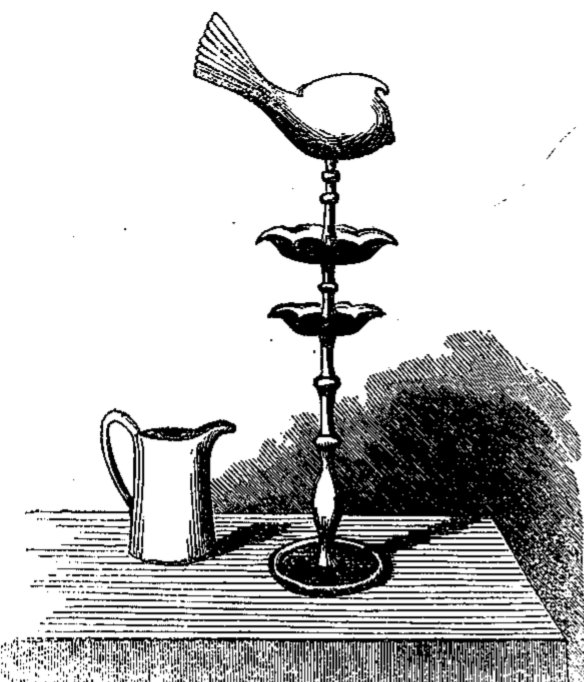
The Mîr, the secular and religious head of the Ezidis, is regarded as the earthly representative of Tawûsî Melek and Şêx Adî (Kreyenbroek/Rashow 2005, pp. 9–10).
Festival and holy day
The New Year festival Serê Salê on the first Wednesday in April (according to the eastern calendar) is also called Cejna Tawûsî Melek or Çarşema Sor (Omarkhali 2023, p. 25). When the holy fire is lit in Lalîş, people call out: "Hole hola Siltan Êzdî ye, hola Tawisî Melek e!" (Grigoriev et al. 2008, p. 24). See Çarşema Sor.
Differing traditions
Is Tawûsî Melek a manifestation of God or a created angel? - According to Pirbari, Tawûsî Melek is a form of manifestation of God: when God appeared to the angels as their head, they called him Tawûsî Melek (Pirbari 2016, p-041, p-257). Tawûsî Melek, Siltan Êzîd and Şêx Adî, he says, are one (p-052). - The Lalîş photo book also speaks of a holy trinity of Şêx Adî, Tawûsî Melek and Siltan Êzîd; in Şêx Adî the Ezidis saw Tawûsî Melek "in form" (Grigoriev et al. 2008, p. 6). A Qewl says that the three are one (Kreyenbroek/Rashow 2005, p. 392). - According to Omarkhali, he is the first of the seven beings created by God (Omarkhali 2023, pp. 23, 102). - According to Şêx Mak’sîm, Tawûsî Melek is a created archangel, not equal to God; he bows before God (Şêx Mak’sîm 2017, PDF pp. 114–123). He is, he says, identical with Amîn Cibraîl, the first archangel, created on a Wednesday "before all eras"; the Gabriel of other religions is a form of the same archangel (PDF pp. 7–10, 18, 47, 70). He does not belong to the Seven; his day is Wednesday (PDF p. 46). Perminov reproduces the same teaching (Perminov 2016, pp. 83–85).
The narrative of the bow before Adam - According to a tradition that Omarkhali (2005) calls the main version, Tawûsî Melek refused to bow before Adam – out of loyalty to the Creator, before whom alone one should bow (Omarkhali 2005, pp. 50–51; Tagay/Ortaç 2016, pp. 57, 60). - In the hymns and narratives on the creation of Adam discussed by Kreyenbroek and Omarkhali (2023), this scene does not occur; there the seven angels help to bring Adam to life (Kreyenbroek/Rashow 2005, p. 30; Omarkhali 2023, pp. 116–119).
Tawûsî Melek and the name Azazîl - Some, mainly Western, accounts equate Tawûsî Melek with an angel named Azazîl (thus Guest 1987, pp. 47–48). Opponents of the Ezidis turned this into the accusation that Tawûsî Melek is a fallen angel (Tagay/Ortaç 2016, p. 61). - Pirbari names Ezazîl as a separate one of the seven highest angels – not as Tawûsî Melek (Pirbari 2016, p-041). See The seven angels. - According to Şêx Mak’sîm, the equation of Tawûsî Melek with Azazîl is "probably the greatest false doctrine"; it has done enormous harm to the people and the religion. In Şerfedîn there is no fallen angel (Şêx Mak’sîm 2017, PDF pp. 129, 138). He writes the name only with an asterisk. - According to the Lalîş photo book, it is a great sin to call an angel of God "fallen" (Grigoriev et al. 2008, pp. 6–7). Lescot's informants described Tawûsî Melek in 1936 as the mightiest and best angel (Lescot 1938, pp. 48–49).
May Tawûsî Melek be depicted? - The Sencaq depicts him as a peacock (Pirbari 2016, p-255). - According to Şêx Mak’sîm, it is forbidden to depict archangels with human faces, because no one has seen their true form (Şêx Mak’sîm 2017, PDF p. 48).
Further views of Şêx Mak’sîm - The caste of the P’îr, he says, was instituted in honor of Tawûsî Melek; no lineage serves him as his descendants (PDF pp. 51–56). - Tawûsî Melek, he says, saved Abraham (Birahîm Xelîl) from the fire of Nimrod (PDF pp. 130–134). - The festival Çarşema Serê Nîsanê on the first Wednesday in April honors Tawûsî Melek (PDF pp. 190–192).
See also
- The seven angels
- Good and evil
- Tawûs – the peacock as a symbol (People & Culture)
- Sencaq and Tawûs gêran (People & Culture)
Sources
- Khanna Omarkhali: The religious textual tradition of the Ezidis – from the oral to the written. Saint Petersburg 2023 (Russian translation of the English original, Wiesbaden 2017), p. 22–23, 25, 71, 90 (n. 133), 102, 106, 112–114, 137–138, 482–483
- Khanna Omarkhali: Yezidi Religious Oral Poetic Literature: Status, Formal Characteristics, and Genre Analysis. With some examples of Yezidi religious texts. In: Scrinium VII–VIII.2 (2011–2012): Ars Christiana, Leiden: Brill, pp. 144–195, p. 150–151, 194
- Philip G. Kreyenbroek, Khalil Jindy Rashow: God and Sheikh Adi Are Perfect. Sacred Poems and Religious Narratives from the Yezidi Tradition. Wiesbaden: Harrassowitz 2005, p. pp. 9–10, 26–27, 29–31, 38, 49 (n. 31), 392
- Dimitri Pirbari (P’îr Dîma), A. Ščedrovickij: Тайна жемчужины (The secret of the pearl). Moscow/Tbilisi 2016, p. p-041, p-052, p-057–058, p-071, p-150–161, p-250, p-255, p-257
- S. A. Grigoriev, L. V. Ivasko, D. V. Pirbari (P’îr Dîma): Lalişa Nûranî / Святой Лалыш / Holy Lalish. Yekaterinburg: Basko 2008, p. pp. 4–7, 11, 24, 87, 183
- Şêx Mak’sîm (Maksim Ezdi): Grundpfeiler der Religion ScherfeDin, 2017 (on EZDIKI.COM in the Religion section and in the library), p. PDF pp. 7–10, 18, 37, 46–48, 51–56, 70, 114–138, 190–192
- Khanna Omarkhali (Ханна Омархали): Йезидизм. Из глубины тысячелетий (From the depths of the millennia). Saint Petersburg 2005, p. pp. 48, 50–51
- Şefik Tagay, Serhat Ortaç: Die Eziden und das Ezidentum. Geschichte und Gegenwart einer vom Untergang bedrohten Religion. Hamburg (Landeszentrale für politische Bildung) 2016, p. pp. 57, 60–61
- Һ'әсәне Шех К'әләше (Hesenê Şêx Kelaşê, Hesen Hesenyan): Р'е-р'ьзма мьләте Эзди ангори qьраре дин (Rê-rizma mileta Êzdî angorî qirarê dîn). Şamîran 1995 (scan and new text edition in the EZDIKI.COM library), p. p. 3
- A. V. Perminov: Езиды – древний народ Адаби (The Ezidis – the ancient people Adabi). Sharya 2016, p. pp. 83–85
- Roger Lescot: Enquête sur les Yezidis de Syrie et du Djebel Sindjār (Study of the Ezidis of Syria and of the Şengal mountains). Beirut 1938, p. pp. 48–49
- John S. Guest: The Yezidis. A Study in Survival. London/New York 1987, p. pp. 47–48, p. 140 (ill.)
- International Journal of Yezidi Studies, Vol. 1. Tbilisi 2024, p. p. 91 (ill.)
Found a mistake?
Is something wrong – a fact, a spelling, a source, an image? Let us know: we check every report and correct the article.
Other spellings: Meleki Tawis · Tawisi Melek · Melek Tawus · Meleki Tawus · Tawus · Sendschaq · Senjaq · Amin Cibrail · Amin Dschibrail · Amin Jibrail · Tawuse Melek · Melek Taus · Taus-i Melek · Malak Tawus · Lalish · Lalisch · Lalesh · Qawl · Qaul · Kewl