
A Sencaq is a standard of brass with a bird figure that is understood as a peacock. According to tradition there are seven Sencaq; each was assigned to a region. With them the Qewal traveled through the Ezidi villages – this tour is called Tawûs gêran (“carrying the peacock around”). This article describes the custom: the object, offices, course, routes and history. The religious significance of the Sencaq belongs to the section Religion.
It is based on the essay by Peter Nicolaus (2024), which rests on conversations with the Baba Şêx, Baba Çawûş, Baba Qewal, Qewal and the female keeper of the Sencaq, as well as on visits to villages in Turkey and interviews in Germany.
Appearance
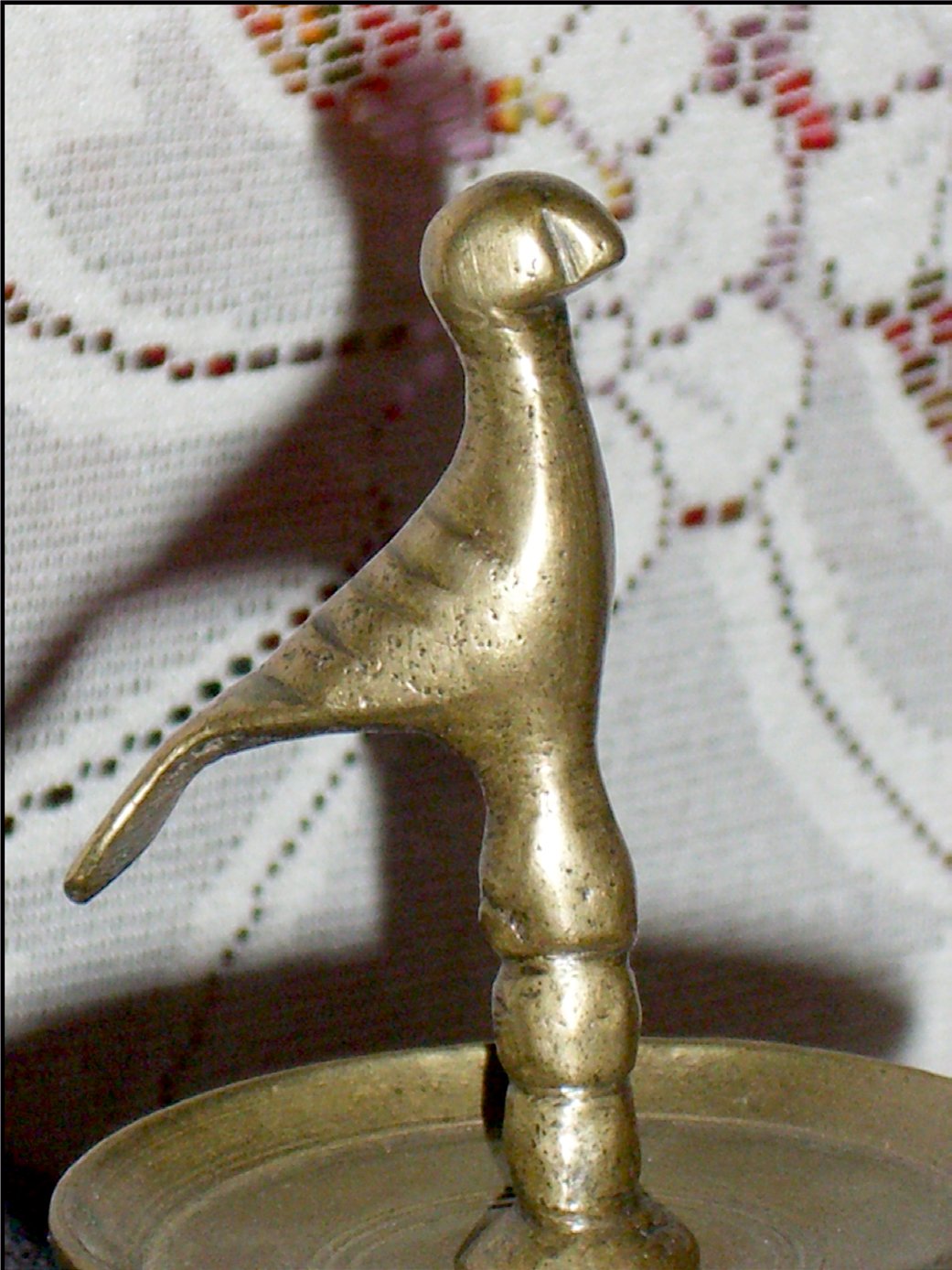
According to Nicolaus, the Sencaq resemble large brass candlesticks: about 80 cm to 1 m high and 6–8 kg in weight (the Mergeh Sencaq about 10 kg). On a base stands a shaft of balls, cones and cylinders; on top, on a small plate, sits the figure of a standing bird. The Şengal and the Armenian Sencaq, according to Nicolaus, hardly resemble a peacock, rather a duck. For the tour the parts are taken apart and reassembled on site.
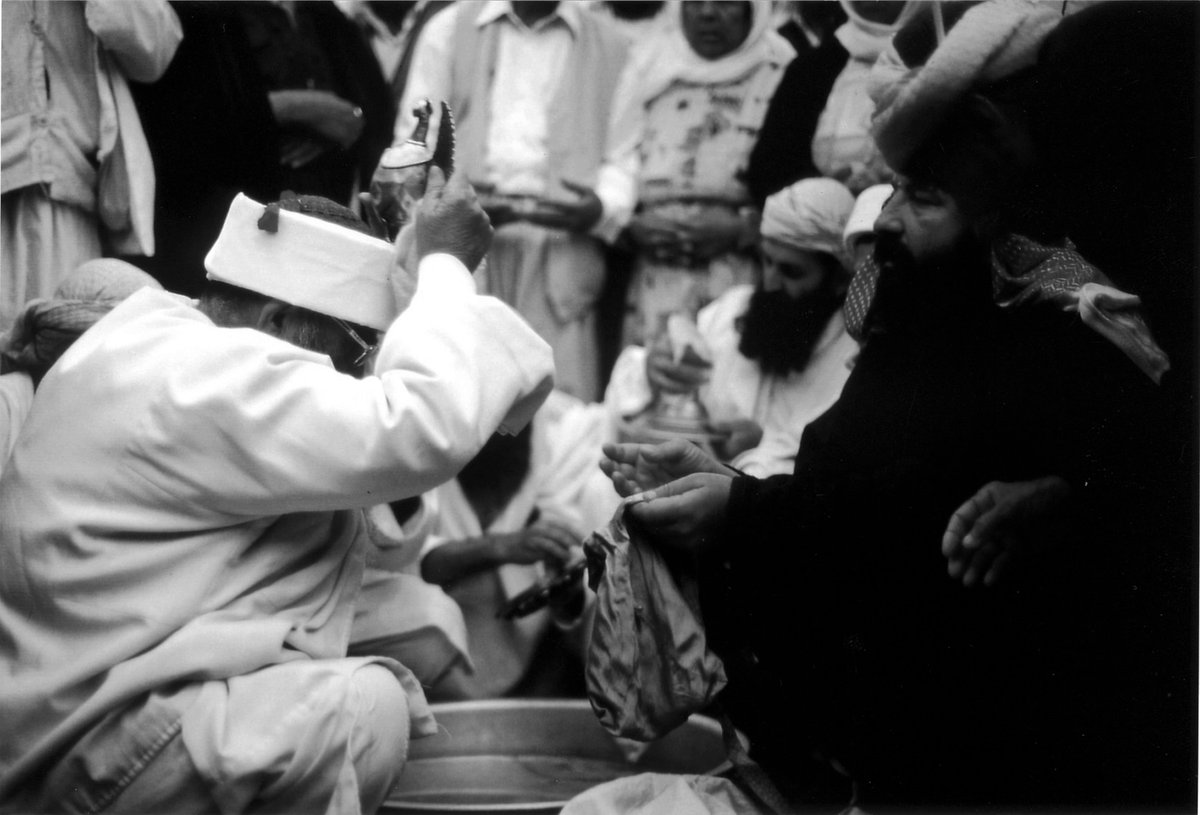

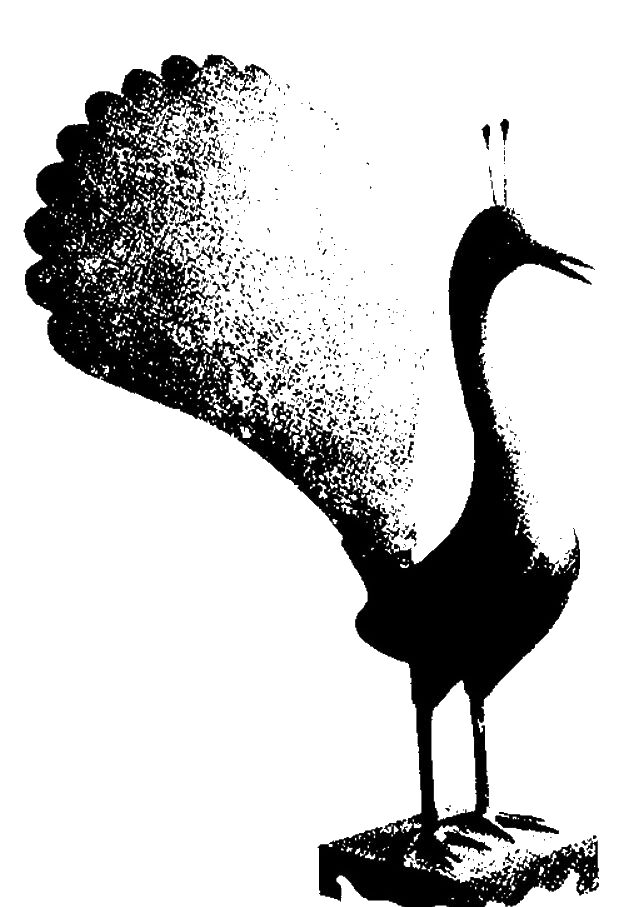
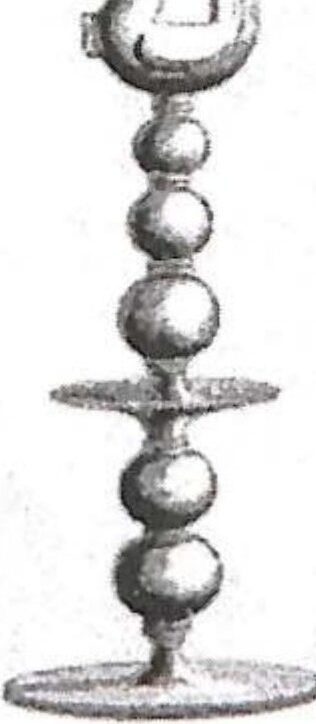
The seven Sencaq and their regions
| Sencaq | Region | Situation today (according to Nicolaus, 2024) |
|---|---|---|
| Mergeh (Şêxan), “Tawûsê Welatê Şêx” | Şêxan and surroundings of Duhok | traveling again (since April 2022) |
| Şengal | Şengal and five villages west of Duhok | hidden in Şengal since 2014; restricted tour in 2024 |
| Heleb (Aleppo) | Hasaka, Amûdê, Serê Kaniyê | lost (according to tradition walled up in a village in Turkey) |
| Xaltan (Diyarbakır) | territory of the Xaltî tribal confederation in the Ottoman province of Diyarbakır | traveled until the mid-1970s; lost |
| Zozan (Hakkari) | Hakkari, Şırnak, Duhok | niche empty for over 100 years |
| Tabriz | Ezidis in Persia | traveled until the first half of the 19th c.; lost |
| Misqof (formerly Serhed) | Serhed, later Transcaucasia | kept in Jrarat (Armenia) |
The names vary in the sources. Khanna Omarkhali calls the Sencaq of Şêxan Tawûsa Enzel (see Qewal); according to Nelida Fuccaro, the Sencaq of Şêxan in the 1920s was called Tawûsê Bizrab and the one traveling to Şengal Tawûsê Enzel (see Religious offices). According to C. J. Edmonds (1967), the first Sencaq, that of Şêxan, was called “Enzel” and the second, that of Şengal, “Bizarb” – this agrees with Omarkhali and contradicts Fuccaro. “Misqof” means “Russia”; the name arose after Iğdır (1828) and Kars and Ardahan (1878) had fallen to Russia and many Serhed Ezidis had moved into the Tsarist empire.
The Sencaq around 1930–1945 according to Edmonds
The British official C. J. Edmonds, who dealt with Ezidi affairs in Iraq in 1926–1945, describes the Sencaq as brass peacock figures on a dismountable stand like a tall candlestick, which the Qewal showed on their tours.
- Only three on the road: In the Şêxan Memorial of 1930/31 the Ezidi dignitaries name only three Sencaq: the first traveled three times a year with Qewal through Şêxan and its surroundings, the second twice a year with the Reşkan and Hoverî tribes through the Şengal district, the third once a year to Syria and to all Ezidis outside Iraq. All returned to the house of the Mîr; no one but he was allowed to take or keep a Sencaq.
- Formerly seven: Edmonds explains the number three by the travel restrictions since the First World War. Formerly there had been seven, allotted to the regions; one was connected with Şêx Adî, the others with the ancestors of the Şêx lineages.
- Original distribution of the gifts (according to an informant of Edmonds): only the gifts from Şêxan, in the name of Şêx Adî, went to the family of the Mîr; the others to the family of the respective Şêx: Şengal → Şerfedîn (House of Şêx Hesen), Aleppo and Mardin → Fexredîn, Van → Sicadîn, Tabriz and Caucasus → Şems, Diyarbakır → Ebû Bekr, an area not clearly defined → Nasirdîn.
- How the Mîr came to receive all revenues (tradition according to Edmonds): When the Kurdish Emir of Botan, Bedirxan Beg, attacked Şêxan, he demanded the surrender of a girl from the Mîr family. To avert this, the Mîr persuaded the beneficiaries to leave him their Sencaq revenues in order to pay Bedirxan. The girl died before that, but the payment was extorted annually until Bedirxan was overthrown in 1847; afterwards the Mîr kept all the Sencaq revenues.
Disputes and theft
- In the 19th century Hadî and Hesen, the two eldest sons of Mîr Huseyn Beg, rebelled against their father, stole the Sencaq of Şêxan and collected its gifts for a year. The Ottoman authorities supported Huseyn Beg; the two were killed (see The Mîr family Çol).
- In 1926 Nayif Beg, a cousin of Mîr Seîd Beg, was arrested in Beled Şengal and charged with having instigated the Qewal to the theft of the Sencaq of Şengal. Mayan Xatûn had come as plaintiff at the head of a delegation from Şêxan; Nayif handed over the Sencaq. According to Edmonds, Îsmaîl Beg is also said to have instigated the theft, because he wanted to be recognized as head of the Ezidis of Şengal independently of the Mîr.
- In the autumn of 1926 news was received in Şêxan for the first time of Qewal who had traveled to the Caucasus in 1914 shortly before the outbreak of war and had been missing ever since; there were hopes of government help for their return.
- In 1926 Îsmaîl Beg showed Edmonds a dismountable brass candlestick with one large and six small wicks, allegedly formerly in the sanctuary of Şêx Adî, and a Caucasian dagger on whose sheath a “peacock” was engraved on a similar stand with five balls set one above the other.
- In 1945 the Qewal with the Sencaq of Şengal happened to be in a village when a peace was concluded there between the Haskan and Aldaxî tribes; the Qewal gave both sides a Berat from Lalîş, which was exchanged and sworn upon (see Şengal).
Keeping
Between the tours the Sencaq lie in the Xezîna Rehmanî (“treasury of the All-Merciful”) in Bacidrê, in the building of the former palace of Mîr Elî Beg. The keeper (mijewir) is always a woman from the Mîr family; according to Nicolaus, Mîra Selwa Necman Beg had held the office for about 40 years. Since 2014 all seven niches have been empty.
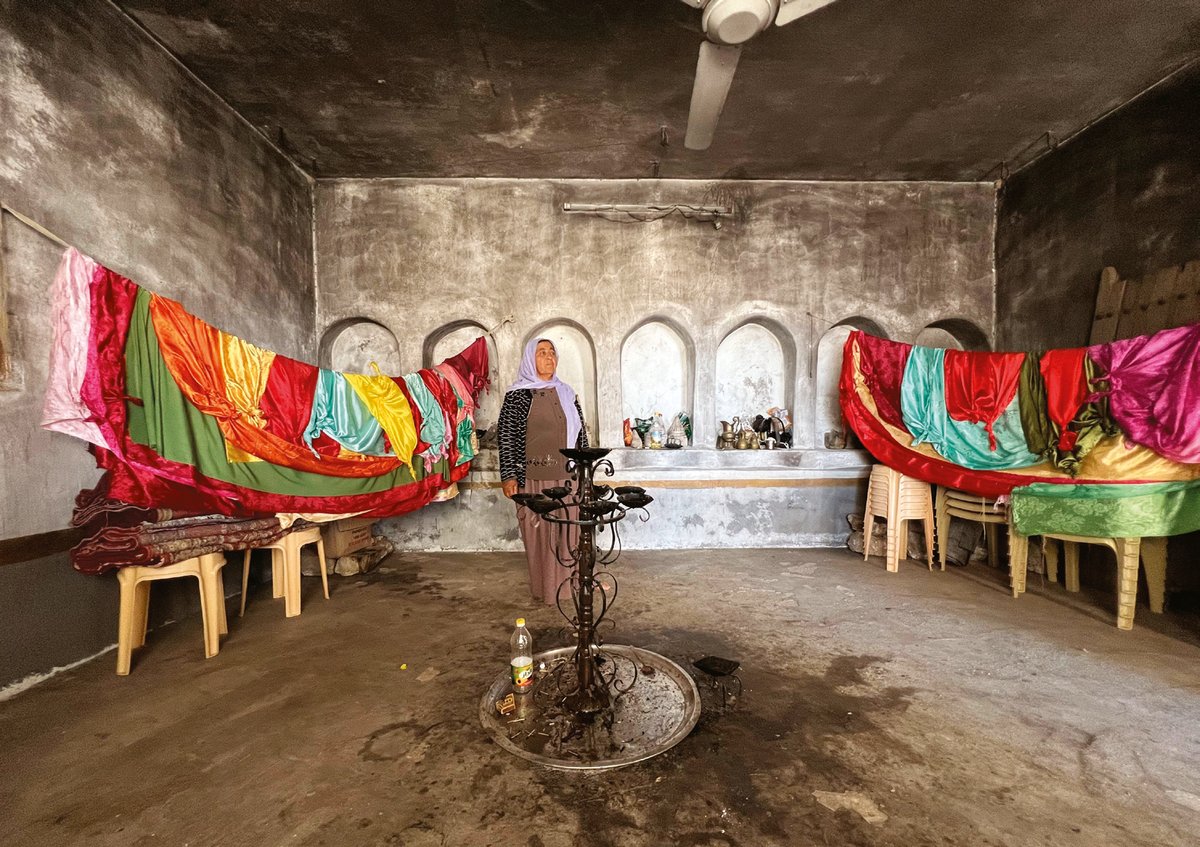
In September 1892 Ottoman troops confiscated five Sencaq in Lalîş (see Ferman 1890–1918). In memory of their return in 1914, a sheep used to be sacrificed every year on May 6; afterwards the Sencaq were baptized in Lalîş.
What the tour served
- Connection of the communities: Formerly the Sencaq visited most Ezidi villages. The journey maintained the connection between the communities and the secular and religious leadership in Bacidrê and Lalîş.
- Revenues: According to Fuccaro, possession of the Sencaq founded the authority of the Mîr and was his most important source of income; the tour was the only means of regularly collecting dues.
- Leasing: The Mîr leased a Sencaq to the Qewal group that bid the most; in return it kept all the donations. In 2011, according to Nicolaus, Qewal paid 300 million Iraqi dinars (about 206,000 dollars) for a tour in Şengal. According to high clergy in Georgia and the Serhed, this leasing is reliably documented only since the beginning of the 20th century.
- New distribution since 2022 (Mergeh Sencaq): Mîr 50%, Baba Qewal (through the leader of the tour) 25%, Metbexçî 12.5%, Neqîb 12.5%.
The retinue and its offices
According to Nicolaus, the retinue of the Mergeh Sencaq includes:
| Office | Task |
|---|---|
| Sencaq-Begê (leader) | leads the ceremony, speaks prayers in return for donations, represents the Baba Qewal |
| Qewlbêj | performs the Qewls |
| two Def players, two Şibab players | frame drum and flute |
| Pêşrew | from the Feqîr family of Lalîş; announces the arrival, chooses the host, lights wicks, distributes Berat, holy water from the jug Şerbik and blessed wicks |
| Neqîb | security, supervision of the donations, accounts for each village, assembly and dismantling of the Sencaq; always a P’îr of the Hecîyal lineage, appointed every year by the Baba Şêx |
| Mijewirê Kaniya Spî | distributes water from the Kaniya Spî spring and baptizes children who have not yet been to Lalîş |
| Qehwecî | coffee server; the host provides 2–3 kg of coffee beans |
In Şengal the retinue is simpler: nine Qewal and the Şêx Wezîr. According to Xelîl Cindî Reşo (1997), there was only one Begê Senceqan from the Hekarî or Dumilî tribes; according to the present Baba Qewal (2024), any suitable Qewal can become leader. Without the Baba Gavan no Sencaq may be baptized and leave Lalîş.
Course in a village
- Host: The Sencaq spends the night in the house of whoever donates the most. He entertains the retinue and visitors, with at least one sheep per place. This custom is already attested around 1840 by the traveler Grant. In Başîqa and Bahzanê the Sencaq has been shown since the early 2000s in large sanctuaries instead of private houses.
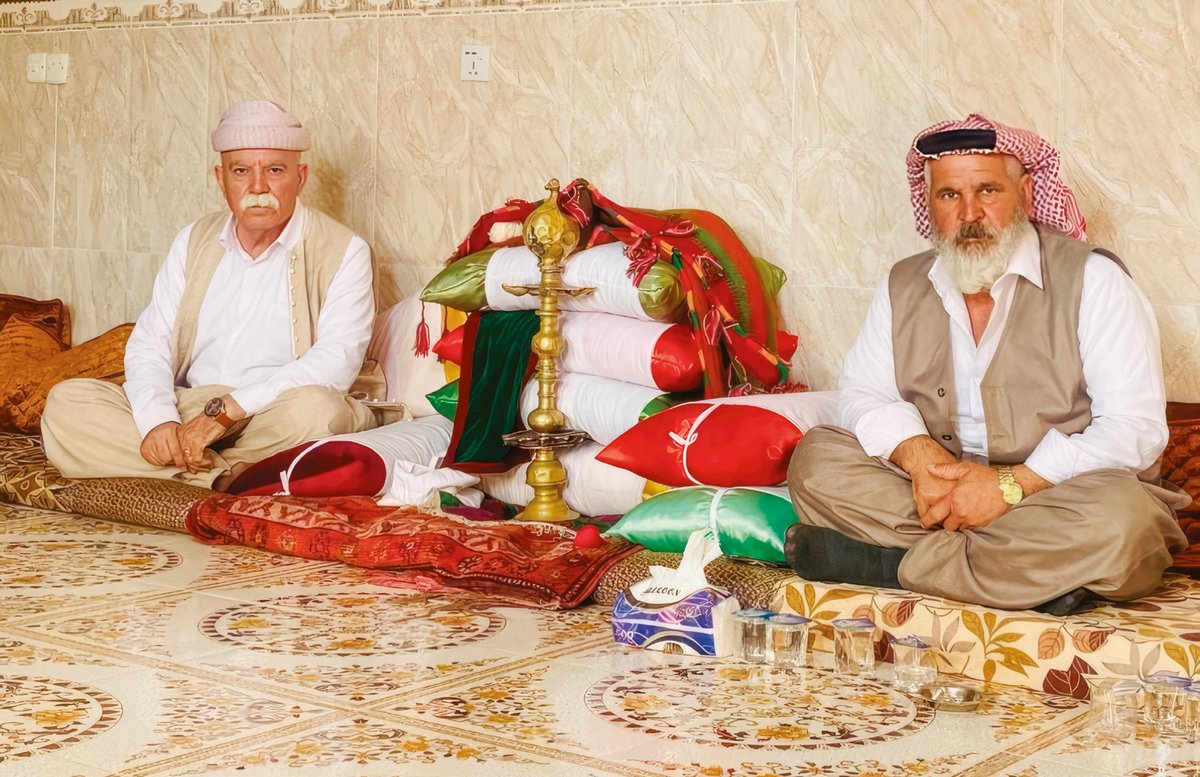
- Display: The Sencaq leans against a stack of colored cushions (often yellow at the bottom, then red, green, white at the top). The Qewal sit on both sides, play and perform Qewls and Qesîde (Sema).
- Women: The ceremony is in men's hands. But during the Tawûs gêran, as in the procession with the Berê Şibakê to Lalîş, only women carry the censer (tawa’) and purify the way with incense.
- Water: The baptismal water of the Sencaq is kept and is regarded as healing. To unmarried young men the Qewal give water with the wish for a good bride.
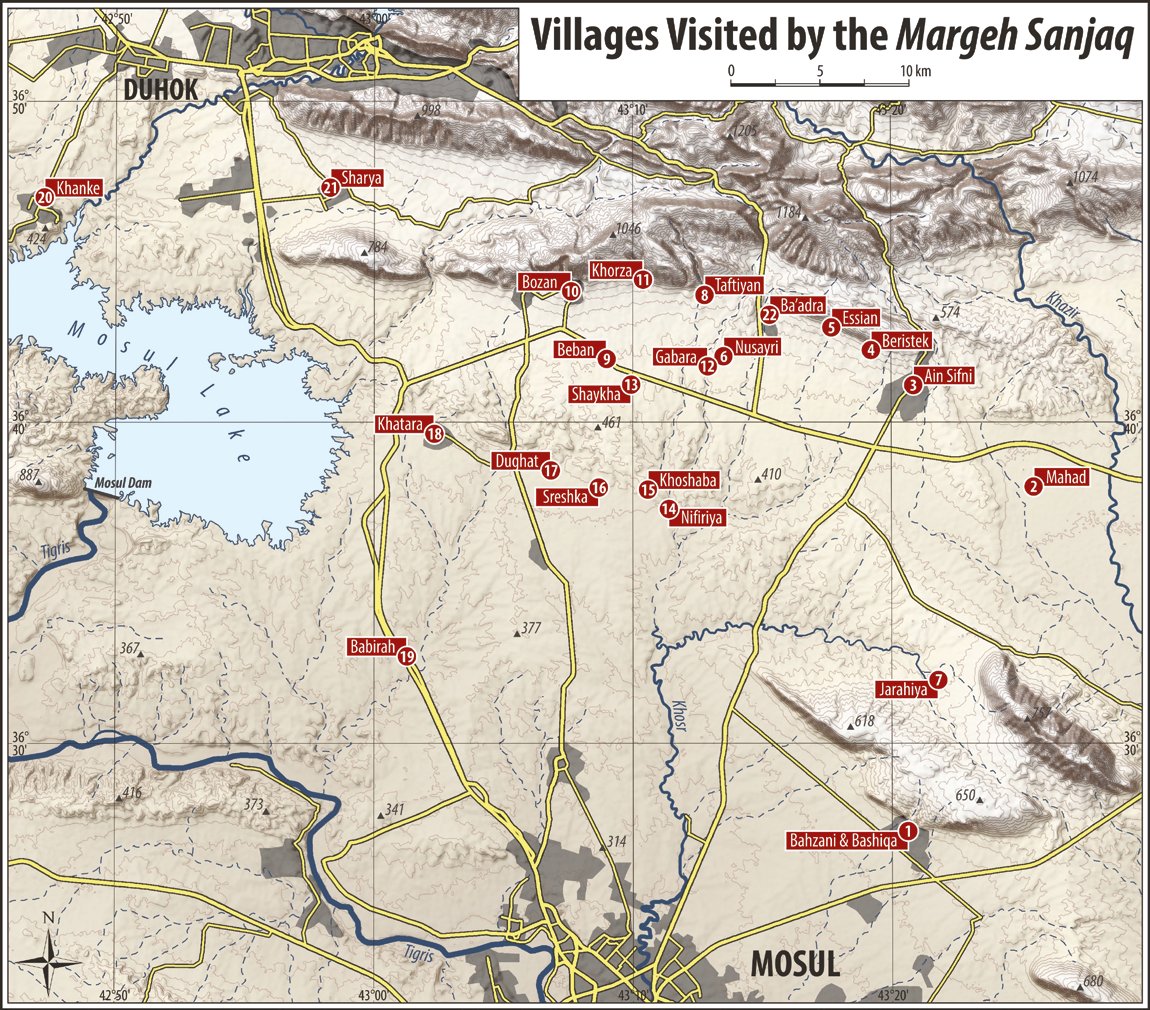
The route of the Mergeh Sencaq
The Mergeh Sencaq travels twice a year: after the New Year Sersal (April) and after the summer fast Çileyê Havînê (ends on August 3). Each round lasts 52 days – according to one Qewal for the 52 weeks of the year.
- Baptism at the spring Kaniya Kelokê in Lalîş (with water of the Kaniya Spî),
- “Valley of the Peacock” with a peacock carved into the rock: assembly and prayer,
- sanctuary of P’îr Bûb in Bahzanê, sanctuary of Melek Şêx Sin in Başîqa,
- collective settlement Mehad (six nights),
- Eyn Sifnî, Beristek, Esiyan, Nisêrî, Cerahiyê, Qaftiyan, Beban, Bozan, Xorzê, Gabara, collective settlement Şêxa, Nifiriya, Xoşaba, Sreşka, Dughat,
- Xetarê (two nights), collective settlement Babîrê (five), Xanke (ten), Şarya (seven), Bacidrê (three),
- finally briefly to Lalîş.
The collective settlements were set up by the Iraqi government in the second half of the 1970s, destroying the villages for this purpose. The Sencaq nevertheless visits there in turn the quarters of the former hamlets, and the Qewal continue to call them “villages”. In Babîrê there are quarters of villages that are today flooded by the Mosul Dam reservoir. In Eyn Sifnî the Sencaq stays only one night – according to Nicolaus' supposition because of the Muslim share of the population.
In August 2014 the Mergeh Sencaq was brought to Eyn Sifnî and then to Erbil. Since 2022 it has stood in Başîqa in the house of the Pêşîmam Mergeh; in April 2022 it set out on tour again for the first time in eight years.
The route of the Şengal Sencaq
Formerly the Şengal Sencaq also traveled twice a year: after the festival of Xidir Nebî / Xidir Ilyas and after Çileyê Havînê, with pauses at Sersal and at the Cejna Cimayê. It began at the sanctuary of Şerfedîn and visited 33 main places in 84 nights; the host was usually the Muxtar (village headman). Longer stays took place among others in Til Ezêr and Sîba Şêx Xidir (seven nights each), Xana Sor (twelve), Borek (seven) and Dugurê (six); Koço also lay on the way.
Five villages west of Duhok (among them Bacid and Kanî Ereb) formerly belonged to the Zozan Sencaq, then to the Xaltan Sencaq. Through the new border after the First World War they came to the Şengal Sencaq and call it “tawûsa terefî” – “peacock from the other side”.
In August 2014 the Şengal Sencaq happened to be on tour. Since then it has been hidden in Şengal; according to Mîra Selwa (2022), the people of Şengal do not give it back because they do not trust the new leadership. In 2005–2010 there were no tours, in 2011/2012 there were again.
The Sencaq outside Iraq
- Turkey: According to contemporary witnesses in Germany, a Sencaq traveled until the mid-1970s through Ezidi villages of Turkey (among others the provinces of Batman, Mardin, Diyarbakır, Şanlıurfa). This ended with the unrest from 1978 and the emigration of the 1980s. According to one tradition there were 365 Ezidi villages in the Xaltî territory, and the Sencaq visited one each day. Layard saw a Tawûs gêran in the village of Redwan in 1849 and was the first outsider to draw a Sencaq.
- Hakkari: Already at the beginning of the 19th century the Ezidi population there declined – through the Ottoman-Persian war of 1821–1823 and the persecution by the Goyan tribe and by the Kurdish Emir Bedirxan Beg of Botan.
- Persia: The Ezidis left by the middle of the 19th century; with this the journey of the Tabriz Sencaq ended.
- Syria: According to P’îr Dima Pirbari, the Aleppo Sencaq left out Aleppo and Afrîn.
The path of the Misqof Sencaq to Jrarat
In 1845, according to Nicolaus, the last Mîr of Bitlis, Şerif Beg, attacked the Qewal returning from Transcaucasia, had them killed and seized the Sencaq and the revenues. In 1849 Layard tried in vain to get the Sencaq back.
- A Şêx of the Sîpkî tribe, ancestor of the Ozmanyan family living in Armenia today, probably acquired the Sencaq and did not return it to the Mîr.
- His younger son Şêx Osman brought it in 1878 with the withdrawing Russian army to Baş Sinak (Surmali district, Erivan Governorate); his parents and elder brothers perished in the fighting. Osman later became a Feqîr; the family keeps his robe (xirqe) and his headdress (tac).
- His son Şêx Haso moved to Tandurek (today Yaylacık, Iğdır), then to the Digor district (Kars), into an Armenian-Ezidi village. During the genocide he fled to Kaniaşir (today Armenia), then via Yeraskhahun to Jrarat (Armavir province).
In Jrarat the Sencaq is kept to this day (see also Festivals and fast days). Pilgrims come to the keeper's house; according to Nicolaus he asks a sheep as a sacrifice and about 300 dollars for a showing. In 2022 the Sencaq was displayed with great ceremony in the temple Quba Mêrê Dîwanê in Aknalich. In the leadership in northern Iraq opinions differ on its authenticity.
The replica and the last journey in the Caucasus
After 1845 the Mîr and the clergy used a replica, which already in 1846 again traveled through Transcaucasia and came to Armenia in 1920–1922. According to eyewitnesses (in Field) there were visits in 1919 and 1928. The last Tawûs gêran in Transcaucasia took place in 1928 or 1929. In 1929, according to Nicolaus, the Qewal traveled back to Baghdad by ship via Cardiff; the Soviets had previously confiscated the Sencaq, and it disappeared in the provincial prison of Tiflis.
Discrepancies: According to Edmonds, Qewal traveled to the Caucasus in 1914 and were considered missing until 1926. According to Guest, the last Qewal came in 1914 and returned to Iraq in 1929 via London; he does not mention a confiscation of the Sencaq (see The Ezidis in Transcaucasia). According to Lescot, the last journey to Soviet Armenia took place in 1927 (see Religious offices).
According to Isabel Broian (2025), in the middle of the 20th century a letter from Lalîş to the program of Radio Yerevan asked about a Qewal who had gone to Armenia before the revolution and had not returned; no answer came.
According to the Ezidi school textbooks of Armenia
The textbooks by E’zîz T’amoyan and his co-authors (2013–2014) name the seven Tawis with their own names and regions (grade 7):
| Tawis | Region according to the textbook |
|---|---|
| Tawisa E’nzel | Şêxan |
| Tawisa Şingarê | Şengal |
| Tawisa H’elebê | Aleppo and Damascus |
| Tawisa Xalitîa | territory of the Xalitî (see Sanctuaries of the Xalitî) |
| Tawisa Zozana | Hakkari |
| Tawisa Misqofa | Russia, Armenia, Georgia |
| Tawisa T’ewrêzê | Tabriz and Urmia |
- The book distinguishes the Tawis (the metal figure, “sign of our veneration”) from Tawûsî Melek.
- According to the tradition it reproduces, the Sencaq are assigned to particular saints: Şerfedîn – Şengal, Şems – Tabriz and Moscow, Sicadîn – Wan, Nasirdîn – Şêxan, Ferxedîn – Aleppo and Mardin, Şêxûbek’ir – Diyarbakır.
- Procession: At least twice a year Qewal, as representatives of the Mîr, bring the Tawis with Def and Şibab; it is set up in a respected house, gifts are brought, people pray and leave the room barefoot and backward. “Beyt’a sivê” and “Beyt’a êvarê” are sung. The original purpose, it says, was the strengthening of faith and cohesion, not the collecting of donations. One Tawis is said to be in Armenia today; its origin is told in different ways.
- New Year in Lalîş (grade 5): On the Wednesday of the New Year festival the Tawis is set up under the direction of the Mîr in the tower of the Mîr (birca mîr); Ezidis from all over the world go in barefoot, bow and go out backward.
- In 2010, according to the 9th-grade textbook, E’zîz T’amoyan brought a Sencaq for the Ezidis of Armenia “in cooperation with the ambassador of India”. The statement is unusual; other sources have not confirmed it so far, and the book does not say how it relates to the Misqof Sencaq in Jrarat.
Sources
- Khanna Omarkhali (Ханна Омархали): Йезидизм. Из глубины тысячелетий (From the depths of the millennia). Saint Petersburg 2005, p. 151 (ill.)
- John S. Guest: The Yezidis. A Study in Survival. London/New York 1987, p. 138 (ill.)
- E’zîzê E’mer, H’esenê Şêx-Me’mûdê: E’debyet û zimanê êzdîkî, grade 5. Yerevan: Spîka 2013, p. p-005–006
- E’zîzê E’mer, H’esenê Şêx-Me’mûdê: E’debyet û zimanê êzdîkî, grade 7. Yerevan: Spîka 2014, p. p-066–068
- H’esenê Şêx-Me’mûdê, E’zîzê E’mer: E’debyet û zimanê êzdîkî, grade 9. Yerevan: Spîka 2012, p. p-023
- International Journal of Yezidi Studies, Vol. 1. Tbilisi 2024, p. p. 81–108
- International Journal of Yezidi Studies, Vol. 2. Tbilisi 2025, p. p. 15, 80–81
- C. J. Edmonds: A Pilgrimage to Lalish. London (Royal Asiatic Society) 1967, p. p-017–018, p-040–041, p-045, p-054, p-069, p-075–076, p-085
- Birgül Açıkyıldız: The Yezidis. The History of a Community, Culture and Religion. London 2010, p. 89, 92 (ill.)
Found a mistake?
Is something wrong – a fact, a spelling, a source, an image? Let us know: we check every report and correct the article.
Other spellings: Sendschaq · Senjaq · Sindschaq · Sinjaq · Tawus geran · Xezina Rehmani · Chezina Rehmani · Khezina Rehmani · Sandschak · Sancak · Tawuse Melek · Melek Taus · Taus-i Melek · Malak Tawus · Qawwal · Kawal · Kewal · Baba Sheikh · Baba Scheich · Bave Şêx