
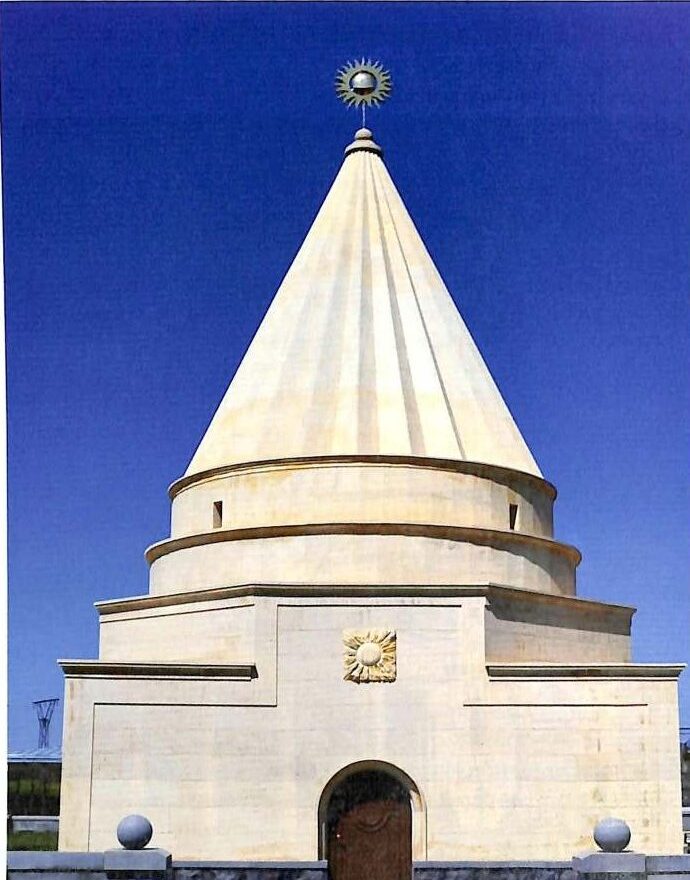
The sanctuary of Aknalich (Ziyaret) is an Ezidi sacred building in the village of Aknalich in the Armenian province of Armavir. It was built by the Moscow-based entrepreneur Mirza Sloyan and his family with their own funds and consecrated on September 29, 2012 in the presence of Mîr Tahsîn Beg. By 2015 a memorial complex, a cultural and educational center and the building site for a larger temple had arisen around the sanctuary.
The main source is the book by Mirza Sloyan himself (“The Road to the Temple. Three Years Later”, Yerevan 2015). The author was the founder and organizer; the book thus describes the events from the point of view of a participant. It contains many speeches, whose content is reproduced here only as the statement of the respective speakers.
The place
Aknalich lies in the Ararat plain in the Armavir province. The sanctuary stands in the cemetery of the village. According to Sloyan, all the deceased members of his family are buried there; he expressly built the sanctuary also in their memory. The Sloyan family itself lived in the nearby village of Zvartnots (Etchmiadzin district).
The book gives no population figure and no information on the history of the village. According to Sloyan, visitors come from Ezidi villages of the Talin and Aparan districts, pilgrims also from Georgia, Russia, Ukraine and Europe. An overview of Ezidi villages is given in the article Ezidi villages of Armenia.
Origin of the idea
According to his own account, Sloyan had long cherished the wish for an Ezidi sanctuary in Armenia; after the Spitak earthquake of 1988 his decision was firm. In the Soviet period, he says, hardly anything was known about Lalîş. Later he made the pilgrimage to Lalîş every year with family and friends.
The religious leadership rejected replicas of Lalîş on principle: Lalîş was unique, there must be no copies; according to Sloyan, similar requests had already been turned down. On journeys through Ezidi villages in Iraq, however, he noticed small sanctuary buildings in cemeteries. For such a building he finally received the Mîr’s permission. The entrepreneur Telman Feroyan speaks of five years of negotiations until consent was given. Before construction began, Sloyan also obtained the consent of representatives of various Ezidi communities in Moscow.
Construction of the sanctuary (until 2012)
- Laying of the foundation stone: From Lalîş came the Qewal Hüseyin and the Koçek Bereket. They brought sacred objects and water from holy springs, which were placed in the foundation. According to Mîr Tahsîn Beg, water from the “White Spring” (Kanîya Spî) and earth from Lalîş were already brought in the year before the consecration (2011). According to Sloyan, earth from Armenia was mixed with earth from Lalîş in the foundation.
- Construction period: about one year. According to his son Roman, Sloyan commuted regularly between Moscow and Armenia during this time.
- Stones: from Noyemberyan (northern Armenia).
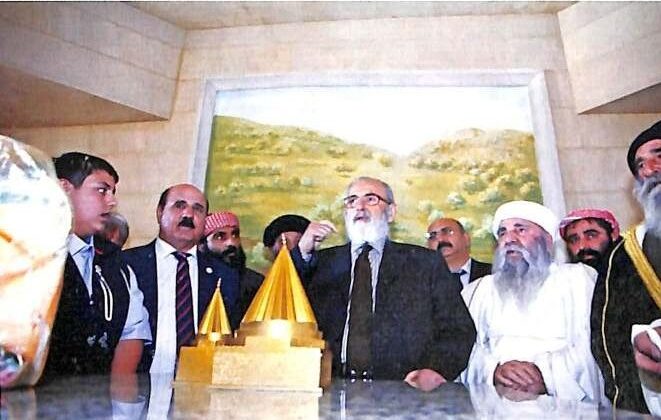
- Form: a stone building of closed appearance with a pointed, conical roof bearing a symbol at the top. Several visitors compared the form with the main sanctuary in Lalîş. Inside, a mural shows Lalîş.
- Participants: The site manager was Gomeros Petrosyan, a childhood friend of Sloyan and building contractor; the organization was taken over by Andranik Artenyan, formerly head of a state farm; the interior decoration with the Lalîş picture and Ezidi symbols was created by the painter Merushan Mcheyan.
- Costs: The building was paid for privately by Mirza Sloyan and his family.
Name
According to Mîr Tahsîn Beg, the building received the name Ziyaret (“sanctuary”) on his instructions; only through the consecration did it become a sanctuary. In the book it is mostly called the “sanctuary of Aknalich”. The planned new building is called the “temple of Tawûsî Melek”.
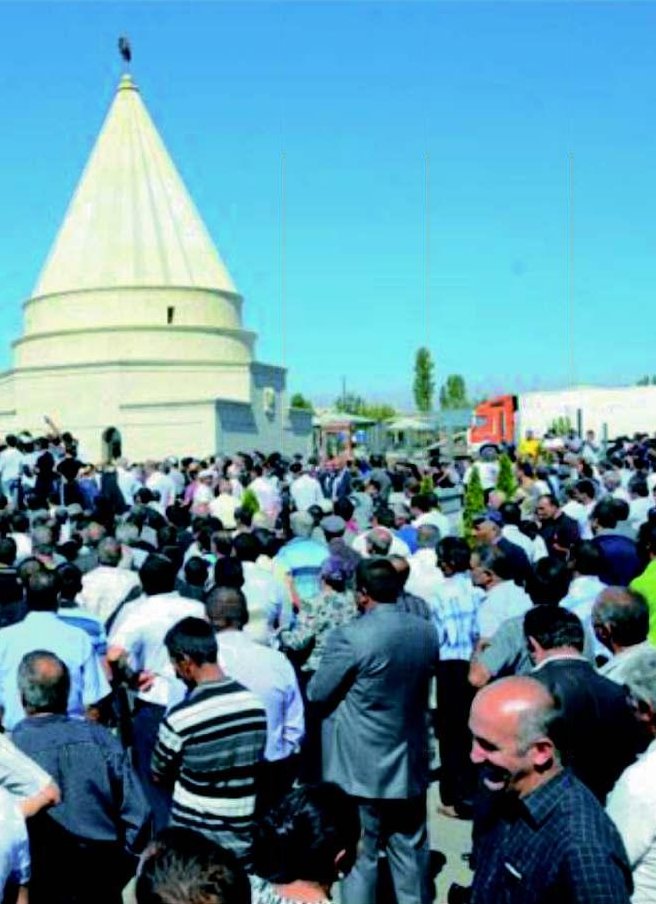
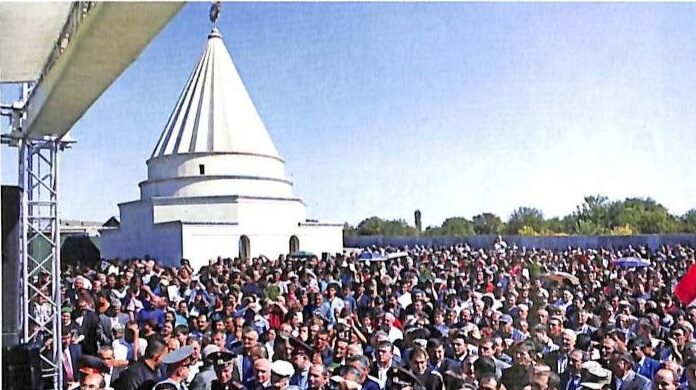
The Ezidi grade 11 school textbook (T’amoyan et al., 2014) calls the sanctuary the second sanctuary of the Ezidis after Lalîş, built on its model and “also called Lalîş”; it was financed, it says, by Mîrzeyê Çolo Sloyan. The cover of this textbook is adorned with a photo of the sanctuary with a festive crowd.
Consecration on September 29, 2012
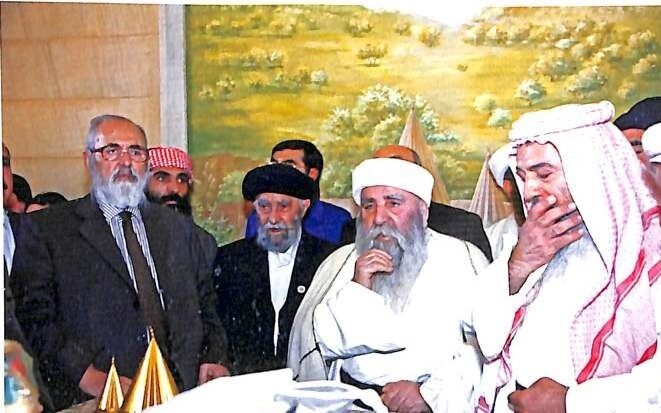
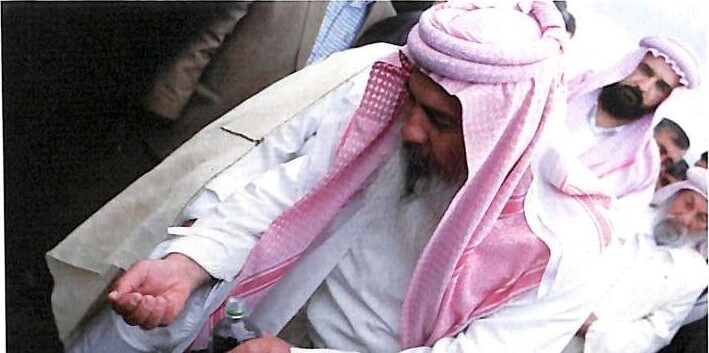
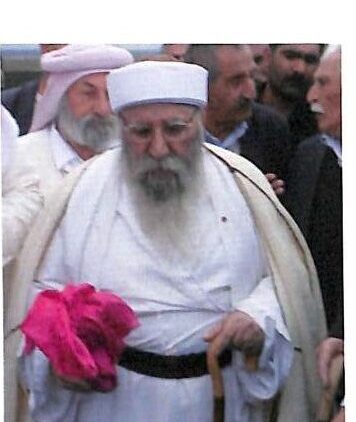
The consecration was performed by the clergy from Lalîş in the presence of Mîr Tahsîn Beg. According to his words, the last visit of a Mîr to Armenia had been in 1909 (see Îsmayîl Beg); his visit was thus the first in a good hundred years. The Mîr declared September 29 the annual “Day of the Sanctuary”; since then thousands of visitors have come on this day. He had the proceeds of the consecration ceremonies distributed to needy Ezidi families.
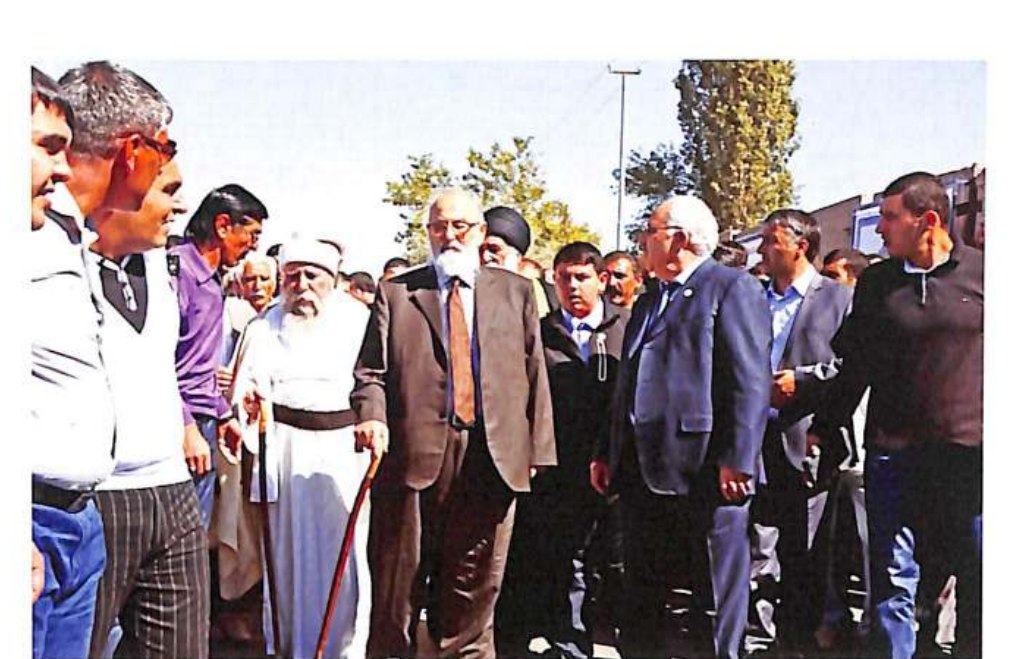
Pilgrims from Armenia, Russia, Ukraine and Europe came to the celebration. Among others, the Marzpet (governor) of the Armavir province, Ashot Kahramanyan, and a cleric of the Armenian diocese of Armavir spoke. Amo Şaroyan called the building the first Ezidi sanctuary in Armenia. On the Mîr’s program of visits see Mîr Tahsîn Beg.
Extension (2013–2014)
- From spring 2013 the grounds were extended. Most of the new area was donated by Lieutenant General Manvel Grigoryan and his family. This made it possible to separate the temple area from the area with the memorial complex and educational center.
- A cultural and educational center was planned in 2012, under construction in 2013 and erected in 2014.
- For the first anniversary on September 29, 2013, guests came from Iraq and Russia, among them Mîr Hazim, the Mîr’s son.
- Plans of 2013 envisaged a permanent cleric at the sanctuary and a large archway with sun and peacocks.
Memorial complex (opened September 29, 2014)
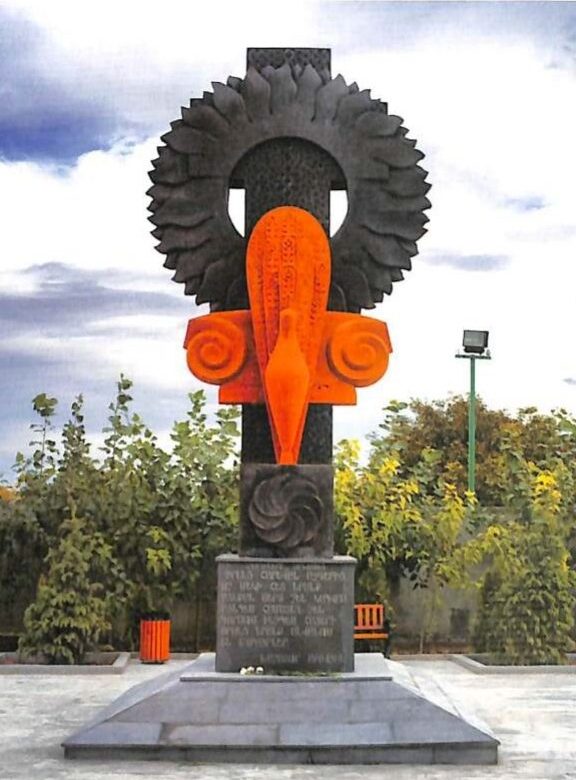
On the Day of the Sanctuary 2014 a memorial complex was opened, which Sloyan dedicated to Armenian-Ezidi friendship. It was built in about three to three and a half months (June to September 2014); Sloyan temporarily moved from Moscow to Aknalich for this. Because of the genocide in Şengal, many Ezidis advised postponing the celebration; it was finally dedicated to the victims, and no guests came from Lalîş that year.
The complex comprises five monuments:
| Monument | Details |
|---|---|
| Monument “Friendship and Brotherhood” | about 7 m high, of hard tuff; cross and capital as Armenian, sun and peacock as Ezidi symbols; idea: Sergo Yeritsyan; sculptor: Tigran Yukhanyan (three to three and a half months of work) |
| Ûsivê Beg | basalt; sculptor Getik Baghdasaryan |
| Cangîr Ax’a | sculptor Getik Baghdasaryan; since 2015 with the burial place of earth from Cangîr Axa’s grave (see below) |
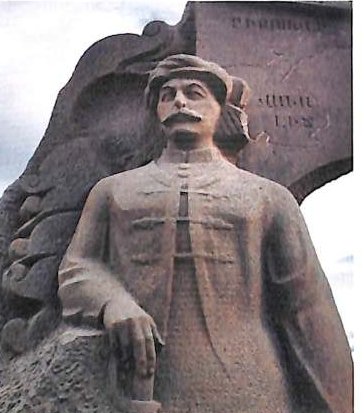
| Andranik Ozanyan, Armenian military leader and friend of Cangîr Axa | basalt; sculptor Getik Baghdasaryan |
| Memorial stone for the victims of the genocide of 1915 | reliefs of Etchmiadzin and Lalîş |
- Dimensions: For the monument the book gives in one place a total height of 7 m, in another a cross of 5–6 m – possibly without the base. The figures are not entirely consistent.
- Arrangement: Ûsiv Beg on the left, Andranik on the right, Cangîr Axa beside them.
- Foundations: A month before the opening, during prayers by Ezidi clergy, earth from the birthplaces of Ûsiv Beg and Cangîr Axa in present-day eastern Turkey was placed in the foundations and sprinkled with water from there.
- At the entrance stands a large arch with a sun relief; in addition there are green spaces and benches with the temple symbol. A park with fountains and a grove with trees of honor were planned.
2015: celebrations and burial
- February 25, 2015: celebration of the 150th birthday of Andranik, with thousands of participants, predominantly Ezidis.
- April 15, 2015: For the first time the New Year festival was celebrated at the sanctuary; for this the Sencaq (peacock standard) kept in Armenia was brought from Jrarat to Aknalich (see Festivals and fast days).
- April 22, 2015: commemoration of the 100th anniversary of the genocide of 1915 with Mîr Tahsîn Beg and the Armenian Minister of Defense Seyran Ohanyan. On the same day earth with the remains of Cangîr Axa from his grave in the Saratov region (Russia) was buried at the foot of his monument, with military honors. On the repatriation see Xetîv Axa.
- The Sloyan family endowed the medals “Cangîr Axa” and “Ûsiv Beg”, which were awarded for the first time in April 2015.

The new temple (from 2015)
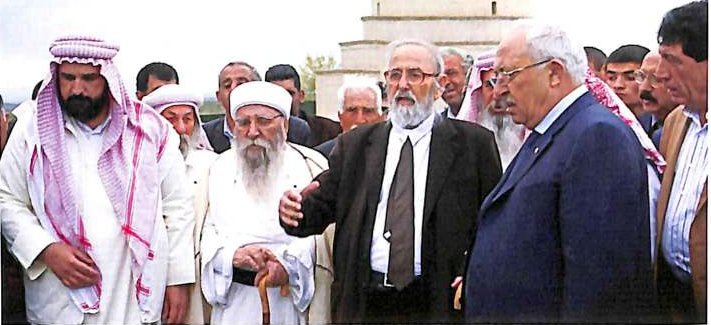
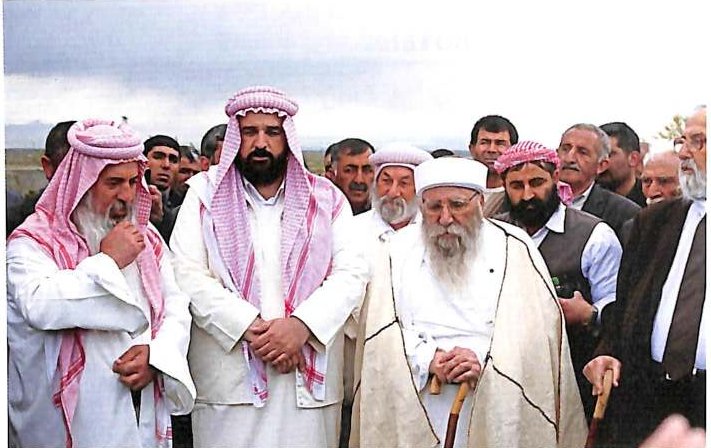
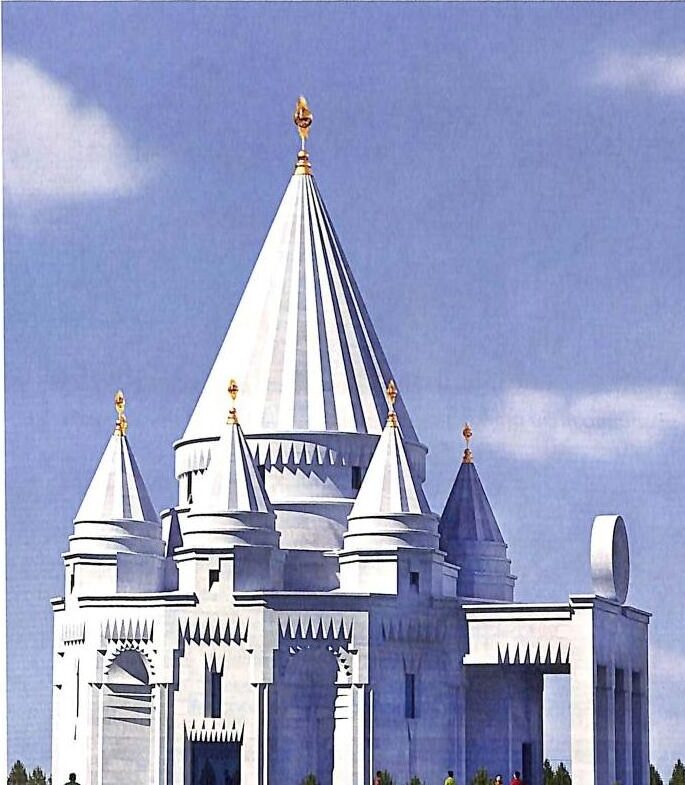
Because the first building had become too small for the visitors, the foundation stone for a larger temple of Tawûsî Melek was laid on April 22, 2015 under Mîr Tahsîn Beg and clergy from Lalîş. According to the Bavê Şêx, earth and water from Lalîş were brought for this. When the book appeared in 2015, the excavation had been dug.
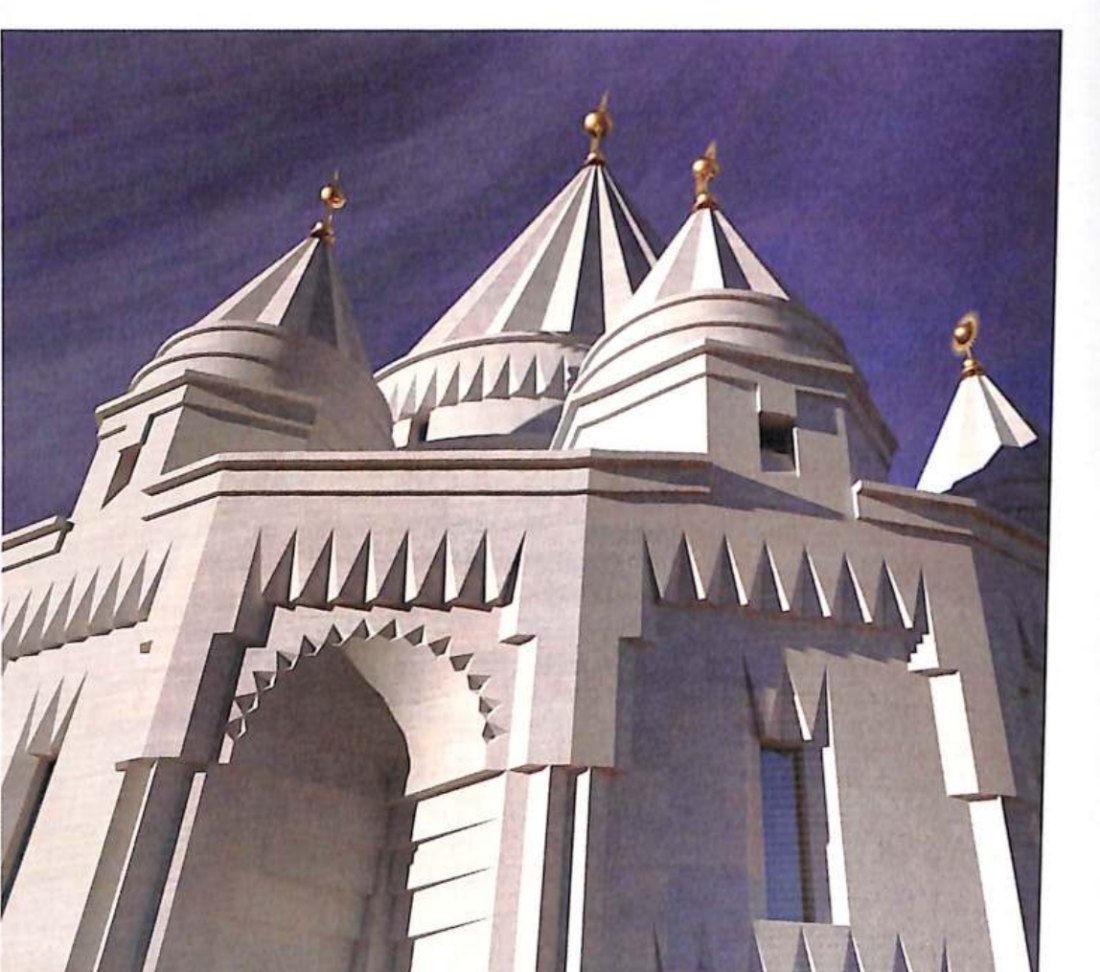
| Feature | Details (design 2015) |
|---|---|
| Architect | Artak Ghulyan (according to the book the author of over 20 church buildings in Armenia and abroad, among others in Moscow, Saratov and Vladimir) |
| Height | 25 m |
| Domes | 1 large and 7 small |
| Interior | more spacious than the first building, with its own vestibule |
| Layout | complex with the existing sanctuary and recreational areas |
Ghulyan said that the simple traditional architecture of Ezidi sanctuaries had caused him difficulties but had also left him freedom; he had developed a modern form from it. Mîr Tahsîn Beg promised to consecrate the temple after its completion, “if health permits”. In 2015 Sloyan declared that Aknalich was to become a “second Lalîş”.
The book ends in 2015 and does not describe the completion. On other pages of this website the finished building is named Quba Mêrê Dîwanê.
Significance
For the Ezidis in Armenia and in the diaspora, Aknalich quickly became a place of pilgrimage and encounter. Bridal couples receive the blessing there before the wedding, and on the Day of the Sanctuary Ezidis from many countries come together.
Quba Mêrê Dîwanê – the largest Ezidi temple in the world (2019)
The new temple begun in 2015 was opened as Quba Mêrê Dîwanê on September 29, 2019, the Day of the Sanctuary. It is regarded as the largest Ezidi temple in the world (Rudaw 2019; Al Jazeera 2019) and stands a few meters from the Ziyaret of 2012. The deputy prime minister of Armenia and other representatives of the state came to the opening (Rudaw 2019).
- Founder: Mirza Sloyan, who had already paid for the Ziyaret (EurasiaNet 2016). He died in Munich in November 2019, a few weeks after the opening (Al Jazeera 2019; Hetq 2020).
- Architect: Artak Guljan (Artak Ghulyan) (Hetq 2020).
- Building: about 25 meters high, of Armenian granite and Iranian marble, prayer room about 200 m² (EurasiaNet 2016).
- Form: seven domes around a high central vault, crowned by golden suns; in the building are a prayer hall, a school for clergy and a museum (Rudaw 2019).
A separate article with many pictures of the exterior and interior, the Ziyaret, the statue park and the cemetery is in the section Religion: Quba Mêrê Dîwanê in Aknalich.
Sources
- Mirza Sloyan (Mirzoyê Çolo Siloyan): Дорога, ведущая в храм. Три года спустя (The road leading to the temple. Three years later). Yerevan 2015, p. 8–15, 24–27, 36–37, 42, 49, 66, 82–99, 165–169, 249, 309–322, 348–352, 446–455, 465, 479
- E’zîzê E’mer, Omerê Şero (Omar Mamoyan), Xidirê Sûrên (Chidir Hadschojan): E’debyet û zimanê êzdîkî, grade 11. Yerevan: Spîka 2014, p. p-001 (ill.), p-014
- Rudaw (Shahla Omar): World’s largest Yezidi temple opens in Armenia, 30.9.2019, accessed 25.11.2026, p. online
- Al Jazeera (Ariel Sophia Bardi): Inside the world’s biggest Yazidi temple in Armenia, 11.11.2019, accessed 25.11.2026, p. online
- EurasiaNet (Maxim Edwards): Armenia to House World’s Largest Yazidi Temple, 6.7.2016, accessed 25.11.2026, p. online
- Hetq (Pietro A. Shakarian): Dispatches from Aknalich – Marking the 1st Anniversary of the World’s Largest Yazidi Temple in Armenia, 14.9.2020, accessed 25.11.2026, p. online
Found a mistake?
Is something wrong – a fact, a spelling, a source, an image? Let us know: we check every report and correct the article.
Other spellings: Ziyaret Aknalitsdschh · Ziyaret Aknalitsjh · Heiligtum von Aknalitsdschh · Heiligtum von Aknalitsjh · Tempel Tawusi Melek · Akhnalidschh · Akhnalijh · Aknalidschh · Aknalijh · Emir · Jerewan · Eriwan · Erivan · Abaran · Bash-Aparan · Lalish · Lalisch · Lalesh · Qawwal · Kawal