
Much of what is known about the history of the Ezidis between the 17th and 20th centuries comes from the reports of foreign travelers, missionaries, diplomats and researchers. They saw the Ezidis from outside, often with prejudices – as late as 1838 a British travel instruction called them “fire” or “devil worshippers”. Their descriptions of places, clothing, festivals and events are, however, valuable testimonies. The overview follows John S. Guest.
Evliya Çelebi (1655–1656)
The Ottoman traveler Evliya Çelebi (1611 – after 1682) accompanied his uncle Melek Ahmed Pasha, governor of Diyarbakır.
- Şengal (1655): He called the mountains a “paradise of the lawless” with 70 springs. He described the men as stocky, with shaggy hair and black eyes, in colorful woolen clothes with silk sashes and turbans, armed with swords, battle-axes and guns; the women wore ankle-length hair. People ate millet bread and mutton and traded in manna, honey, grapes, raisins and silk.
- Şêxan (1656): In the village of Manar near Akrê he counted 500 Ezidi houses, all the men armed with muskets. The chief of the Dasinî received him very hospitably.
- Lalîş (1656): He described the sanctuary as a large building beside a tomb with a high dome and magnificent furnishings.
The Capuchins of Aleppo (1668–1671)
- At the beginning of 1668 the Capuchin Père Justinien de Neuvy in Aleppo learned of the Ezidis of Jebel Seman through Armenian merchants. Two Ezidi chiefs had previously visited the English chaplain in Aleppo.
- Justinien was led in disguise into the Ezidi area. A Şêx received him with an embrace and brandy; in the camp sheep were slaughtered to the music of flutes, tambourines, kettledrums and lutes, women in festive dress came out of the black tents with cries of joy, and there was dancing for days. He described the Ezidis as “reserved, modest and straightforward”. The clergy wore black, the tribesmen white cloth with a round neckline.
- On June 24, 1668 two Şêx were baptized with the names Peter and Paul; Justinien stayed seven months. A tribesman told him the tradition that his people descended from crusaders.
- Disputes with the Armenians and the Jesuits led the French consul to stop the mission in 1669. In 1670 the Capuchin Jean-Baptiste de Saint-Aignan wrote to the French minister Colbert that the Ezidis offered the king 30,000 men. In 1671 the Catholic orders in Aleppo gave up the attempts at conversion; the Jesuits continued in vain until 1682.
- In 1672 the Carmelite Jean-Marie de Jésus met the “king” of the Ezidis near Nisibin with large herds on the way to the summer pasture. A red standard edged with yellow was carried before him.
- In 1674 the French envoy Marquis de Nointel secretly met an Ezidi chief in Aleppo who offered 50,000 men.
Early reports in the 18th century
Italian missionaries reported from Iraq in 1769, 1781 and 1810. The Dominican Maurizio Garzoni (in Amadiya 1759–1779) wrote about the Mîrs of Şêxan. The Dominican Raffaello Campanile (in Mosul 1803–1815) gave the first European eyewitness account of Şengal (1818): 16,000 people in 13 villages.
The era of the British witnesses (1816–1850)
| Person | Role | Encounter with the Ezidis |
|---|---|---|
| John Macdonald Kinneir | officer of the East India Company | traveled in July and August 1814 through Redwan and the Ezidi villages north of Mosul (Namur, Xetara) – see below |
| Claudius James Rich | Resident of the East India Company in Baghdad 1808–1821 | in 1816 he met four chiefs from Şengal in Mosul and described their oath custom; in 1820 he spent the night in an Ezidi village and heard the blind singer Lasso. |
| William F. Ainsworth and Christian Rassam | doctor and interpreter of British expeditions | On June 8, 1840 they were the first Europeans to visit Lalîş. Rassam became British vice-consul in Mosul in 1840; Guest calls him the man “who brought the Ezidis into the 19th century”. |
| Justin Perkins | American missionary in Urmia | met the Sîpkî tribe on the upper Euphrates in 1837 – the first documented encounter with an American. |
| Asahel Grant | American mission doctor | visited Lalîş and the Mîr in Bacidrê in 1841. |
| George Percy Badger | Anglican missionary | provided the first detailed description of Lalîş in 1843. |
| Ilya Berezin | scholar from Kazan | twelve days near Mosul in 1843; report in Moscow in 1854. |
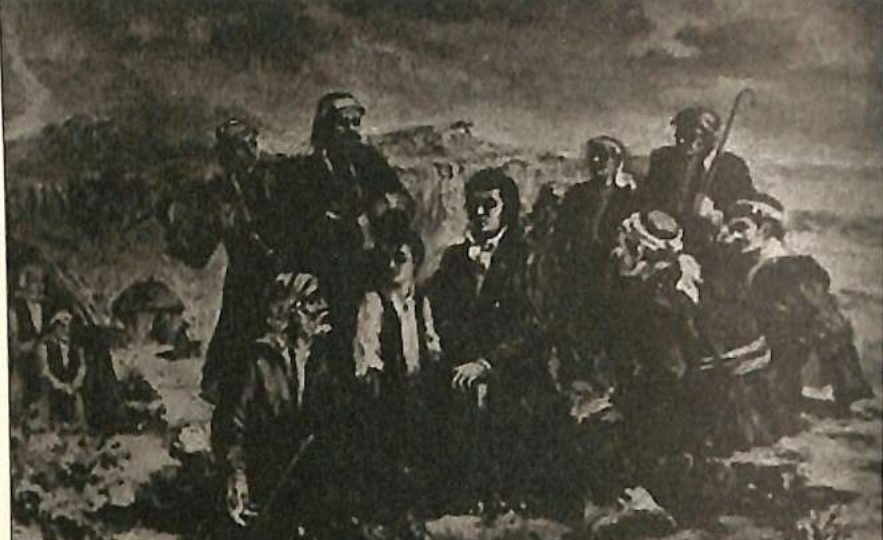
| Austen Henry Layard | archaeologist | experienced the assembly festival in Lalîş in 1846 and 1849, accompanied the campaign against the Mihirkan in 1846 and helped in 1849 with the decree in favor of the Ezidis. Guest calls him a “liberator of the Ezidis”. |
| Frederick Cooper | painter | drew Şêx Nasir, Mîr Huseyn Beg and the sanctuary in 1849. |
| Humphry Sandwith | doctor | described the young Mîr Huseyn Beg in 1849. |
In 1982 a fountain was built in the village of Kurukavak (formerly Hemduna) near Redwan in eastern Turkey in memory of Layard’s visit of 1849.
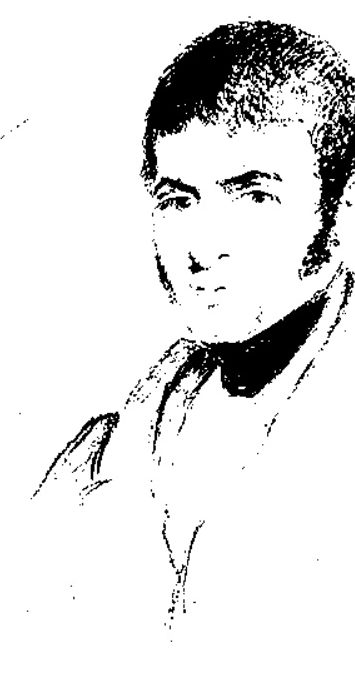
Kinneir as an eyewitness in 1814
In 1818 the British officer John Macdonald Kinneir published in London the account of his journey through Asia Minor and Armenia in the years 1813–1814. He encountered the Ezidis in the summer of 1814 on the way from Sêrt via Mardin and Cizîr to Mosul. Kinneir adopts the disparaging external designation of his time and reproduces about Şengal only rumors with obviously exaggerated figures; neither is adopted here. His own encounters, by contrast, he describes objectively and in part very warmly:
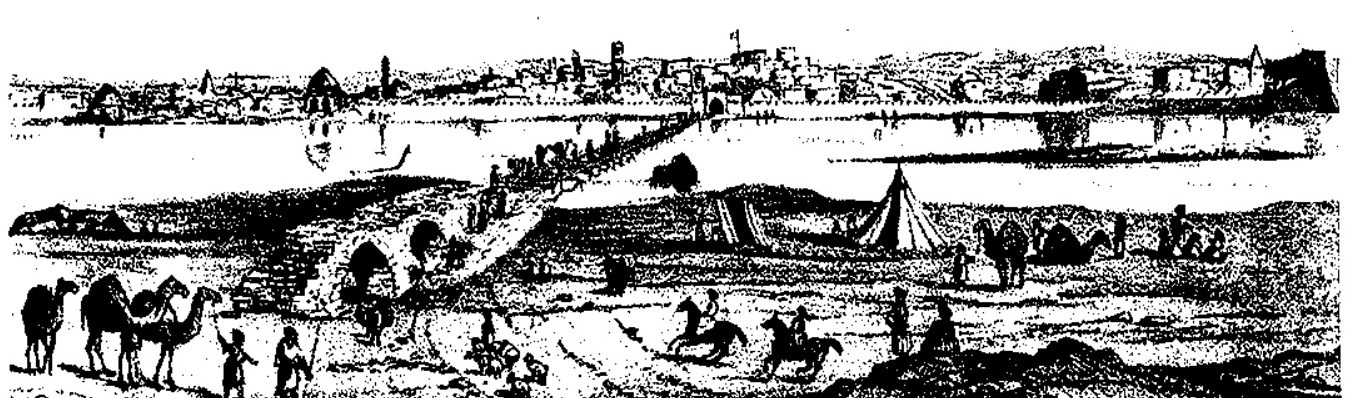
- July 13, 1814, Redwan: Redwan castle, seat of an Ezidi chief, surrounded by about a hundred huts; reception by the brother of the absent chief (see Redwan and Xerzan).
- Beginning of August 1814, Namur and Xetara: In Namur north of Mosul the Ezidis entertained the travelers “cordially” with milk, cheese and bread and provided eight armed horsemen as an escort. Their leader, the brother of the Ezidi chief, asked how many Ezidi families there were in England. After a stop in the Ezidi village of Xetara (in Kinneir Hatarra), Kinneir dismissed the guard near Tel Isqof; it asked for no tip.
- Kinneir notes that the Ezidis had suffered “many bloody persecutions” from the Muslims (p. 415).
Kinneir’s account is thus older than Layard’s descriptions of 1849.
Layard as an eyewitness 1849–1850
Layard’s second book, “Discoveries among the Ruins of Nineveh and Babylon” (London 1853; used here in the abridged New York edition of the same year), reports first-hand on his second journey. Layard was personally attached to the Ezidis; he describes places, people, clothing and festivals precisely, but interprets their religion from a Christian European point of view and uses the pejorative terms of his time. These judgments are not adopted on this site. The title of his first work, “Nineveh and Its Remains” (1849), contains the disparaging external designation with which opponents and European travelers branded the Ezidis at that time; volume 2 of this work, which is at hand here, lists the Ezidis as a separate population group alongside Chaldeans and Arabs, but otherwise contains hardly any information about them (the chapters on the Ezidis are in volume 1).
What Layard observed in 1849–1850:
| Time | Place | Observation |
|---|---|---|
| August 28, 1849 | Istanbul – Trabzon | departure with Qewal Yûsif and four chiefs from the districts near Diyarbakır on an English steamer |
| September 1849 | Xerzan, Redwan, Dêrabûn, Sêmêl | triumphal reception in the Ezidi villages; description of Redwan and of the Qewal circuits – see Redwan and Xerzan around 1849 |
| autumn 1849 | Lalîş | assembly festival with Qewal Yûsif’s report from Istanbul – see The festival in Lalîş 1849 |
| 1850 | Başîqa, Bahzanê, Êsiyan, Bacidrê | wedding of Qewal Yûsif’s niece (see Wedding); gazelle hunt with Mîr Huseyn Beg; night in Şêx Nasir’s new house in Êsiyan |
| end of March 1850 | Şengal | journey with Qewal Yûsif; peace settlements between the villages; agreement that Qewal Yûsif would bid for the tax farm of Şengal – see Şengal |
| May 1850 | Şengal | second visit; Layard helps with tax collection in Eldîna |
| summer 1850 | area of Van | information about Ezidi villages east of Mahmudiye and in the Karasu district (see below) |
Discrepancy: who sent the delegation to Istanbul?
According to Guest, the British vice-consul Christian Rassam sent Qewal Yûsif with four chiefs to Istanbul at the beginning of 1849. Layard, by contrast, writes that Mîr Huseyn Beg and Şêx Nasir, “the heads of the whole community”, sent the delegation to the sultan when they heard that Layard was in Istanbul. The occasion, he says, was the harsh and unjust forced recruitment of the Ezidis into the Ottoman army; through the mediation of the ambassador Stratford Canning a decree was obtained that freed them from all unlawful impositions. Both accounts are given side by side here (see also The Mîrs of Şêxan 1832–1913).
The Ezidis near Van (1850)
On his journey to Lake Van, Layard learned from a local informant, Ahmed Axa, that east of the Mahmudiye district and in the Karasu district there were many Ezidi villages and a considerable Jewish population. Both, he said, were severely oppressed by Kurdish chiefs, who unhesitatingly took their property and even their lives, because the qadis had issued fatwas that both were permitted to the believer. Layard reproduces this as his informant’s statement. On such legal opinions in general see Fatwas against the Ezidis.
The second half of the 19th century
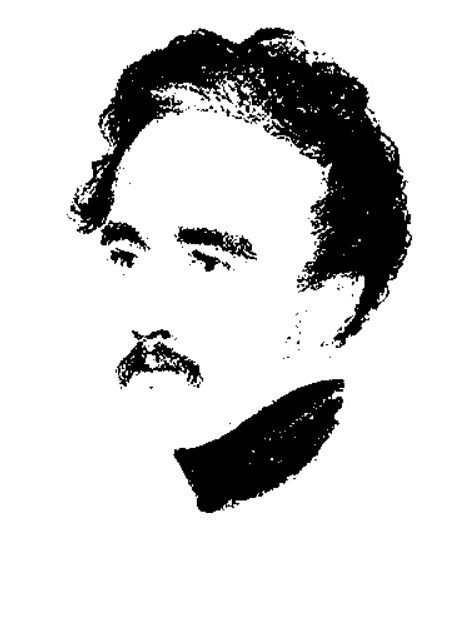
- In 1854 the American missionaries Henry Lobdell and Marsh made daguerreotypes of Şêx Nasir and Mîr Huseyn Beg in Lalîş.
- In 1867 the German botanist Carl Haussknecht visited Şengal alone and collected many plants.
- In 1880 the German orientalist Eduard Sachau passed through Şengal.
- In 1879–1885 the French vice-consul Nicolas Siouffi collected information about the Ezidis in Mosul; in 1885 he counted 8,360 Ezidis in 18 villages in Şengal.
- In 1883/84 the Russian vice-consul Yuri Kartsov and the doctor L. E. Browski visited Lalîş.
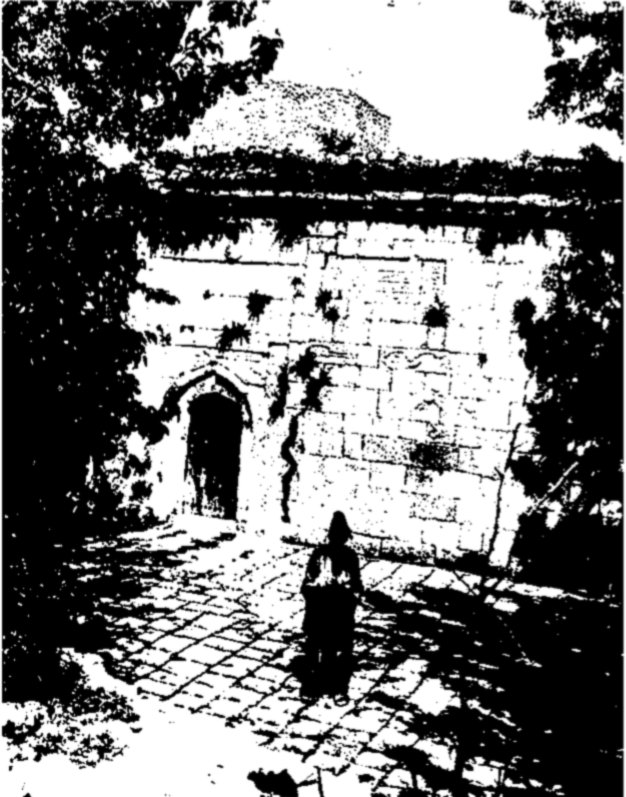
- In 1886 Athelstan Riley made the oldest photographs of the mausoleum of Şêx Adî.
- In 1894 the Spanish journalist Saturnino Ximénez accompanied Mîr Mîrza Beg to Lalîş.
In the South Caucasus: Yeghiazarov (1884) and Leclercq (1893)
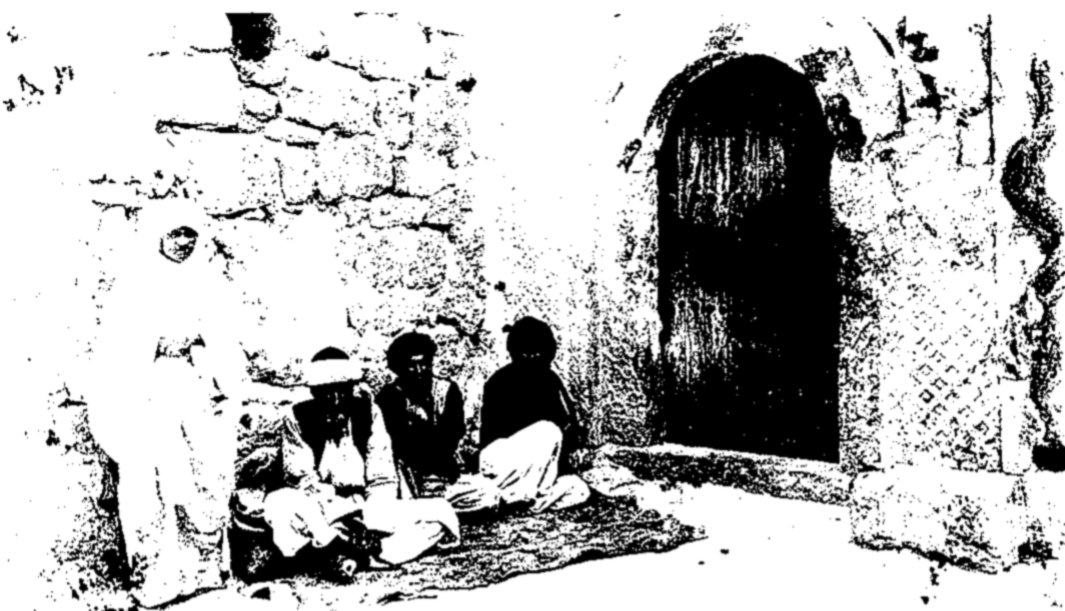
- S. A. Yeghiazarov (1884): According to his own statement, the Armenian jurist Soghomon Yeghiazarov worked for twelve years on the population of the Erivan Governorate. The occasion was an application of the Sunni spiritual administration in 1874, whereupon the governor requested reports on the Ezidis from the district chiefs (p. 173–174). His informants were Hesen Axa and the Feqîr Pîr Hesen; according to his words the Ezidis received him “like one of their own relatives” (p. 175). The study was printed in Tiflis; the copy at hand bears the year 1884, the part on the Ezidis was completed on October 1, 1884. Other articles on this site give, following secondary sources, the printing as 1891; this cannot be confirmed from the copy at hand – possibly the text also appeared in the proceedings of the Caucasian Department of the Geographical Society. Yeghiazarov expressly opposed the accusation of “devil worship”, but assigned the Ezidis to a neighboring people; this classification is not adopted. His descriptions are the basis of the articles Customary law in the Erivan Governorate and Ezidis in the Erivan Governorate (1873–1884).
- Jules Leclercq (1893): The Belgian travel writer tried to climb Ararat in 1890; his account appeared in Russian in St. Petersburg in 1893. His section on the Ezidis is not an eyewitness account but a summary after E. Kovalevsky and Yeghiazarov. He repeats rumors and slanders of his time, which are not adopted here, but himself calls the designation “devil worshippers” “not entirely accurate”. Usable are the figure of 7,772 Ezidis in Transcaucasia after Kovalevsky (p. 36), the tradition of the progenitor “Gezden”, who married a houri of paradise (p. 33; cf. Ezda in Yeghiazarov, see Traditions of origin), and the explanation of the round shirt collar (see Traditional clothing).
The early 20th century
- In 1904 the Briton W. A. Wigram found Lalîş deserted and decayed; in 1912 he visited the Mîr in Bacidrê.
- In 1906 Mark Sykes met Hemo Şero in Şengal and described the dress of the mountain dwellers.
- In 1909 Gertrude Bell visited Mîr Elî Beg and Mayan Xatûn in Bacidrê and photographed the Mîr; Elî Beg’s sister guided her through Lalîş. Later, as a British official in Baghdad, she kept in contact with Hemo Şero and Îsmayîl Beg.
- In 1928 the journalist Paul Schütz visited Îsmayîl Beg in Şengal.
- In 1934 the American anthropologist Henry Field visited Mayan Xatûn in Bacidrê, found manuscripts in Şengal and measured Ezidis in Tiflis.
Significance
The reports are the basis for many data of Ezidi history, for instance the campaigns of the 19th century. But they almost always show the view from outside. Several visitors – above all missionaries – also tried to coax secrets of their religion out of the Ezidis. On the history of the written tradition see History of the sources on the Ezidis.
Additions: Layard 1846, Drower 1940 and Evliya Çelebi
Layard’s first account (1849)
Layard described his first visit to the Ezidis in 1846 in the first volume of Nineveh and Its Remains (London 1849; preface October 1848). He describes the festival in Lalîş (see The festival in Lalîş 1846), Bacidrê and Êsiyan, Tayyar Pasha’s campaign against Mîrkan (see Campaigns 1836–1847) and the villages of Şengal. According to him, only one European before him, Dr. Forbes, had visited Şengal. Layard was well disposed toward the Ezidis and expressly contradicted the slanders about their festivals; at the same time he uses the disparaging external designations of his time and interprets the religion speculatively as a remnant of ancient cults. Only his observations are adopted on this site.
E. S. Drower (1940)
The British orientalist Ethel Stefana Drower (1879–1972), wife of a British judicial adviser in Iraq and above all a researcher of the Mandaeans, visited the Ezidis around 1922/23 and again in April 1940. At that time she lived for about ten days in Başîqa (with visits to Bahzanê) and five days in Lalîş; in Baghdad she spoke with Mîra Wansa. Her book Peacock Angel (London 1941) is one of the most precise descriptions of the customs, clothing, cuisine and sanctuaries of the Mosul plain (see Sersal in Başîqa 1940 and Tattooing).
Drower expressly distanced herself from the rumors she had reproduced in her earlier book By Tigris and Euphrates (1923), rejected the designation “devil worshippers” and called the slander of nocturnal debauchery an old lie. But she spoke no Êzdîkî, interpreted the customs comparatively as pagan cults and reproduces gossip about individuals; this is not adopted on this site.
Evliya Çelebi as a source
Bahadin Hawar Kerborani (2021) re-evaluates the travel accounts of Evliya Çelebi: Evliya names Ezidis in many places from Bingöl to Duhok, describes their trade and was an eyewitness of a campaign against Şengal in 1655. At the same time his account is full of disparaging external designations, and his figures are considered unreliable. See The Ezidis in the 16th and 17th centuries.
Travelers and researchers in T’amoyan’s school textbooks
The Ezidi school textbooks of Armenia (T’amoyan et al., 2013–2014) present some witnesses and researchers. Their information is not always reliable and is reproduced here only with an indication of this.
- Khachatur Abovyan (1809–1848; the textbook misprints the years as “1809–4848” or “1809–1840”): The grade 4 and grade 5 books bring abridged translations from his text “The Ezidis”. As a testimony of Armenian perception in the 19th century, he emphasizes the bravery, honesty and hospitality of the Ezidis; they had been oppressed by many neighboring peoples and were closest to the Armenians, who called them “brothers”. His judgments about “character” are period-bound. Factual statement of Abovyan: Ezidis had formed a free principality between Kayseri and Adana, in the area of Zeytun and Maraş, until about ten years before his account; after the campaign of Reşid Pasha, who wanted to force them to change their faith, only a few converted, the rest moved to the Russian part of Armenia. This statement has not been checked here against other sources (cf. Campaigns 1836–1847).
- John S. Guest (d. May 14, 1997 according to the textbook): The grade 7 textbook names his book on the Ezidis (London/New York 1987) and states, according to the newspaper “Dengê êzdîa” of April 23, 1991, that he built a water supply for the Ezidis in K’ûrûk’avak’ (formerly Hamdûna, Kurtalan district, Siirt province); his father, as an official in Turkey, had been a guest of the Ezidi family Cezayê (K’izlanî clan). Guest is said to have later visited Armenia and, in 1992, Lalîş. This information has not been checked further here.
- Austen Henry Layard: A text by Eskerê Boyîk in the grade 7 textbook summarizes Layard’s life (born in Paris in 1817, childhood in Italy, journey to the Orient from 1839, twice a guest of the Ezidis) and relates, following Layard, that Mîr Huseyn Beg had him name the newborn son – he named him after the grandfather Elî Beg. The claim in the same text that a descendant of Layard named “Johannes Düchting” built a water supply in Hamdûna contradicts the statement about Guest in the same volume and is not adopted.
Sources
- Eskerê Boyîk: Bi Kurtayî Dîroka Êzidiyên Ermenistanê (A short history of the Ezidis of Armenia). Diyarbakır 2016, p. 48 (ill.)
- John S. Guest: The Yezidis. A Study in Survival. London/New York 1987, p. 47, 65–73, 77–81, 85–128, 162–175, 185–189, 209–216, 224–232
- E’zîzê E’mer, H’esenê Şêx-Me’mûdê: E’debyet û zimanê êzdîkî, grade 4. Yerevan: Spîka 2013, p. p-088–089
- E’zîzê E’mer, H’esenê Şêx-Me’mûdê: E’debyet û zimanê êzdîkî, grade 5. Yerevan: Spîka 2013, p. p-010–012
- E’zîzê E’mer, H’esenê Şêx-Me’mûdê: E’debyet û zimanê êzdîkî, grade 7. Yerevan: Spîka 2014, p. p-057–059, p-076–078
- Austen Henry Layard: Discoveries among the Ruins of Nineveh and Babylon (abridged edition). New York 1853, p. 17, 36–53, 72–84, 171–181, 198–221, 270–277, 317–318
- Austen Henry Layard: Nineveh and Its Remains, Vol. 2. London 1849, p. title page (p-015), 153 (p-351), index
- John Macdonald Kinneir: Journey through Asia Minor, Armenia, and Koordistan in the Years 1813 and 1814. London 1818, p. p. 414–416, 458–460 (PDF p-419–p-421, p-461–p-463)
- S. A. Yegiazarov (Егиазаров): Краткий этнографический очерк курдов Эриванской губернии – containing the ethnographic-legal outline on the Ezidis. Tbilisi 1884, p. title page (p-002), p. 173–176, 232 (PDF p-087–p-089, p-116)
- Jules Leclercq: Поездка на Арарат (Journey to Ararat). Saint Petersburg 1893, p. title page (p-002), p. 32–37 (PDF p-020–p-022)
- Austen Henry Layard: Nineveh and Its Remains, Vol. 1. London 1849, p. preface, p. 269–323 (PDF 322–378)
- E. S. Drower: Peacock Angel. Being some Account of Votaries of a Secret Cult and their Sanctuaries. London 1941, p. p. 1–7 (PDF 12–18)
- Güneş Murat Tezcür (ed.): Kurds and Yezidis in the Middle East. Shifting Identities, Borders, and the Experience of Minority Communities. London: I.B. Tauris 2021, p. 101–106 (Kerborani)
Found a mistake?
Is something wrong – a fact, a spelling, a source, an image? Let us know: we check every report and correct the article.
Other spellings: Evliya Celebi · Evliya Tschelebi · Evliya Chelebi · Dschlaudius Ridschh · Jlaudius Rijh · Gertrud Bell · Ledschlerdschq · Lejlerjq · Sinjar · Sindschar · Shingal · Shengal · Singal · Shekhan · Scheichan · Shaikhan · Lalish · Lalisch · Lalesh · Sheikh