
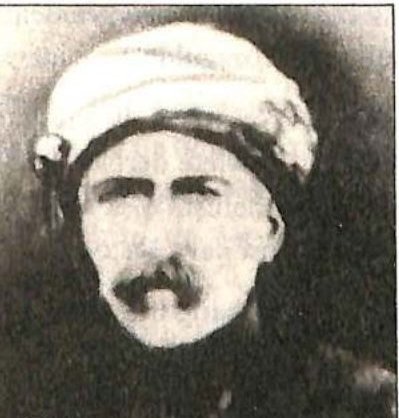
Ûsiv Beg (1869–1934) was head of the Hesinî tribe and is regarded as the last common head of the Ezidis in the South Caucasus. He was a deputy in both parliaments of the first Republic of Armenia and in 1918 led an Ezidi cavalry detachment. This chronology presents his life in detail. A short biography is on his person page.
The main source is the documentary biography by Manuk Muradyan (Armenian 2012, Russian 2013). It relies on the family archive of the descendants (the Ûsivyan family), on the National Archives of Armenia and on recollections of contemporary witnesses. Where Eskerê Boyîk’s “Short History of the Ezidis of Armenia” (dirok) states something different, this is noted. An overview of the discrepancies is at the end.
Name
In the sources he appears under many names: Usub Bek, Jusuf Bek, Jusuf Aga, Jusuf Bek Teimurow, Temirjan and others. In the seminary in Etchmiadzin he was called Hovsep Temuryants. After Armenia’s independence in 1918 he wrote his name Temiryan instead of Temirov. The family name goes back to his grandfather Temir Axa. Ûsiv’s own name later became the family name of his grandchildren: Ûsivyan.
The Ezidis called him “father”. Muradyan renders the word as Kako, Boyîk as Keko or Bavo.

Origin and childhood (1869–1879)
| Year | Event |
|---|---|
| 1869 | Born in Eslanlû on Mount Sinek (Surmelî district). Father: Hesen Axa II, mother: Xezal Xanim. The year of birth also appears in his deputy questionnaire of 1919. |
| Siblings: the brothers Biro and Hesen and the sisters Gulê, Nanê, Cewar, Hacîk and Newat. |
The family stood at the head of the Hesinî. The Russian authorities recognized it as nobility.
Education (around 1879–1883)
- His father pushed through, against resistance, that his son should attend a school. He himself went to Catholicos Gevorg IV in Etchmiadzin.
- At about 11 years of age Ûsiv entered the Gevorgian Seminary in Etchmiadzin, which had been founded in 1874. He left it in 1883 from the 3rd class. Boyîk also gives the same years (1879–1883). The priest Sakaryants, by contrast, wrote in 1904 that he had completed the 4th class. The year 1883 also appears in the questionnaire of 1919.
- A fellow pupil was the later composer Komitas (Soghomon Soghomonyan), who entered in 1881. A lifelong friendship resulted.
- In 1920 the writer Avetis Aharonyan called him “my pupil”. Muradyan suspects that Aharonyan prepared him for the seminary in Iğdır.
- Ûsiv Beg spoke very good Armenian and Russian. In 1904 the publicist A. Gyurjyan wrote that he spoke “pure literary Armenian”.
Head of the Hesinî (from 1896)
- In 1896 his father died. According to family tradition he was poisoned on the way to an invitation to the tsar’s court. Ûsiv was 27 years old and became head of the Hesinî – according to tradition the 26th head of this lineage. In practice he was now regarded as head of all the Ezidis in the South Caucasus.
- He had the duties of a tribal chief: he was judge and mediator, saw to the taxes, protected widows and orphans and represented his people before the authorities. More on this in the article Hesinî.
- After the period of mourning he married Kewê, a woman from the Sîpkî tribal confederation from the Kars region.
- He spent the winter in Iğdır and Eslanlû. In 1909 about 30 villages on Sinek with land, summer pastures and winter quarters were subject to him. He was regarded as one of the richest men of his time, but lived modestly.
- His house was a meeting place for guests: Komitas and the painter Panos Terlemezyan stayed with him several times. With his help Komitas wrote down Ezidi songs; Ûsiv Beg had singers come from the villages for this. Among his friends were also Cihangîr Axa, the Armenian military leader Andranik and the later general Drastamat Kanayan (“Dro”). Dro is said to have been the matchmaker at his wedding.
Education and offices before the World War (1900–1914)
| Year | Event |
|---|---|
| 1900–1904 | At state expense three Russian-language schools for Ezidi children are established: in Bacelî (Kars), Qundaxsaz (Aparan) and Zor (Surmelî). Zor receives a two-story school building for 15,000 rubles. Ûsiv Beg is present at the opening. Year disputed: Boyîk and a newspaper report give 1902, Muradyan elsewhere 1904. |
| 1902–1904 | The authors Gyurjyan and Sakaryants visit him and write about the Ezidis on Sinek. The cleric Sion Ter-Manvelyan from Iğdır bases his book of 1910 on conversations with him. |
| 1902 | Birth of his son Elîxan. |
| 1907–1912 | Several visits by Îsmayîl Beg (Mîr Îsmayîl) of the Mîr family, who lived in Şengal. Together they visit the Catholicos in Etchmiadzin and the viceroy in Tiflis. |
| 1908 (order of Dec. 6) | Silver medal “for zeal” as elder of the village community of the Hesinî Ezidis; the certificate is dated May 20, 1909 (Boyîk: “silver badge 1908”). |
| 1909 | Îsmayîl Beg appoints him by letter as his deputy for the Ezidis in the Caucasus. According to Boyîk, Îsmayîl Beg also asked the viceroy to recognize Ûsiv Beg as head of the Ezidis of Russia in religious matters as well. |
| Feb. 14, 1909 | His mother Xezal Xanim transfers to him by notarial power of attorney (Iğdır) the administration of her property. |
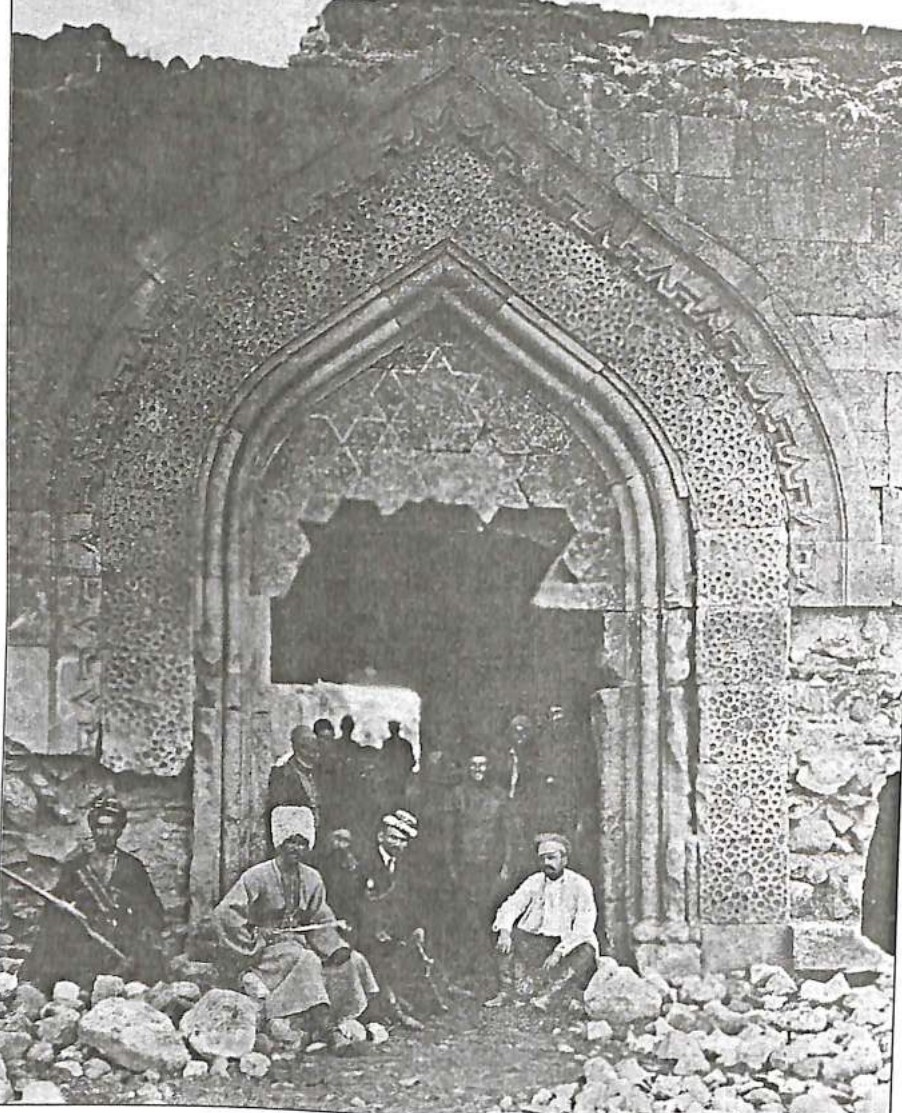
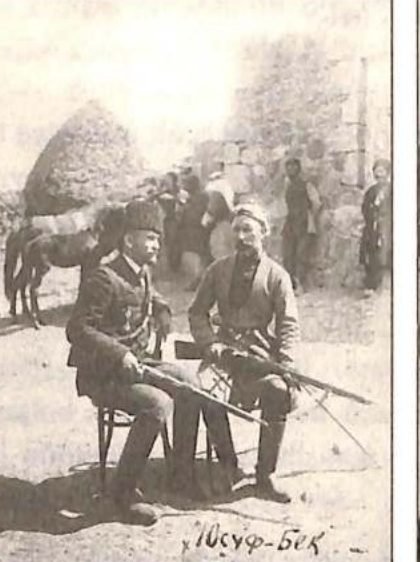
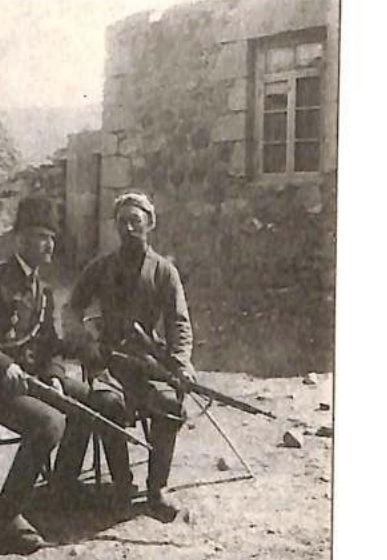
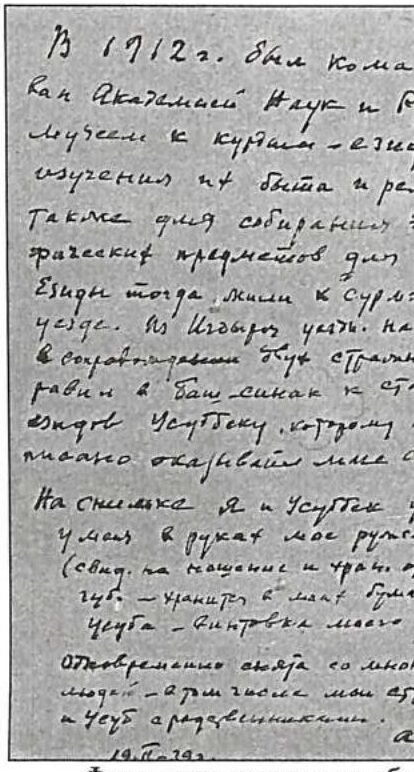
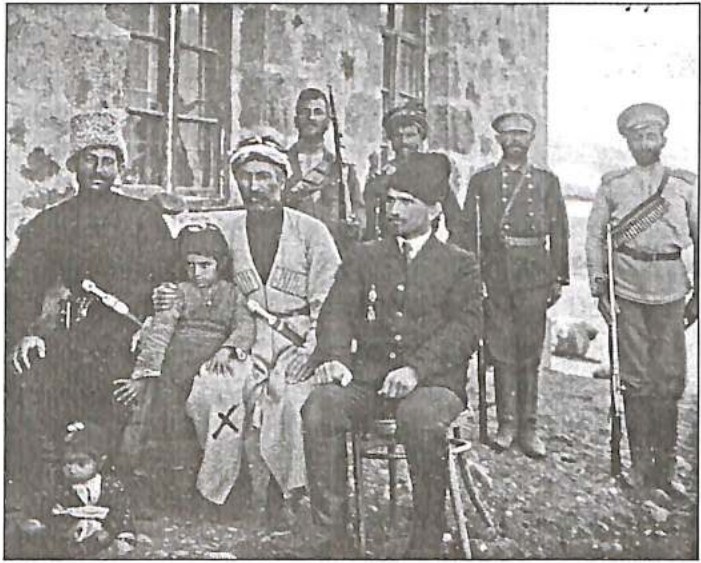
| 1912 | The ethnographer Ashkharbek Loris-Kalantar comes on behalf of the Russian Museum. Ûsiv Beg accompanies him to the summer camps and gives the museum everyday objects. Four photos of this visit are in the National Archives of Armenia. |
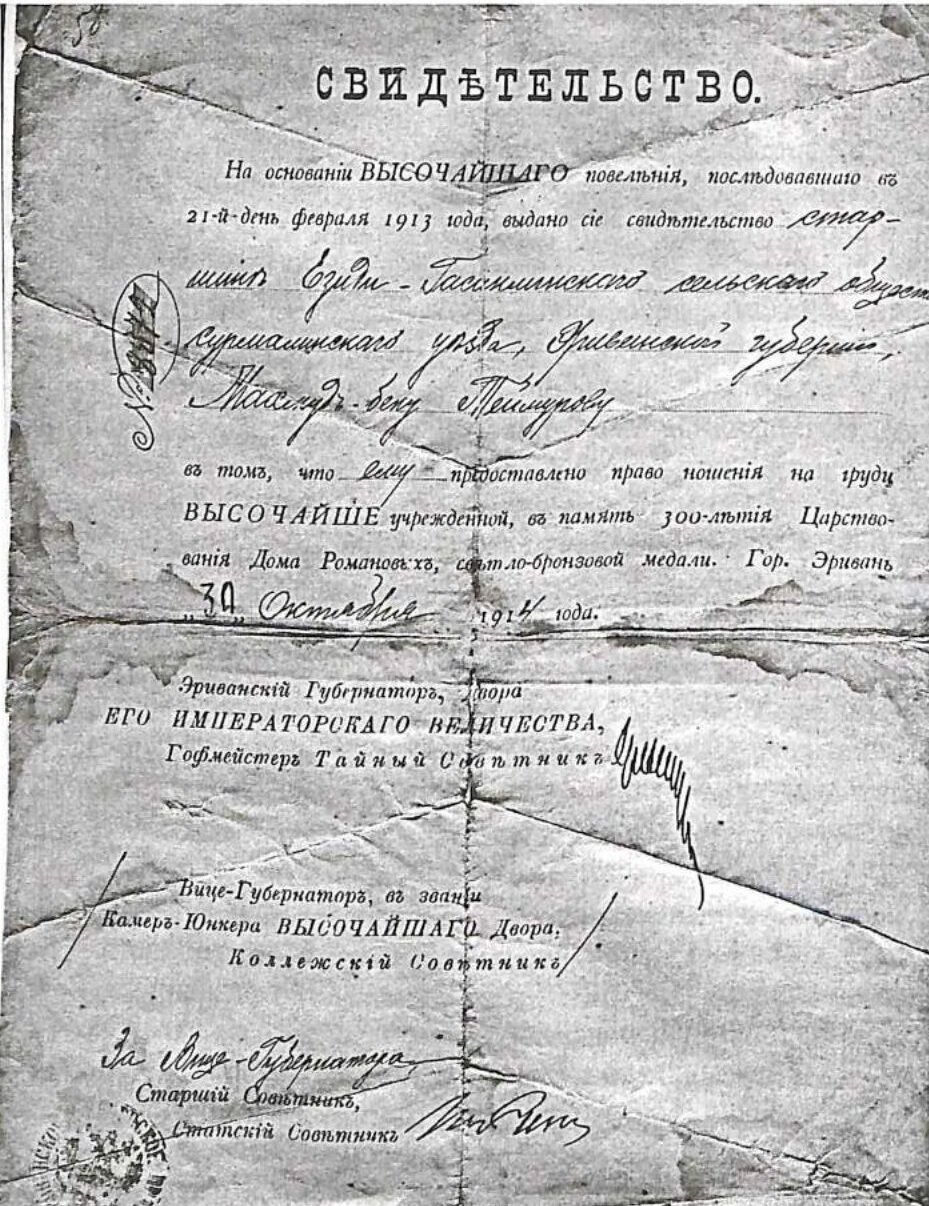
| 1912 (order of Dec. 6) | Gold medal “for zeal”; the certificate is dated June 12, 1913. |
| March 28, 1913 | Letter of thanks from the Russian Museum, signed by Grand Duke Georgy Mikhailovich (Boyîk: March 24). |
| Nov. 13, 1913 | The Council of Ministers grants him a lifelong pension of 600 rubles a year. His father had received 250 rubles from 1890. |
| around 1913 | Undated letter of congratulation to the viceroy in the name of 3000 Ezidi families who had come “60 years ago” under Temir Axa. Muradyan dates it to the Romanov jubilee of 1913. |
Muradyan calls the years 1913–1916 the most active period of his public work.

First World War (1914–1917)
- In 1915 he donated to a Red Cross field hospital with 40 beds in Yerevan and received a letter of thanks.
- When the schools closed during the war, including the one in Zor, he asked the governor and the viceroy to reopen them.
- In 1915 he applied for a scholarship for his son Elîxan at the Lazarev Institute of Oriental Languages in Moscow. In the application he calls himself “head of all the Ezidis in the Caucasus” and writes that the war had ruined him. The scholarship was granted.
- July 16, 1916: He asked the viceroy to resettle 31 Ezidi families from the village of Cabalî (Khanate of Maku, Persia) in the village of Taparîz (Bazîd district); their livestock and household goods had been taken from them. On July 22, 1916 the answer came: resettlement would be possible only after the war. It was addressed to the “head of all the Ezidis in the Caucasus” in Eslanlû.
- According to Boyîk, horsemen of Ûsiv Beg and Cihangîr Axa fought with the Russian army for Kars and Sarıkamış. They helped refugees near Iğdır cross the Aras over the Qeregel bridge.
Revolution and founding of the state (1917–1918)
- May 1917: Ezidi community assemblies unanimously gave him full powers to represent them in the new committees. Three resolutions are preserved: of May 15 (189 households), of May 18 (286 households, community of the Hesinî) and of May 29 (Sinek community). According to Muradyan at least 27 communities passed such resolutions.
- Autumn 1917: The military leader Garegin Nzhdeh took him to Tiflis and introduced him to the Armenian National Council. There he got to know Aharonyan, Aram Manukyan, Ruben Ter-Minasyan and Simon Vratsian.
- From the end of 1917 to 1918 a cavalry battalion of Ezidi volunteers under his command fought at the front that the Russian army had abandoned. In a government meeting in 1918 it is called the “Alashkert battalion of the Ezidis”; he was granted 2000 rubles of outstanding pay.
Sardarabad and Bash Aparan (May 1918)
- In the battles of May 1918 Ezidi cavalry detachments fought on the Armenian side. Ûsiv Beg’s detachment took part at Sardarabad in the fighting of the Erivan Corps under General Movses Silikyan. An eyewitness reports that two Ezidi commanders had their camps in the steppe around Sardarabad: Cihangîr Axa near Talin and Ûsiv Beg at the “Black Stream”.
- According to Muradyan, his horsemen also fought under Dro at Bash Aparan.
- He called on the Ezidis to join the Armenian troops. Hundreds followed, among them his relative Şamil Temurov.
- According to Boyîk, 700 Ezidi horsemen under Ûsiv Beg and Cihangîr Axa fought at Sardarabad, Bash Aparan and Karakilisa. Muradyan does not give this figure.
- On November 7, 1918, by Order No. 34 of General Silikyan, he received the St. George Cross 4th class – as commander of the battalion of Ezidi volunteers and with the rank of lieutenant (poruchik). He was decorated for supporting the Erivan Corps at Sardarabad and for personal bravery. (Muradyan prints the year as “1916”; 1918 is obviously meant; Boyîk gives 1918.)
Deputy of the Republic of Armenia (1918–1920)
| Date | Event |
|---|---|
| Aug. 1, 1918 | Opening of the first parliament (Khorhurd) in Yerevan with 46 deputies. Ûsiv Beg is the only representative of the Ezidis and belongs to the faction of the Dashnaktsutyun party. He becomes a member of the refugee commission. |
| 1918–1920 | Residence in Yerevan, Starokazarmennaya Street 29 (today part of Tigran Mets Street). |
| Feb. 1919 | Delegate for the refugees from Surmelî at the 2nd Congress of Western Armenians. With a parliamentary commission he travels to Surmelî, where there is famine. |
| May 1919 | Member of the district council of Surmelî. |
| June 21–23, 1919 | Election to the second parliament: 7th place on the list, the most votes in Surmelî. |
| Aug. 1919 | Member of the commission for labor and welfare and the commission for the refugees from Surmelî. The commission crosses the front line and finds 4000–5000 starving Armenian and Ezidi refugees. Afterwards Ûsiv Beg decides to resettle his people in the Ararat plain. |
| autumn 1919 | A delegation of Ezidi clergy from Lalîş brings a letter from Îsmayîl Beg to Yerevan. At a ceremony in parliament Ûsiv Beg receives the scroll and hands it to the president of parliament. See Şengal 1915–1918. |
| autumn 1919 | Visit to a new school in the village of Aghavnatun, which Ezidi children also attended. |
| 1919–1920 | Still battalion commander with the rank of lieutenant; an Ezidi cavalry detachment belongs to the Surmelî Corps under Dro. |
| Aug. 27, 1920 | Telegram of congratulation to Prime Minister Hamo Ohanjanyan on the Treaty of Sèvres: the Ezidi people rejoiced at the recognition of Armenia. Signature “Us. Temurjan”. The telegram is regarded as the only surviving Armenian document in his hand. |
| Sept. 1920 | First congress of the Ezidis of Armenia in Alexandropol (Gyumri), see Organizations 1919–1931. According to Muradyan, Lazo presided, Ûsiv Beg was his deputy. According to Boyîk both presided together. |
The historian Ararat Hakobyan judges that the Ezidi deputy always represented a clear line supportive of the state. Often a decision depended on his vote. According to family tradition, in the famine years he distributed American relief goods such as flour and clothing to the Ezidis.
War, Sovietization and exile (1920–1921)
- In the autumn of 1920 Turkish troops attacked. Ûsiv Beg housed most of the inhabitants from Sinek in the village of Şamîram (Ashtarak district), far from the front. Surmelî went to Turkey in 1921 with the treaties of Moscow and Kars.
- On December 2, 1920 Armenia became Soviet. Muradyan calls this day the “last day of the dynasty of the chiefs”.
- According to Vratsian, Ûsiv Beg took part in the uprising against the Bolsheviks in February 1921. Afterwards he went with the government to Zangezur and in June/July 1921 into exile in Iran.
- In September 1921 he returned to Armenia. He built a house in Şamîram. He advised his people not to resist the new power and to take part in the reconstruction. He remained an adviser to his tribe.
Soviet period, banishment and imprisonment (1921–1932)
- Ûsiv Beg’s name was concealed in the Soviet period. He was not invited to the congress of the Ezidis on Aragats in 1923 or to a further congress in 1926. In 1926 he can be seen in a scene of the film Zerê – the only known film footage of him.
- Out of fear the family destroyed letters, photos, tsarist orders and documents from the period of independence.
- According to Muradyan, in 1929 he was taken by the secret police and banished to Kevar (today Gavar, on Lake Sevan). His wife Sayrê accompanied him; a few days later his nephew Egit Beg was also arrested. According to the family, Ûsiv Beg, Egit Beg and Cihangîr Axa lived there together for one and a half to two years.
- Boyîk speaks of a house banishment around 1930 together with Cihangîr Axa. According to his account, the Armenian party chief Aghasi Khanjyan sent both to Kevar under the pretext of banishment for their protection. The Ûsivyan family also relates that Khanjyan intervened on his behalf.
- Afterwards he was held in the internal prison of the secret police in Yerevan. In the summer of 1932 he was released ill after eight months of imprisonment. In 2011 the intelligence service of Armenia stated that it had no file on him.
Death and grave (1934)
- Ûsiv Beg died on January 12, 1934 in Şamîram, on a frosty snowy day. Boyîk reports that thousands of Ezidis and Armenians came to his house. According to an oral tradition, a commission of the secret police came that morning and found him dead.
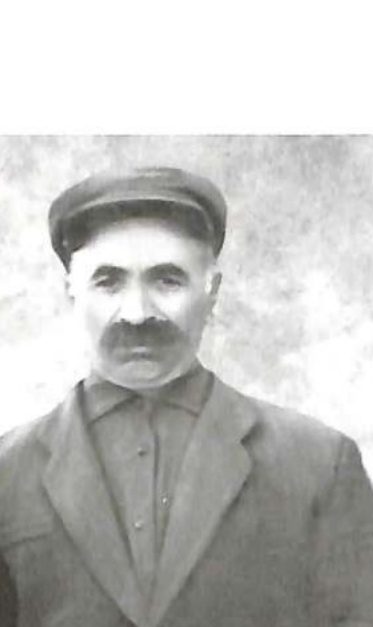
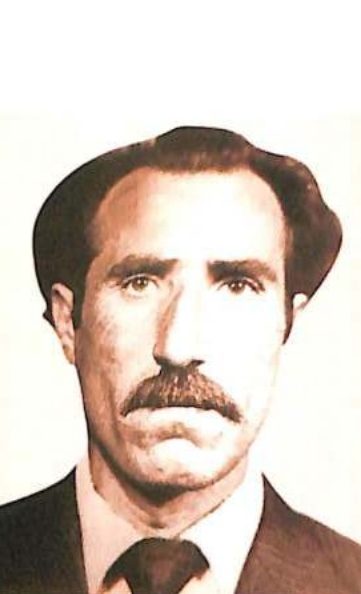
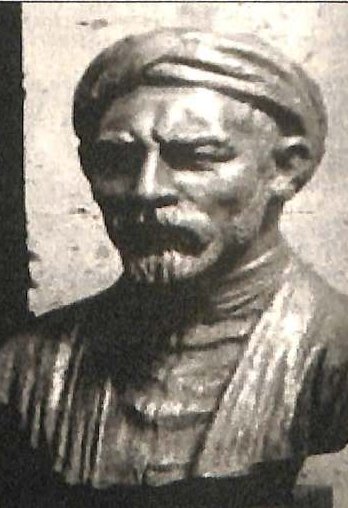
- He was buried in the cemetery of Şamîram. Until about 1970 it was dangerous to speak publicly about him. In 1982 his grandson Mecît Beg Ûsivyan placed a bust on the grave.
- The grave is to this day a place of pilgrimage for Ezidis. At festivals toasts are drunk to him and to the chiefs of the Hesinî. People swear “by the bread of the house” of the family.
Family
| Name | Details | |
|---|---|---|
| Parents | Hesen Axa II and Xezal Xanim | |
| 1st marriage | Kewê (Sîpkî, from Kars) | Ûsiv Beg deliberately chose a wife from outside the Hesinî. She died giving birth to the youngest son. |
| Children | Tazê, Elîxan (b. 1902), Susik, Gewaz, Emen, Qulixan | Elîxan was the eldest son and designated successor. Qulixan was conscripted in 1941 and went missing. |
| 2nd marriage | Sayrê (Hesinî) | Boyîk calls her Seyran. |
| Child | Gulîzar | According to Muradyan born 1921, according to Boyîk 1920. |
- In the questionnaire of 1919 he gave three sons and three daughters. According to Muradyan, a middle son died of an illness at the beginning of 1920, a married daughter in 1919. In the end he had two sons and five daughters. Boyîk counts the same.
- Grandchildren: Muradyan names Gulîzar as the mother of the writer Eskerê Boyîk and Emen as the mother of Ahmedê Gogê. Boyîk confirms this: he writes about his mother Gulîzer and calls Ahmedê Gogê the son of his aunt.
- His brothers were called Biro and Hesen. He raised Biro’s sons Egit, Paşa and Zurban like his own children.


Honors after his death
- 1982: bust on the grave in Şamîram.
- Sculpture group “Ûsiv Beg and Komitas” in the school of Şamîram.
- June 14, 2004: The secondary school of Şamîram is named after him.
- A picture and brief information about him appear in an Ezidi primer published in Armenia.
- 2012: A bronze bust by the sculptor Serzh Mehrabyan is placed in the hall of the First Republic in the Sardarabad Museum. It is a gift of Mecît Beg Ûsivyan and his sons.
- July 3, 2012: Muradyan’s book is presented at the Institute of History of the Academy of Sciences of Armenia, together with the documentary film “The Last Leader”.
- According to Avik Isahakyan, the grandson of the poet Avetik Isahakyan, Ûsiv Beg was the model for the wise “Jusuf Aga” in a story by his grandfather (1934).
Discrepancies between the sources
| Topic | Muradyan (usubbek) | Boyîk (dirok) |
|---|---|---|
| School in Zor | 1904 (elsewhere 1902) | 1902 |
| Elîxan at the Lazarev Institute | two years (1915–1917) | three years |
| Second wife | Sayrê | Seyran |
| Daughter Gulîzar | b. 1921 | b. 1920 (both: mother of Eskerê Boyîk) |
| Egit Beg | nephew (son of the brother Biro) | cousin |
| Letter of thanks from the museum | March 28, 1913 | March 24, 1913 |
| Banishment to Kevar | 1929, later with Egit Beg and Cihangîr Axa | around 1930, with Cihangîr Axa |
| Congress of Alexandropol 1920 | chaired by Lazo, Ûsiv Beg deputy; secretary Elîxan (perhaps his son) | chaired by Ûsiv Beg and Lazo; secretary presumably Elîxan Şaginov |
| Horsemen at Sardarabad | no total figure | 700 horsemen (with Cihangîr Axa) |
| Address “father” | Kako | Keko, Bavo |
According to Muradyan, Komitas’s music edition with 13 melodies from the region appeared in Moscow in 1904. Boyîk gives the year 1910.
Additions and discrepancies according to Sloyan (2015)
The book by Mirza Sloyan on the sanctuary of Aknalich contains a chapter on Ûsiv Beg. According to his own statement, Sloyan relies above all on the books of Manuk Muradyan, on memorial volumes on the battles of May 1918 and on his own journeys. Much agrees with the chronology above (birth 1869, schools 1900–1904, appointment by Îsmayîl Beg 1909, St. George Cross on November 7, 1918, exile in Persia 1921, imprisonment until the summer of 1932, death on January 12, 1934). In addition or differently he states:
- Death of the father (1896): Hesen Axa is said to have been poisoned on the way to the tsar at the railway station of Ulukhanlu (today Masis).
- 1917: Ûsiv Beg is said to have been a member of the Armenian National Council; the Ezidi leaders had authorized him to speak in their name.
- Letter from Lalîş (autumn 1919): Sloyan dates it to October 14, 1919. It says that in the First World War the Ezidis took in 6000 Armenians and even hid 200 of them in the sanctuary of Şêx Adî. The scroll is today kept in the Matenadaran (manuscript archive) in Yerevan.
- Congress in Alexandropol: Sloyan gives the date as September 22, 1920.
- Decorations: The book also names orders of 1879 and 1880 for the war of 1877/78. For Ûsiv Beg, born in 1869, this is impossible; presumably they belong to his father Hesen Axa II.
- Wedding: According to Sloyan, Ûsiv Beg married at 31–32 years of age, and Dro was his best man (Kirîv). Muradyan calls Dro the matchmaker and places the first marriage soon after 1896.
- Son Qulixan: According to Sloyan he fell in the Second World War near Kerch; according to Muradyan he went missing.
- Son Elîxan: banished to Siberia in 1936, in a construction battalion during the war, afterwards head of a sheep farm in Şamîram; died 1959.
- Grave: Sloyan writes that the grave monument of 1982 was placed by a son; according to Muradyan it was the grandson Mecît Beg.
- Descendants: Around 2014 the tribal chief of the Hesinî was the grandson Mecît Beg Ûsivyan, then 84 years old. The family numbers about 500 descendants.
- Eslanlû today: During a visit in 2014 the village had about 100 farmsteads; Ûsiv Beg’s house on the edge of the village had been rebuilt and was inhabited by two families. Earth from the old cemetery and water from the “spring of Ûsiv Beg” were taken to Armenia.
- Monument 2014: Since September 29, 2014 a basalt monument to Ûsiv Beg by Getik Baghdasaryan has stood in the memorial complex of Aknalich.
Sources
- Manuk Muradyan: Усуб Бек (Ûsiv Beg). Yerevan 2013 (Russian translation of the Armenian original, Yerevan 2012), p. 4–16, 57–60, 83–200, 228–288, 340–357
- Eskerê Boyîk: Bi Kurtayî Dîroka Êzidiyên Ermenistanê (A short history of the Ezidis of Armenia). Diyarbakır 2016, p. 60–98
- Mirza Sloyan (Mirzoyê Çolo Siloyan): Дорога, ведущая в храм. Три года спустя (The road leading to the temple. Three years later). Yerevan 2015, p. 75–78, 88, 98, 168, 172–188, 203–215
Found a mistake?
Is something wrong – a fact, a spelling, a source, an image? Let us know: we check every report and correct the article.
Other spellings: Jusuf Bek · Usive Beg · Usive Bek · Usive Bey · Usiv Beg · Usiv Bek · Usiv Bey · Ûsivê Bek · Ûsivê Bey · Ûsiv Beg · Jusuf Beg Teimurow · Jusuf Bey Teimurow · Usub Beg · Usub Bey · Usiv Temiriyan · Jusuf Beg · Qers · Abaran · Bash-Aparan · Emir