
Hesen Axa the First
Hesen Axa led the Hesinî at the time of the wars of 1826–1829. In 1828 he went over to the Russian side with at least 100 armed horsemen and settled with his tribe in Surmelî.
Alexander Pushkin met him in 1829 and described him in his “Journey to Arzrum”: tall, in a red jacket and black cap. Hesen Axa asked Pushkin whether the Ezidis in Russia were considered “devil worshippers”, and was relieved when the latter said no.
Hesen Axa the Second
Hesen Axa, son of Temir Axa, was born on June 18, 1842 in Eslanlû (Surmelî).
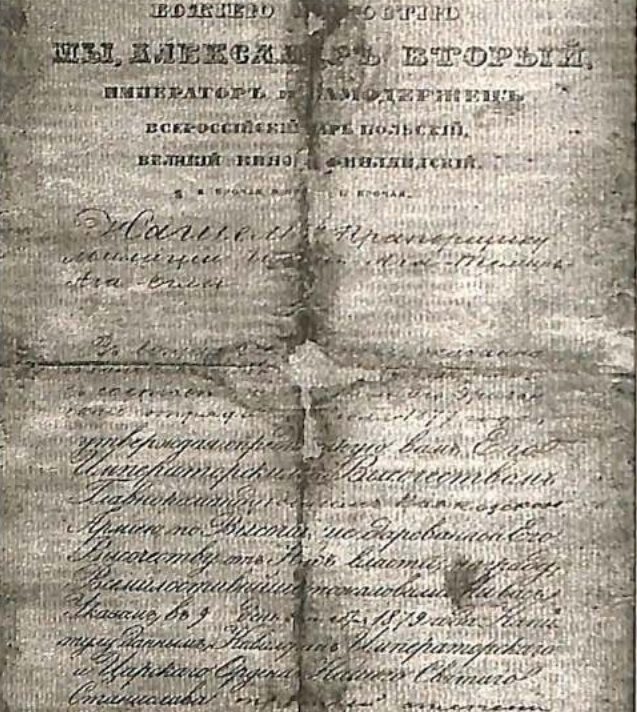
- In 1877 he served in the cavalry regiment and led 300 horsemen at Bazîd under General Ter-Gukasov; in 1880 he received an officer's rank.
- In 1883–1884 he headed the zemstvo administration of Surmelî.
- He received the Order of St. Stanislaus 3rd Class (1879) and 2nd Class (1893) and the Order of St. Anne 3rd Class (1880); from 1890 he drew a pension.
- He spoke Armenian and Russian. At a time when reading and writing were considered improper among the Ezidis, he campaigned for schools and sent his son Ûsiv Beg to the seminary in Etchmiadzin.
- He received the ethnographer Yeghiazarov, who spoke with Pîr Hesen about the religion in order to refute the accusation of “devil worship”.
Hesen Axa died around 1896 at about 52 years of age. According to tradition he was poisoned on his way to an invitation from the Tsar.

Additions according to Muradyan (2013)
In his biography of Ûsiv Beg, Manuk Muradyan relies on the service record of Hesen Axa II, on documents from the family archive and on Russian war reports.
Hesen Axa I
- He was the successor of Osman Axa. His life dates are unknown. Muradyan supposes that he was born in the second half of the 18th century in the Bazîd area. He probably died by 1840–1842 at the latest, for in 1843 Temir Axa was head.
- According to the officer P. I. Averyanov, Hesen Axa came to Bazîd on September 8, 1828 with 300 families. He asked to be allowed to return to the old pastures and provided 100 horsemen. General Ushakov speaks of 200 families.
- A report by Prince Chavchavadze of September 15, 1828 praises his horsemen: everywhere they had been the first to throw themselves into battle.
- At Toprakkale they recovered 140 stolen oxen belonging to the Ezidis and returned 500 head of cattle to Armenian owners.
- Pushkin describes him without a name as a tall man in a red cloak and black cap. He is said to have explained that the Ezidis believed in one God. The identification with Hesen Axa comes from later sources.
- Discrepancy: Muradyan gives the capture of Bazîd once as July 28 and once as August 28, 1828. Boyîk (dirok) gives August 28.
Hesen Axa II – career according to the service record
| Date | Event |
|---|---|
| June 18, 1842 | Birth in Eslanlû |
| April 1877 | Junker in the Ezidi irregular cavalry division; in the war of 1877–1878 he leads 300 horsemen in the Erivan Corps under General Ter-Gukasov |
| July 30, 1877 | Battle for which on Oct. 27, 1879 he receives the Order of St. Stanislaus 3rd Class with swords |
| Oct. 23, 1877 | Battle near Erzurum, for which on Apr. 16, 1880 the Order of St. Anne 3rd Class with swords |
| May 1880 | Second lieutenant (podporuchik) |
| Aug. 18, 1883 | Head of a section of the rural guard (rural police) in the Surmelî district |
| March 15, 1884 | Discharge at his own request for family reasons |
| 1890 | State pension of 250 rubles a year (decision of Jan. 26, 1890) |
| June 17, 1893 | Order of St. Stanislaus 2nd Class, as head of the 6th military horse district of Surmelî |
| 1896 | Death in Eslanlû |
Discrepancies with Boyîk (dirok): Boyîk gives May 15, 1884 as the date of discharge, Muradyan March 15. Boyîk speaks of the “zemstvo administration” of Surmelî. The service record, however, has the rural guard (Russian земская стража), i.e. a rural guard force.
Family
- His wife was Xezal Xanim, the daughter of a simple Mirîd (layman). An Ezidi funeral song names her.
- He had three sons – Biro, Ûsiv and Hesen – and five daughters: Gulê, Nanê, Cewar, Hacîk and Newat.
- In 1883 he married a daughter to a simple Mirîd who had become wealthy. As bride price (Qelen) he received 60 two-year-old sheep, 100 rubles, a mare of the “Kehêl” breed and gifts. The dowry was no less than the bride price.
- One son-in-law was Regan Axa, the head of the village of Zor.
Activities
- He was the most important informant of the ethnographer Soghomon Yeghiazarov (1883/84). He persuaded clergy and tribesmen to give him reliable information.
- As early as the 1880s he wanted to found schools for Ezidi children and asked Yeghiazarov for a curriculum. According to Ûsiv Beg he wished for a script for his people. This was realized only after his death.
- According to the newspaper “Haraj” (1920), Armenian revolutionaries in the 1880s and 1890s used the routes of the Ezidi heads across the border with their consent.
- According to family tradition he was friends with General Mikhail Loris-Melikov.
Death
According to family tradition, Hesen Axa was poisoned with coffee in 1896 at an inn in Ulukhanlu (today Masis) on his way to an invitation to the Tsar's court. He had himself brought back to Eslanlû and died there. Russian border soldiers rendered him military honors at his funeral. Boyîk, by contrast, writes that the poisoning took place in the house of a cleric in Ulukhanlu. Both accounts are tradition.
According to Elîxan, his grandson, the widow received a pension from the Tsar. The family gives 100 gold pieces for this, elsewhere 100 rubles a year.
On the life of his son see Ûsiv Beg: timeline and activities.
Hesen Axa II in Yeghiazarov (1884)
The study by the Armenian jurist S. A. Yeghiazarov (Soghomon Yeghiazarov) is now available in the original (Tiflis 1884; the part on the Ezidis was completed on October 1, 1884). Yeghiazarov names Hesen Axa and the Feqîr Pîr Hesen as his informants (p. 176). What he learned from Hesen Axa or writes about him:
- Self-designation and language: According to Pîr Hesen and Hesen Axa, the Ezidis call themselves Êzdî (p. 178). They call their language the “language of the Êzdî” (p. 180; see Names and terms).
- Origin: According to both, the progenitor Ezda is a being created directly by God, “half angel, half human” (p. 178) – a tradition. The Hesinî firmly rejected the view of other Ezidis that they descended from the Caliph Yazîd (p. 177–178).
- Family and tribe: In his words, his ancestors had led the tribe already in Mesopotamia, for at least 300 years; he knew seven generations (p. 202–203; see Hesinî). According to him, the division into districts of the elders (Rûspî) still existed among the tribes in the Ottoman Empire (p. 198).
- Marriage: Hesen Axa was himself married to the daughter of a simple Mirîd and “last year” (i.e. 1883) gave a daughter to a simple but wealthy Mirîd (p. 194). This confirms the information according to Muradyan above. The bride price (60 sheep, 100 rubles, a mare) is given only by Muradyan; it does not appear in the available text of Yeghiazarov, particularly as pages 220–221 of the chapter on marriage are missing there.
- Emer Axa: Yeghiazarov calls Emer Axa the younger brother of Hesen Axa. He was elected village headman unanimously for three successive three-year terms; the voters called out: “Our head is Emer Axa!” (p. 214).
Discrepancies concerning Emer Axa
- Brother of Hesen Axa or of Temir Axa? Yeghiazarov (1884) calls Emer Axa the brother of Hesen Axa II. Likewise Muradyan, following the medal certificate, writes that Emer was a son of Temir Axa and younger brother of Hesen Axa II. In the article Temir Axa, on the other hand, it says, following Boyîk, that “Omer Axa” was a brother of Temir Axa.
- Older or younger? In the list of Temir Axa's sons according to Wezîr Ûsivyan (Elo, Kelaş, Emer, Esed, Hesen, Ewas), Emer stands before Hesen. If the list were ordered by age, Emer would be the elder brother – Yeghiazarov expressly calls him the younger. Whether the list is ordered by age is not clear from the sources; the question remains open.
- He is not to be confused with Emer Axa, the head of the Sîpkî in the Kars region, whom Yeghiazarov also names (p. 197).
On the law and the position of the tribal leaders as Yeghiazarov learned them from Hesen Axa, see Customary law in the Erivan Governorate.
Sources
- Eskerê Boyîk: Bi Kurtayî Dîroka Êzidiyên Ermenistanê (A short history of the Ezidis of Armenia). Diyarbakır 2016, p. 40–62
- Manuk Muradyan: Усуб Бек (Ûsiv Beg). Yerevan 2013 (Russian translation of the Armenian original, Yerevan 2012), p. 17–25, 41–42, 52–57, 74–86, 109, 210–211, 232–233
- S. A. Yegiazarov (Егиазаров): Краткий этнографический очерк курдов Эриванской губернии – containing the ethnographic-legal outline on the Ezidis. Tbilisi 1884, p. p. 176–180, 194, 198, 202–203, 214, 232 (PDF p-089–p-116)
Found a mistake?
Is something wrong – a fact, a spelling, a source, an image? Let us know: we check every report and correct the article.
Other spellings: Hesen Agha · Hesen Aga · Hesen Axa Temir Axa oxli · Jerewan · Eriwan · Yerevan · Murid · Tbilisi · Tbilissi · Faqir · Fakir · Qers · Eziden