
Co-founder of the 1928 alphabet, founder of modern prose literature and witness of the 20th century
Ezidi writer, scholar and co-founder of the Latin alphabet of 1928/1929. In 1931 he wrote the first modern prose work about the life of the Ezidi shepherds in the Caucasus, survived almost two decades of Stalinist exile in Siberia and left behind important historical novels.
Origins and youth as a shepherd in the province of Kars
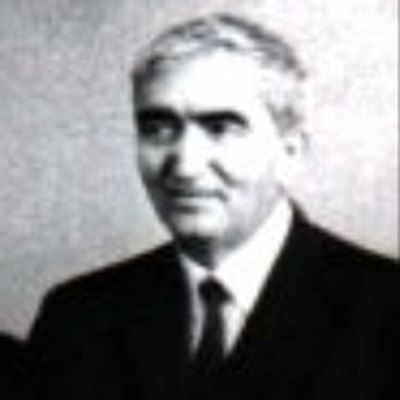
E’rebê Şemo (in Russian documents Arab Shamilovich Shamilov) was born on 23 October 1897 into an Ezidi family of the Şêx (sheikh) caste in the village of Susuz in the province of Kars, which then belonged to the Russian Empire.
In his childhood and youth he worked as a shepherd and cowherd on the high pastures (Zozan) of the Caucasus, but early on learned Russian, Armenian and Turkish at the village school. During the First World War he served as an interpreter for the Russian Caucasus army and witnessed at close quarters the suffering of the Ezidi and Armenian refugees fleeing the Ottoman troops.
The alphabet of 1928/1929 and the founding of the first newspaper
In the 1920s E’rebê Şemo moved to Armenia and, within the early education programmes, worked to teach the Ezidi rural population, who at that time were still almost entirely illiterate, to read and write:
- Development of the Latin alphabet (1928/1929): on behalf of the People’s Commissariat for Education of the Armenian SSR, E’rebê Şemo, together with the Assyrian linguist Isaak Marogulov, developed in 1928 the first phonetically precise alphabet on a Latin basis (officially introduced in Armenia in 1929). Together they published in 1929 the first textbook in this script: “Xoevabuna Xwendinê” (Teach Yourself to Read).
- Co-founder of Rya Teze (1930): in March 1930 he was among the founders and first editors of the newspaper Rya Teze (“The New Way”) in Yerevan, which appeared as the most important educational and cultural organ for the Ezidi villages in the South Caucasus.
The first modern novel and Stalinist exile (1931–1956)
From 1931 E’rebê Şemo studied and did research at the Institute of Oriental Studies of the Academy of Sciences in Leningrad (St Petersburg), where he worked closely with the famous orientalist Joseph Orbeli.
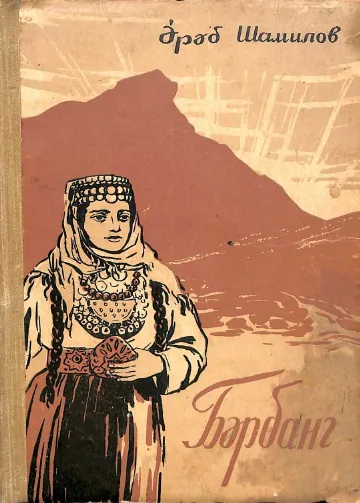
- Founder of prose literature: in 1931 (expanded in 1935) E’rebê Şemo published his autobiographical work “Şivanê Kurmanca” (in later editions Berbang), which literary scholarship regards as the first modern novel in the mother tongue. In it he describes in faithful detail the traditional life, customs and hard struggle for survival of the Ezidi shepherd families in the province of Kars before and during the First World War.
- Arrest and 19 years of Gulag (1937–1956): at the height of Stalin’s “Great Terror” – in the same year 1937 in which the Soviet leadership also struck the ethnic category “Ezidis” from the censuses – E’rebê Şemo was arrested by the NKVD secret service in Leningrad. Without a regular trial he was sentenced as an alleged “enemy of the people” and sent for almost two decades to forced labour camps and into exile in Siberia.
Rehabilitation and late work in Yerevan (1956–1978)
Only three years after Stalin’s death was E’rebê Şemo officially rehabilitated in 1956 and allowed to return to Yerevan. Despite almost twenty years of imprisonment, he resumed his writing unbroken.
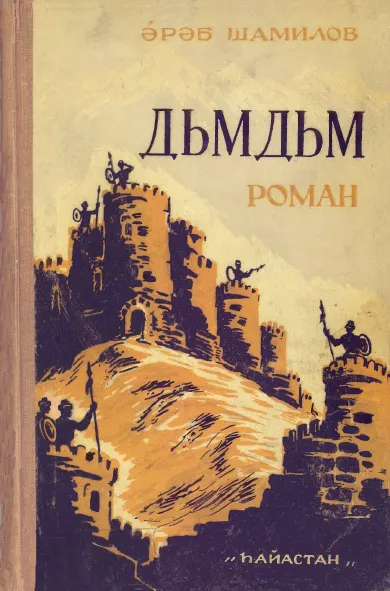
Since by then the Cyrillic alphabet developed by H’eciyê Cindî was mandatory in the Armenian SSR and Soviet publishing allowed only the designation “Kurdish”, his great late works appeared in Cyrillic script (many of them are part of our library today):
- “Jiyana Bextewar” (1959): an extensive social novel about the path of the surviving refugees from the Ottoman Empire and the building of new villages in Armenia.
- “Kela Dimdim” (1966): a famous historical novel, based on old oral traditions, about the defence of the mountain fortress of Dimdim in the 17th century.
- “Hopô” (1969): another great narrative work about the life and traditions of the community in the South Caucasus.
E’rebê Şemo died on 21 May 1978 in Yerevan at the age of 80. His works have been translated into numerous languages (including Russian, Armenian, German, French and Arabic).
Books in our library
More on EZDIKI.COM
More notable figures
Sources
- Christine Allison: Yazidis i. General. Encyclopædia Iranica
- Ja. W. Wassilkow & M. Ju. Sorokina: Люди и судьбы. Биобиблиографический словарь востоковедов – жертв политического террора. St. Petersburg 2003
- Rûdaw: Erebê Şemo – Father of the Kurdish Novel (Gastbeitrag)
- Wikipedia (en): Arab Shamilov
Compiled from the sources listed. We welcome additions and corrections via the contact page. Contact
Other spellings: Erebe Semo · Erebe Schemo · Erebe Shemo · Ereb Semo · Ereb Schemo · Ereb Shemo · E’reb Şemo
Found a mistake?
Is something wrong – a fact, a spelling, a source, an image? Let us know: we check every report and correct the article.