
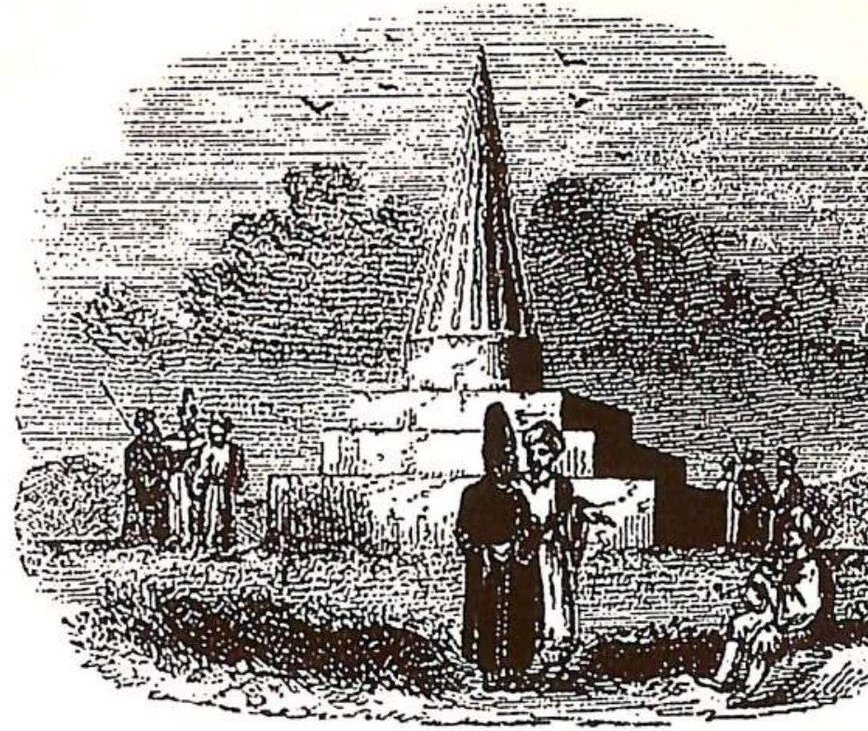
In northern Iraq almost every Ezidi village has its own mausoleums – tomb buildings of saints that are at the same time places of devotion. In her field research of 2002–2005 the art historian Birgül Açıkyıldız recorded 66 mausoleums and compiled them in a catalogue. The following list reproduces this catalogue. On building forms, conical roofs and architectural decoration see Ezidi sacred architecture.
Notes on the list
- Dating: years in bold are attested by an inscription or record. Centuries are dating proposals by the author based on comparison with other buildings; they are not certain.
- Ribs: number of ribs of the conical roof; “–” = no conical roof; “?” = no information in the catalogue.
- Combined entries: the catalogue lists some buildings together in one row. Where it gives the number of ribs only in combined form, this is noted.
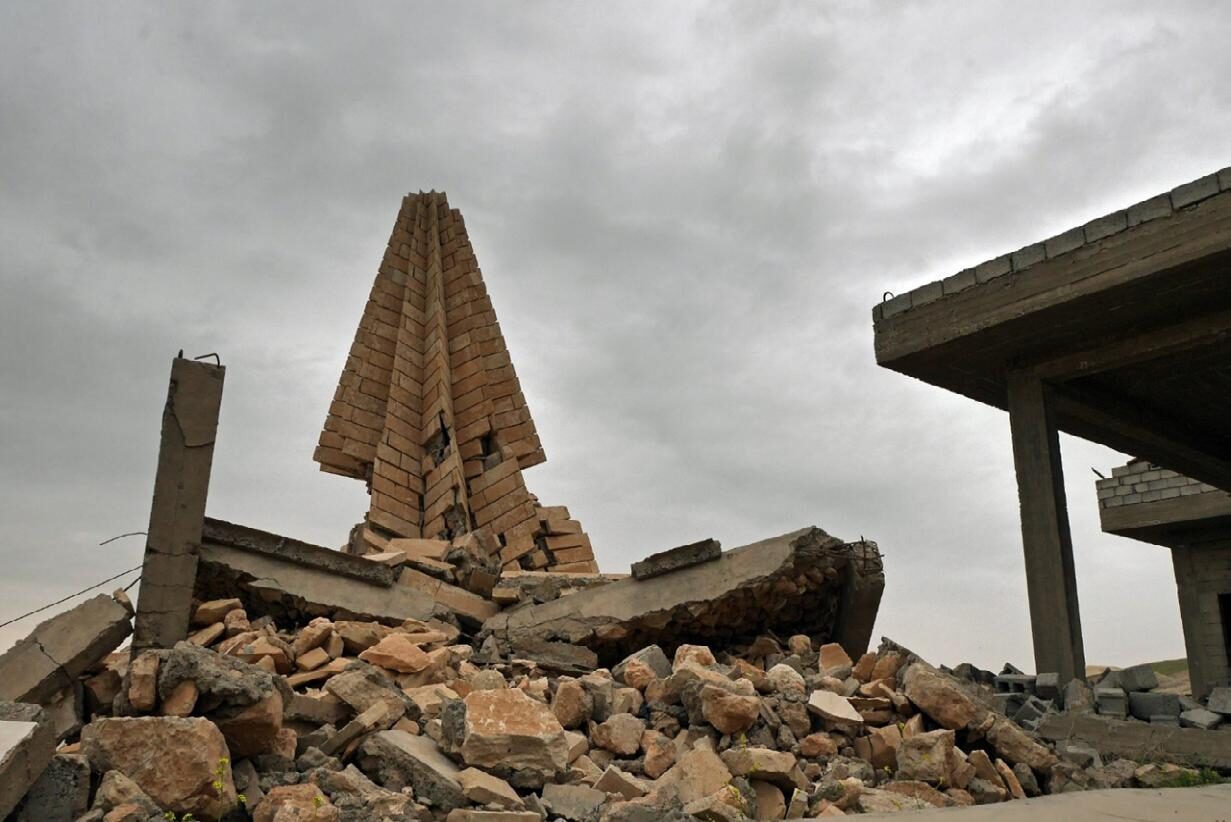
- Condition: the information describes the condition around 2002–2005. Later events, especially the genocide of 2014 in Şengal, are not taken into account (see Şengal 2007 and 2014).
- Spelling of the names in the form used on this site; the source uses English transliteration.
Lalîş (14)
On the sanctuary of Şêx Adî itself see Lalîş.
| No. | Mausoleum | Ground plan | Roof | Ribs | Dating |
|---|---|---|---|---|---|
| 1 | Şêx Adî | square | cone | 48 | 12th c. |
| 2 | Şêx Hesen | square | cone | 32 | 13th c. |
| 3 | Şêx Şems | complex (several building phases) | cone, barrel vault, flat | 32 | 12th c. |
| 4 | Şêx Mişelleh | rectangle with anteroom | cone, flat | 28 | 14th c. |
| 5 | Êzdîna Mîr | rectangular | pointed barrel vault | – | 12th c. |
| 6 | Şêx Ebû Bekir | rectangular | barrel vault | – | 13th c. |
| 7 | Xatûna Fexran | rectangle with anteroom | pointed barrel vault, flat | – | 13th c. |
| 8 | Şêx Nasirdîn | rectangle with anteroom | pointed barrel vault, flat | – | 13th c. |
| 9 | Pîr Cerwan | rectangular | barrel vault | – | 13th c. |
| 10 | Pîr Sîn | rectangular | barrel vault | – | 12th c. |
| 11 | Qadî Bilban | rectangular | flat | – | 12th c. |
| 12 | Alû Bekir | rectangular | barrel vault | – | 13th c. |
| 13 | Hecî Muhammad | iwan (open hall) | barrel vault | – | no information |
| 14 | Pîr Kivane Rut | double rectangular | barrel vault | – | 13th c. |
According to Açıkyıldız, 20 sarcophagi stand in the mausoleum of Êzdîna Mîr. Êzdîna Mîr and Şêx Ebû Bekir are the largest barrel-vaulted rectangular buildings in the valley.
Bozan (12)
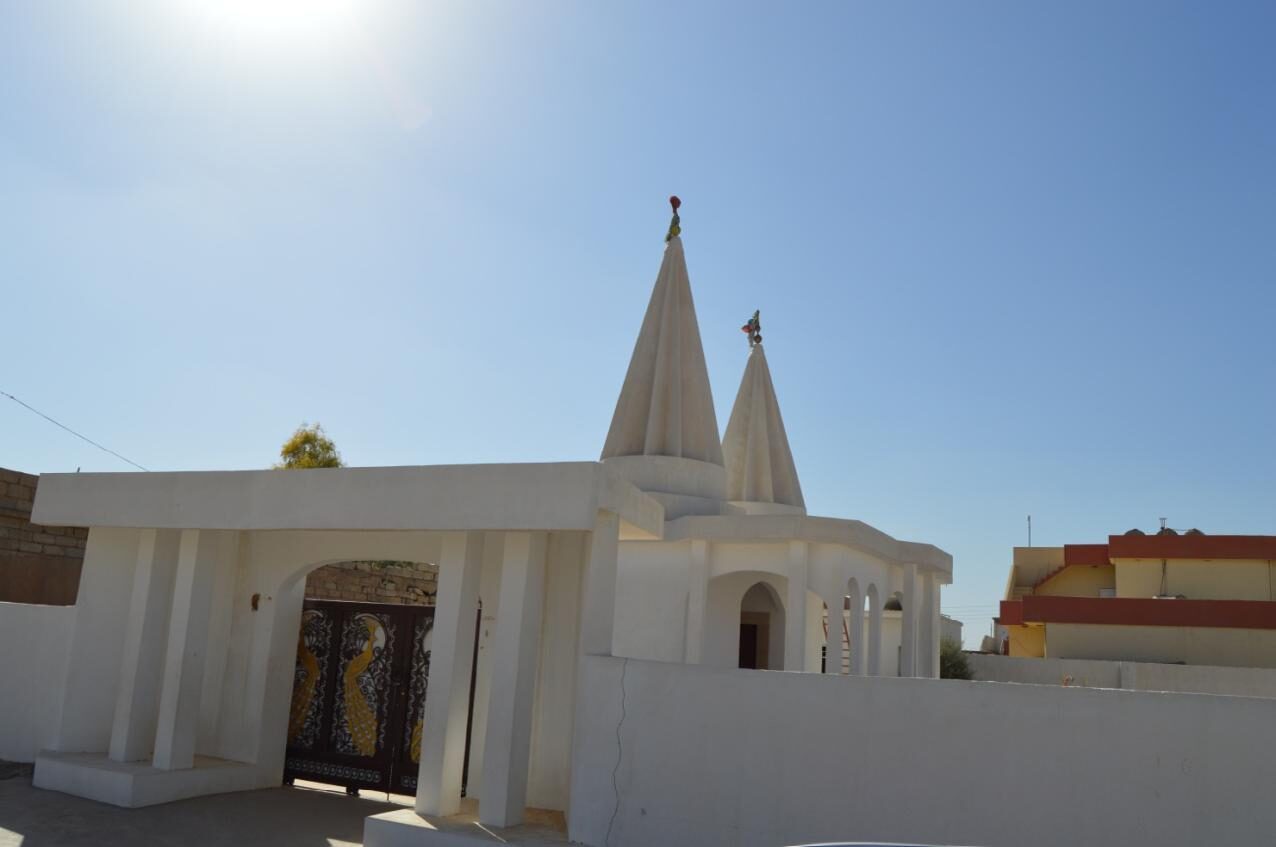
Bozan in Şêxan is regarded as the first seat of Şêx Adî before Lalîş and is therefore also called Lalişa Piçûk (“little Lalîş”). According to Açıkyıldız, the cemetery on the slope comprises exactly 30 mausoleums and holy enclosures; she included the following in the catalogue.
| No. | Mausoleum | Ground plan | Roof | Ribs | Dating |
|---|---|---|---|---|---|
| 15 | Şêx Şems | rectangle with anteroom | barrel vault | – | 12th c. |
| 16 | Xetî Besî | double rectangular | barrel vault, small cone | 16 | 12th c. |
| 17 | Alû Bekir | rectangular | barrel vault | – | 12th c. |
| 18 | Pîr Elî and Pîr Buwal | double rectangular | barrel vault | – | 12th c. |
| 19 | Ruale Kevînîye | rectangle with anteroom | barrel vault, pointed barrel vault | – | 14th c. |
| 20 | Şêx Mend Paşa | rectangular | barrel vault | – | 14th c. |
| 21 | Şêx Adî | rectangular | flat | – | 13th c. |
| 22 | Pîr Mend | round or rectangular | without roof | – | old (no further information) |
| 23 | Nabadar | round or rectangular | without roof | – | old (no further information) |
| 24 | Şêx Nasirdîn | round or rectangular | without roof | – | old (no further information) |
| 25 | Êzdîna Mîr | round or rectangular | without roof | – | old (no further information) |
| 26 | Şêx Berekat | round or rectangular | without roof | – | 1974 |
At Xetî Besî Açıkyıldız found a niche in the south wall, which she interprets as a prayer niche; she therefore dates the building to the 12th century. Xetî Besî is regarded as the forefather of a branch of the Pîr family Hesen Maman.
Other places in Şêxan (5)
| No. | Mausoleum | Place | Ground plan | Roof | Ribs | Dating |
|---|---|---|---|---|---|---|
| 27 | Şêx Elî Şemsê | Eyn Sifnî | square | cone | 28 | 14th c. |
| 28 | Şêx Hentûş | Eyn Sifnî | square | cone | 24 | 12th c. |
| 29 | Mîr Elî Beg | Baadrê | square with anteroom | cone, flat | 28 | 1913 |
| 30 | Melik Şêx Sîn | Beban | square | cone | 20 | 14th c. |
| 31 | Şêx Siwar | Beban | square | cone | 28 | 14th c. (door 1923, restoration 1985) |
- The mausoleum of Şêx Elî Şemsê stands on a hill above Eyn Sifnî, Şêx Hentûş alone in the field.
- The mausoleum in Baadrê is dedicated to Mîr Elî Beg, who was murdered in 1913.
- Şêx Siwar in Beban is the only Ezidi building with geometric decoration inside (a star with eleven rays). The inscriptions give 1923 for the door and 1985 for a restoration; Açıkyıldız dates the building itself to the 14th century on the basis of comparisons.
Dohuk province (7)
The villages of Dohuk province (among them Kabartu, Mem Şivan, Xanike, Dêrebûn, Şarîya) are purely Ezidi.
| No. | Mausoleum | Place | Ground plan | Roof | Ribs | Dating |
|---|---|---|---|---|---|---|
| 32 | Baba Çawîş | Kabartu | square | cone | 28 | 1450 |
| 33 | Şêx Mend Paşa | Kabartu | square | cone | 16 | 1967 |
| 34 | Pîr Afat | Dêrebûn | square | cone | 16 | no information |
| 35 | Şêx Bezît | Xanike | square with anteroom | cone, flat | 24 | 14th c. |
| 36 | Şêx Şems | Mem Şivan | square | cone | 28 | 14th c. |
| 37 | Şêx Sîn | Mem Şivan | square | cone | 24 | 14th c. |
| 38 | Şêx Ebû Bekir | Mem Şivan | rectangular | without roof | – | 14th c. |
- Pîr Afat in Dêrebûn stands next to a cave and a spring and is much visited in April.
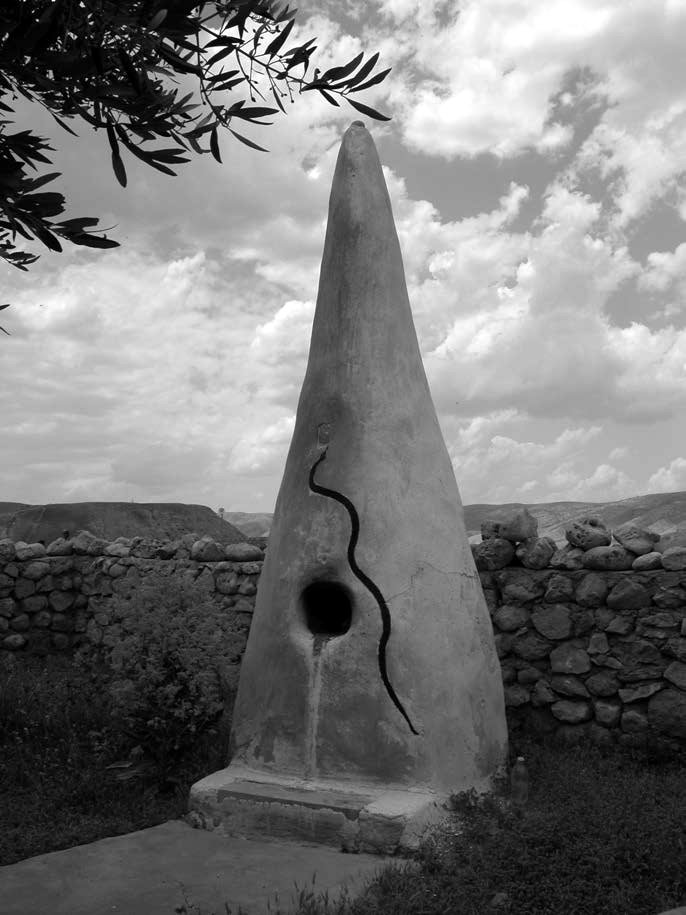
- On the door of Şêx Ebû Bekir in Mem Şivan a snake and a pair of lions are mounted. The building inscription of Şêx Şems in Mem Şivan is the only one in which the word qubba occurs.
Behzanê and Başîqe (17)
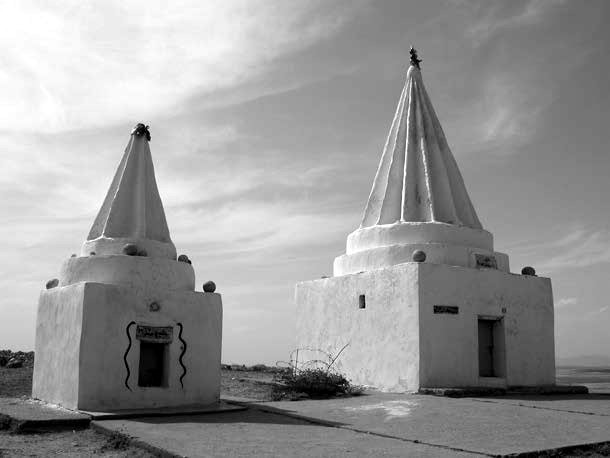
In Behzanê/Başîqe at the foot of Mount Meqlûb the mausoleums lie on small hills, each with a courtyard and family graves, always surrounded by high walls. According to Açıkyıldız, most are dedicated to members of the second generation of the Şemsanî (second half of the 12th century); only Pîr Bûb is dedicated to a Pîr.
| No. | Mausoleum | Place | Ground plan | Roof | Ribs | Dating |
|---|---|---|---|---|---|---|
| 39 | Hesen Ferroş | Dirawiş (near Behzanê) | square | cone | 16 | 14th c. |
| 40 | Melekê Mîran | Behzanê | square | cone | ? | 1919 |
| 41 | Pîr Bûb | Behzanê | square | cone | 32 | 13th c. |
| 42 | Mîr Sicadîn | Behzanê | square | cone | 24–28 (combined) | 14th c. |
| 43 | Şêx Ebû Bekir | Behzanê | square | cone | 24–28 (combined) | 14th c. |
| 44 | Şêx Xefîr | Behzanê | square | cone | 24–28 (combined) | 14th c. |
| 45 | Şêx Nasirdîn | Behzanê | square | cone | 24–28 (combined) | 14th c. |
| 46 | Şêx Mend Paşa | Behzanê | square | cone | 24–28 (combined) | 14th c. |
| 47 | Şêx Şems | Behzanê | square | cone | 32 | 14th c. |
| 48 | Şêx Şerfedîn | Behzanê | square | cone | 32 | 14th c. |
| 49 | Şêx Zeynedîn | Behzanê | square | cone | 32 | 14th c. |
| 50 | Seîd û Mesûd | Behzanê | rectangular | cone | 20 | 14th c. |
| 51 | Şehîd Ebdulezîz | Behzanê | square | cone | 24 | 19th c. |
| 52 | Şêx Muhammad | Başîqe | square with anteroom | cone, dome (flat outside) | 32 | 14th c. |
| 53 | Şêx Babik | Başîqe | square | cone | 28 | 14th c. |
| 54 | Sitt Habîbî | Başîqe | square | cone | 24 | 14th c. |
| 55 | Sitt Hecîcî | Başîqe | square | cone | 24 | 14th c. |
- A stream flows beneath the mausoleum of Melekê Mîran; according to Açıkyıldız, a mud against rheumatism is prepared from its earth and water.
- Şêx Muhammad is the only mausoleum in Behzanê/Başîqe with an anteroom. According to tradition, Sitt Habîbî was his wife; their graves lie in the same precinct.
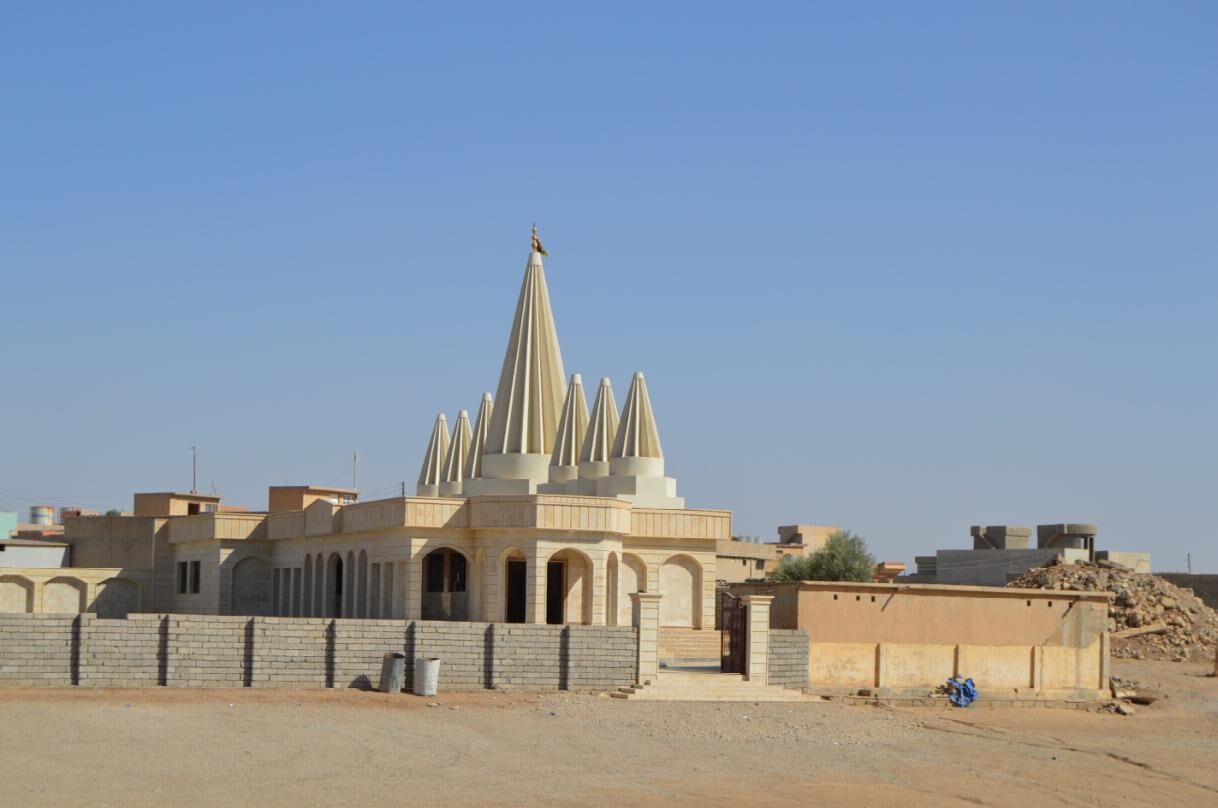
Şengal (11)
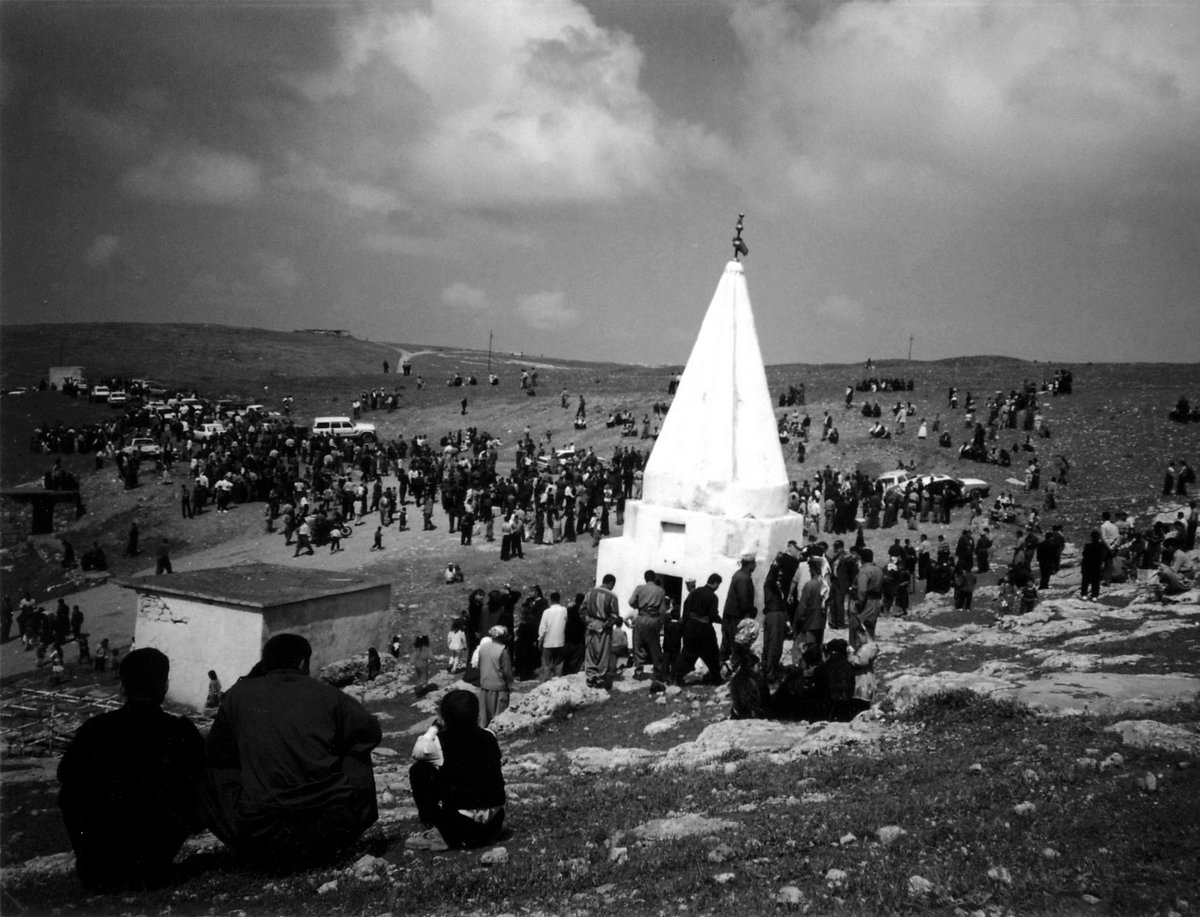
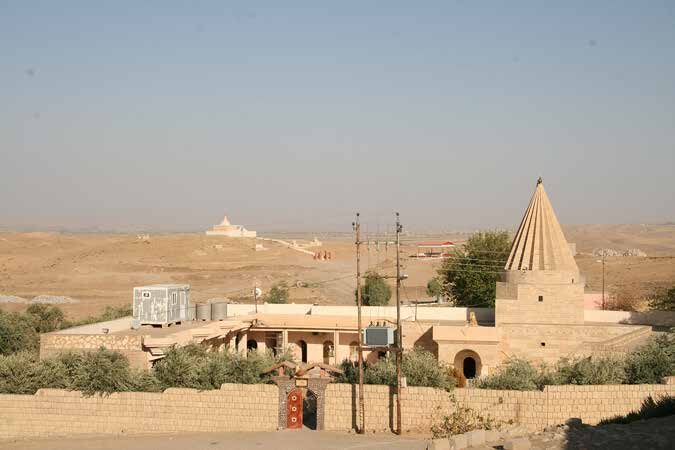
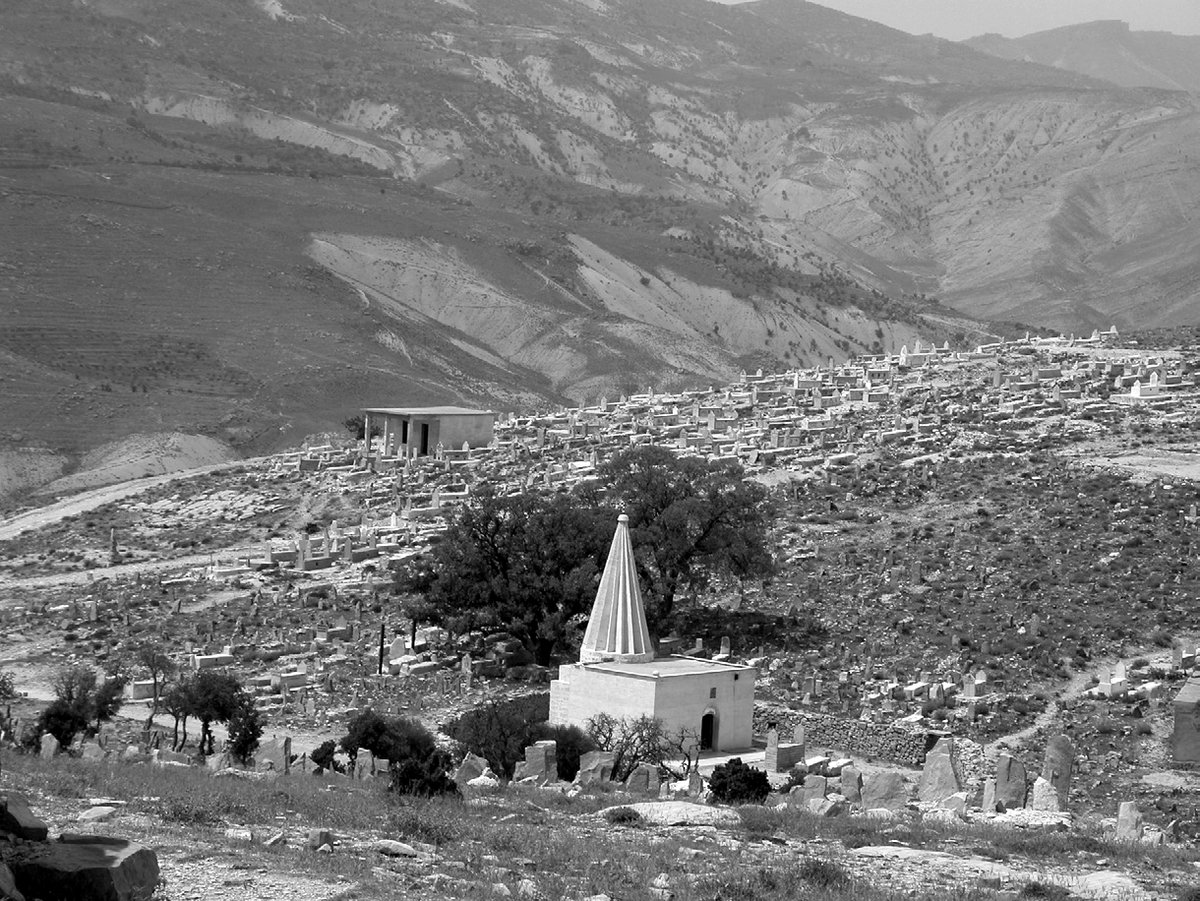
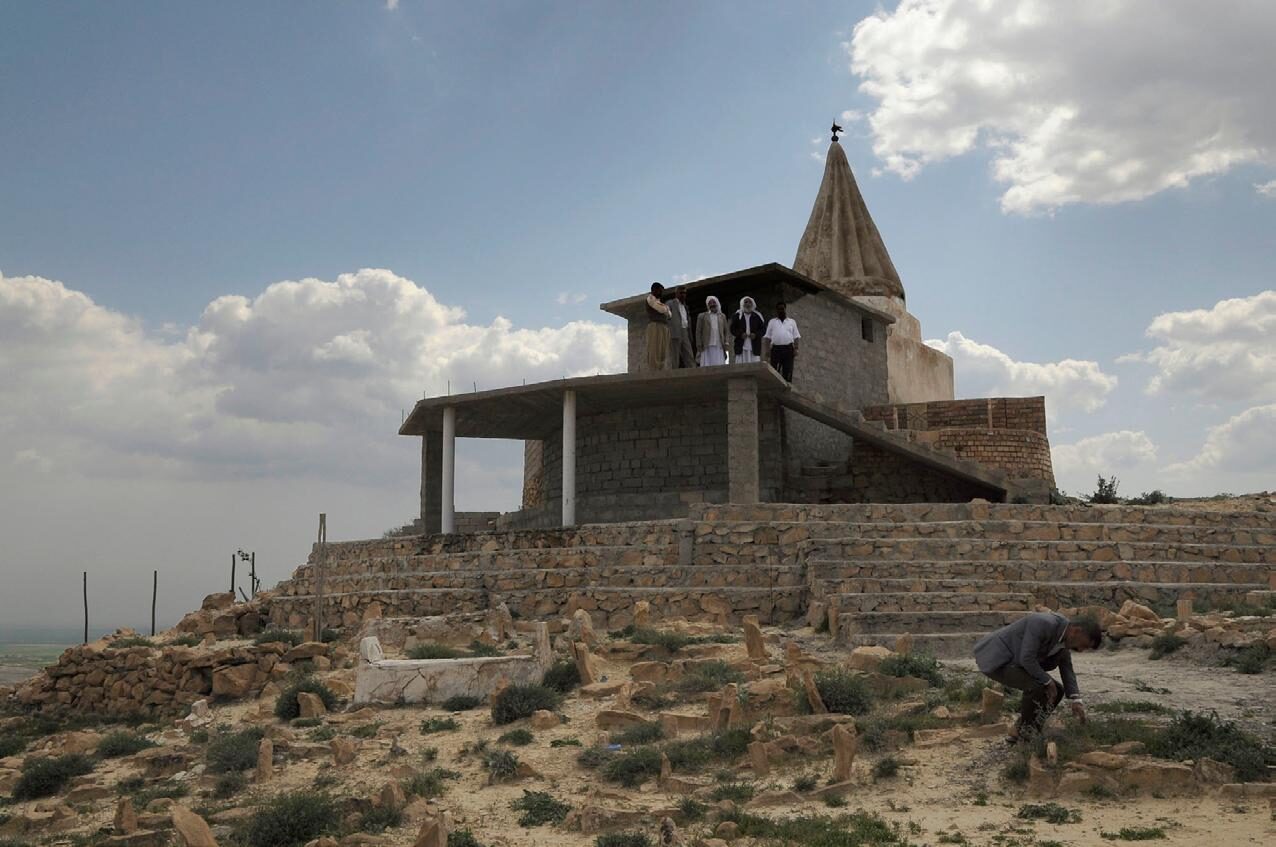
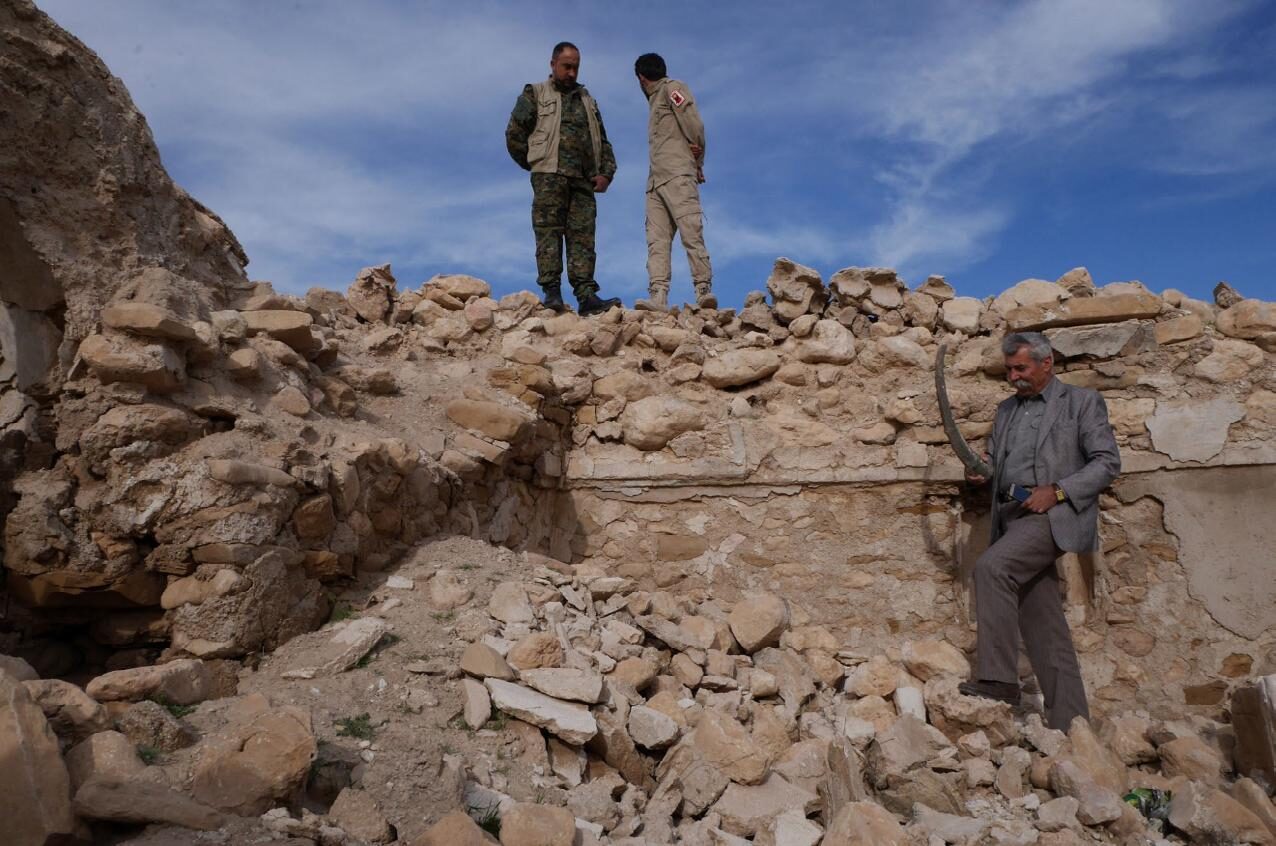
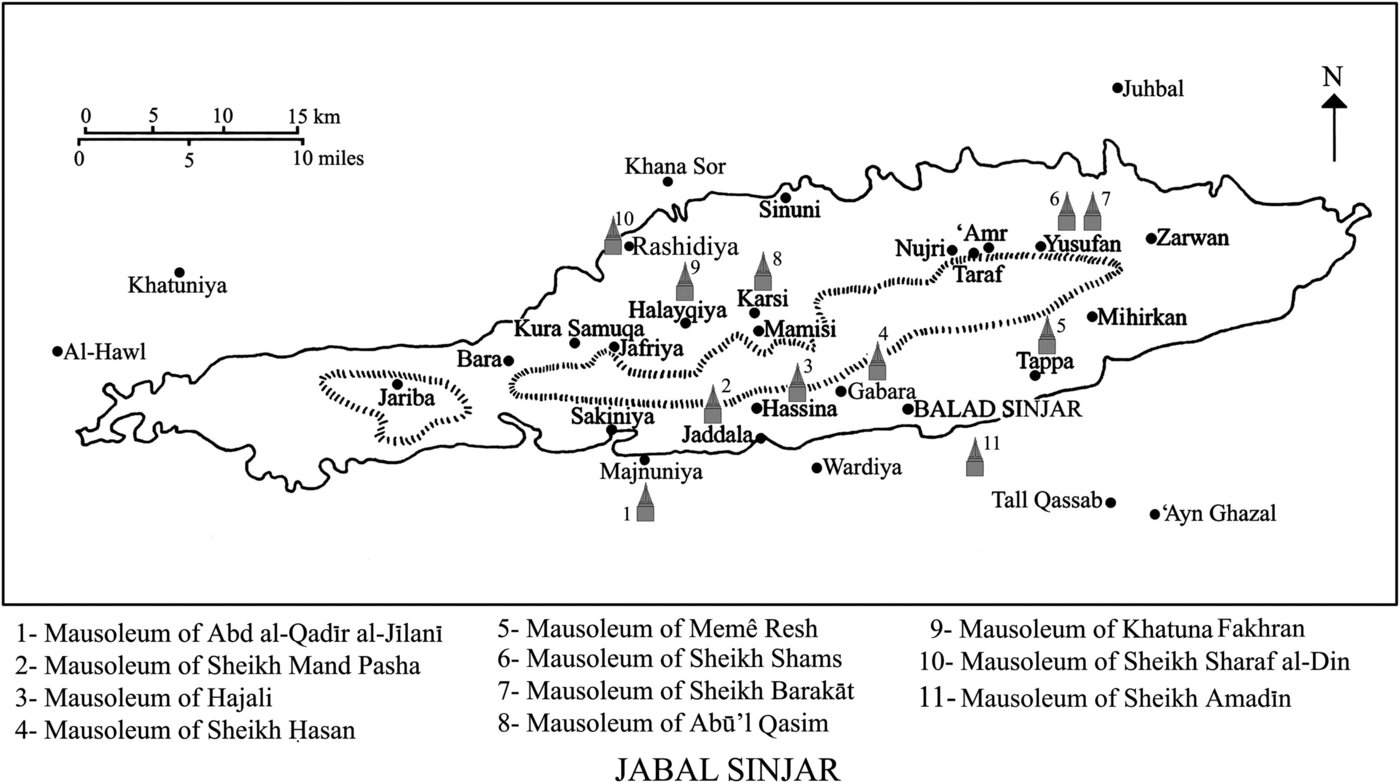
Most of the mountain villages of Şengal were destroyed in the 1970s; their inhabitants were resettled in collective villages in the plain. Only the mausoleums remained standing in the mountains; the pilgrims return there for the feasts. On the region see Şengal.
| No. | Mausoleum | Ground plan | Roof | Ribs | Dating |
|---|---|---|---|---|---|
| 56 | Şêx Şerfedîn (Reşîdiya) | square with anteroom | cone, flat | 40 | 1274 |
| 57 | Şêx Amadîn (Galê Bîrîn) | rectangle with anteroom | cone, flat | 32 | 1400 |
| 58 | Şêx Ebû l-Qasim | rectangle with anteroom | cone, flat | 28 | 1903 |
| 59 | Şêx Mend | square with anteroom | cone, flat | 28 | 1948 |
| 60 | Hecalî | square (two-story) | cone | 24 | 12th c. |
| 61 | Memê Reş | square | cone | 28 | 12th c. |
| 62 | Abd al-Qādir al-Jīlānī | square | cone | 16 | 12th c. |
| 63 | Şêx Hesen | square with anteroom | cone, flat | 24 | 13th c. |
| 64 | Xatûna Fexran | square with anteroom | cone, flat | ? | 13th c. |
| 65 | Şêx Berekat | square | cone | 20 | 13th/14th c. |
| 66 | Şêx Şems | square | cone | 28 | 13th/14th c. |
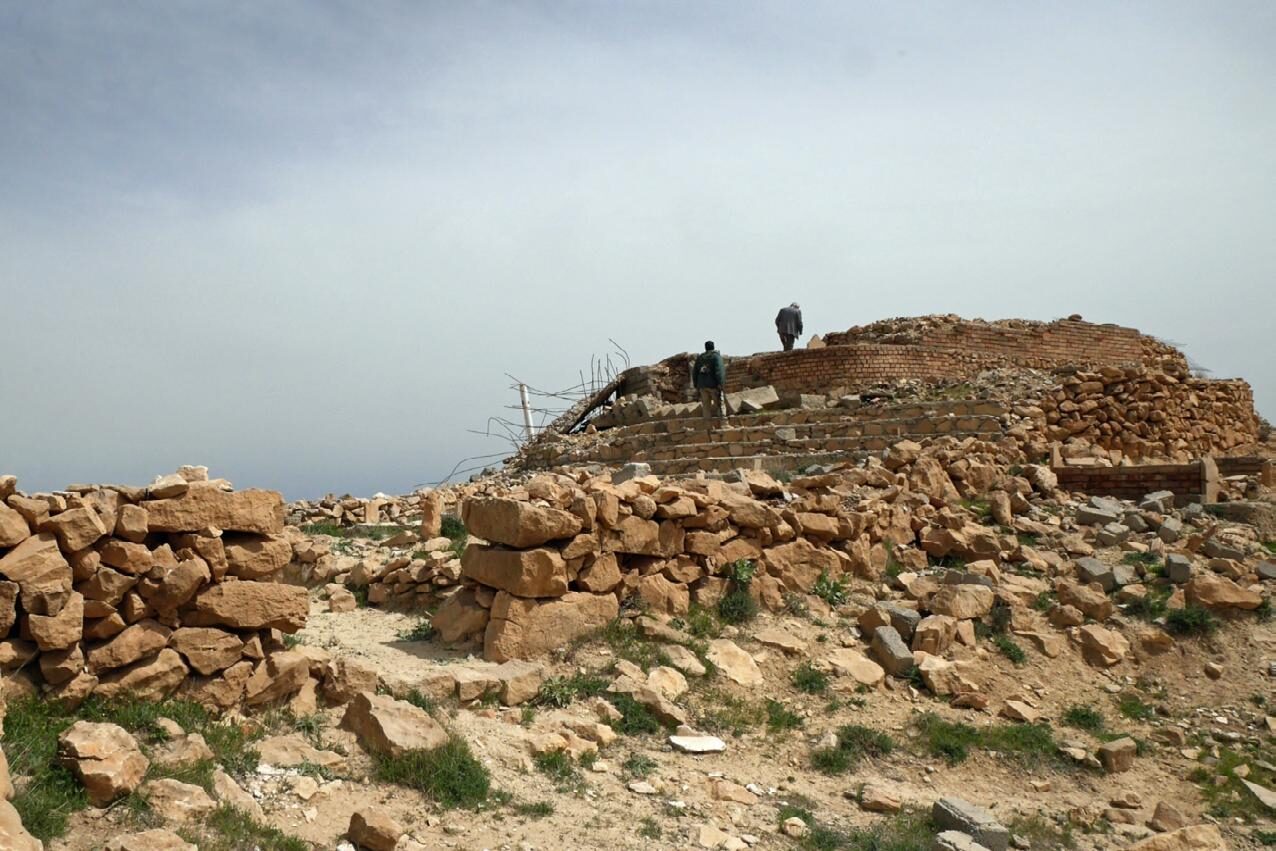
- Şêx Şerfedîn in the village of Reşîdiya is the most visited building in Şengal. An Arabic inscription on the façade gives 1274 as the year of construction. In the courtyard stand two shrines; in the tomb chamber stands a wishing column about 1 m high (stûna mîraza).
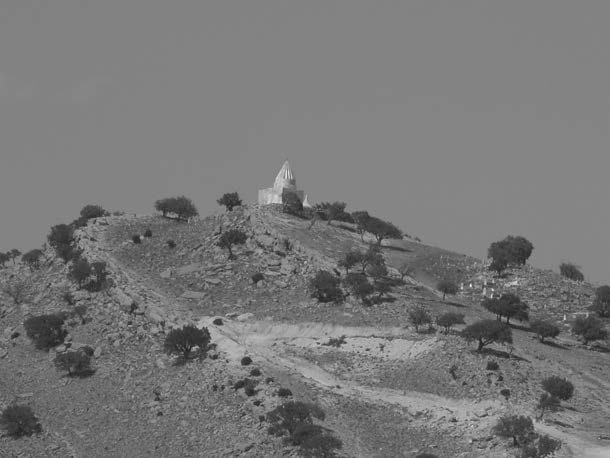
- Şêx Amadîn stands alone on the summit of the Galê Bîrîn in the south of the mountains, entirely of whitewashed gypsum mortar. On the door frames a pair of snakes facing each other is mounted; an inscription gives the year 1400, which Açıkyıldız assumes to be the year of foundation.
- Hecalî is the only two-story mausoleum; the ground floor served the sick who were waiting to be healed.
Figures and contradictions
By ground plan (typology in the appendix of the source): 31 square, 7 square with anteroom, 10 rectangular, 7 rectangle with anteroom, 4 double rectangular, 1 complex, 6 without roof – together 66. The catalogue lists the hall of Hecî Muhammad (no. 13) as an “iwan”; arithmetically it must be counted among the double rectangular buildings in the typology.
By area: in the concluding chapter Açıkyıldız gives other figures: Şêxan 46 mausoleums, Behzanê/Başîqe 17, around Dohuk 6, Şengal 11 – together 80. The figures for Behzanê/Başîqe and Şengal agree with the catalogue. For Şêxan and Dohuk together the catalogue lists only 38 buildings. Possibly further buildings (such as shrines or enclosures) are included in the concluding chapter; the author does not explain the difference.
Places of pilgrimage around Başîqa and Bahzanê according to Drower (1940)
The list above records buildings. In 1940 E. S. Drower also described smaller places of pilgrimage and the customs at them (Peacock Angel, 1941). According to her informants, Mezar is the name for any place of pilgrimage – a tree, a grave, a cenotaph, a spring, a stone or a cave; the same saint often has several such places.
| Place (spelling adapted) | Location | Information according to Drower |
|---|---|---|
| Şêx Mihemed | Başîqa, at the edge of the village next to the Jacobite church | largest sanctuary of Başîqa, site of the spring festival; permanent guardian a Koçek dressed in white; rebuilt by Sadiq, the father of her host (inscription) – cf. no. 52 above |
| Melkê Miran | Başîqa/Bahzanê | sanctuary – cf. no. 40 above |
| Sitt Nefîse | Başîqa | olive tree with a wall; on Tuesdays and Thursdays wicks are lit; dust against malaria |
| Feqîr Elî | Başîqa | holy tree |
| Ras el-‘Eyn | above Başîqa | upper washing place; cave with spring and rock reliefs (seated figures with conical caps), called “Kaf” |
| Şêx Mus es-Sor (“Mus the Red”) | Başîqa | stone circle; against skin ailments one pours out water, applies the moist dust and breaks the vessel |
| P’îr Mamê | Başîqa | grave; the headstone is wrapped with white woolen threads spun jointly by mother and daughter; against heart and head pain |
| Şêx Mes‘ûd, Şêx Ebdul‘ezîz, Şêx Sicadîn, Şêx Hesen el-Basrî | Başîqa | graves or cenotaphs |
| Şêx Zindan with his sister Sitt Nefîse and his mother Xedîce | Başîqa | group of places of pilgrimage; with a tradition about a liberation from Damascus |
| Şêx Zendîn | Bahzanê | holy stone |
| Şêx Mend | Bahzanê, at the mouth of a ravine | its own spring, four guardians – cf. no. 46 above |
| Hecî Xalo | Bahzanê | holy mulberry tree |
| Şêx Ubekr | Bahzanê | conical building with pilgrims’ room and kitchen, cave with spring, mulberry tree with votive rags; according to the informants not “Ebû Bekr” – cf. no. 43 above |
| Usivê Kanerî | in the hills | sanctuary without a grave, with a cave and a fig tree, next to it ruins called “Gowrastan” |
| small spring sanctuary | near Bahzanê | guarded by a Qewal; rags against fever |
Customs at the sanctuaries
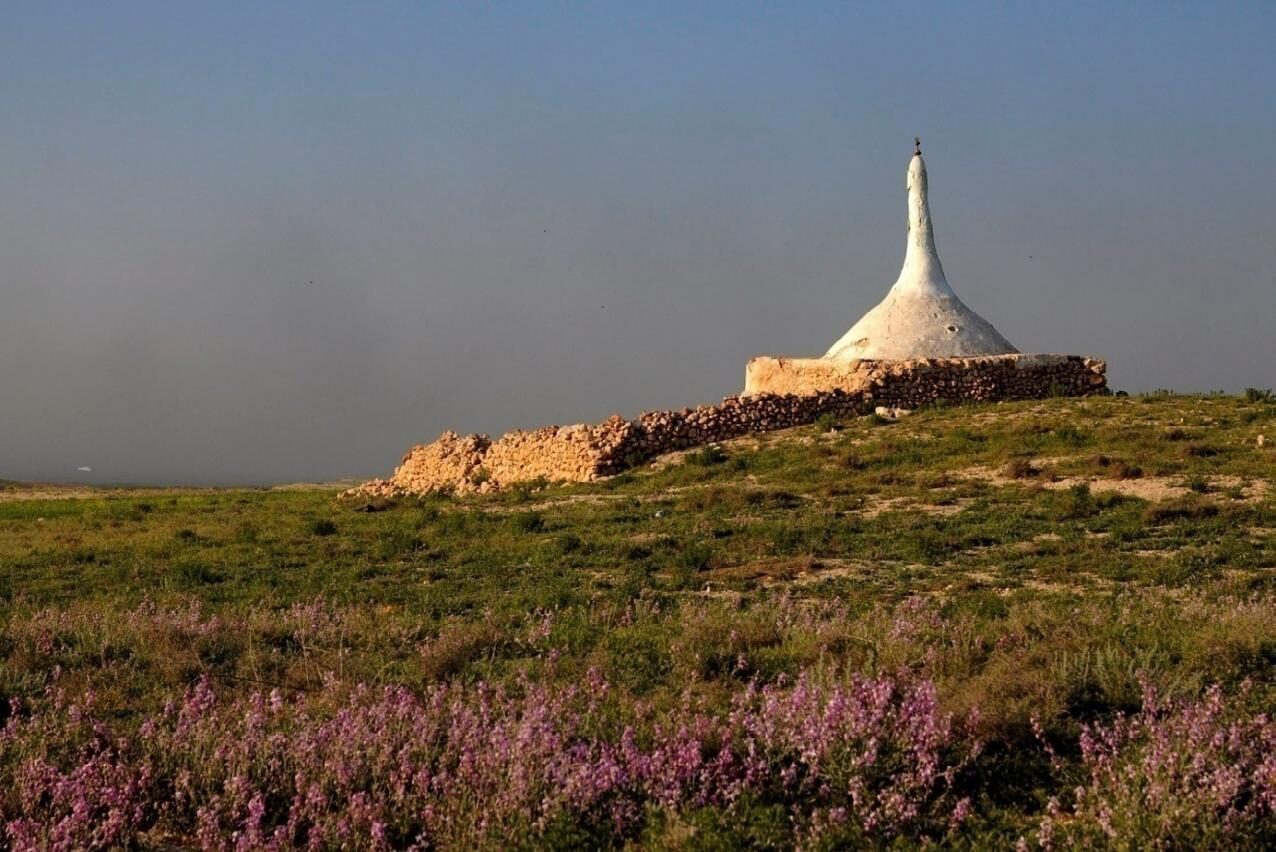
- Conical towers: for the ribbed spire a central pole of poplar wood (spindar) is set up, with a perforated disk at the top into which thinner poles are inserted obliquely; the whole is covered with gypsum (cus) (see Sacred architecture).
- According to Drower, conical buildings also stand over the graves of young men who died unmarried.
- Healing dust: some Şêx keep boxes with dust from various sanctuaries against particular ailments; it is applied after seven days of fasting and prayer.
- Vows are redeemed with silk: in 1940 a recovered child was carried into Şêx Mihemed in green silk; the silk was afterwards attached to the ball at the top of the tower (see Sersal in Başîqa 1940).
Şêxan and Şengal
In Lalîş in 1940 Drower visited, among others, the sanctuaries of Şêx Şems, Xatûna Fexra, Nasirdîn, Qadî Bilban, P’îr Hecalî, Şêx Sicadîn, Şêx Mend, P’îr Hesil Mamê and Ebû l-‘Eqreb (against scorpion stings). In Şengal she names the sanctuary of Şêx Ebû l-Qasim and the treeless holy spring Pira Hayî.
Sources
- Güneş Murat Tezcür (ed.): Kurds and Yezidis in the Middle East. Shifting Identities, Borders, and the Experience of Minority Communities. London: I.B. Tauris 2021, p. fig. 6.1 (ill.)
- Qader Saleem Shammo: From Fatwā to Genocide. Historic and Contemporary Manifestations of the Islamic Genocide against the Yezidis (Yezidi Studies 5). Berlin 2026, p. 293 (ill.)
- Dimitri Pirbari (P’îr Dîma), A. Ščedrovickij: Тайна жемчужины (The secret of the pearl). Moscow/Tbilisi 2016, p. 78 (ill.)
- Birgül Açıkyıldız: The Yezidis. The History of a Community, Culture and Religion. London 2010, p. 34–36, 131–140, 158–187, 212, 225–228, 257
- E. S. Drower: Peacock Angel. Being some Account of Votaries of a Secret Cult and their Sanctuaries. London 1941, p. pp. 27–29, 36–38, 43–59, 87–89, 115–118, 151–201 (PDF 40–44, 51–53, 60–78, 110–112, 142–145, 184–242)
Found a mistake?
Is something wrong – a fact, a spelling, a source, an image? Let us know: we check every report and correct the article.
Other spellings: List der Mausoleen · Sinjar · Sindschar · Shingal · Shengal · Singal · Lalish · Lalisch · Lalesh · Sheikh Adi · Scheich Adi · Shaikh Adi · Şêxadî · Shikhadi · Sheikh · Scheich · Shex · Emir · Shekhan · Scheichan