
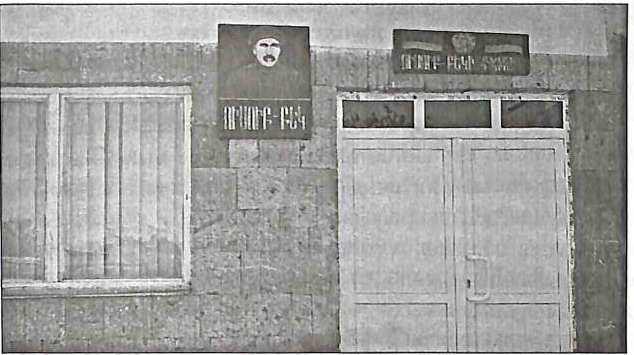
Şamîram is one of the largest Ezidi villages of Armenia. It was settled in 1920 at the instigation of Ûsiv Beg by families of the Hesinî tribe; the former inhabitants, Muslim Kurds, had left the village in 1915–1920. Ûsiv Beg’s family lived here; his grave with a monument lies in the village cemetery, and the secondary school bears his name.

In the 1960s the Arzni-Şamîram canal brought water to the village. Gardens and fields with winter and summer wheat were created, and after 1970 Şamîram seemed almost like a small town. In 1991 it counted 320 houses with about 1500 people.
Additions according to Muradyan (2013)
Location
Şamîram lies at an altitude of 1163 m in the Aştarak district (Aragatsotn province), about 55 km from Yerevan and 25 km from Aştarak. The statistician Korkotyan also calls the place Şamîran. Muradyan supposes that the name dates from the time of the former inhabitants. To the south, above the gorge, lies a fortified site from the 2nd–1st millennium BC (“Şamîram fortress”, about 10 ha), which has been excavated by Yerevan University since 1975.
Settlement and inhabitants
- According to a count of 1922, the first 62 households of the Hesinî settled in the village at the end of 1919; Korkotyan describes it as empty for 1919. Boyîk (dirok) gives 1920 as the year of settlement.
- In autumn 1920 Ûsiv Beg accommodated most of the inhabitants from the Sinek here, far from the front in the war against Turkey.
| Year | Inhabitants |
|---|---|
| 1922 | 435 |
| 1926 | 583 |
| 1931 | 709 |
| around 2012 | approx. 1700 (99% Ezidis) |
The inhabitants live from livestock breeding (cows, sheep) and agriculture. Since 1968 a pipeline from Arzni has brought water for irrigation; Boyîk speaks generally of the 1960s. Half jokingly, Şamîram is called the “capital of the Ezidis of Armenia”.
School
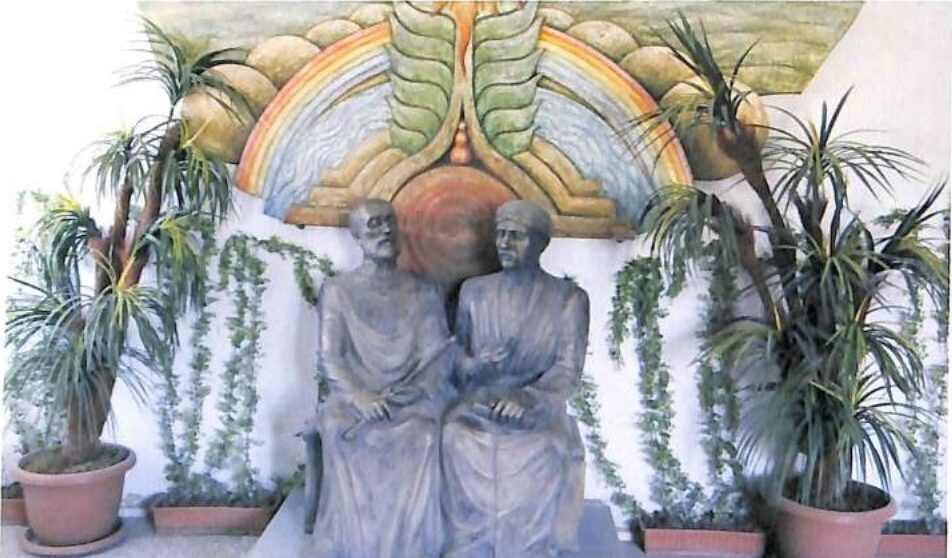
There has been a school since the 1920s. In the 1970s and 1980s it had 400–500 pupils, around 2012 still about 100. Boyîk gives about 380 children. On 14 June 2004 the secondary school was named after Ûsiv Beg by decision of the provincial governor. In the school stands a sculptural group “Ûsiv Beg and Komitas”.
Places of remembrance
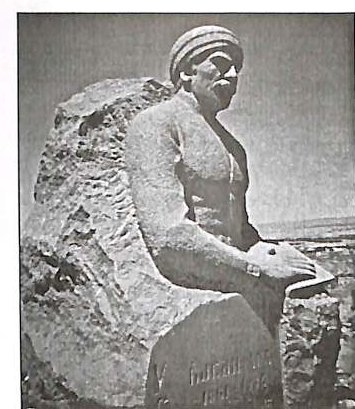
- Grave of Ûsiv Beg in the village cemetery; in 1982 his grandson Mecît Beg Ûsivyan placed a bust on it. The grave is visited by Ezidis.
- In the center of the village the descendants of Ûsiv Beg had a memorial site erected with a monument of Armenian tuff, modeled on a building in Lalîş. Year disputed: Muradyan gives 1996 in one place, 2006 in another.
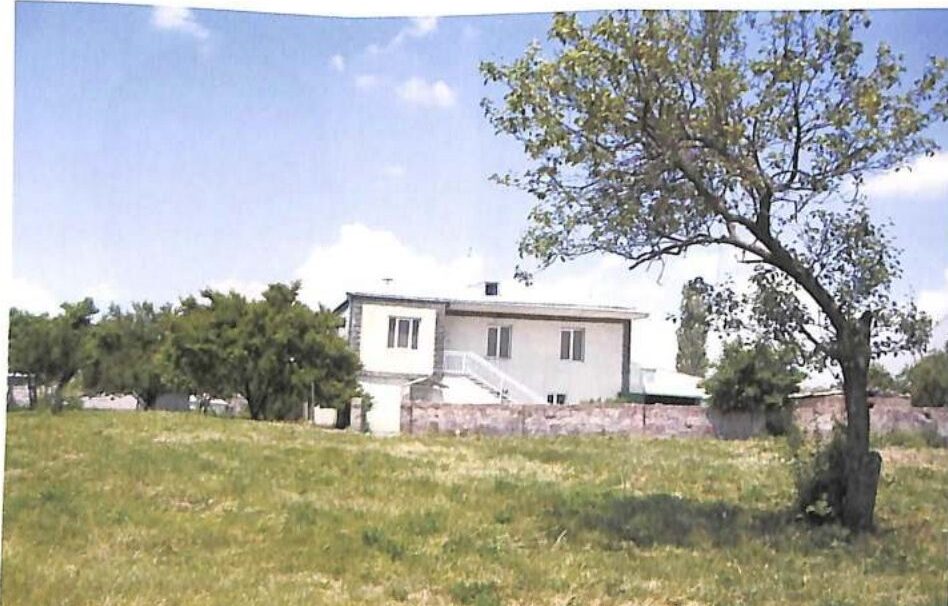
- The ancestral house of the Ûsivyan family lay on a rocky gorge; in 1962 Mecît Beg built a new house in the village center. The family plans a memorial museum there.

The village in the Soviet era
- After his return from exile (1921), Ûsiv Beg built a large house here with a guest room in which the elders met. He advised listening to the state, working and not quarreling.
- According to Boyîk, Gogê Ûsiv headed the collective farm for a long time. Kerem Xudoyan was chairman of the village soviet for over 30 years, Suto Emeryan from 1986 chairman of the united village soviet of Aruch.
- In the Stalin era many men from Şamîram were arrested, see Repressions 1937–1939.
- Miraz Biroyan, a great-grandson of Ûsiv Beg’s brother Biro, later headed the community administration.
A book from Şamîran (1995)
In 1995 the Şêx Hesenê Şêx Kelaşê (Hesen Hesenyan) completed in the village his guide to customs and traditions according to the religion (“Sala 1995-a, gundê Şamîranê”). He learned from his father Şêx K’eleşê, his brother Şêx Xwedêda and from Şêx Dewrêşê Kelaş, also a son of Şêx K’eleş. The book can be read in the library as a scan and as a new text edition.
Sources
- Һ'әсәне Шех К'әләше (Hesenê Şêx Kelaşê, Hesen Hesenyan): Р'е-р'ьзма мьләте Эзди ангори qьраре дин (Rê-rizma mileta Êzdî angorî qirarê dîn). Şamîran 1995 (scan and new text edition in the EZDIKI.COM library), p. 45
- Eskerê Boyîk: Bi Kurtayî Dîroka Êzidiyên Ermenistanê (A short history of the Ezidis of Armenia). Diyarbakır 2016, p. 12–13, 94, 168–169, 278–279
- Manuk Muradyan: Усуб Бек (Ûsiv Beg). Yerevan 2013 (Russian translation of the Armenian original, Yerevan 2012), p. 45–46, 191–200, 230–247, 281–288
Found a mistake?
Is something wrong – a fact, a spelling, a source, an image? Let us know: we check every report and correct the article.
Other spellings: Samiram · Schamiram · Shamiram · Elegez · Alagyaz · Alagjas · Aragats · Jerewan · Eriwan · Erivan · Lalish · Lalisch · Lalesh · Sheikh · Scheich · Shex · Eziden