
Redwan and the Xerzan area (in Layard Kherzan, today usually Garzan) lie in the valleys of the eastern arm of the Tigris between Bitlis and the Tigris, east of Diyarbakır. In the 19th century the area was densely settled by Ezidis. The most detailed description from this period comes from the British archaeologist Austen Henry Layard, who passed through here in September 1849 with Qewal Yûsif and the Ezidi delegation from Istanbul. This article reproduces what Layard saw; his judgments about religion and character are not adopted.
The journey of 1849
Layard traveled back to Mosul with Qewal Yûsif and four chiefs from the districts near Diyarbakır, who had spent a few months in Istanbul (see Qewal Yûsif). In Bitlis he chose the longer route through the valleys of the eastern arm of the Tigris, because in this way he could visit the Ezidi villages of Xerzan. On the 20th (September 1849) they set out from Bitlis.
On the way they passed Goeena, the village of the Kurdish sheikh Şêx Qasim. Layard calls him known for his hatred of the Ezidis: he had repeatedly raided their districts and killed everyone he could reach. His last raid, however, had been repulsed with heavy losses.
The villages on the Xerzan
| Place | In Layard | What Layard observed |
|---|---|---|
| Hamki | Hamki | Ezidi village in the plain of Xerzan; the peasants were just coming from the threshing floor |
| Guzelder | Guzelder | the village head invited them to a meal; gift of home-woven carpets |
| Koşana | Koshana | large village; the inhabitants mostly entirely in white |
| Redwan | Redwan | small town with a bazaar, main town of the district |
Hamki
Near Hamki the peasants at first took the large troop of horsemen for irregular troops. Qewal Yûsif hid his face in his headcloth and gruffly demanded quarters; when he made himself known, the men threw down their shovels and forks and crowded to kiss his hand. In the circle of the village elders he recounted his whole journey: the arrival in Istanbul, the talks with the ministers, the decree for the protection of the Ezidis, the steamships and the seasickness.
That same night the people of Hamki sent messengers to the surrounding villages. Before daybreak many Ezidis stood ready on horseback and on foot, in their best clothes and with flowers and green leaves in their turbans. Their leader was Akko, according to Layard a warrior tried in the battles of the Ezidis, with a beard long since gray.
Guzelder
The head of Guzelder invited Layard to a meal. On the way more and more horsemen and people on foot joined until the procession numbered “many hundreds”. The men waited in front of the village, the women and children stood on the roofs in festive clothing with branches. From the neighboring villages came Feqîr in dark, coarse clothing with red-and-black turbans. There were stuffed lambs, pilaf and grapes from the area; on parting the host laid home-woven carpets at Layard’s feet. Behind the village a further group of Ezidis joined, as well as Jacobites with their bishop and priests.
Koşana
After two hours the procession reached the large village of Koşana. The whole population had come out, mostly entirely in white, with leaves and flowers in their turbans. Women stood by the path with jugs full of fresh water and bowls of sour milk; others with the children on the roofs uttered the joyful trill (tahlîl).
Redwan
The reception
Before Redwan, first horsemen from the town and the neighboring villages approached, then Ezidis on foot with flowers and branches, led by musicians with a big drum and zurna. They were followed by the Armenian community with its clergy and the Jacobites and other Christians with their priests. Layard dismounted at the house of Nazî, whom he calls the “chief of the whole Ezidi district”; as he dismounted two sheep were slaughtered before him. According to Guest, Nazî was a nephew of Mîrza Axa.
Layard lodged in the Armenian church. He records that Mîrza Axa, “the last semi-independent Ezidi chief”, had built it expressly for the Armenian Christians, and calls this an example of tolerance. On the hill above the church lay the ruins of the castle of the former chiefs of Redwan. Layard talked for a long time with the Ezidi chiefs about the situation of their people.
The town in 1849
- Redwan was regarded as a town because it had a bazaar, and was the main town of a large district.
- Layard estimated about 800 simply built houses (huts).
- The town lay on a large stream which, five to six miles further on, flowed into the Diyarbakır arm of the Tigris.
- The inhabitants were Ezidis, except for about 100 Armenian and 40–50 Jacobite and Chaldean families.
- Usually a Turkish Müdür (subordinate official) lived in the town; at the time of Layard’s visit he was absent.
The Qewal in Redwan
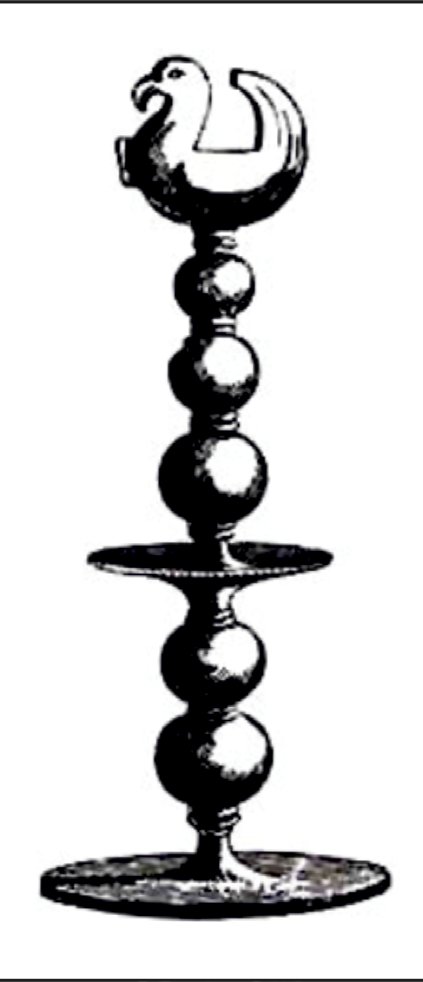
At the time of the visit the Qewal whom Mîr Huseyn Beg and Baba Şêx Şêx Nasir sent out every year to collect the gifts for the Mîr and the sanctuary of Şêx Adî happened to be in Redwan. Xerzan was one of the four districts of these tours (see Spiritual offices). Here Layard was allowed to see and draw the Sencaq; on the significance of the Sencaq see the section on religion.
The farewell
After breakfast in Nazî’s house a large crowd accompanied Layard for another three to four miles. Akko gave him a black-and-brown greyhound named Touar. Qewal Yûsif and the chiefs sent messengers ahead to Mîr Huseyn Beg; before every village Layard was received by the inhabitants. At Tilleh, where the waters of Bitlis, Sêrt and Botan unite with the western arm of the Tigris, they forded the river.
On the way to Mosul: Dêrabûn and Sêmêl
Beyond Cizîrê, Ezidi horsemen met Layard and warned of raids by the desert Arabs (Bedouins). With a strong escort he took the shorter route via Dêrabûn.
- Dêrabûn (in Layard Dereboun): large Ezidi village on the western spur of the mountains of Zaxo. Many springs irrigated extensive rice fields. Below lay the large Christian village of Feshapoor with a ferry across the Tigris. The Ezidi chief, whose name Layard does not give, entertained the travelers.
- Sêmêl (in Layard Semil): Ezidi village on a high artificial mound, crowned by a recent mud castle. Its lord Ebdê Axa (Abde Agha), a big man with a very deep voice, sat in the vaulted gatehouse with deep niches; there people gathered during the day for business, and at night guests slept in it (cf. Farmstead and guest room). A lamb was slaughtered; but a Bedouin raid on a neighboring village forced Ebdê Axa to leave his guests.
Shortly beyond Sêmêl, Mîr Huseyn Beg, Şêx Nasir, Qewal and elders came to meet Layard; they had ridden almost 40 miles through the night to escort him to Tel Isqof.
The situation in autumn 1849
At the feast in Lalîş a few weeks later, according to Layard, it was precisely the people from this area who were absent (see The feast in Lalîş 1849):
- The inhabitants of Xerzan and Redwan were hard pressed by forced conscription into the Ottoman army.
- Ebdê Axa and his people were defending their villages against Arab plunderers, who, although repulsed after Layard’s departure, were still in the area bent on revenge.
- The nomads (Koçer) and the tribes of Dêrabûn stayed away out of the same fear.
Redwan in 1814 according to Kinneir
As early as 35 years before Layard, the British officer John Macdonald Kinneir came through Redwan. He gives only brief eyewitness accounts; his disparaging judgments about the religion are not adopted here.
13 July 1814: Redwan
- Four miles beyond the place Ooshu, Kinneir reached the district of “Herbo Peri” with several Ezidi villages (p. 414).
- After ten miles he came to the castle of Redwan (in his text Redyran), the seat of an Ezidi chief. It stood on a rock above the Erzen arm of the Tigris, surrounded by about a hundred huts in which Ezidis, Armenians and Chaldeans lived (p. 414).
- The chief was absent. His brother received the travelers kindly in a large open arbor of green branches and leaves in front of the castle, which was renewed every two to three days. The whole village came running; the host kept the crowd away from the guests with a voice accustomed to command (p. 414).
- An Armenian in the chief’s service enjoyed his full confidence. He asked the travelers not to spit in the presence of the Ezidis – this was considered the greatest insult (pp. 414–415).
- There was a dispute about the baggage with a younger brother of the chief. The brother nevertheless accompanied the travelers to the village of Givers and gathered horsemen there as an escort; he had the money for this handed over to the Armenian (pp. 415–416).
- Kinneir heard that 10,000 Ezidi families lived between Erzen and Cizîr. This is hearsay, not a count (p. 415).
Early August 1814: Namur and Xetara
On the way from Cizîr to Mosul, Kinneir passed through two Ezidi villages north of Mosul (pp. 458–460):
- Namur: the Ezidis received the travelers warmly, brought milk, cheese and excellent bread and provided eight armed horsemen as an escort. Their leader was the brother of the Ezidi chief; he asked about the customs of the Europeans and how many Ezidi families there were in England, and was surprised that there people did not even know the name of the Ezidis.
- Xetara (in Kinneir Hatarra): a short stop after 16 miles, then on to the Chaldean village of Tel Isqof. There Kinneir dismissed the guard; it asked no tip and departed content with what it had been given.
1814 and 1849 compared
| Kinneir (July 1814) | Layard (September 1849) | |
|---|---|---|
| Redwan | castle, seat of an Ezidi chief, about 100 huts | small town with a bazaar, about 800 houses, castle only a ruin |
| Inhabitants | Ezidis, Armenians, Chaldeans | Ezidis, plus about 100 Armenian and 40–50 Jacobite and Chaldean families |
| Host | brother of the absent chief | Nazî, nephew of Mîrza Axa |
The figures are in each case estimates. Whether Redwan really grew so much between 1814 and 1849, or whether the two travelers counted different things (only the houses around the castle or the whole town), cannot be clarified from the sources. Kinneir does not give the name of the chief of 1814; whether it was Mîrza Axa remains open.
Further history
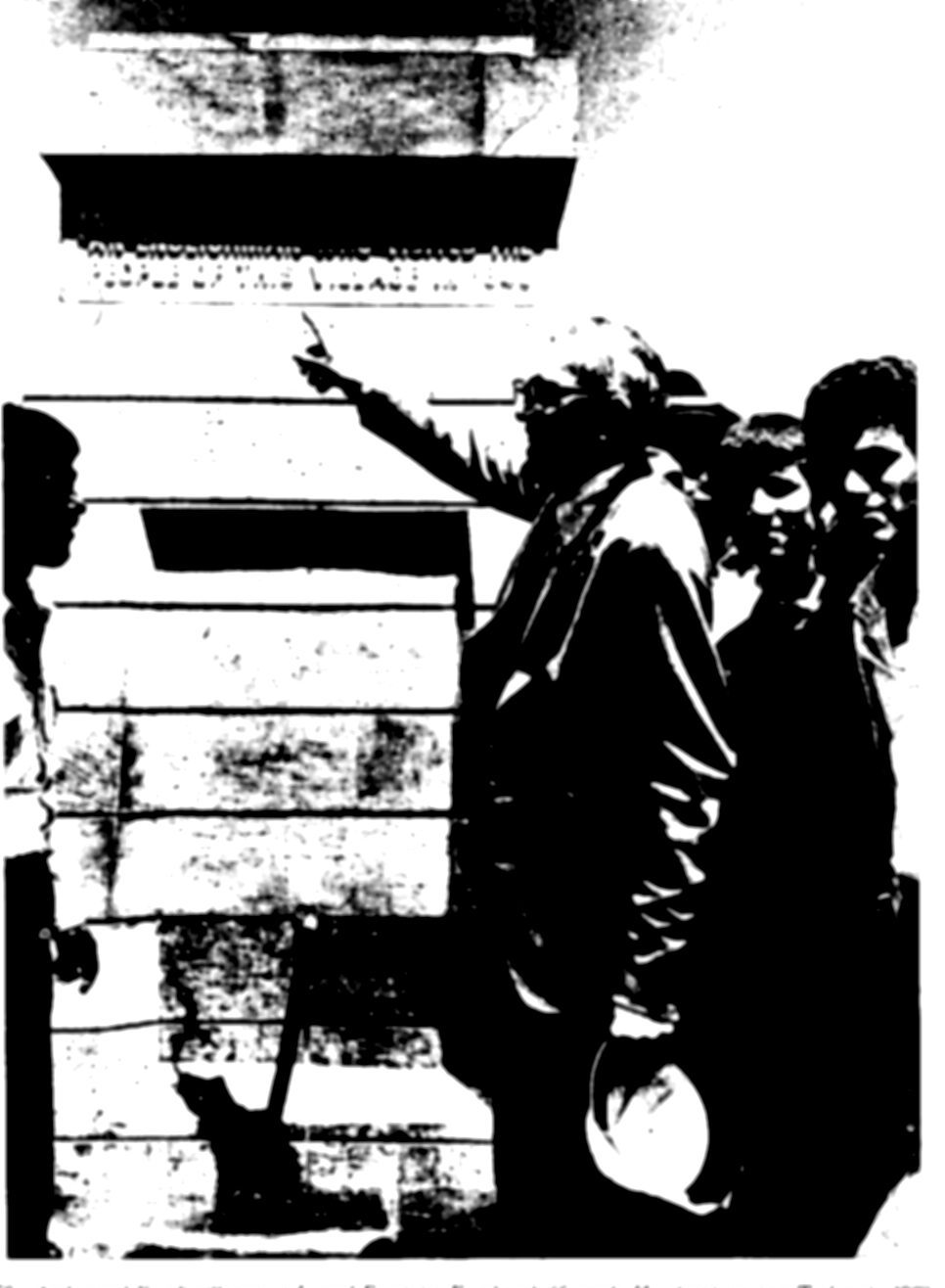
On the rule of Mîrza Axa and his end in 1837 see Mîrza Axa of Redwan and Campaigns 1836–1847. According to an eyewitness cited by Guest, the rebel Yezdanşêr Beg killed Ezidis with his own hands in Redwan in 1854/55 (see Chronicle of the Ferman according to Guest). In 1982 a fountain commemorating Layard’s visit was erected in the village of Kurukavak (formerly Hemduna) near Redwan (see Travelers and researchers).
On the source
Layard’s “Discoveries among the Ruins of Nineveh and Babylon” (1853) is available here in the abridged New York edition. Layard was well disposed toward the Ezidis and calls them “much maligned and oppressed”; at the same time he wrote from a Christian-European perspective for a public interested in the Bible. Only places, names, figures and observations are adopted here. The figure of 800 houses is his estimate.
Sources
- Austen Henry Layard: Discoveries among the Ruins of Nineveh and Babylon (abridged edition). New York 1853, p. 17, 36–53, 73
- John S. Guest: The Yezidis. A Study in Survival. London/New York 1987, p. 79–80, 118–119, 160 (ill.)
- International Journal of Yezidi Studies, Vol. 1. Tbilisi 2024, p. 101 (ill.)
- John Macdonald Kinneir: Journey through Asia Minor, Armenia, and Koordistan in the Years 1813 and 1814. London 1818, p. pp. 414–416, 458–460 (PDF p-419–p-421, p-461–p-463)
Found a mistake?
Is something wrong – a fact, a spelling, a source, an image? Let us know: we check every report and correct the article.
Other spellings: Chetara · Khetara · Cherzan · Kosana · Koschana · Derabun · Semel · Qawwal · Kawal · Kewal · Mossul · Mûsil · Sheikh · Scheich · Shex · Faqir · Fakir · Emir · Baba Sheikh · Baba Scheich