
Mor kirin is consecration with holy water. The word mor means "seal" and "consecration", kirin "to make": a person or an object is "sealed", that is, certified as pure and belonging (Şêx Mak’sîm). In Western literature the rite is often called "baptism" (Kreyenbroek). Whoever is consecrated is called morkirî (Omarkhali 2023).
The White Spring
The water for the consecration preferably comes from the Kaniya Sipî, the "White Spring" in Lalîş. Its significance is explained by the tradition of creation:
- In the beginning the world was a sea. God and his angels traveled over the water and stopped at the place of Lalîş. There they threw leaven (havên) into the sea; the sea curdled, and the earth came into being. The spot where the leaven fell into the water is today the Kaniya Sipî (Lalişa Nûranî; Pirbari).
- According to the hymns, the Kaniya Sipî gave the "rennet" that made the earth solid; it was made the direction of prayer (Qible) (Kreyenbroek). A Qewl verse quoted by Pirbari says: Şerfedîn is our religion, Kaniya Sipî our Qible.
- When at the Flood all water became murky, only it remained clear. It is the Havên of Lalîş, and Lalîş is the Havên of the earth (Lalişa Nûranî).
- According to Şêx Mak’sîm, the primordial souls of the Ezidis were given life with the help of the Kaniya Sipî when they received a body.
With its water the Ezidis also make their leaven and their yogurt culture "helal", that is, pure, every year at the beginning of spring (Lalişa Nûranî). On the spring itself see Kaniya Sipî.
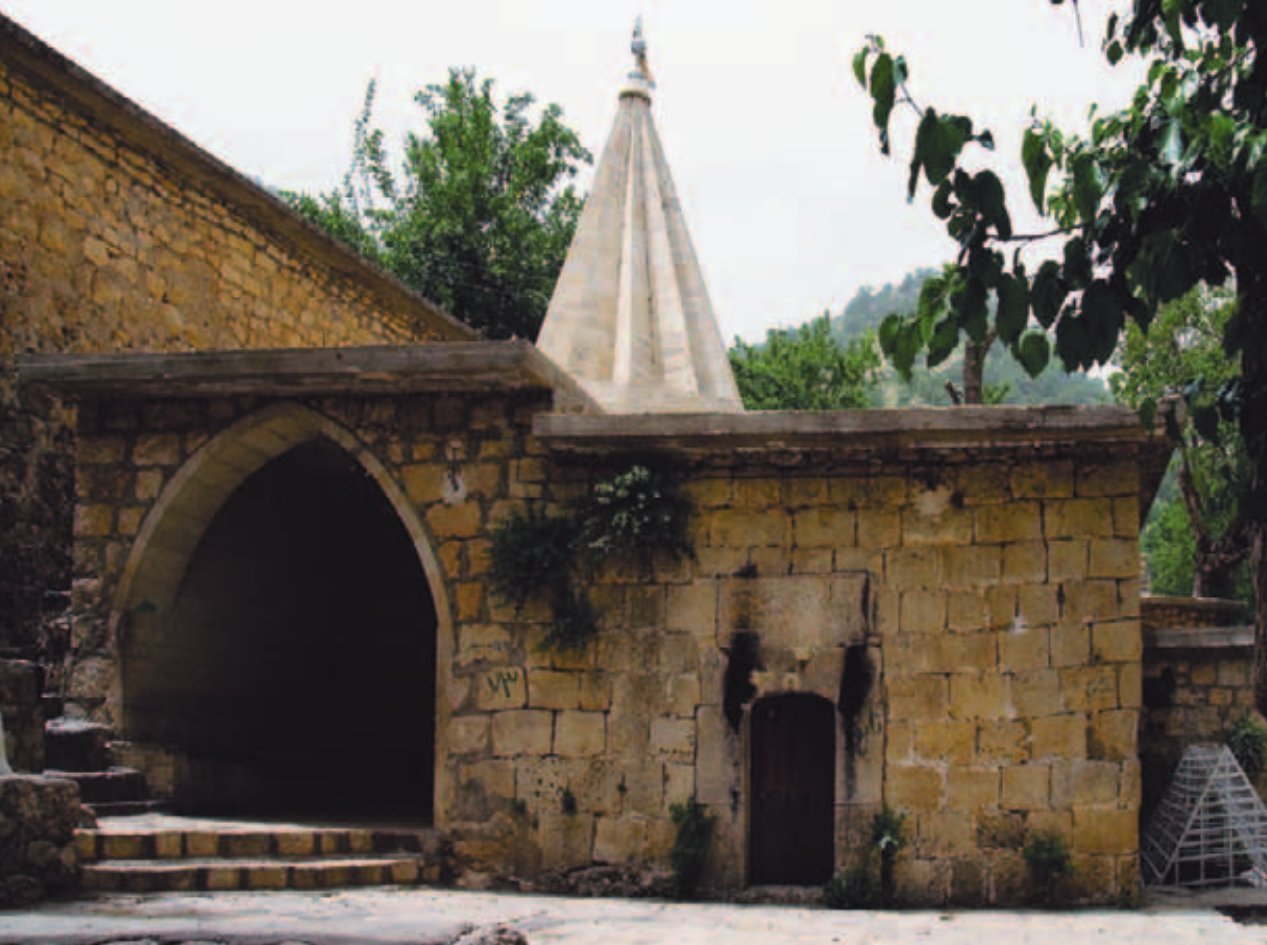
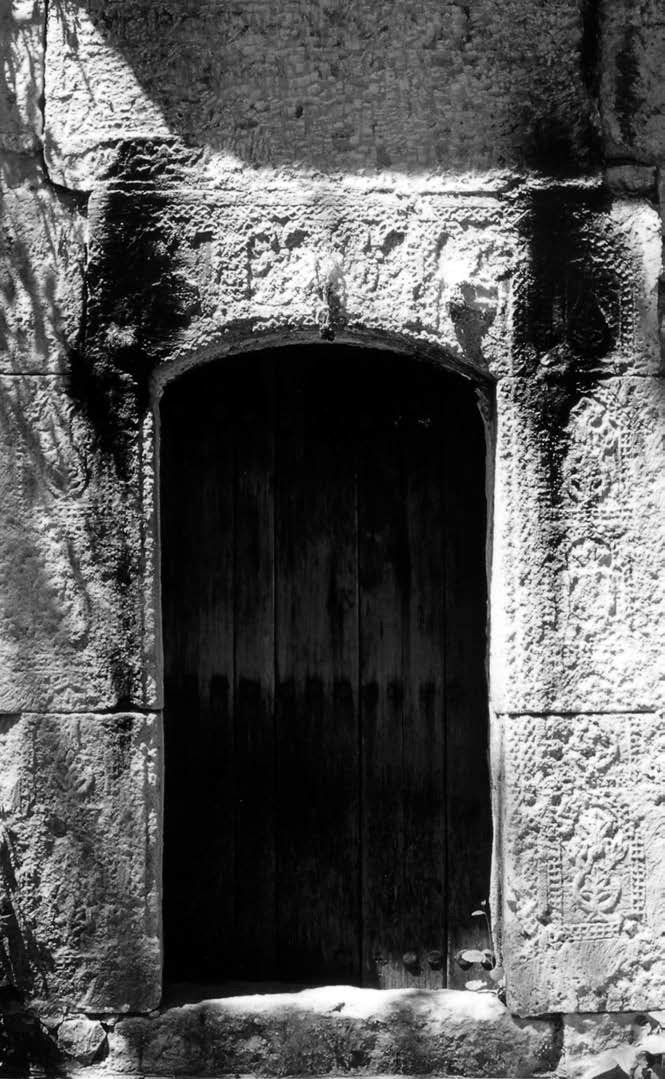
The consecration of the child
Every Ezidi should be consecrated with the water of the Kaniya Sipî after birth – according to the Êzdîkî text of Lalişa Nûranî, to make him "pure and helal", according to the English version, to "wash away the impurity of birth". Omarkhali (2005) writes that newborns are consecrated in the first week of life. Formerly girls and boys were consecrated separately; to this day there are the basins Kaniya kurika (boys) and Kaniya keçika (girls).
According to Kreyenbroek, the consecration is performed by the family of the Micêwir of the spring or by the father. Whoever cannot come to Lalîş is consecrated with water that the Qewal bring along at the Tawûs gêran, or with ordinary water. At the Tawûs gêran the Qewal pour water on the heads of those assembled and say that this is the water of the White Spring, the "cup of Êzîd" (Kreyenbroek).
According to Şêx Mak’sîm, every Ezidi should visit Lalîş and wash in the Kaniya Sipî; only a Şêx from the house of Şêşims, he says, may serve there. Kreyenbroek and Omarkhali (2023), by contrast, call the Micêwir of the spring a P’îr. Omarkhali (2023) calls the consecration in the Kaniya Sipî the initiation of the Ezidis; in the Iraqi school textbook the initiation is called bisk girtin.
The consecration of pilgrims
Whoever makes a pilgrimage to Lalîş consecrates himself in the water of the Kaniya Sipî and of the Kaniya Zimzim: one sprinkles oneself and at the same time speaks requests for one's relatives, the so-called Sela (Lalişa Nûranî). Pirbari: the water is sprinkled on the pilgrims' heads. See Pilgrimage.
Because spouses become brother and sister at the spring, according to Lalişa Nûranî, they may not go together to the Kaniya Sipî and Zimzim; there are separate entrances for men and women.
The consecration of holy things
Objects are also "sealed". At the Festival of the Assembly (Cejna Cimayê) the bier Berê Şibakê, which recalls the burial of Şêx Adî, is consecrated with water of the Kaniya Sipî before it is carried into the sanctuary. Likewise the pieces of cloth (perî) that are tied to the dome are consecrated (Lalişa Nûranî). The holy earth Berat is kneaded with the water of the spring (see Berat and holy earth).
Mor kirin of the dead
The washing of the dead is also called mor kirin. Şêx Mak’sîm describes it according to the Qewlê Sera Mergê (hymn of the hour of death):
- It takes place early in the morning, about half an hour before sunrise, when the morning star (Stêra Sibê) rises.
- The washing is done with three bowls (t’as) of water: the first from the head to the navel, the second from the navel to the feet, the third from the head to the feet. At each pass the prayer Doa Mor kirinê is spoken.
- Only the Ferz of the dead person, that is, his rightful Şêx and P’îr, may wash him. Without them the washing is not valid, however knowledgeable another Şêx or P’îr may be.
Perminov (2016) describes the same three passes with one bowl of water. Şêx Mak’sîm interprets the time of day as a reminder that the soul originally came from the morning star; he connects the number three with the three basic commandments. Both are his interpretation. See Burial – religious meaning and Burial and mourning.
See also
- Kaniya Sipî · Creation and the Pearl
- Birth: Bisk and Sinet (People & Culture)
Sources
- Philip G. Kreyenbroek, Khalil Jindy Rashow: God and Sheikh Adi Are Perfect. Sacred Poems and Religious Narratives from the Yezidi Tradition. Wiesbaden: Harrassowitz 2005, p. pp. 15–18, 27, 29–30, 37–38
- S. A. Grigoriev, L. V. Ivasko, D. V. Pirbari (P’îr Dîma): Lalişa Nûranî / Святой Лалыш / Holy Lalish. Yekaterinburg: Basko 2008, p. pp. 20–21, 26–29, 33–35, 52
- Khanna Omarkhali: The religious textual tradition of the Ezidis – from the oral to the written. Saint Petersburg 2023 (Russian translation of the English original, Wiesbaden 2017), p. pp. 14, 48, 237
- Khanna Omarkhali: Yezidi Religious Oral Poetic Literature: Status, Formal Characteristics, and Genre Analysis. With some examples of Yezidi religious texts. In: Scrinium VII–VIII.2 (2011–2012): Ars Christiana, Leiden: Brill, pp. 144–195, p. p. 191
- Khanna Omarkhali (Ханна Омархали): Йезидизм. Из глубины тысячелетий (From the depths of the millennia). Saint Petersburg 2005, p. pp. 135–136
- Şêx Mak’sîm (Maksim Ezdi): Grundpfeiler der Religion ScherfeDin, 2017 (on EZDIKI.COM in the Religion section and in the library), p. pp. 35–36, 91–93, 175 (PDF)
- Dimitri Pirbari (P’îr Dîma), A. Ščedrovickij: Тайна жемчужины (The secret of the pearl). Moscow/Tbilisi 2016, p. pp. 41, 78, 130, 247 (PDF)
- A. V. Perminov: Езиды – древний народ Адаби (The Ezidis – the ancient people Adabi). Sharya 2016, p. p. 103
- Birgül Açıkyıldız: The Yezidis. The History of a Community, Culture and Religion. London 2010, p. p. 191
Found a mistake?
Is something wrong – a fact, a spelling, a source, an image? Let us know: we check every report and correct the article.
Other spellings: Morkiri · Kaniya Sipi · Kaniya Spi · Sheikh · Scheich · Shex · Lalish · Lalisch · Lalesh · Qawl · Qaul · Kewl · Ezidiki · Ezdeki · Qawwal · Kawal · Kewal · Tawûsî Melek · Tawuse Melek · Melek Taus