
Words carry great weight in the religion Şerfedîn. An oath binds before God and the holy beings, a blessing brings prosperity, a lie is regarded as the work of evil. This article brings together how Ezidis swear, bless, make peace and carry wishes to holy places. Prayer texts are only named.
By whom one swears
Omarkhali (2005) has recorded the most serious oaths of the Ezidis from Armenia. One swears:
- by God (Xwedê), by the sun (Şems) or by both together;
- by Tawûsî Melek and by Şêx Adî;
- by the hearth (Ocax), the house of a spiritual lineage;
- by the direction of prayer toward the sun (Qubleta bi dor), "by this day" (wê rojê) or "by this light" (wê îşîkê);
- by earth and heaven (erd û ezman);
- by the blow on the Xerqe (derba xerqê) – breaking this oath is regarded as a mortal sin – and by the "blow of Şêşims";
- by the "lord of this evening" (mêrê vê êvarê), by a place of pilgrimage (ziyaret) and by the house of the healer lineage Cindîyar.
Clergy often swear by the ancestor of their lineage, for example a P’îr of the lineage Îsibiya: "Îsibiya!". Laypeople swear by the name of the P’îr or Şêx lineage that looks after their house. In Armenia people also swear by the houses of well-known Şêx with a special gift (Omarkhali 2005).
Hesenê Şêx Kelaşê (1995), too, names the sun, Şems, as the lord with whom oaths, sacrifices and fasting are connected. The oaths show what is holy to the Ezidis: God, the sun as his light, the holy beings, the spiritual families and the Xerqe. On the object of the oath "Derba xerqe" see Feqîr and the Xerqe.
A notable report comes from the neighborhood: according to Omarkhali (2023), Muslims in Botan and Mardin swear their strongest oath "by the Black Book" – the supposed holy book of the Ezidis.
What counts as a sin of the tongue
Hesenê Şêx Kelaşê counts among the sins lying, cursing, slander, quarreling and telling of "things unseen and not happened"; for the latter, he says, the soul burns in hell. According to Omarkhali (2005), the lie (derew) is regarded as the work of evil. It is also regarded as a sin to pronounce the names that other religions give to an "evil spirit"; one would thereby recognize evil as a power of its own (Pirbari; Kreyenbroek). See Good and evil.
Even toward evildoers one should not curse. Şêx Mak’sîm: one does not ask Melek Şemsedîn to destroy the evildoers, but to let justice be done to them (heqê wan bîne). And: whoever recognizes justice in a person should not ask about religion and people.
Blessing
- The P’îr blesses the house: once a year the P’îr visits his Mirîd and prays over bread and salt for prosperity (Lalişa Nûranî). For this he receives the gift zikat.
- At a wedding the Şêx speaks prayers of blessing (Drower 1941).
- The blessing for all: one formula reads: "O Şems, help the 72 peoples, then us!" (Omarkhali 2023); Şêx Mak’sîm hands it down as a morning formula: "God, help the 72 peoples, then help us Ezidis."
- Beginning and end: in Iraq the performance of sacred texts begins "with the permission of God, the Lord of permission"; at the end there is often "We are imperfect, God is perfect" (Omarkhali 2023), sometimes "God and Şêx Adî are perfect" (Kreyenbroek).
- At table: before eating one says quietly "With permission, in the name of God", after eating "We have diminished, may God increase" (Omarkhali 2005). This is the Du’aya sifrê.
- When giving: whoever gives a donation speaks the Du’aya xêrê (Omarkhali 2005).
Making peace
There is a prayer of its own for concord, the Du’a Tifaqê (Kreyenbroek). In a dispute a Şêx or P’îr places a Berat, a small ball of holy earth from Lalîş, between the two parties; they hand each other the Berat over the Xerqe of a Feqîr (Lalişa Nûranî; Bedelê Feqîr Hecî). Thus the earth of Lalîş and the holy garment bear witness to the reconciliation (see Berat and holy earth). According to Lalişa Nûranî, the Micêwir and the Qewal also settled disputes.
Wishes at holy places
A prayer of its own is the Du’a Mirazê, the "prayer of wishes" (Kreyenbroek). In Lalîş there are places to which one carries one's wishes (Lalişa Nûranî):
- At the five columns of the main hall, which are dedicated to Melek Nasirdîn, Siltan Êzîd, Melek Fexredîn, Şêşims and Melek Şêx Sin, the Ezidis tie and untie knots in colorful cloths and make a wish.
- Onto the wishing stone Berê Miraza one throws a cloth with closed eyes; if it stays there, that is a good sign.
- Whoever touches the Stûna Miraza, the "column of wishes", has a wish fulfilled, especially for marriage.
- To the fever tree relatives of the sick tie a ribbon and ask for healing.
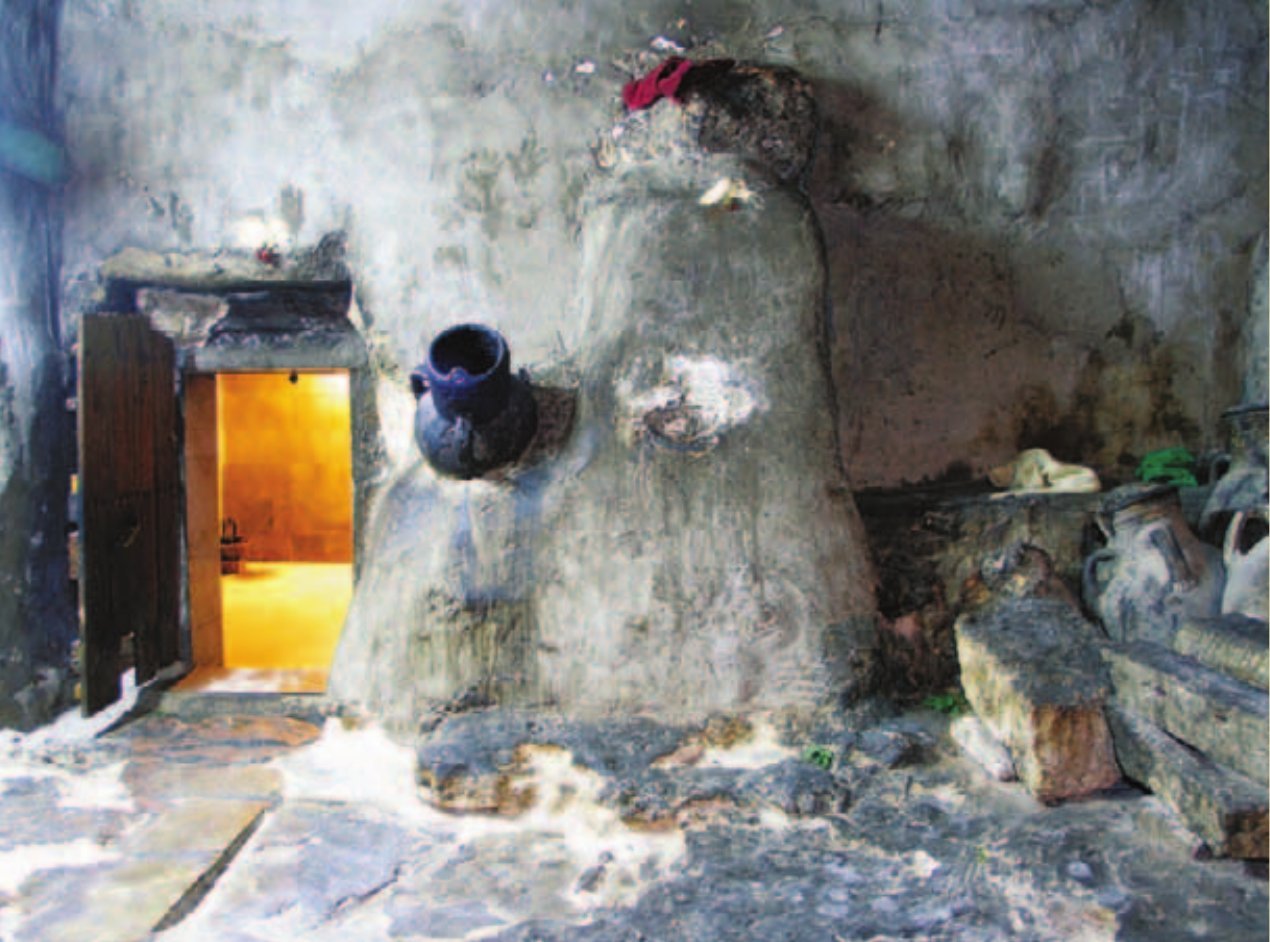
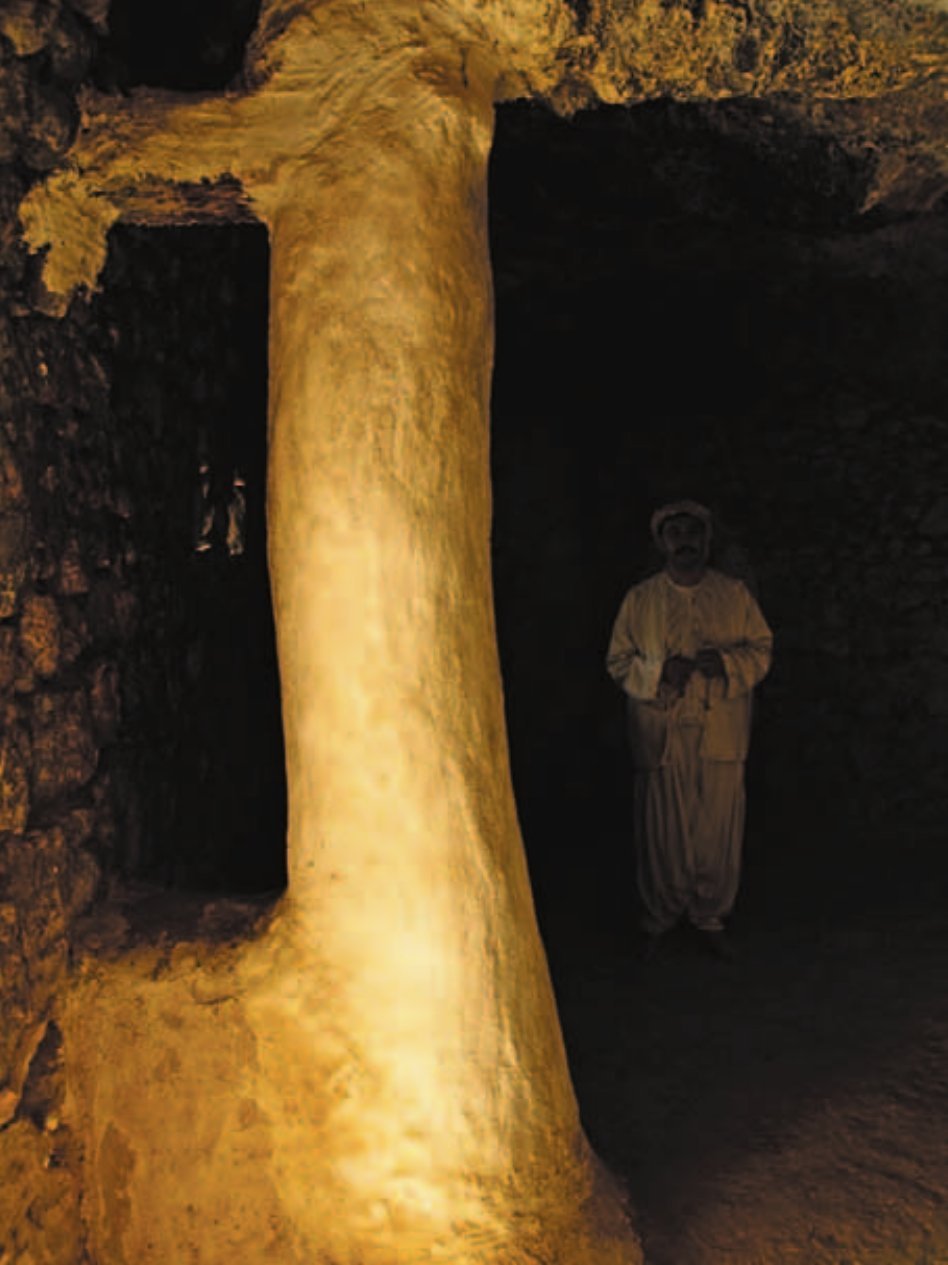
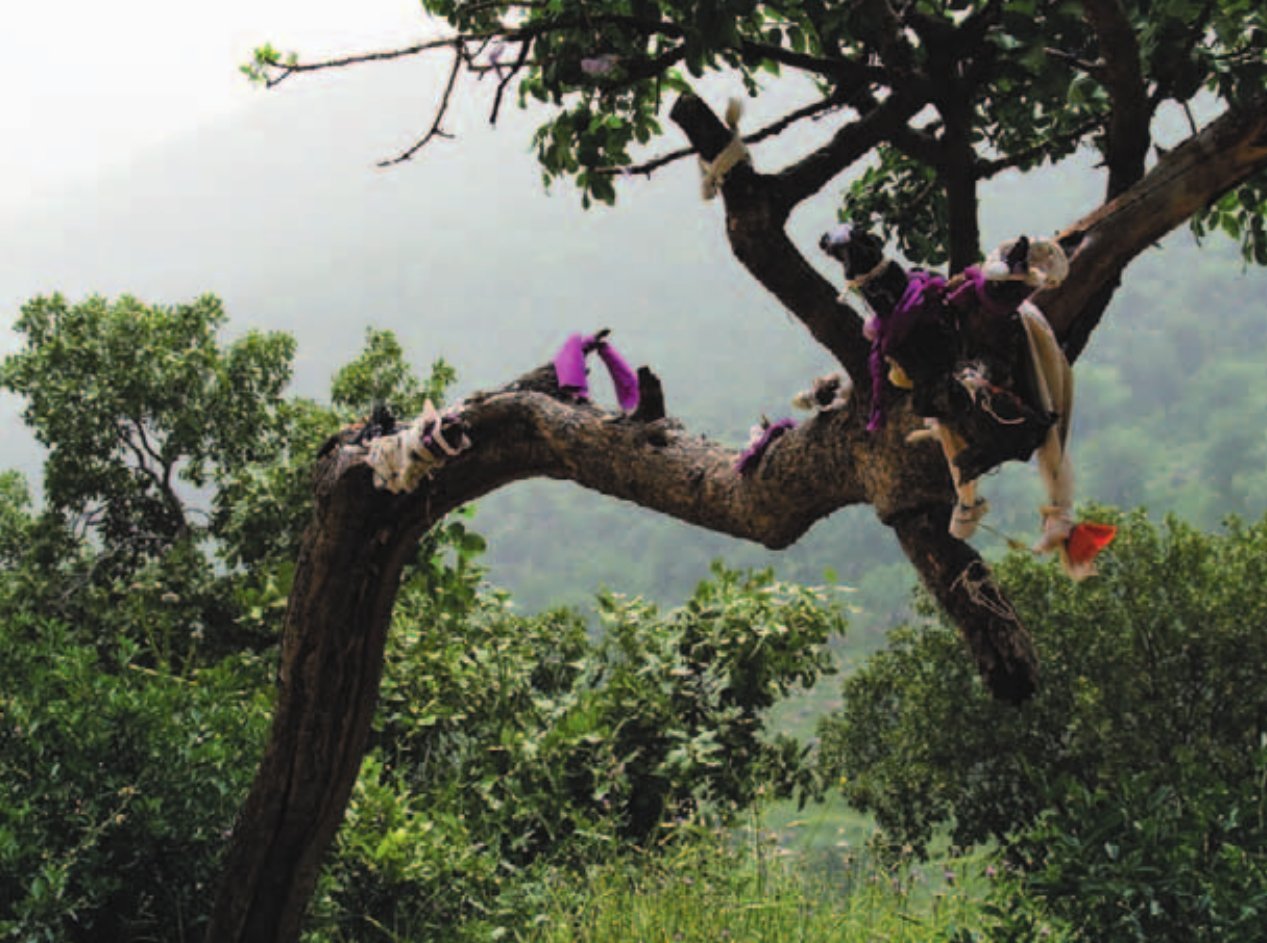
On these places see Hesin Dena and the wishing stones and Holy trees.
See also
- Prayer and prayer times
- Rules of greeting and conduct (People & Culture)
Sources
- Khanna Omarkhali (Ханна Омархали): Йезидизм. Из глубины тысячелетий (From the depths of the millennia). Saint Petersburg 2005, p. pp. 43–45, 127, 129
- Һ'әсәне Шех К'әләше (Hesenê Şêx Kelaşê, Hesen Hesenyan): Р'е-р'ьзма мьләте Эзди ангори qьраре дин (Rê-rizma mileta Êzdî angorî qirarê dîn). Şamîran 1995 (scan and new text edition in the EZDIKI.COM library), p. pp. 3–4, 41–42
- Khanna Omarkhali: The religious textual tradition of the Ezidis – from the oral to the written. Saint Petersburg 2023 (Russian translation of the English original, Wiesbaden 2017), p. pp. 37, 79, 91, 93
- Philip G. Kreyenbroek, Khalil Jindy Rashow: God and Sheikh Adi Are Perfect. Sacred Poems and Religious Narratives from the Yezidi Tradition. Wiesbaden: Harrassowitz 2005, p. pp. 18, 109, 188, 279
- S. A. Grigoriev, L. V. Ivasko, D. V. Pirbari (P’îr Dîma): Lalişa Nûranî / Святой Лалыш / Holy Lalish. Yekaterinburg: Basko 2008, p. pp. 12–13, 26–37, 73, 131, 156, 204
- Şêx Mak’sîm (Maksim Ezdi): Grundpfeiler der Religion ScherfeDin, 2017 (on EZDIKI.COM in the Religion section and in the library), p. pp. 60, 210–213 (PDF)
- Dimitri Pirbari (P’îr Dîma), A. Ščedrovickij: Тайна жемчужины (The secret of the pearl). Moscow/Tbilisi 2016, p. p. 28 (PDF)
- E. S. Drower: Peacock Angel. Being some Account of Votaries of a Secret Cult and their Sanctuaries. London 1941, p. p. 19 (PDF 32)
- Bedelê Feqîr Hecî (Bedilê Feqîr Heci): Bawerî û Mîtologiya Êzidiyan. Çendeha Têkist û Vekolîn [Faith and mythology of the Ezidis. Some texts and studies]. Dihok 2002, p. p. 24
Found a mistake?
Is something wrong – a fact, a spelling, a source, an image? Let us know: we check every report and correct the article.
Other spellings: Sdschhwur · Sjhwur · Dua xere · Dua chere · Dua khere · Dua sifre · Dua Tifaqe · Dua Miraze · Derba xerqe · Derba cherqe · Derba kherqe · Tawuse Melek · Melek Taus · Taus-i Melek · Malak Tawus · Sheikh Adi · Scheich Adi · Shaikh Adi · Şêxadî · Shikhadi