
Qurban is the name of the animal sacrifice. Ezidis offer it at great festivals, at the death of a person, at the commemoration of the dead and before opening holy objects. A sacrifice is valid only if the prayer Terqîn is spoken at it. Hesenê Şêx Kelaşê (1995) compares a sacrificial animal without Terqîn with "a passport without photo and stamp".
Sacrifice, gift and prayer
According to the Qewlê Erd û Ezman ("Earth and Heaven"), which Hesenê Şêx Kelaşê cites, earth and heaven stand on three things: Qurban (sacrifice), Xêr (gift, good deed) and Du’a (prayer). Sacrifice is thus not only a custom, but belongs to what sustains the world. The meat is distributed – to guests, pilgrims and the poor. The distribution itself is part of the rite and is called ser qurbanê in Omarkhali (2023).
To whom sacrifices are made
Sacrifices directly to God are unknown according to Omarkhali (2023) – just as prayers are rarely addressed directly to God. Sacrifices are made in honor of the holy beings and saints:
- At death, according to Şêx Mak’sîm, a lamb or an ox is first sacrificed to the archangel Azrail (Nasirdîn), the angel of death. He bases this on the Qewlê Sera Mergê: the angel does not take one soul in place of another; he is "innocent" of the death. See Burial – religious meaning.
- On the weekdays of the angels: according to Şêx Mak’sîm, one sacrifices for an angel on the weekday that belongs to his archangel – for Şêx Alê Şemsa, for example, on Thursday.
- At the stone trough of Melek Fexredîn in Lalîş sacrificial lambs are slaughtered in honor of this saint (Lalişa Nûranî).
- For Şêşims, the lord of the sun, the only annual bull is sacrificed at the autumn festival (see below).
Occasions
| Occasion | Sacrifice | Source |
|---|---|---|
| Festival of the Assembly (Cejna Cimayê), Lalîş | bull in front of the sanctuary of Şêşims; from it the holy dish Simat | Lalişa Nûranî; Kreyenbroek |
| Festival of Erefat | around this time families slaughter an animal | Kreyenbroek |
| Death and commemoration | sacrifice for Nasirdîn; after seven days a wether or a heifer | Şêx Mak’sîm; Rudenko |
| Opening of holy objects (mişûr, tas, kilît) | chickens or rams | Omarkhali (2023) |
| Festival of Batizmiye (Çelkan tribe, Turkey) | sheep sacrifice | Kreyenbroek |
At the commemoration of the dead after seven days, according to Rudenko, the animal is usually slaughtered by the P’îr: it is laid on its left side, a pinch of salt is put into its mouth and a prayer is spoken. Before the manuscript Mişûra Reş Belek is opened once a year, a chicken is sacrificed, the Terqîn is spoken and a Qewl is performed (Omarkhali 2023).
The bull sacrifice and the dish Simat
On the fourth day of the autumn festival Cemaya Şîxadî (Assembly of Şêx Adî), according to Lalişa Nûranî, a bull is sacrificed in front of the dome of Şêşims; Kreyenbroek names the fifth day. From the meat, with cracked wheat, the holy dish Simat (also Şîlan) is cooked and distributed to the guests of the house of Şêx Adî, to pilgrims and to the poor. It is cooked in large cauldrons in the courtyard Gaykuj – the name means "place where the bull is slaughtered". The servants bring the firewood for it from outside, for in the valley of Lalîş no tree may be felled. The course of the bull sacrifice is described in Qebax – the bull sacrifice.
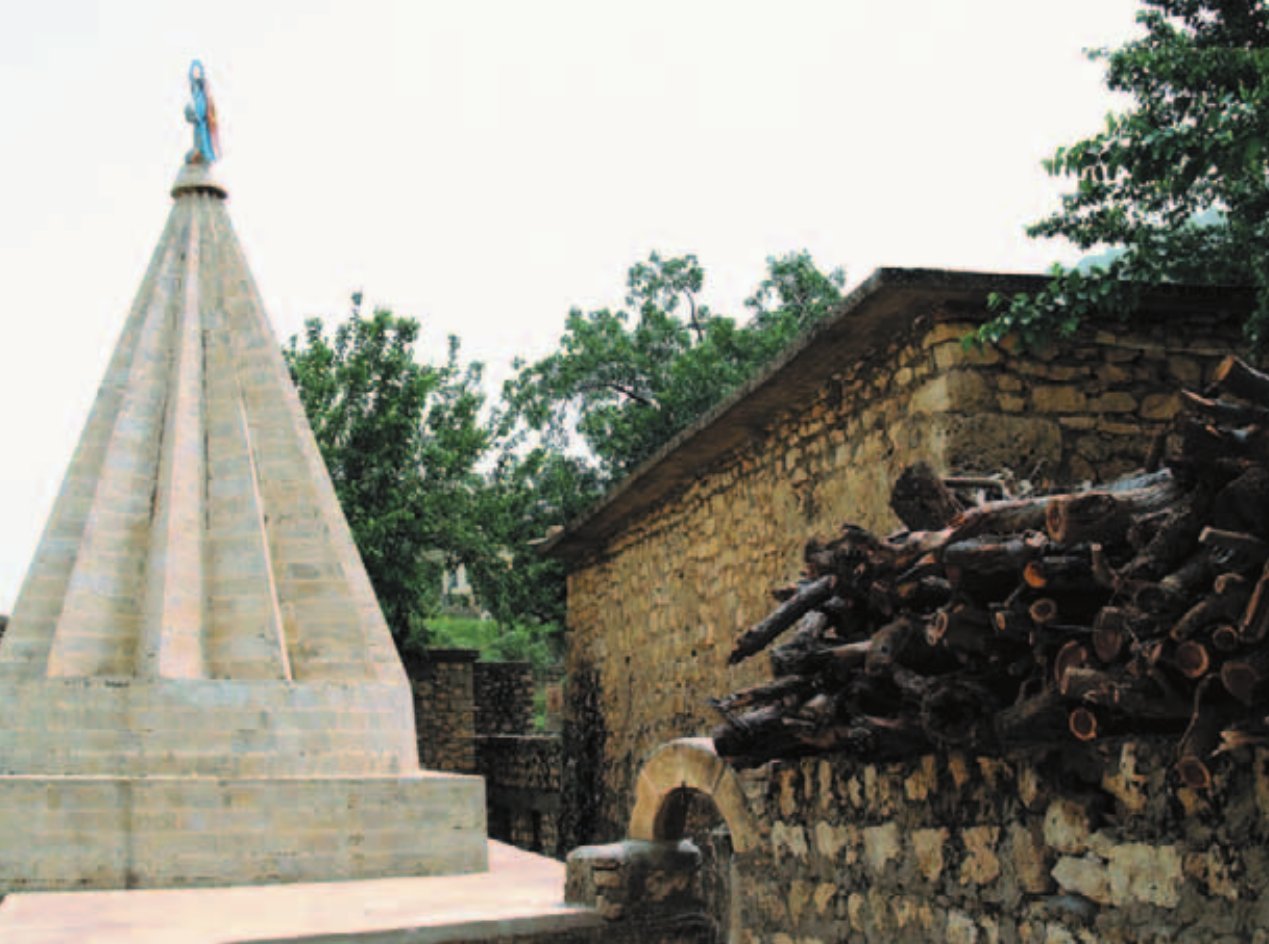
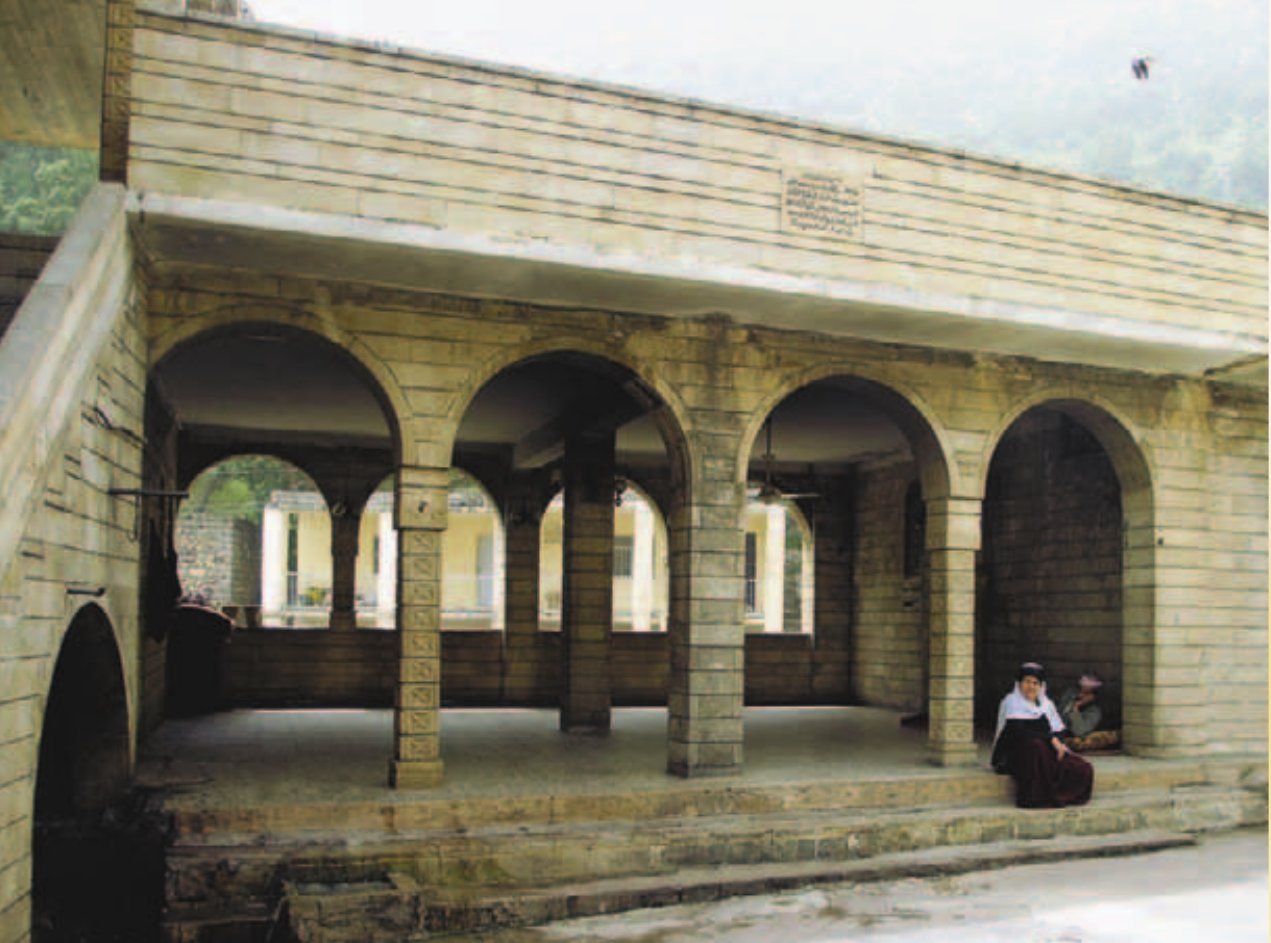
Kreyenbroek compares the bull sacrifice with the ancient Iranian autumn festival Mehragan and the cult of Mithras. This is a research hypothesis.
The prayer Terqîn
The Terqîn (in the Caucasus) or Telqîn (in Iraq and Syria; from Arabic talqīn, "instruction") is the prayer at sacrifices and burials. According to Omarkhali (2011/12), it deals with the hereafter.
- Who speaks it: in the Caucasus only P’îr and Şêx, in Iraq also Qewlbêj, Qewal and Feqîr (Omarkhali 2023). Only men from the spiritual castes; women may not speak it publicly, even if they know it (Omarkhali 2011/12 and 2023).
- Language: it is full of Arabic phrases. In the Caucasus it is hardly understood; precisely for this reason it is regarded there as especially mysterious and has a higher rank. No word may be changed (Omarkhali 2011/12).
- When: before and after the sacrifice, at burial, at the rite Dest Danîn. In the Caucasus a short Terqîn is additionally spoken after every Qewl as "confirmation" (Omarkhali 2023; Omarkhali 2005).
- Versions: in Armenia and Georgia over 20 versions have been recorded (Omarkhali 2023).
- Gift: whoever speaks the prayer receives a small fee, maşê t’erqînê (Omarkhali 2005).
Şêx Mak’sîm calls the T’erqîn the main prayer at rituals and sacrifices. This article does not reproduce its wording; it belongs in the Prayers section.
See also
Sources
- Һ'әсәне Шех К'әләше (Hesenê Şêx Kelaşê, Hesen Hesenyan): Р'е-р'ьзма мьләте Эзди ангори qьраре дин (Rê-rizma mileta Êzdî angorî qirarê dîn). Şamîran 1995 (scan and new text edition in the EZDIKI.COM library), p. pp. 26, 31–32
- Khanna Omarkhali: The religious textual tradition of the Ezidis – from the oral to the written. Saint Petersburg 2023 (Russian translation of the English original, Wiesbaden 2017), p. pp. 14, 46, 48, 53, 90, 92, 145, 162
- Khanna Omarkhali: Yezidi Religious Oral Poetic Literature: Status, Formal Characteristics, and Genre Analysis. With some examples of Yezidi religious texts. In: Scrinium VII–VIII.2 (2011–2012): Ars Christiana, Leiden: Brill, pp. 144–195, p. pp. 160, 178–179
- Khanna Omarkhali (Ханна Омархали): Йезидизм. Из глубины тысячелетий (From the depths of the millennia). Saint Petersburg 2005, p. pp. 138, 156
- Şêx Mak’sîm (Maksim Ezdi): Grundpfeiler der Religion ScherfeDin, 2017 (on EZDIKI.COM in the Religion section and in the library), p. pp. 46, 63–65, 79–82, 204 (PDF)
- S. A. Grigoriev, L. V. Ivasko, D. V. Pirbari (P’îr Dîma): Lalişa Nûranî / Святой Лалыш / Holy Lalish. Yekaterinburg: Basko 2008, p. pp. 26–30, 99, 144
- Philip G. Kreyenbroek, Khalil Jindy Rashow: God and Sheikh Adi Are Perfect. Sacred Poems and Religious Narratives from the Yezidi Tradition. Wiesbaden: Harrassowitz 2005, p. pp. 16–18, 38
- M. B. Rudenko: Обрядовая поэзия – Похоронные причитания (Ritual poetry – funeral laments). Moscow 1982, p. pp. 64–65 (p-066–067)
- Dimitri Pirbari (P’îr Dîma), A. Ščedrovickij: Тайна жемчужины (The secret of the pearl). Moscow/Tbilisi 2016, p. pp. 252, 260 (PDF)
Found a mistake?
Is something wrong – a fact, a spelling, a source, an image? Let us know: we check every report and correct the article.
Other spellings: Terqin · Telqin · Talqin · Xer · Cher · Kher · Silan · Schilan · Shilan · Qebach · Qebakh · Sheikh · Scheich · Shex · Qawl · Qaul · Kewl · Lalish · Lalisch · Lalesh