
Among the Ezidis fasting is called rojî. According to Kreyenbroek, it is a central part of the religion. Unlike in Islam, however, there is no month of fasting for everyone: the Ezidis fast above all three days before two great winter festivals. Whoever is especially devout or holds a high office fasts forty days twice a year. The festivals themselves are described in Religious festivals and Festivals and fast days.
How one fasts
One eats and drinks nothing between sunrise and sunset (Omarkhali 2005). The photo book Lalişa Nûranî describes the day as follows:
- Before daybreak one eats, often with the neighbors, the early meal Paşîv.
- During the day one works as usual.
- In the evening one washes, says the evening prayer and visits the holy signs.
- Then one breaks the fast with the Fitar.
In the fasting periods, according to Lalişa Nûranî, one kisses a Berat, a small ball of holy earth from Lalîş, in the evening after the prayer and before eating (see Berat and holy earth). During the three days one gives alms and brings the neighbors "bread of the dead", food in remembrance of the deceased.
The fasts of the year
Rojiyên Êzîd – the fast for Êzîd
The most important fast is the three days before the festival Eyda Êzîd in December. According to Lalişa Nûranî, it is obligatory and is dedicated to Êzîd, whom the photo book here equates with God (Xweda). The fast begins on Tuesday; on the fourth day, Friday, is the festival. On Friday evening the experts perform Qewl, and the community celebrates (Lalişa Nûranî; Omarkhali 2005). Kreyenbroek calls the fast Eyda Rojiyê and the festival after it the celebration of the birth of Êzîd.
The fast before Xidir Nebî and Xidir Eylas
In February one fasts for three days, from Monday to Wednesday, before the festival of the two "fulfillers of wishes" Xidir Nebî and Xidir Eylas. According to Lalişa Nûranî, this fast is not obligatory, but meritorious. Whoever is named Xidir or Eylas must keep it for seven years. Hesenê Şêx Kelaşê (1995) calls the night after the third day of fasting for Xidir Nebî a "very great" night for the salvation of the soul.

The dates in the sources
The dates are given differently, partly because the Ezidis use the eastern (Julian) and the western calendar side by side:
| Source | Festival after the fast in winter | Festival after the fast in February |
|---|---|---|
| Lalişa Nûranî, Omarkhali (2023) | Eyda Êzîd on the first Friday in December (eastern calendar) | first Thursday (Lalişa Nûranî) or in the Caucasus first Friday in February (Omarkhali) |
| Şêx Mak’sîm | E’yd Melek Şemsedîn on the Friday near the winter solstice; E’yd Sultan Êzîd on the third Friday in December | E’yd Xidir Nebî on the third Friday in February |
| Lescot (1936) | twice a year three days: Îda Roja and before Xidir Elyas |
According to Şêx Mak’sîm, one fasts for three days before each of these festivals; he calls December (Kanûn) the beginning of the twelve months that belong to Şemsedîn. He also reports that some Ezidis fast every Wednesday, because Wednesday is holy.
The great fasts: Çilê havînê and Çilê zivistanê
Twice a year there is a 40-day fast: Çilê havînê ("the forty summer days") and Çilê zivistanê ("the forty winter days"). Pirbari calls it Çila erbeîn, the fast of the Ezidi "monks".
- Who fasts: the Babê Şêx, the Koçek, the First Pêşîmam and, in winter, the Baba Gavan (Kreyenbroek; Lalişa Nûranî). According to Omarkhali (2005), the Feqîr fast for up to 40 days; Lescot names additional fasting periods for them.
- Course in summer (Kreyenbroek): in June the dignitaries fast for three days in Lalîş, then at home, and three days before the end again in Lalîş. Many other Ezidis fast along for the last three days. At the end there is a celebration in Lalîş.
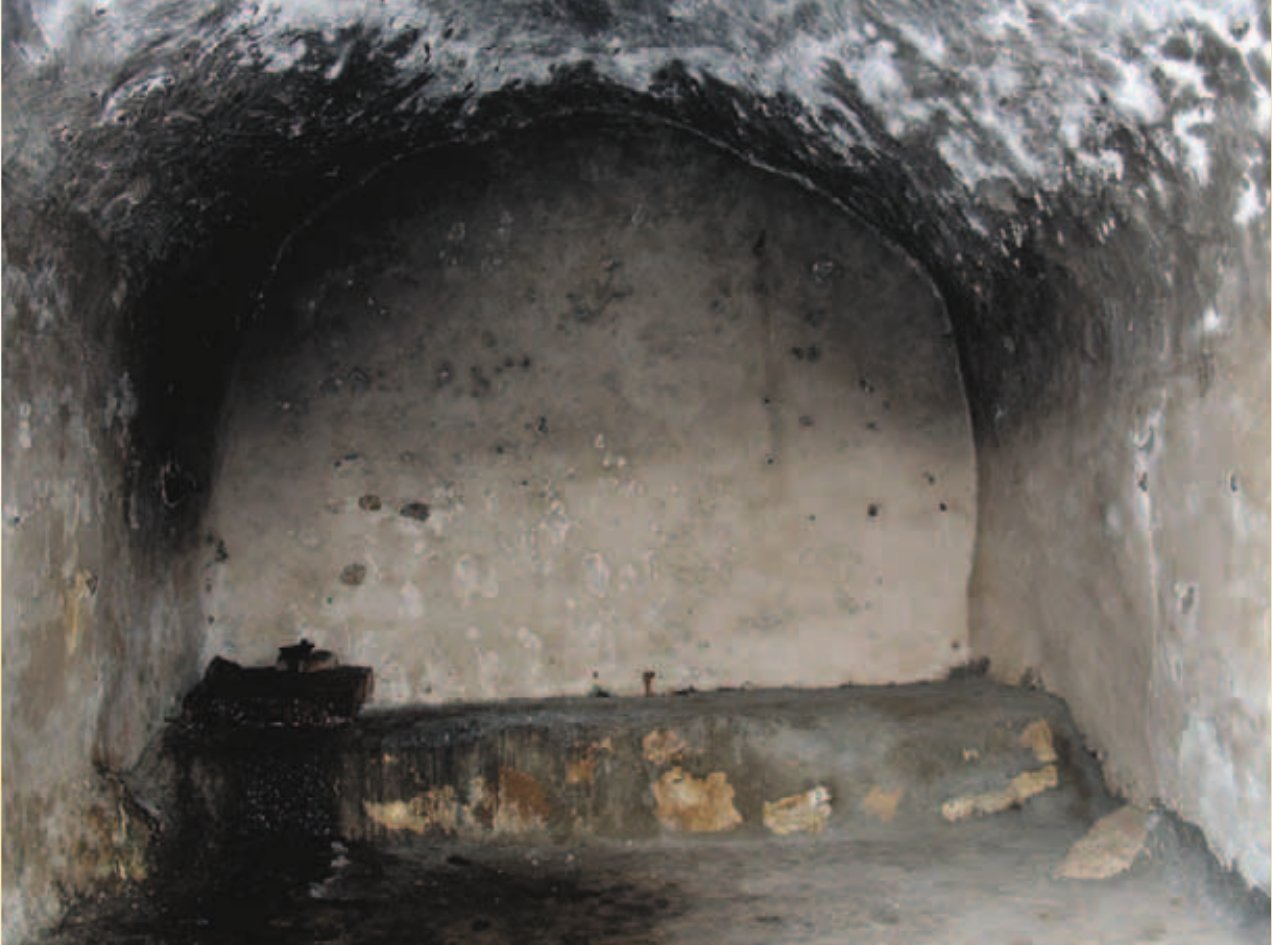
- The cave of the Forty: on the first and last day the fasting clergy (Çilegir) go into the cave Çilexane beneath the temple and sing hymns there. Only Feqîr and Çilegir may enter. According to tradition, Şêx Adî himself fasted there for forty days (Lalişa Nûranî).
- After the festivals at the end of both Çile the Sema is held (Lalişa Nûranî).
Fasting and Islam
Kreyenbroek points out that some hymns expressly reject Islamic duties: in the Qewlê Mela Abû Bekir a scholar abandons the greeting, the obligatory prayer and fasting in the Islamic manner. Ezidi fasting is thus not an adopted Ramadan fast, but has its own times and its own meaning.
See also
Sources
- S. A. Grigoriev, L. V. Ivasko, D. V. Pirbari (P’îr Dîma): Lalişa Nûranî / Святой Лалыш / Holy Lalish. Yekaterinburg: Basko 2008, p. pp. 28, 31, 34, 37, 168, 204
- Philip G. Kreyenbroek, Khalil Jindy Rashow: God and Sheikh Adi Are Perfect. Sacred Poems and Religious Narratives from the Yezidi Tradition. Wiesbaden: Harrassowitz 2005, p. pp. 8, 10, 17, 35
- Khanna Omarkhali (Ханна Омархали): Йезидизм. Из глубины тысячелетий (From the depths of the millennia). Saint Petersburg 2005, p. pp. 131, 133, 145–146
- Khanna Omarkhali: The religious textual tradition of the Ezidis – from the oral to the written. Saint Petersburg 2023 (Russian translation of the English original, Wiesbaden 2017), p. pp. 25, 145–146
- Şêx Mak’sîm (Maksim Ezdi): Grundpfeiler der Religion ScherfeDin, 2017 (on EZDIKI.COM in the Religion section and in the library), p. pp. 37, 190, 197–200 (PDF)
- Roger Lescot: Enquête sur les Yezidis de Syrie et du Djebel Sindjār (Study of the Ezidis of Syria and of the Şengal mountains). Beirut 1938, p. pp. 70–71 (p-075–076)
- Һ'әсәне Шех К'әләше (Hesenê Şêx Kelaşê, Hesen Hesenyan): Р'е-р'ьзма мьләте Эзди ангори qьраре дин (Rê-rizma mileta Êzdî angorî qirarê dîn). Şamîran 1995 (scan and new text edition in the EZDIKI.COM library), p. p. 34
- Dimitri Pirbari (P’îr Dîma), A. Ščedrovickij: Тайна жемчужины (The secret of the pearl). Moscow/Tbilisi 2016, p. pp. 258–259 (PDF)
Found a mistake?
Is something wrong – a fact, a spelling, a source, an image? Let us know: we check every report and correct the article.
Other spellings: Rojiyen Ezid · Rojiyet Ezi · Eyda Rojiye · Cile · Tschile · Chile · Cile havine · Tschile havine · Chile havine · Cil havine · Cile zivistane · Tschile zivistane · Chile zivistane · Cil zivistane · Cila erbein · Tschila erbein · Lalish · Lalisch · Lalesh · Barat