
In February the Ezidis celebrate the festival of Xidir Nebî and Xidir Eylas (also Xidir Elyas, Xidir Îliyas). Both are regarded as fulfillers of wishes (Lalişa Nûranî, Engl. p. 31). Like the festival of Êzîd, it is celebrated, according to Khanna Omarkhali, in all Ezidi communities (Omarkhali 2023, p. 25). Kreyenbroek points out that this festival is not known only among the Ezidis (p. 18).
The date for the current year is in the calendar.
Xidir Nebî and Xidir Eylas
According to Omarkhali (2005), Xidir Nebî is the patron of lovers and fulfiller of wishes, Xidir Eylas the protector of the sick, travelers and prisoners (p. 73). Who the two are and how they appear in the Qewls is explained in the article Xidir Nebî and Xidir Elyas.
In Lalîş lamps of their own burn for them, the Çirayên Xidir Eylas û Xidir Nebî (Lalişa Nûranî, p. 202). In the village of Bozan stands the large dome of Xidir Îliyas (p. 168).
Obligatory or voluntary?
According to the photo book Lalişa Nûranî, the fast before this festival is not obligatory, but meritorious. Whoever is named Xidir or Eylas, however, must keep it for seven years (p. 28).
The night before the festival
Hesenê Şêx Kelaşê calls the night after the third day of fasting Leyleqedr; it is, he says, very great for the salvation of the soul (p. 34). He rejects a custom called K’osegeldî, because in his view it was introduced by Muslims out of hostility toward Tawûsî Melek (p. 34).
On this night people first visit families that have lost a relative in the current year; the men then gather in the house of a Şêx or P’îr and listen to hymns and prayers (Omarkhali 2005, p. 74).
The Mişûr Reş Belek
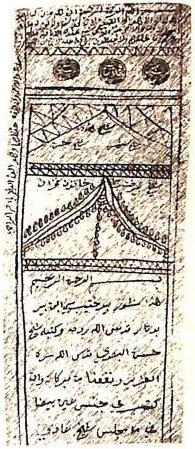
An example of how closely holy objects are bound to "their" day: the Mişûra Reş Belek, a holy manuscript kept in a family, is opened only once a year – at the festival of Xidir Nebî û Xidir Eylas, on its weekday (Monday), after the sacrifice of a chicken, the prayer Terqîn and a Qewl (Omarkhali 2023, pp. 53–54). See Holy signs and objects.
The date
The sources give the weekday and week differently:
| Source | Information |
|---|---|
| Lalişa Nûranî (2008), Iraq | first Thursday in Sibat (February); fasting Monday to Wednesday (p. 28) |
| Omarkhali 2023, Iraq | first Thursday (Xidir Eylas) and first Friday (Xidir Nebî) in the eastern February (p. 25) |
| Omarkhali 2023, Armenia and Georgia | only the first Friday in the eastern February (p. 25) |
| Omarkhali 2005 | first Friday in February, old style, after three days of fasting (p. 73) |
| Şêx Mak’sîm (2017) | third Friday in February, three days of fasting (Tuesday to Thursday) before it (p. 200) |
| Tagay/Ortaç (2016) | first Thursday in February, Julian, after three days of fasting (p. 89) |
| Lescot (1938), Şengal and Syria | fixed on 18 February, three days of fasting before it (pp. 70–71) |
The first Friday in the eastern February falls, according to today's calendar, on 14 to 20 February. In Iraq the statements "first Thursday" and "first Friday" mean two consecutive feast days for the two saints.
Customs among the people
Flour marks on the walls, the salty flatbread totka şor, the woolen sock dolîdang and the hoof print in the flour are described in the section People & Culture: Festivals and fast days.
Sources
- S. A. Grigoriev, L. V. Ivasko, D. V. Pirbari (P’îr Dîma): Lalişa Nûranî / Святой Лалыш / Holy Lalish. Yekaterinburg: Basko 2008, p. pp. 28, 31, 168, 202
- Khanna Omarkhali: The religious textual tradition of the Ezidis – from the oral to the written. Saint Petersburg 2023 (Russian translation of the English original, Wiesbaden 2017), p. pp. 25, 53–54
- Philip G. Kreyenbroek, Khalil Jindy Rashow: God and Sheikh Adi Are Perfect. Sacred Poems and Religious Narratives from the Yezidi Tradition. Wiesbaden: Harrassowitz 2005, p. p. 18
- Şêx Mak’sîm (Maksim Ezdi): Grundpfeiler der Religion ScherfeDin, 2017 (on EZDIKI.COM in the Religion section and in the library), p. p. 200
- Һ'әсәне Шех К'әләше (Hesenê Şêx Kelaşê, Hesen Hesenyan): Р'е-р'ьзма мьләте Эзди ангори qьраре дин (Rê-rizma mileta Êzdî angorî qirarê dîn). Şamîran 1995 (scan and new text edition in the EZDIKI.COM library), p. p. 34
- Dimitri Pirbari (P’îr Dîma), A. Ščedrovickij: Тайна жемчужины (The secret of the pearl). Moscow/Tbilisi 2016, p. p. 66 (ill.)
- Khanna Omarkhali (Ханна Омархали): Йезидизм. Из глубины тысячелетий (From the depths of the millennia). Saint Petersburg 2005, p. pp. 73–75
- Roger Lescot: Enquête sur les Yezidis de Syrie et du Djebel Sindjār (Study of the Ezidis of Syria and of the Şengal mountains). Beirut 1938, p. pp. 70–71
- Şefik Tagay, Serhat Ortaç: Die Eziden und das Ezidentum. Geschichte und Gegenwart einer vom Untergang bedrohten Religion. Hamburg (Landeszentrale für politische Bildung) 2016, p. p. 89
Found a mistake?
Is something wrong – a fact, a spelling, a source, an image? Let us know: we check every report and correct the article.
Other spellings: Xidir Nebi · Chidir Nebi · Khidir Nebi · Chidir Eylas · Khidir Eylas · Chidir Elyas · Khidir Elyas · Chidir Ilyas · Khidir Ilyas · Xidir Iliyas · Chidir Iliyas · Khidir Iliyas · Ayda Xidir Nebi · Ayda Chidir Nebi · Ayda Khidir Nebi · Eyda Xidir Nebi u Xidir Eylas · Lalish · Lalisch · Lalesh · Qawl