
The Sencaq (also Sancaq, Senceq) or Tawûs ("peacock") is the holy peacock image of the Ezidis: a bird figure of copper or brass on a tall stand. It is the sign of Tawûsî Melek, the highest angel (Kreyenbroek, pp. 7, 15–16; Omarkhali 2023, pp. 137–138). The Qewal carry it on their circuits through the communities; this journey is called Tawûs gêran.
What the Sencaq look like, which areas they had, where they are today and how the circuits proceeded is described in detail in the article Sencaq and Tawûs gêran in the section People & Culture. This article explains the religious meaning.
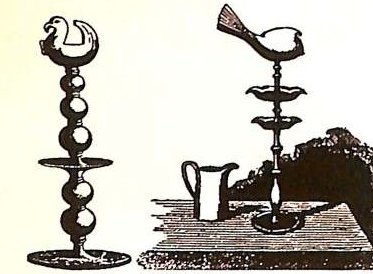
A sign, not God
The Sencaq is an image of Tawûsî Melek, not Tawûsî Melek himself and certainly not God. The Ezidis believe in one God; Tawûsî Melek is his angel (Lalişa Nûranî, pp. 4–5). The peacock is his sign – just as other religions honor a sign without worshipping it. According to Şêx Mak’sîm, it is even forbidden to depict the angels with human faces, because no one has seen their true form (p. 48). A bird as a symbol is something different from a likeness.
Foreign visitors in earlier times often took the Sencaq for an "idol". How the Ezidis themselves explain it is in Tawûs – the peacock as a symbol. Who Tawûsî Melek is is explained in Melek Tawis.
Seven Sencaq for seven communities
According to Lalişa Nûranî, the copper figure of the peacock was a sign of power. Each Sencaq belonged to one of the communities (civak) of the Ezidis: Şêxan, Şengal, Heleb (Aleppo), Tewrêz (Tabriz), Diyarbekir, Hekarî and Serhed (pp. 8–11). Instead of Serhed, Omarkhali (2023) names the Tawûsa Miskoviya for Armenia and Georgia (see the table in Sencaq and Tawûs gêran). Kreyenbroek speaks of seven images of Tawûsî Melek; three of them were a source of income for the Mîr (p. 9).
The Sencaq thus connects every community with the center: with the Mîr, who is regarded as the earthly representative of Tawûsî Melek and of Şêx Adî (Kreyenbroek, p. 9), and with Lalîş. Without the permission of the Mîr there is no circuit (Lalişa Nûranî, p. 205).
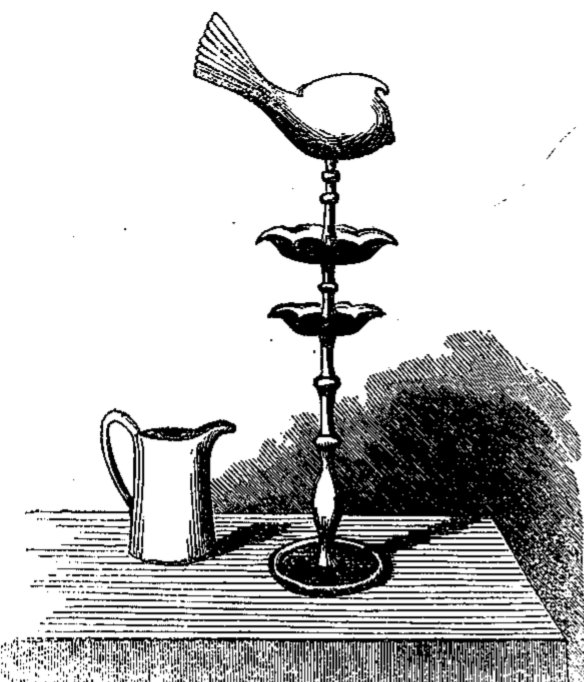
What happens at the Tawûs gêran
According to Kreyenbroek, the circuit is a highlight in the year of a village (pp. 15–16):
- The Qewal come to the village with the Sencaq.
- The chief Qewal preaches (mişabet); the Qewal perform a Sema with Def and Şibab (pp. 7, 15–16).
- At the end they pour water of the Kaniya Sipî from Lalîş on the heads of the faithful. As they do so, they say in substance: "This is the water of the White Spring, it is the cup of Êzîd" (pp. 15–16).
With this water, children who did not come to Lalîş could be baptized (mor kirin) (Kreyenbroek, p. 18). According to Lalişa Nûranî, the Qewal were at the same time preachers and executors of legal tasks; they collected donations for Lalîş and settled disputes (pp. 8–11, 205–206). The Gera Tawisê with Def and Şibab still exists in Iraq today (pp. 10–11).
The course in detail is described in Sencaq and Tawûs gêran in the Rituals section.
Tawûs siyar kirin
Assembling and setting up the Sencaq is called Tawûs siyar kirin, literally "letting the peacock mount" (Omarkhali 2023, p. 524). According to Kreyenbroek, the prayer formula Dirozge names "the coming of the Tawûs of Şêx Adî" (p. 286).
Return to Lalîş
For the great autumn festival, the Cejna Cimaiyê, the Qewal bring the Sencaq and the collected gifts back to Lalîş (Kreyenbroek, pp. 16–17).
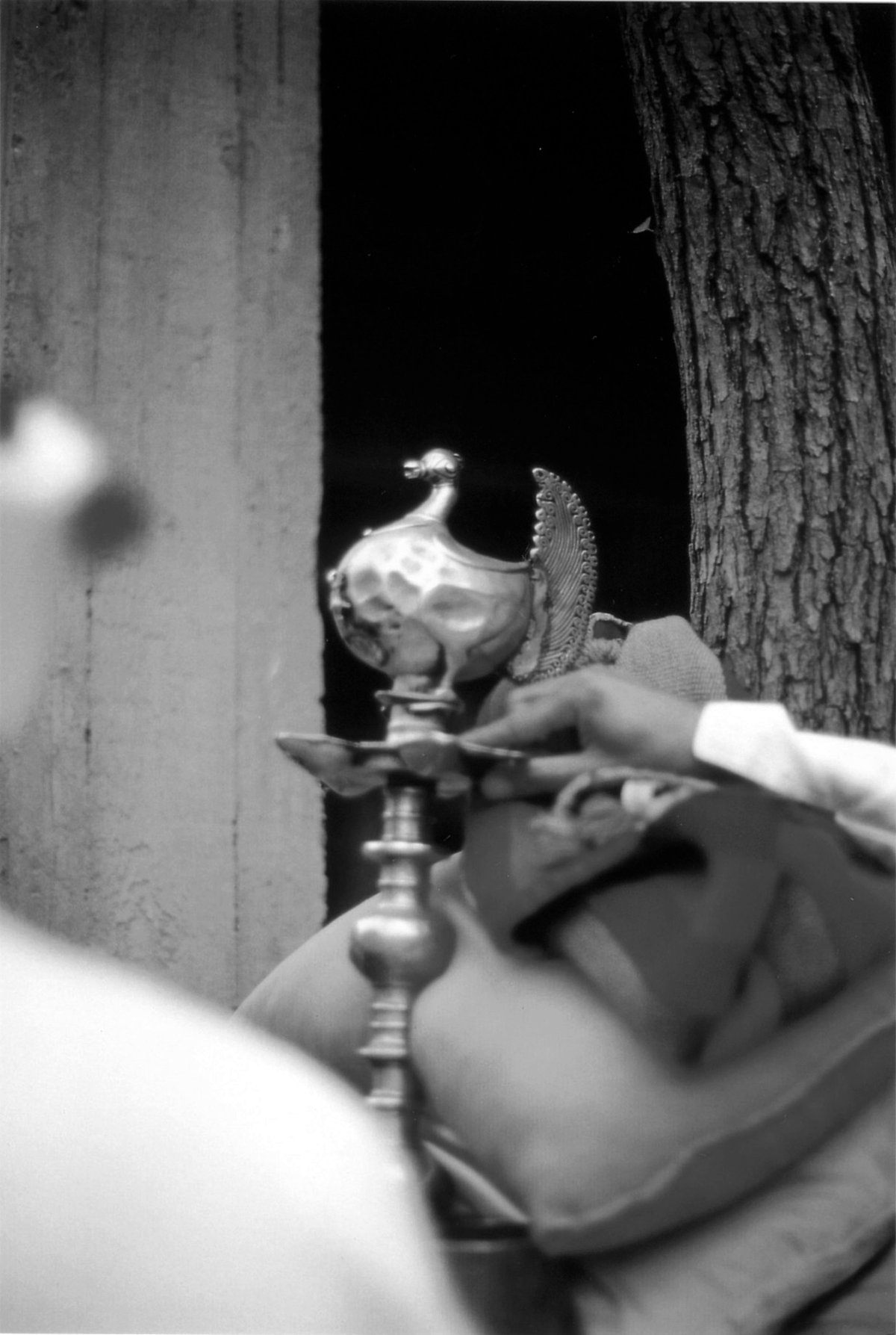
A Sencaq in Armenia
A Sencaq that Khanna Omarkhali calls Tawûsa Enzel was entrusted to other families in troubled times. The researcher found it in Armenia in 2008 (Omarkhali 2023, p. 51 n. 115). On the Sencaq of Jrarat see Sencaq and Tawûs gêran.
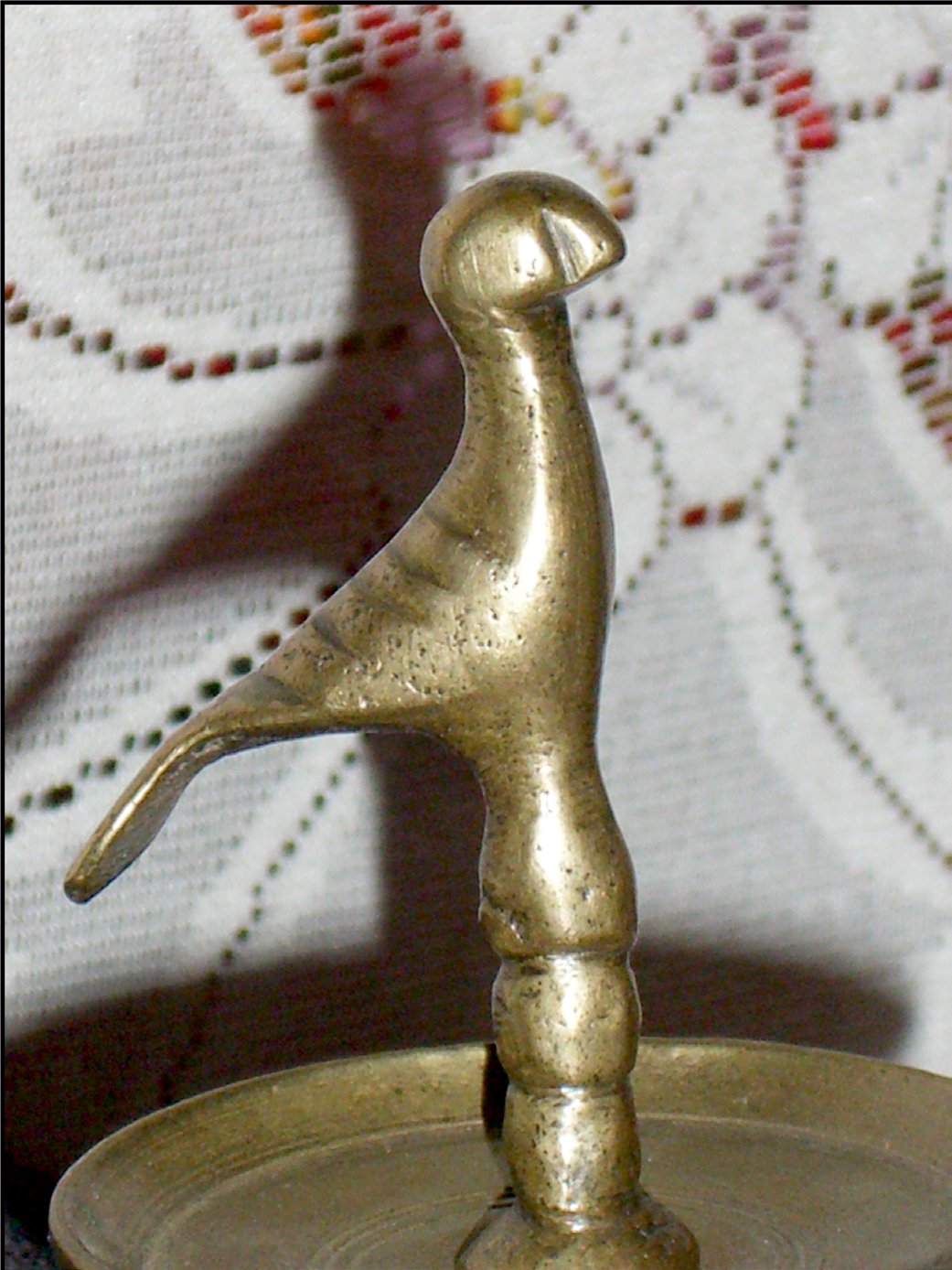
The peacock on the walls
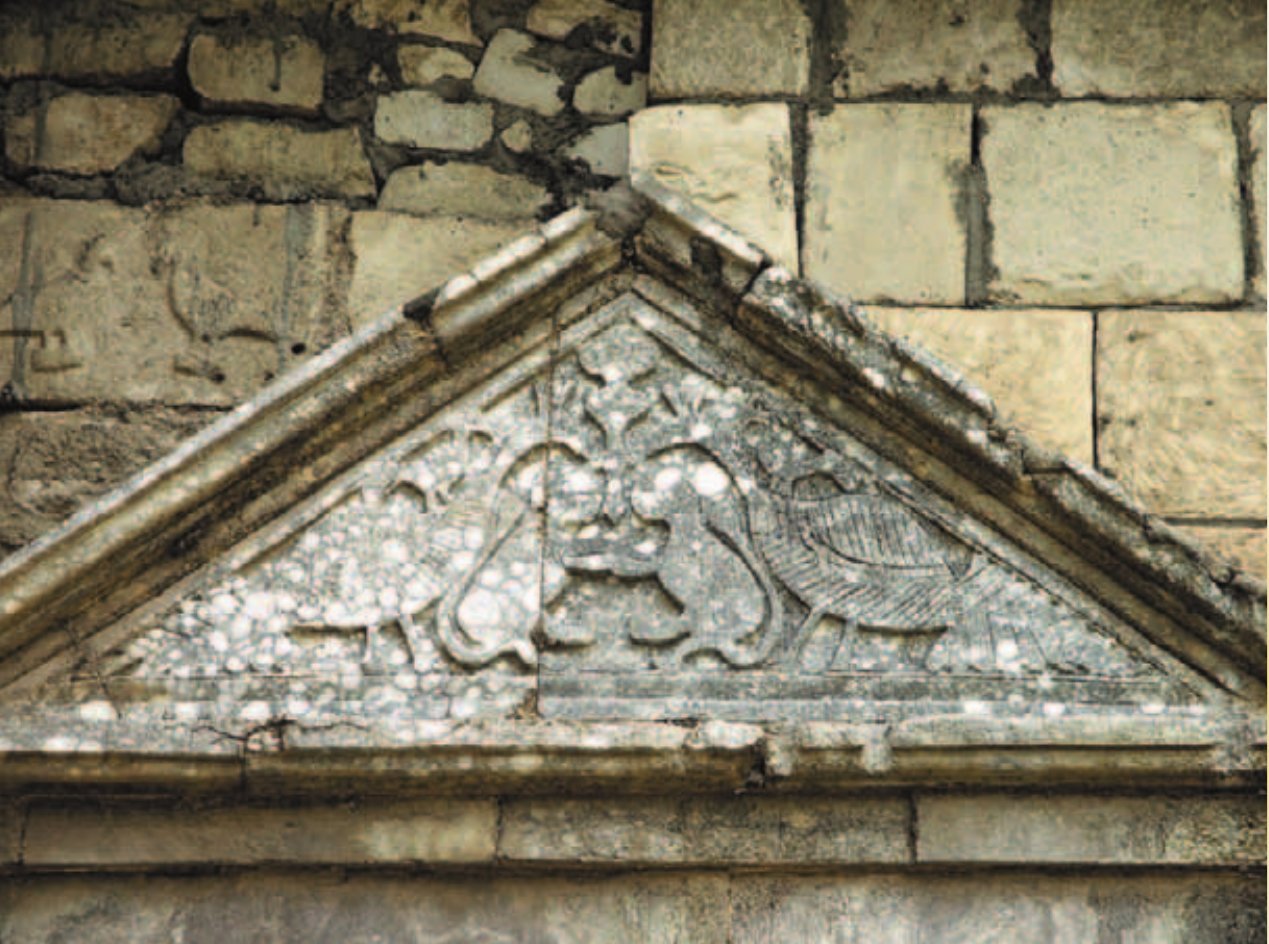
The peacock can also be seen on the walls of Lalîş, as a relief above the temple gate and at the spring Kanîzerk. The authors of Lalişa Nûranî interpret two peacocks with a tree between them as a symbol of the divine trinity; see Holy signs and objects.
Sources
- S. A. Grigoriev, L. V. Ivasko, D. V. Pirbari (P’îr Dîma): Lalişa Nûranî / Святой Лалыш / Holy Lalish. Yekaterinburg: Basko 2008, p. pp. 4–5, 8–11, 66, 205–206
- Philip G. Kreyenbroek, Khalil Jindy Rashow: God and Sheikh Adi Are Perfect. Sacred Poems and Religious Narratives from the Yezidi Tradition. Wiesbaden: Harrassowitz 2005, p. pp. 7, 9, 15–18, 286
- Khanna Omarkhali: The religious textual tradition of the Ezidis – from the oral to the written. Saint Petersburg 2023 (Russian translation of the English original, Wiesbaden 2017), p. pp. 51 (n. 115), 137–138, 524
- Şêx Mak’sîm (Maksim Ezdi): Grundpfeiler der Religion ScherfeDin, 2017 (on EZDIKI.COM in the Religion section and in the library), p. p. 48
- Dimitri Pirbari (P’îr Dîma), A. Ščedrovickij: Тайна жемчужины (The secret of the pearl). Moscow/Tbilisi 2016, p. p. 71 (ill.)
- John S. Guest: The Yezidis. A Study in Survival. London/New York 1987, p. p. 140 (ill.)
- Birgül Açıkyıldız: The Yezidis. The History of a Community, Culture and Religion. London 2010, p. p. 89 (ill.)
- International Journal of Yezidi Studies, Vol. 1. Tbilisi 2024, p. p. 104 (ill.)
Found a mistake?
Is something wrong – a fact, a spelling, a source, an image? Let us know: we check every report and correct the article.
Other spellings: Sendschaq · Senjaq · Sandschaq · Sanjaq · Sendscheq · Senjeq · Tawus · Tawusa Enzel · Tawus siyar kirin · Sandschak · Sancak · Tawuse Melek · Melek Taus · Taus-i Melek · Malak Tawus · Qawwal · Kawal · Kewal · Lalish · Lalisch