
The Cejna Cimaiyê, the "Festival of the Assembly", is the great autumn festival of the Ezidis in Lalîş. According to Lalişa Nûranî, it lasts seven days (p. 24). Omarkhali gives as its time 23 September to 1 October according to the eastern (Julian) calendar, according to today's calendar roughly 6 to 14 October; she dates the visit to the sanctuary to 23 to 30 September (Omarkhali 2023, p. 25). On the beginning on 23 Îlon see also Lalîş in the festival year. For the Ezidis of Iraq it is the most important festival; whoever can should take part in it (Tagay/Ortaç, p. 87). In Armenia, Georgia and Russia it was not celebrated (Omarkhali 2005, p. 72).
The date for the current year is in the calendar.
What the festival means
The sources name three meanings, which do not exclude one another:
- Remembrance of Şêx Adî. According to Lalişa Nûranî, the festival goes back to the death of Şêx Adî. His companions took leave of him, and according to his will the Ezidis mourned for seven days. Hence the pilgrimage lasts seven days (pp. 24/27). The photo book therefore calls the festival Cemaya Şîxadî, "assembly at Şîxadî's".
- Image of the heavenly assembly. According to Kreyenbroek, the earthly assembly in Lalîş mirrors the heavenly assembly of God and the Seven (the seven angels) (pp. 16–17).
- Determination of the coming year. According to the tradition reproduced by Birgül Açıkyıldız, in these days Tawûsî Melek and the angels fix the fate of the coming year (pp. 84, 117).
Kreyenbroek and Omarkhali compare the festival with the ancient Iranian autumn festival Mehragan; this is a comparison made by research, not an Ezidi teaching (Kreyenbroek, p. 17; Omarkhali 2005, pp. 72–73).
The seven days
The course according to Lalişa Nûranî (pp. 24–29); the main rituals fall on the fourth to seventh days:
| Day | Ritual |
|---|---|
| every evening | The Qewal preach (şîret), play Def and Şibab and sing Qewls; then the Sema in the courtyard |
| 4th day | Sacrifice of a bull in front of the dome of Şêşims; from the meat the holy dish Simat is cooked and distributed to the guests |
| 5th day | The bier Berê Şibakê is brought from the village of Behzan and assembled; the Qewlê Texte is sung meanwhile |
| 6th day | The bier is consecrated with water of the Kaniya Sipî and carried into the sanctuary; the faithful venerate it one by one |
| 7th day | Visits, congratulations, dancing; the setting of the Perî on the domes |
Kreyenbroek places the bull sacrifice on the fifth day (p. 17). On the sacrifice itself see Qebax – the bull sacrifice.
The bull sacrifice at the sanctuary of Şêşims
The bull is led to the dome of Şêşims, who is regarded as the "lord of the sun" (Lalişa Nûranî, pp. 26, 30). That the sacrifice is made precisely at this sanctuary connects the autumn festival with the sun (Omarkhali 2005, pp. 72–73). On Şêşims see Fast and festival of Şêşims.
Berê Şibakê
The Berê Şibakê is regarded as the bier on which the body of Şêx Adî lay. It is kept throughout the year in the village of Behzan (Lalişa Nûranî, pp. 26/29). While it is being assembled, the Qewal sing the Qewlê Texte, which deals with the creation of the world and with the throne of God; afterwards sweets and fruit are distributed. The next day clergy, Feqîr, representatives of certain tribes and the Mîr stand by the bier; it is consecrated with water of the Kaniya Sipî (mor kirin) and carried to the sound of Def and Şibab into a hall of the sanctuary (pp. 26/29). According to Omarkhali, the Dirozge, the Qewlê Şêxadî û Mêra and the Qewlê Texta belong to this rite (Omarkhali 2023, pp. 145–146, 481, 483).
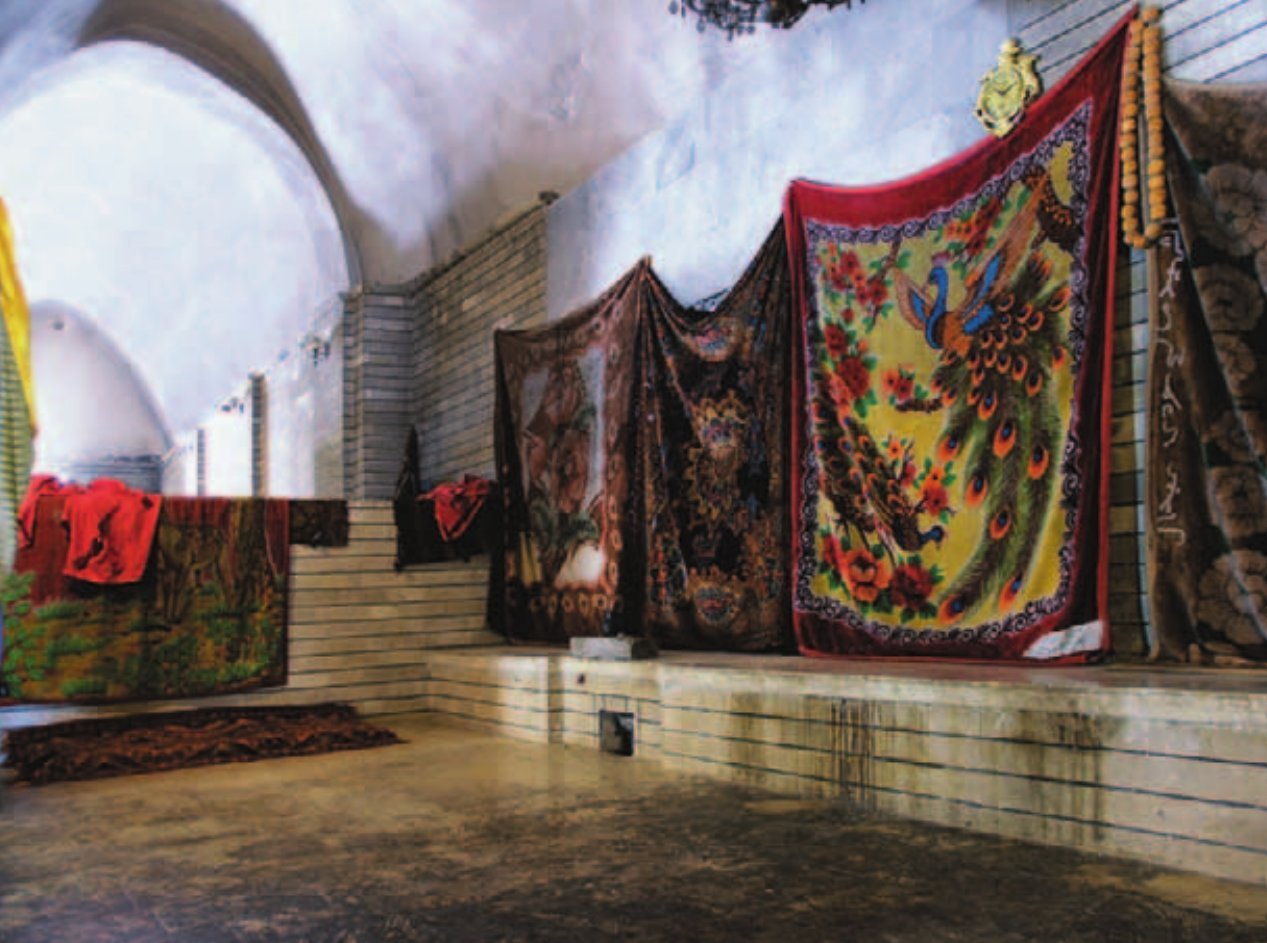
Perî siwar kirin – the cloths on the domes
On the seventh day the Perî – pieces of cloth – are consecrated in the spring water and carried into the sanctuary to the sound of Def, Şibab and with incense (bixûr). The pilgrims place them on their heads and make donations; then they are carried onto the domes and fastened at the tip (Lalişa Nûranî, pp. 26/29). They are usually green, red and yellow; the English version interprets the colors as life, fire and sunlight (p. 29). According to Omarkhali, the Qewlê Êzîd û Medehê is performed at this (Omarkhali 2023, pp. 471–472).
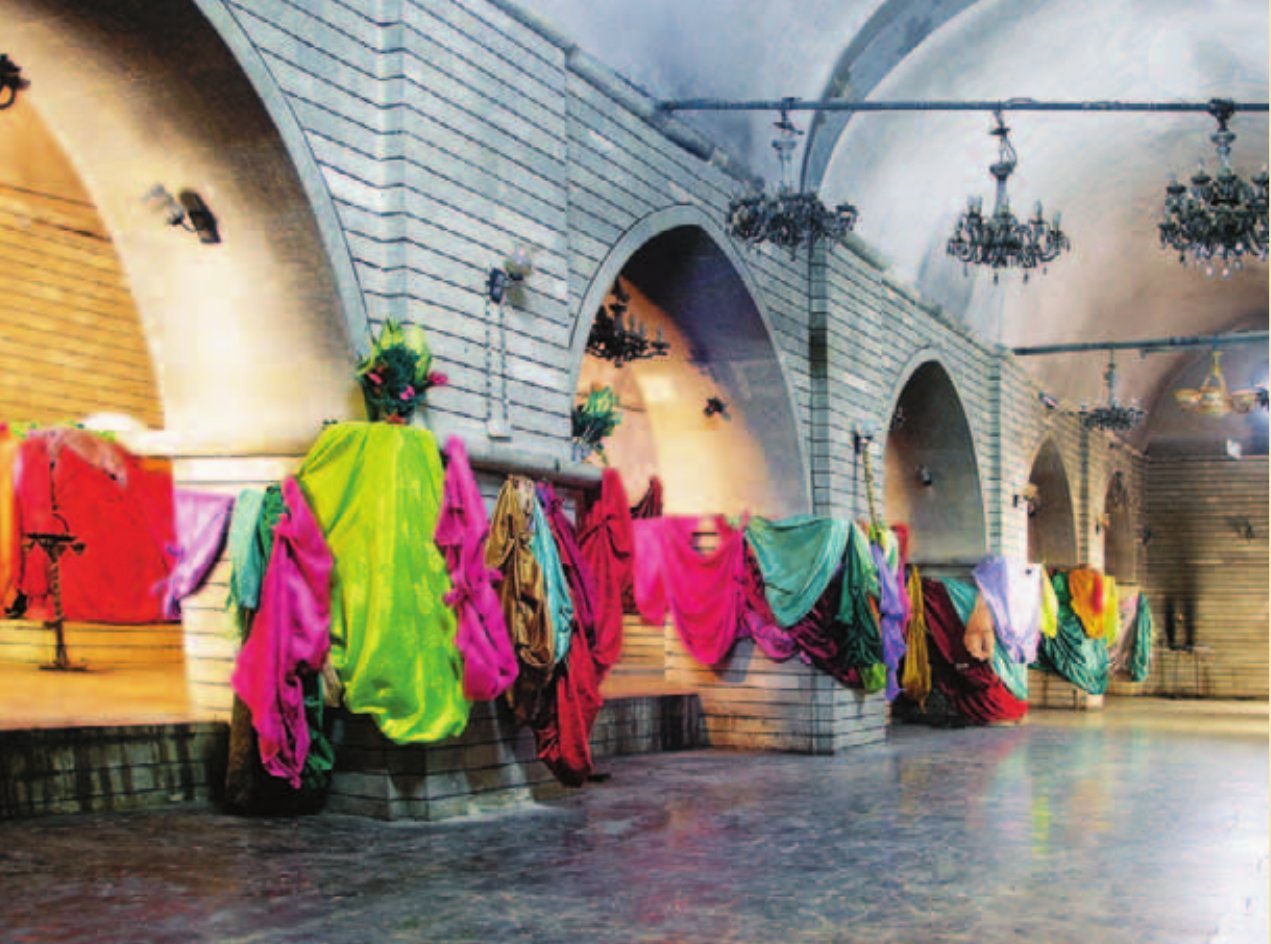
Cloths also hang on the columns of the main hall and on the tombs of the saints. The pilgrims tie and untie knots and make a wish. Five columns are named after angels: Melek Nasirdîn, Siltan Êzdî, Melek Fexredîn, Şêşims and Melek Şêx Sin (pp. 26/29).
The Sema
The Sema is the religious round dance of the clergy. It is regarded as the dance of the angels; whoever is present is spiritually purified (Lalişa Nûranî, pp. 26–28). During the Assembly it takes place every evening in the courtyard Celsa Şîxadî, and by day also at the dome of Şêşims, at the Kaniya Sipî and at the building of Şêx Ebdil Qadir (pp. 26/29).
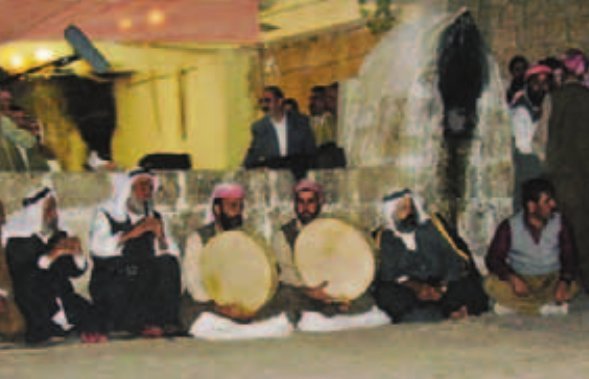
The course in brief according to Lalişa Nûranî (pp. 26–31): the clergy sit along the walls on both sides of the temple gate, the Qewal opposite. The Qewal begin with the sermon. The Feraş fetches the lamp Çeqeltû from the sanctuary and lights the candelabrum Çirayê Merîfetê in the middle of the courtyard. In the sanctuary a Feqîr puts on the garment of Şîxadî, Tac û hil, and steps out; everyone stands up. With slow movements – the right hand on the left shoulder, then slowly down – he shows the purification of the heart. The clergy follow him in a line; later a second line under the Bavê Şêx joins. They circle the candelabrum three times. At the end the Feqîr kisses the threshold, and everyone kisses the garment of Şîxadî.
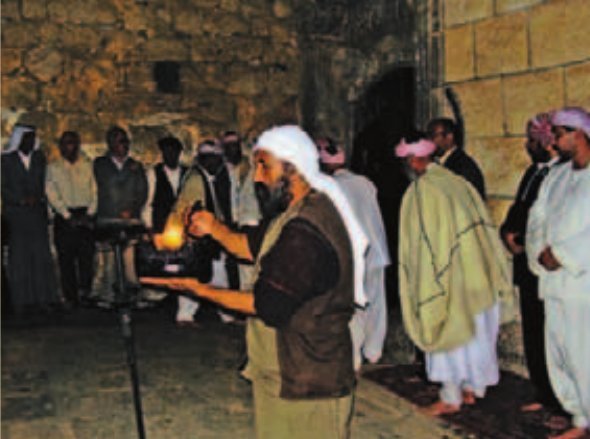
Kreyenbroek knows seven Sema, each a sequence of Qewls and Qesîde of its own (p. 48); Omarkhali confirms this (2023, pp. 139, 146–147). In detail: Sema.
The Sencaq return
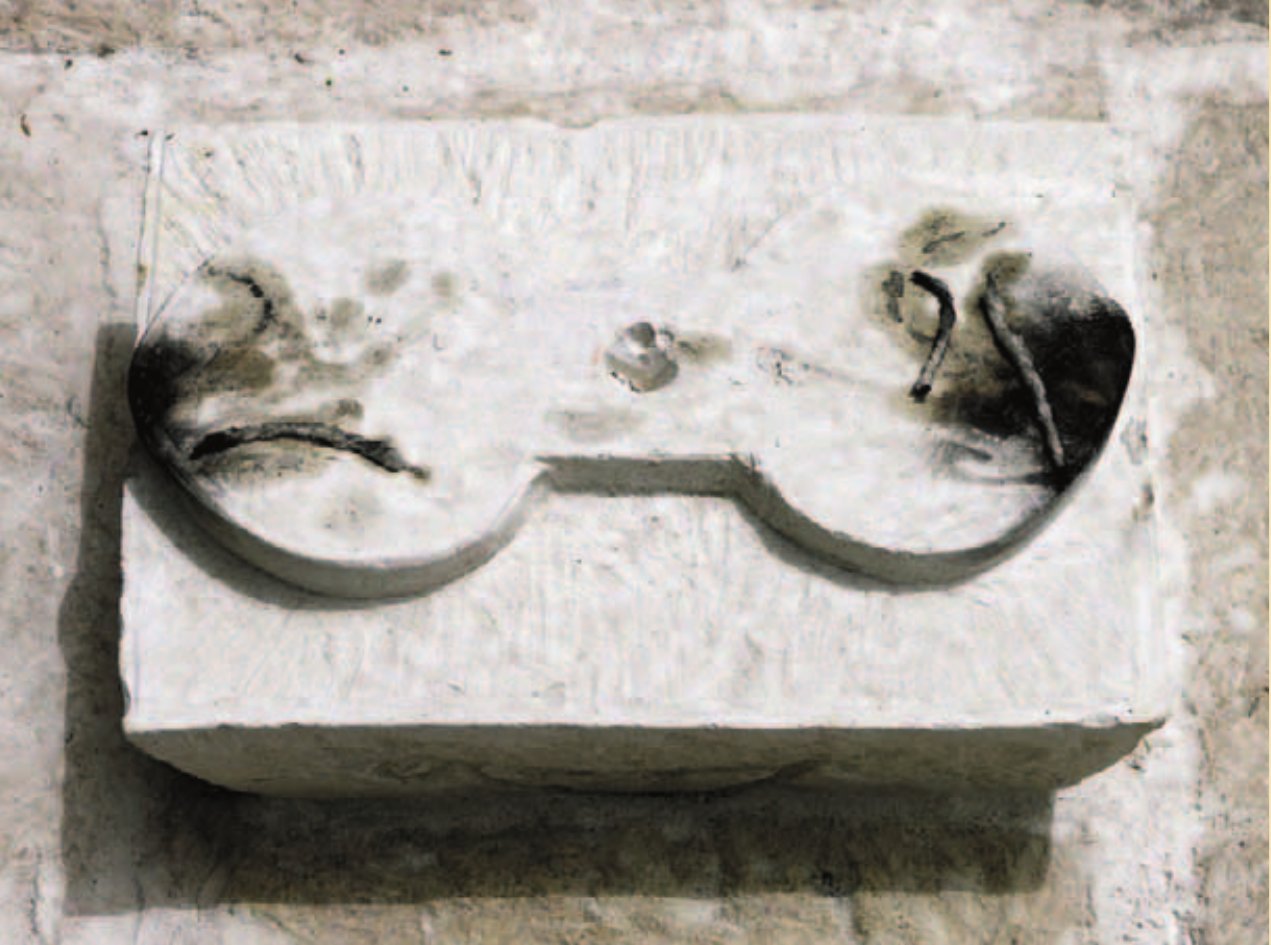
For the Assembly the Qewal bring the Sencaq – the peacock images of Tawûsî Melek – and the gifts collected from the communities back to Lalîş (Kreyenbroek, pp. 16–17). See Sencaq and Tawûs.
Eyewitnesses
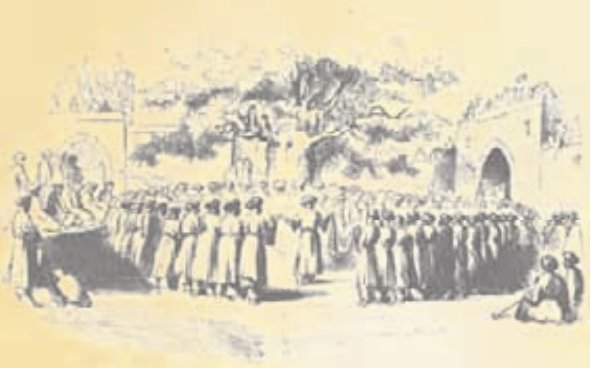
Travelers report what the festival looked like in the 19th and 20th centuries: The festival in Lalîş 1846, 1849 and 1944. On pilgrimage in general: Pilgrimage to Lalîş.
Sources
- S. A. Grigoriev, L. V. Ivasko, D. V. Pirbari (P’îr Dîma): Lalişa Nûranî / Святой Лалыш / Holy Lalish. Yekaterinburg: Basko 2008, p. pp. 24–31, 63, 67, 69–70
- Philip G. Kreyenbroek, Khalil Jindy Rashow: God and Sheikh Adi Are Perfect. Sacred Poems and Religious Narratives from the Yezidi Tradition. Wiesbaden: Harrassowitz 2005, p. pp. 15–17, 48
- Khanna Omarkhali: The religious textual tradition of the Ezidis – from the oral to the written. Saint Petersburg 2023 (Russian translation of the English original, Wiesbaden 2017), p. pp. 25, 139, 145–147, 471–472, 481, 483
- Birgül Açıkyıldız: The Yezidis. The History of a Community, Culture and Religion. London 2010, p. pp. 84, 117
- Khanna Omarkhali (Ханна Омархали): Йезидизм. Из глубины тысячелетий (From the depths of the millennia). Saint Petersburg 2005, p. pp. 72–73
- Şefik Tagay, Serhat Ortaç: Die Eziden und das Ezidentum. Geschichte und Gegenwart einer vom Untergang bedrohten Religion. Hamburg (Landeszentrale für politische Bildung) 2016, p. p. 87
Found a mistake?
Is something wrong – a fact, a spelling, a source, an image? Let us know: we check every report and correct the article.
Other spellings: Cimaʽiya Şêx · Cejna Cimaye · Dschejna Dschimaye · Jejna Jimaye · Cejna Cemaiye · Dschejna Dschemaiye · Jejna Jemaiye · Cemaya Sixadi · Dschemaya Schichadi · Jemaya Shikhadi · Eyda Cemaye · Eyda Dschemaye · Eyda Jemaye · Cimaʽiya Sex Adi · Cimaʽiya Sheikh Adi · Cimaʽiya Scheich Adi · Lalish · Lalisch · Lalesh · Sheikh Adi