
According to the photo book Lalişa Nûranî, almost all festivals and rituals of the Ezidis are connected with Lalîş. This article shows what happens in Lalîş at the individual festivals and at which places. The festivals themselves – their meaning, their course in the villages, their history – are described in the category Religious festivals.
The day in Lalîş
Even without a festival Lalîş does not rest. According to Kreyenbroek, the Beyta Cindî and the Beyta Sibê (Beyt of the morning, also Beyt of Şêşims) are sung there daily in the morning, and the Beyta Hêvarî in the evening. Every evening the Feraş lights the wicks (Nîşangeh and wicks).
Çarşema Sor – the New Year
The Çarşema Sor ("Red Wednesday", also Sersal) falls on the first Wednesday in April according to the Eastern (Julian) calendar. In Lalîş the doors are decorated with red April flowers and colorful eggshells (only in the text in Êzdîkî). Everyone prepares a wick and waits for the holy fire that a Feqîr brings from the sanctuary; from it everyone lights his wick. The crowd calls: "Hole hola Siltan Êzdî ye, hola Tawisî Melek e!" The Extiyarê Mergehê goes with Feqîr and clergy to the Dergê Mîr and sings Qewls. In the evening the valley shines with thousands of wicks (Lalişa Nûranî). → Çarşema Sor, Dergê Mîr
Cejna Cimaiyê – the assembly in autumn
The most important festival in Lalîş is the Cejna Cimaiyê, called Cemaya Şîxadî ("assembly at Şîxadî") in the photo book. It lasts seven days. The photo book connects it with the death of Şêx Adî: according to his will, the Ezidis mourned him for seven days; since then they make a seven-day pilgrimage to Lalîş. According to Kreyenbroek, the earthly assembly mirrors the heavenly assembly of God with the Seven. → Cejna Cimaiyê
Date: the text in Êzdîkî names 23 Îlon (September) according to the Eastern calendar, which is October 6 according to the Gregorian. The English version swaps the calendars ("September 23, October 6 according to the Julian") – this is an error of the translation. Edmonds, too, gives September 23–30 Old Style, that is, October 6–13.
What happens at which place (Lalişa Nûranî):
| Day | What | Where |
|---|---|---|
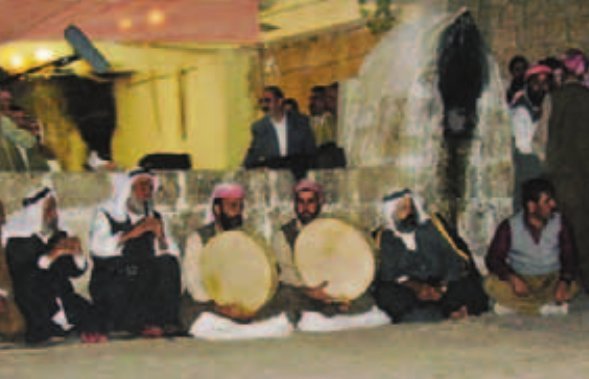
| every evening | sermon of the Qewal, Def and Şibab, Qewls; Sema | Celsa Şîxadî |
| in the daytime | Sema also by day | Celsa Şêşims, Kaniya Sipî, building of Şêx Ebdil Qadir |
| 4th day | bull sacrifice, from it the holy food Simat | dome of Şêşims |
| 5th/6th day | the bier Berê Şibakê is assembled; meanwhile the Qewlê Texte is sung | – |
| 6th day | the Berê Şibakê is consecrated with water of the Kaniya Sipî and carried into the hall | Kaniya Sipî → courtyard → main building |
| 7th day | visits, congratulations, dancing; Siwarkirina perîyan | sites of the saints, domes |
On the bull sacrifice the statements differ: Kreyenbroek names the fifth day (Sanctuary of Şêşims).
The Sema
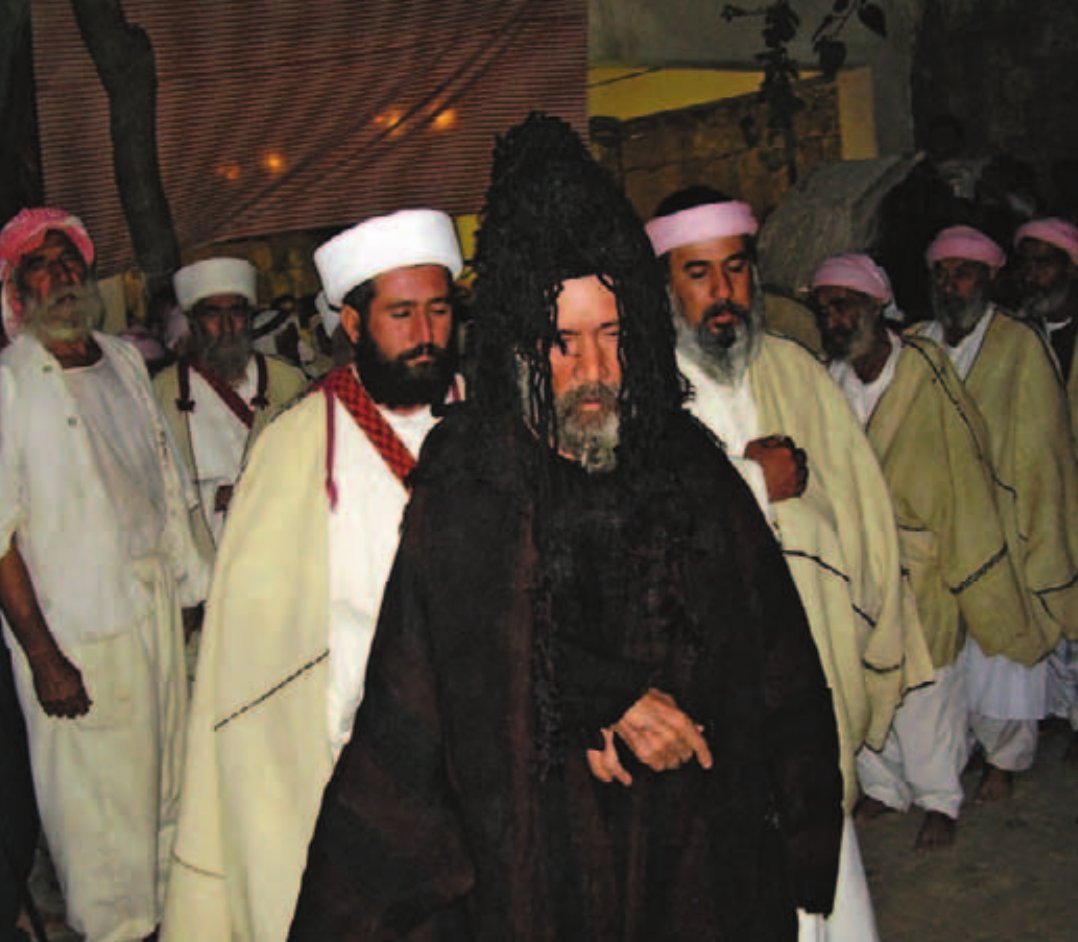
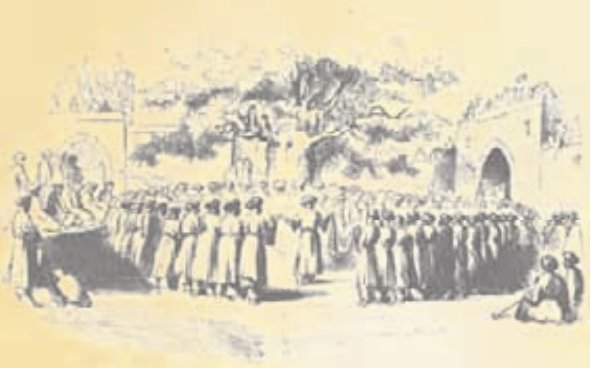
The Sema is considered the "dance of the angels"; whoever takes part in it is spiritually purified (Lalişa Nûranî). A Feqîr in the garment of Şîxadî leads the row of clergy through the Derê Qapîyê into the courtyard; they circle the lampstand in the center three times. The course is described in the article Sema; the places are under Celsa Şîxadî and Dergê Şîxadî.
Berê Şibakê – the bier of Şêx Adî
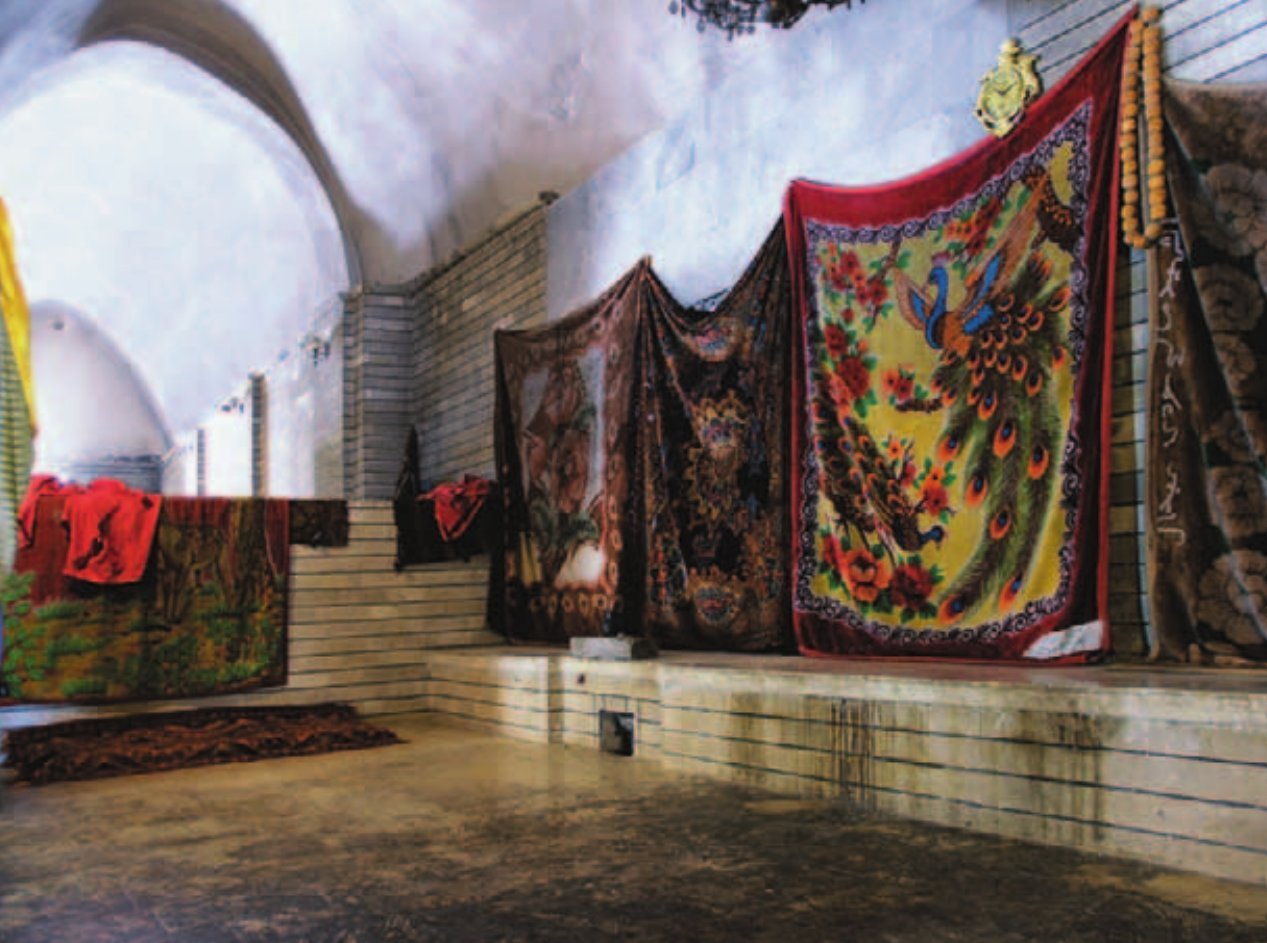
Rituals on the 5th and 6th day represent the burial of Şêx Adî. The bier Berê Şibakê, on which according to tradition his body lay, is kept during the year in the village of Behzan and brought to Lalîş for the festival. During the assembling, the Qewlê Texte is sung, which deals with the creation of the world and the throne of God; afterward sweets and fruits are distributed. On the sixth day clergy, Feqîr and representatives of certain tribes stand with the Mîr at the bier while the Qewlbêj sing; then it is consecrated with water of the Kaniya Sipî and carried to Def and Şibab into the hall and laid down in the Dîwana Berê Şibakê. The Ezidis step up one by one and venerate it (Lalişa Nûranî).
Siwarkirina perîyan – the cloths on the dome
On the seventh day Perî, colored pieces of cloth, are consecrated in the spring water and carried into the sanctuary to Def, Şibab and incense. People lay them on their heads and give donations; then they are carried onto the dome and fastened at the tip. Usually there are three colors: green, red and yellow; the English version interprets them as life, fire and sun (Lalişa Nûranî). → Domes
Other festivals connected with Lalîş
- Erefat: according to Kreyenbroek, the dignitaries climb Mount Erefat; the Mîr Hec throws bread, those who catch it run to the Kaniya Sipî, afterward one washes in the Zemzem (Mountains, Other festivals).
- Şeva Berat: in this night, according to Kreyenbroek, God determines the coming year; the dignitaries gather in the sanctuary of Şêx Adî, the Pêşîmam leads a prayer, and Qesîde are sung.
- Çilê havînê and Çilê zivistanê: the two forty-day fasts in summer and winter; the Çilegir go into the cave Çilexane, and at the festivals afterward the Sema is danced (Caves, Fasting).
- Rojî û Cejna Êzîd: three days of fasting and festival on the first Friday in December (Eastern calendar) (Fast and festival of Êzîd).
- Cejna Xidir Nebî û Xidir Eylas: on the first Thursday in February; in Lalîş separate lamps burn for the two, in Bozan stands the dome of Xidir Îliyas (Xidir Nebî festival).
- Whitening of the domes: in former times the domes were whitewashed every two years with a festival of its own (Domes).
How the festivals were experienced by eyewitnesses is reported in the articles The festival in Lalîş 1846, 1849 and 1944 in the section People & Culture.
Sources
- S. A. Grigoriev, L. V. Ivasko, D. V. Pirbari (P’îr Dîma): Lalişa Nûranî / Святой Лалыш / Holy Lalish. Yekaterinburg: Basko 2008, p. pp. 24–37, 70, 137, 168, 202
- Philip G. Kreyenbroek, Khalil Jindy Rashow: God and Sheikh Adi Are Perfect. Sacred Poems and Religious Narratives from the Yezidi Tradition. Wiesbaden: Harrassowitz 2005, p. pp. 10 (n. 17), 16–17, 51, 217
- C. J. Edmonds: A Pilgrimage to Lalish. London (Royal Asiatic Society) 1967, p. p-020
Found a mistake?
Is something wrong – a fact, a spelling, a source, an image? Let us know: we check every report and correct the article.
Other spellings: Cejna Cimaiye · Dschejna Dschimaiye · Jejna Jimaiye · Cemaya Sixadi · Dschemaya Schichadi · Jemaya Shikhadi · Carsema Sor · Tscharschema Sor · Charshema Sor · Bere Sibake · Bere Schibake · Bere Shibake · Ber Sibake · Siwarkirina periyan · Seva Berat · Scheva Berat · Lalish · Lalisch · Lalesh · Charshama Sor