
According to Ezidi belief, Lalîş is also the place where the fate of the soul of every deceased person is decided. The places in the valley – a gate, a square, a bridge, a lane, a gorge – are at the same time the stations of this path. Belief in the hereafter as a whole is treated in the article Soul, hereafter and rebirth.
The stations
1. The soul comes to Lalîş
After death the soul comes to Lalîş (Lalişa Nûranî). Pirbari, too, writes that the souls of the Ezidis pass through Lalîş after death and that paradise opens there.
2. The judgment in front of the Dergê Mîr
In front of the gate Dergê Mîr the soul is judged (Lalişa Nûranî). The photo book shows the square with the caption "place where the soul is judged". Pirbari names a holy stone Erasat in Lalîş at which the judgment takes place; afterward the soul goes into the hereafter. → Dergê Mîr
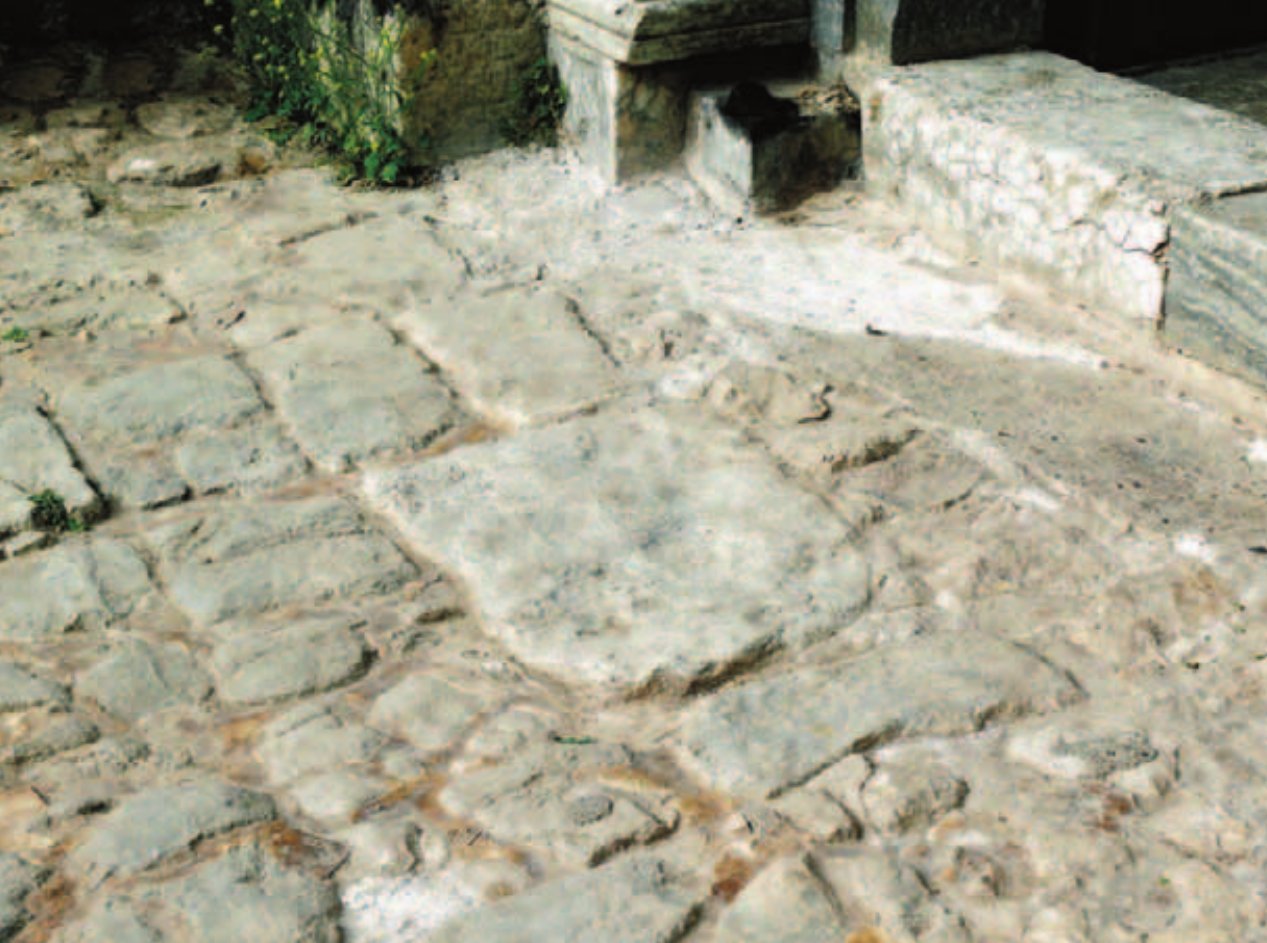
3. The examination in the Sûka Merîfetê
In the Sûka Merîfetê, the "market of knowledge", it is called out: "Whose Dirho (ward) is this soul?" Then its Şêx, its P’îr, its Merebî and its brother of the hereafter step forward. If they are satisfied with it, they defend the soul and save it from the Zebanî (Lalişa Nûranî, pp. 28–30). → Sûka Merîfetê
4. The bridge Pira Selatê
Over the Pira Selatê the soul goes into the other world. For the good soul it becomes wide, for the bad one hair-thin, and that one falls down (Lalişa Nûranî). According to Şêx Mak’sîm and Pirbari, the brother of the hereafter leads the soul across. → Pira Selatê
5. The Zebanî and the gorge
If the soul is bad, the Zebanî beat it and throw it into the gorge Newala Waweylê. It lies between the mountains Mişrûgiya and Erefat, above the valley Geliyê Qewalan (Lalişa Nûranî). → Mountains and greeting places
The order
The photo book names the stations in two places in different orders: once the soul is first judged in front of the Dergê Mîr and then crosses the bridge (p. 20); elsewhere the soul comes after the Pira Selatê to the Sûka Merîfetê and is examined there (pp. 28–30). In the valley the bridge does in fact lie before the gate; the sources do not explain the difference.
Who are the Zebanî?
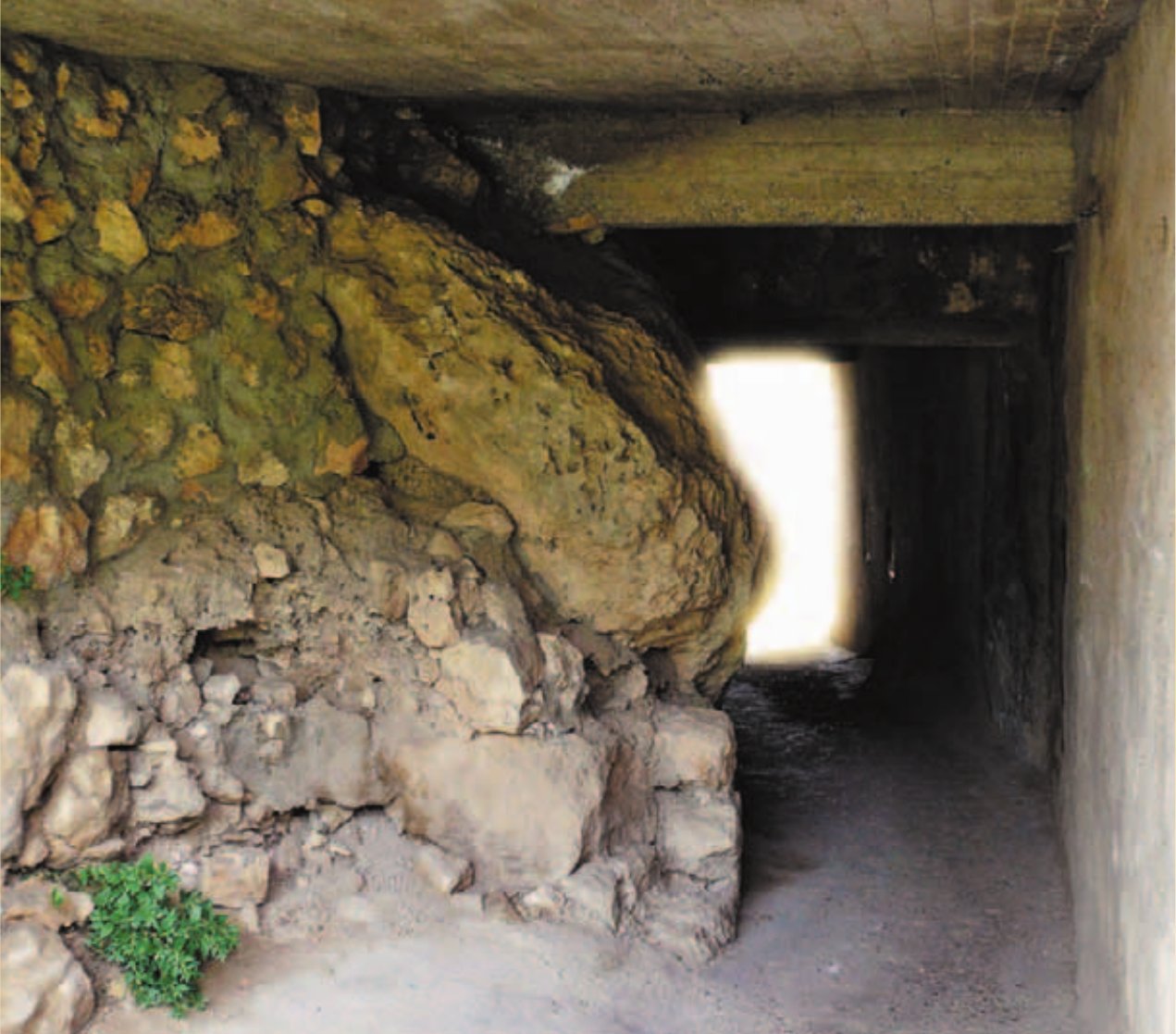
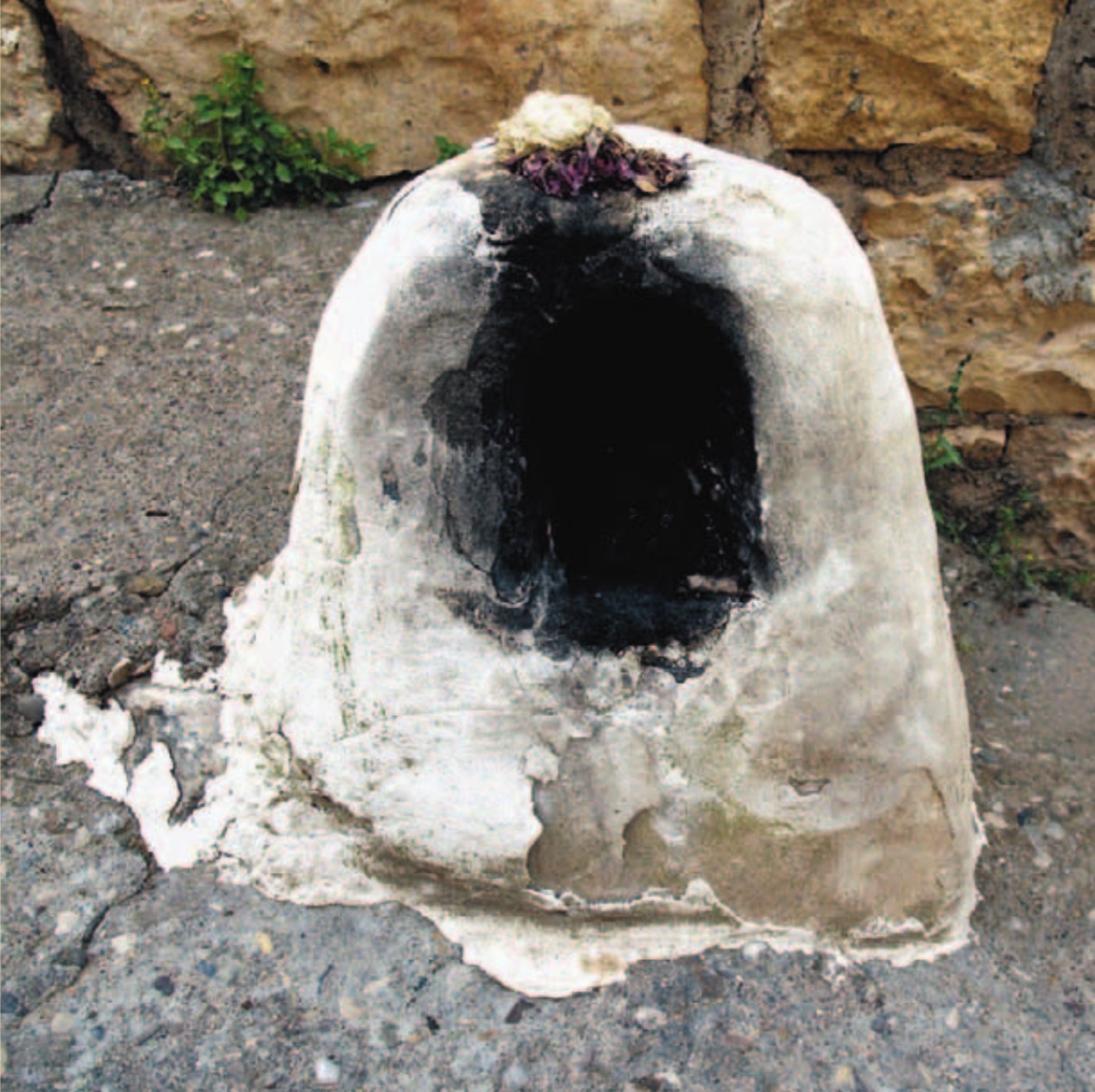
The Zebanî are the guardians of the hereafter who throw the souls of sinners into hell (Lalişa Nûranî, p. 132). According to a text translated by Kreyenbroek, they are seven brothers; the greatest is called Şêx Şeylî. In the list of wicks of Lalîş there are a wick of Şêx Şeyla and a "wick of the Zebanî". In Lalîş a lane and a wick place bear their name:
The helpers of the soul
All versions emphasize that the soul is not alone: the spiritual guardians that every Ezidi must have in life – Şêx, P’îr, Merebî, Hosta and the brother or sister of the hereafter – stand up for it. In the Qewlê Seremergê, translated by Kreyenbroek, the friends and brothers of the hereafter help their sinful brothers at the bridge, and there God himself intercedes for the soul. → Brother and sister of the hereafter, Hosta and Merebî
Sources
- S. A. Grigoriev, L. V. Ivasko, D. V. Pirbari (P’îr Dîma): Lalişa Nûranî / Святой Лалыш / Holy Lalish. Yekaterinburg: Basko 2008, p. pp. 20–23, 28–30, 62, 82, 132, 202–203
- Dimitri Pirbari (P’îr Dîma), A. Ščedrovickij: Тайна жемчужины (The secret of the pearl). Moscow/Tbilisi 2016, p. pp. 87, 247, 253
- Philip G. Kreyenbroek, Khalil Jindy Rashow: God and Sheikh Adi Are Perfect. Sacred Poems and Religious Narratives from the Yezidi Tradition. Wiesbaden: Harrassowitz 2005, p. pp. 291–292, 349
- Şêx Mak’sîm (Maksim Ezdi): Grundpfeiler der Religion ScherfeDin, 2017 (on EZDIKI.COM in the Religion section and in the library), p. pp. 75–77
Found a mistake?
Is something wrong – a fact, a spelling, a source, an image? Let us know: we check every report and correct the article.
Other spellings: Zebani · Newala Waweyle · Derge Mir · Derg Mir · Dergê Mir · Derg Mîr · Suka Merifete · Pira Selate · Geridschht der Seele · Gerijht der Seele · Lalish · Lalisch · Lalesh · Emir · Sheikh · Scheich · Shex · Pîr · Qewal · Qawwal