
According to Ezidi belief, the soul is immortal; only the body passes away. After death the soul is judged, and it must cross the narrow bridge Pira Selatê into the hereafter (Axret). Alongside this stands a second, old idea: the soul can return in a new body – it "changes the shirt" (kirasgorîn). Both ideas exist side by side (Omarkhali 2023, pp. 21–22).
The soul
In the religious texts the soul is regarded as blessed and imperishable (Omarkhali 2023, p. 118). It comes from God's grace, the body from the earth (Hesenyan 1995, p. 27). According to the hymns, the souls dwelt for a very long time in the heavenly lamp (qendîl) before they received a body; according to Pirbari, at death the soul returns there (Kreyenbroek/Rashow 2005, p. 29; Pirbari 2016, p-071–072). On the creation of the soul see Adam and the human being.
According to Hesenê Şêx Kelaşê, lifespan and fate are predetermined by God (Hesenyan 1995, pp. 12–13).
The hour of death
The hour of death is called seremerg. The Qewlê Seremergê, which is performed at burials, deals with it (Pirbari 2016, p-255; Kreyenbroek/Rashow 2005, pp. 341–349). It tells of the whole of life: formation in the mother's womb, birth, childhood, marriage, prosperity, illness. Then the angel of death Ezraîl comes in the clothing of a Feqîr. The inner essence (sur) of the person gently detaches itself from hands and feet and immediately recognizes its lord (Kreyenbroek/Rashow 2005, pp. 341–349).
In the Caucasus and in Şengal the declaration of faith begins with two holy beings who stand at the deathbed: Sicadîn, the messenger of death, and Nasirdîn, who takes the soul. They have the dying person recite the declaration (Omarkhali 2023, pp. 92–93). See Sicadîn and Nasirdîn.
In the grave
In the grave two beings question the soul. The Qewlê Seremergê describes them as a deaf and a mute angel with clubs; they do nothing to the good (Kreyenbroek/Rashow 2005, pp. 341–349). Pirbari calls them Nekir û Nekîn: they ask every dead person about his faith and his good deeds (Pirbari 2016, p-253). According to a Qesîde, they do not come to one who has Hesen Meman as his P’îr (Kreyenbroek/Rashow 2005, p. 223, n. 182).
The judgment in Lalîş
According to tradition, the soul of every Ezidi comes to Lalîş after death. In front of the gate Dergê Mîr it is judged (Grigoriev et al. 2008, pp. 20–23). Pirbari names a holy stone in Lalîş, Erasat, at which the judgment takes place (Pirbari 2016, p-247). Kreyenbroek names Sikan (Berê Sikanê) as the place of judgment (Kreyenbroek/Rashow 2005, p. 412, n. 127).
The bridge Pira Selatê
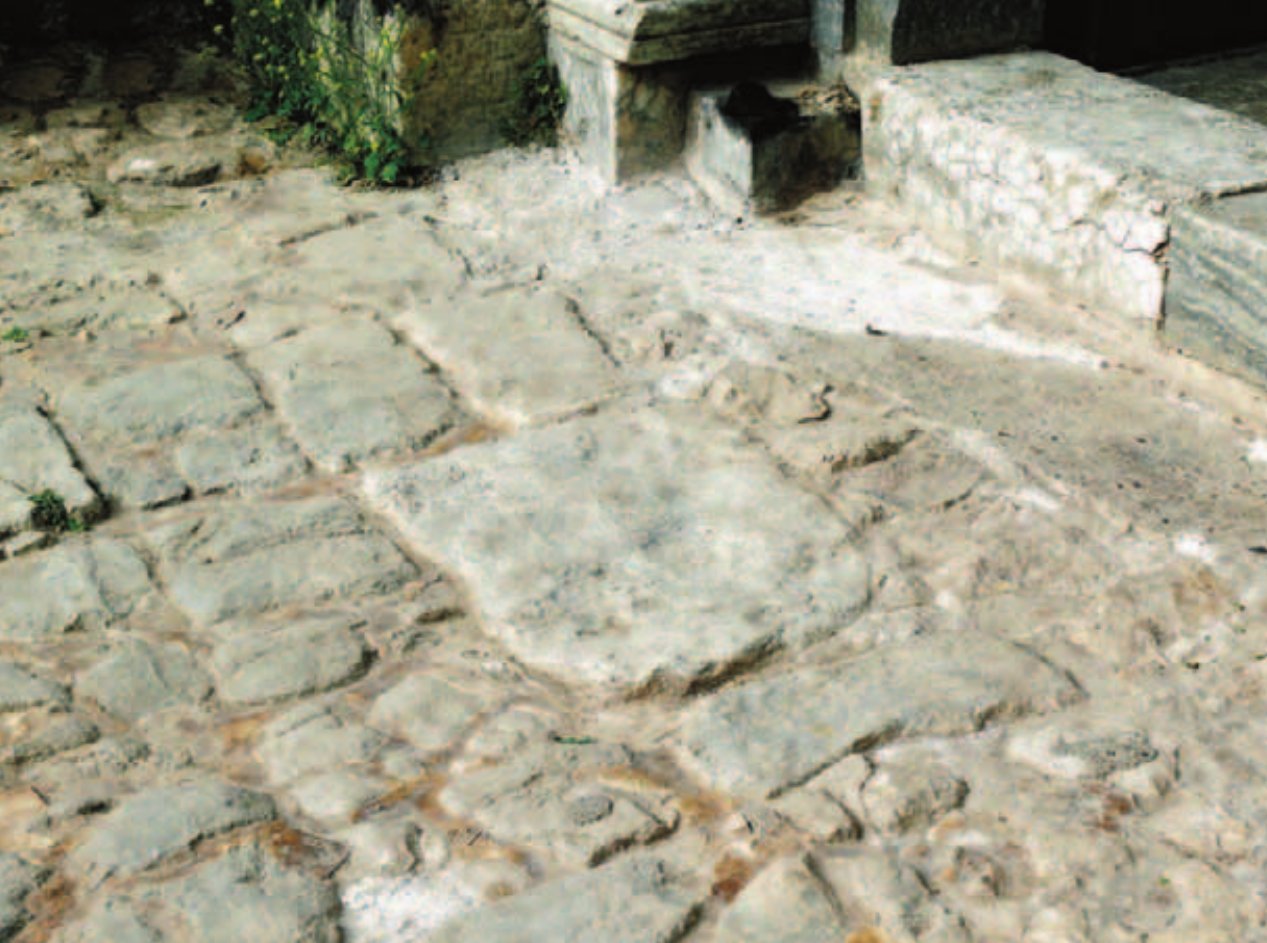
After that the soul must cross the bridge Pira Selatê (also Pira Sirat). If it is good and God is pleased with it, the bridge becomes wide; if it is bad, the bridge becomes as thin as a hair, and the soul falls down (Grigoriev et al. 2008, p. 28). According to the Qewlê Seremergê, the Zebanî bring the soul to the bridge: on one side lies paradise, on one the darkness, on the third hell. There friends and brothers of the hereafter help their sinful brothers, and God intercedes for the soul (Kreyenbroek/Rashow 2005, p. 349).
The Ezidi crosses the bridge with the help of his brother of the hereafter (birayê axretê) (Pirbari 2016, p-253). According to Omarkhali (2005), Şêxisin also helps with this; the declaration of faith, she says, must be recited after death before the bridge (Omarkhali 2005, pp. 63, 105–106). Therefore every Ezidi needs his spiritual companions; without his Şêx and P’îr the soul is without support (Hesenyan 1995, pp. 17–18). See The basic pillars of the faith.
In Lalîş a bridge stands as the image of the Pira Selatê; pilgrims take off their shoes in front of it (Grigoriev et al. 2008, pp. 20–25).
Paradise and hell
The hereafter knows paradise and hell (bihuşt û dojeh) and a day of judgment (roja axiretê) (Grigoriev et al. 2008, pp. 4–5). In a sermon the angry person receives a house of scorpions and snakes, the kind person a palace in paradise (Kreyenbroek/Rashow 2005, p. 290). According to a Qewl, the eternal paradise belongs to Tawûsî Melek (p. 27).
The Zebanî are the guardians of the hereafter, who receive and punish the sinners (Pirbari 2016, p-250; Kreyenbroek/Rashow 2005, pp. 291–292). In Lalîş a "gate of paradise" (Derê Bihuştê), a lane and a wick place of the Zebanî recall these ideas (Grigoriev et al. 2008, pp. 76, 82, 132).
The transmigration of souls: "changing the shirt"
The transmigration of souls is called kirasgorîn – literally "change of shirt". When someone dies, the Ezidis in Iraq say: kiras gorî – "he has changed the shirt" (Omarkhali 2023, p. 21 with n. 24). In the Qewlê Seremergê "in this garment" means roughly "in this life" (Kreyenbroek/Rashow 2005, pp. 343–344).
In earlier times the Koçek – devout seers – foretold how the soul of a deceased person would be reborn; they supposedly remembered earlier lives (Kreyenbroek/Rashow 2005, p. 8). The identification of holy figures from different times is also explained by this belief (p. 22).
The souls of the dead of a cemetery visit the soul of the newly deceased (Hesenyan 1995, pp. 27–28). Whoever dies "becomes a witness of souls": to the living, the dead person is like a judge on the Last Day (p. 16).
Differing traditions
Paradise and hell – or transmigration of souls? - Omarkhali: the older idea of transmigration of souls and cyclical time exists peacefully alongside the younger idea of a judgment at the end of time (Omarkhali 2023, pp. 21–22). Lescot likewise found both side by side in 1936 (Lescot 1938, pp. 67–68). - Tagay and Ortaç reproduce (following Othman) a teaching according to which there is no paradise and no hell: the soul migrates until it reaches the highest purity and then returns to Tawûsî Melek (Tagay/Ortaç 2016, p. 65). - According to Şêx Mak’sîm, there is paradise (Bihuşt), hell (Doje) and an intermediate place Jenme (Şêx Mak’sîm 2017, PDF pp. 211–212). The soul, he says, comes from the morning star, where paradise lies (PDF pp. 15–16).
Who are the Zebanî? - According to Pirbari and Kreyenbroek, the guardians of the hereafter, who punish sinners; the greatest is called Şêx Şeylî (Pirbari 2016, p-250; Kreyenbroek/Rashow 2005, pp. 290–292). - According to Şêx Mak’sîm, Zibênî are souls in need in the hereafter – for example the dead without heirs, with an unknown grave, the fallen or people without a brother of the hereafter. Every Ezidi should give food to the needy in their memory (nanê zibênya) (Şêx Mak’sîm 2017, PDF pp. 104–106).
Who leads across the bridge? - According to Pirbari and Omarkhali (2005), the brother of the hereafter, according to Omarkhali also Şêxisin (Pirbari 2016, p-253; Omarkhali 2005, pp. 105–106). - According to Şêx Mak’sîm, the Birê Axiretê leads the soul across the bridge, which he calls P’r’a Serhatê (Şêx Mak’sîm 2017, PDF pp. 75–77).
See also
- Ages and end times
- The Pira Selatê in Lalîş
- Brother and sister of the hereafter
- Burial and mourning (People & Culture)
Sources
- Khanna Omarkhali: The religious textual tradition of the Ezidis – from the oral to the written. Saint Petersburg 2023 (Russian translation of the English original, Wiesbaden 2017), p. 21–22, 92–93, 116–119, 467–468, 479–480
- Philip G. Kreyenbroek, Khalil Jindy Rashow: God and Sheikh Adi Are Perfect. Sacred Poems and Religious Narratives from the Yezidi Tradition. Wiesbaden: Harrassowitz 2005, p. pp. 8, 12, 22, 27, 29, 33, 223 (n. 182), 290–292, 341–349, 412 (n. 127)
- Dimitri Pirbari (P’îr Dîma), A. Ščedrovickij: Тайна жемчужины (The secret of the pearl). Moscow/Tbilisi 2016, p. p-029, p-071–072, p-087, p-247, p-250, p-253, p-255
- S. A. Grigoriev, L. V. Ivasko, D. V. Pirbari (P’îr Dîma): Lalişa Nûranî / Святой Лалыш / Holy Lalish. Yekaterinburg: Basko 2008, p. pp. 4–5, 20–23, 28, 62, 76, 82, 132
- Şêx Mak’sîm (Maksim Ezdi): Grundpfeiler der Religion ScherfeDin, 2017 (on EZDIKI.COM in the Religion section and in the library), p. PDF pp. 15–16, 75–77, 104–106, 211–212
- Һ'әсәне Шех К'әләше (Hesenê Şêx Kelaşê, Hesen Hesenyan): Р'е-р'ьзма мьләте Эзди ангори qьраре дин (Rê-rizma mileta Êzdî angorî qirarê dîn). Şamîran 1995 (scan and new text edition in the EZDIKI.COM library), p. pp. 12–13, 16–18, 27–28
- Khanna Omarkhali (Ханна Омархали): Йезидизм. Из глубины тысячелетий (From the depths of the millennia). Saint Petersburg 2005, p. pp. 63, 105–106
- Şefik Tagay, Serhat Ortaç: Die Eziden und das Ezidentum. Geschichte und Gegenwart einer vom Untergang bedrohten Religion. Hamburg (Landeszentrale für politische Bildung) 2016, p. p. 65
- Roger Lescot: Enquête sur les Yezidis de Syrie et du Djebel Sindjār (Study of the Ezidis of Syria and of the Şengal mountains). Beirut 1938, p. pp. 67–68
Found a mistake?
Is something wrong – a fact, a spelling, a source, an image? Let us know: we check every report and correct the article.
Other spellings: Ruh · Achret · Akhret · Achiret · Akhiret · Kirasgorin · Kiras guhorin · Pira Selate · Bihust · Bihuscht · Bihusht · Zebani · Nekir u Nekin · Sheikh · Scheich · Shex · Qawl · Qaul · Kewl · Faqir