
The Ezidi faith rests less on fixed tenets than on right action and on firm bonds. Researchers speak of orthopraxy: more important than a formulated doctrine is to know one's place in the community and to keep the commandments (Kreyenbroek/Rashow 2005, p. 6; Omarkhali 2023, pp. 9, 22). Three groups of basic pillars are named again and again: the three basic commandments (sê herf), the five obligatory bonds (pênc ferz) and the pillars of the religion (erkan).
Sê herf – the three basic commandments
Sê herf literally means "three letters". What is meant are three commandments; whoever breaks one of them leaves the religion, according to tradition (Grigoriev et al. 2008, pp. 12–13). Omarkhali (2005) calls them the "three mortal sins" (Omarkhali 2005, pp. 107–108).
| Name | literally | Content |
|---|---|---|
| Şelpkê zêrîn (Şerbikê zêrîn) | "golden cup/jug" | prohibition of marriage between the castes (Şêx, P’îr, Mirîd) and between certain lineages |
| Dîska denê (Dîza danê) | "dye pot" | prohibition of marriage with non-Ezidis – and thus of conversion to another faith |
| Derba xerqe | "blow on the Xerqe" | prohibition of raising one's hand against a cleric, a Feqîr in the Xerqe or one's own Şêx and P’îr |
(Grigoriev et al. 2008, pp. 12–13; Omarkhali 2005, pp. 107–108; Şêx Mak’sîm 2017, PDF pp. 59–61)
The Xerqe is the black woolen garment of the Feqîr, devout men who lead a particularly strict life (Grigoriev et al. 2008, pp. 204–205). It is regarded as one of the holiest signs of the religion (Pirbari 2016, p-257). Violence against a Feqîr is a grave sin (Kreyenbroek/Rashow 2005, p. 18).
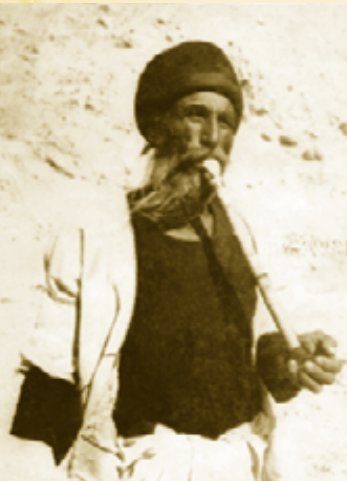
Whoever asks a Şêx for the brotherhood of the hereafter hears, according to Omarkhali, the answer: "Yes, agreed – but in the three letters I am not with you." With this he commits himself to keeping the three commandments (Omarkhali 2005, pp. 107–108).
Pênc ferz – the five bonds
Ferz means "duty". Among the Ezidis, however, what is meant is not actions such as fasting or praying, but five people who accompany the religious life of each individual (Kreyenbroek/Rashow 2005, p. 6). Every Ezidi – including every Şêx and P’îr – must have them:
- Şêx – the spiritual guide from the caste of the Şêx;
- P’îr – the spiritual guide from the caste of the P’îr;
- Hosta – the teacher who taught one prayers and sacred texts;
- Merebî – the tutor;
- brother of the hereafter or sister of the hereafter (birayê/xuşka axretê), who helps the soul across the bridge after death.
(Kreyenbroek/Rashow 2005, pp. 6, 12; Omarkhali 2023, p. 24; Pirbari 2016, p-254; Polatov 2011, p. 47)
In the declaration of faith the believer confirms that he is content with these five "paths" (tirêq) (Omarkhali, article, p. 191, n. 109). According to Hesenê Şêx Kelaşê, the soul is without support without its own Şêx and P’îr – the "five T’irêq" (Hesenyan 1995, pp. 17–18). According to Pirbari, the five appear as witnesses at the judgment in the Qewlê Şêxûbekir (Pirbari 2016, p-127).
The position of Hosta and Merebî is less firm today than that of the others (Omarkhali 2023, p. 24). More on the individual bonds under Şêx and P’îr and Brother and sister of the hereafter.
The pillars of the religion (erkan)
The Qewlê Bedîla Xedara names as "pillars of the religion" (erkanê dînî): xêr (goodness, alms), xizmet (service), xîret (zeal), mirwat (magnanimity, humanity) and qelema girtî ("the closed pen", that is, the controlled tongue) (Omarkhali 2023, pp. 468–469). In conversations, religious experts also named fasting, prayer, honoring one's parents, truth (rastî) and conscientiousness (bext) (pp. 258–261).
Honoring one's parents is regarded as one of the most important principles; the Qewlê Daîk û Baba deals with it (Omarkhali 2023, p. 470). Pirbari names as commandments: honor one's parents, help the poor, acquire knowledge (Pirbari 2016, p-101–102).
Ferz of the truth and ferz of the path
The text of the Lalîş photo book distinguishes two kinds of duties (Grigoriev et al. 2008, p. 12):
- ferzên heqîqetê ("duties of the truth"): the five spiritual reference persons;
- ferzên terîqetê ("duties of the path"): knowledge of God, good action, charity, fasting, circumcision (sunet), cutting of the first lock of hair (bisk), prayer, pilgrimage to Lalîş, the levy zikat, alms, permitted food and avoiding what is forbidden.
The English version of the same book swaps the two designations (Grigoriev et al. 2008, pp. 13–17).
Differing traditions
Who belongs to the five Ferz?
| Source | The five |
|---|---|
| Kreyenbroek/Rashow 2005, p. 6 | Şêx, P’îr, Merebî, Hosta, brother of the hereafter |
| Pirbari 2016, p-254 | Şêx, P’îr, Oste (Hosta), Merebî, Yar-birayê axretê |
| Polatov 2011, p. 47 | Şêx, P’îr, Hosta, Murebbî, Yar-birayê axretê |
| Tagay/Ortaç 2016, p. 74 | Hosta (here explained as "God"), Şêx, P’îr, Mirebbî, brother/sister of the hereafter |
| Şêx Mak’sîm 2017, PDF pp. 66–77 | Şêx, P’îr-Hosta (one person), Merhebî, Yal (a Şêx from the house of Şîxsin, responsible for circumcision and religious marriage), Birê Axiretê |
According to Şêx Mak’sîm, every Ezidi receives his five Ferz through the ritual Destdamin, an oath on the three basic commandments (PDF pp. 61–65). The Ferz, he says, were instituted "in honor of five riders" (PDF pp. 66–68). He calls the claim that the Ferz arose only in the 12th century a false doctrine (PDF pp. 168–171).
What does the third commandment forbid? - According to the Lalîş photo book and Omarkhali (2005): violence and contradiction against clergy and Feqîr (Grigoriev et al. 2008, pp. 12–13; Omarkhali 2005, pp. 107–108). - According to Şêx Mak’sîm, Derba Xerqe more generally commands respect (qedr û me’rîfet) for other castes, peoples and religions (Şêx Mak’sîm 2017, PDF pp. 60–61).
How many pillars does the religion have? - Omarkhali names the five pillars of the Qewlê Bedîla Xedara (Omarkhali 2023, pp. 468–469). - Pirbari speaks of 99 principles of the Feqîr estate and three pillars: knowledge, truth and modesty (Pirbari 2016, p-183–193). - According to Şêx Mak’sîm, there are 99 Erkan – stages of religious development. They are all based on Îman, faith in Tawûsî Melek as the first archangel; above this stands faith (Bawerî) in the one God. The Ferz are only one of the 99 Erkan (Şêx Mak’sîm 2017, PDF pp. 37, 206–208). Pirbari, too, connects erkan with îman (Pirbari 2016, p-247, p-250).
See also
- The three basic rules and five duties (People & Culture)
- Prohibitions and taboos
- The name of the religion
Sources
- Philip G. Kreyenbroek, Khalil Jindy Rashow: God and Sheikh Adi Are Perfect. Sacred Poems and Religious Narratives from the Yezidi Tradition. Wiesbaden: Harrassowitz 2005, p. pp. 6, 12, 18, 37
- Khanna Omarkhali: The religious textual tradition of the Ezidis – from the oral to the written. Saint Petersburg 2023 (Russian translation of the English original, Wiesbaden 2017), p. 9, 22, 24, 258–261, 468–470
- Khanna Omarkhali: Yezidi Religious Oral Poetic Literature: Status, Formal Characteristics, and Genre Analysis. With some examples of Yezidi religious texts. In: Scrinium VII–VIII.2 (2011–2012): Ars Christiana, Leiden: Brill, pp. 144–195, p. 191 (n. 109)
- Dimitri Pirbari (P’îr Dîma), A. Ščedrovickij: Тайна жемчужины (The secret of the pearl). Moscow/Tbilisi 2016, p. p-101–102, p-127, p-183–193, p-247, p-250, p-254, p-257
- Şêx Mak’sîm (Maksim Ezdi): Grundpfeiler der Religion ScherfeDin, 2017 (on EZDIKI.COM in the Religion section and in the library), p. PDF pp. 37, 58–77, 168–171, 206–208
- S. A. Grigoriev, L. V. Ivasko, D. V. Pirbari (P’îr Dîma): Lalişa Nûranî / Святой Лалыш / Holy Lalish. Yekaterinburg: Basko 2008, p. pp. 12–13, 204–205
- Khanna Omarkhali (Ханна Омархали): Йезидизм. Из глубины тысячелетий (From the depths of the millennia). Saint Petersburg 2005, p. pp. 107–110
- S. M. Polatov: Дети Солнца (Children of the Sun). Rybinsk 2011, p. p. 47
- Һ'әсәне Шех К'әләше (Hesenê Şêx Kelaşê, Hesen Hesenyan): Р'е-р'ьзма мьләте Эзди ангори qьраре дин (Rê-rizma mileta Êzdî angorî qirarê dîn). Şamîran 1995 (scan and new text edition in the EZDIKI.COM library), p. pp. 13, 17–18
- Şefik Tagay, Serhat Ortaç: Die Eziden und das Ezidentum. Geschichte und Gegenwart einer vom Untergang bedrohten Religion. Hamburg (Landeszentrale für politische Bildung) 2016, p. p. 74
Found a mistake?
Is something wrong – a fact, a spelling, a source, an image? Let us know: we check every report and correct the article.
Other spellings: Se herf · Drei Budschhstaben · Drei Bujhstaben · Penc ferz · Pendsch ferz · Penj ferz · Erkane dini · Erkan dini · Erkan dînî · Iman · Baweri · Orthoprachie · Orthoprakhie · Selpke zerin · Schelpke zerin · Shelpke zerin · Sheikh · Scheich · Shex · Pîr