
Even before the creation of this world, God created seven divine beings, usually called "angels". Their head is Tawûsî Melek. God handed over to them the affairs of the world (Omarkhali 2023, pp. 23, 102). In the hymns they are called Heft Sur, the "seven mysteries" (Omarkhali, article, p. 145; Kreyenbroek/Rashow 2005, pp. 12–13). According to the faith, they also appear in human form; many Şêx families trace themselves back to them (Kreyenbroek/Rashow 2005, pp. 12–13).
What the Seven do
According to the hymns, the Seven drank from the cup and came into the world, whose "kings" they became. They helped to bring Adam to life (Kreyenbroek/Rashow 2005, p. 26): according to one narrative, they entered Adam's body before the soul (Omarkhali 2023, pp. 116–119). The heavenly assembly of God with the Seven is regarded as the model of the annual Festival of the Assembly in Lalîş (Kreyenbroek/Rashow 2005, pp. 16, 36). According to Pirbari, the angels are "radiated" from God's light, speak with one another and question Siltan Êzîd (Pirbari 2016, p-052, p-246).
Other names of the Seven are "seven riders" and "seven Sur" ("seven powers"); an epithet of the angels is Bavzar or Zerbav, "holy father" (Pirbari 2016, p-247, p-249, p-255). In Lalîş there is a wick place for the "Seven Riders of the House of Adî" (Grigoriev et al. 2008, pp. 77, 203).
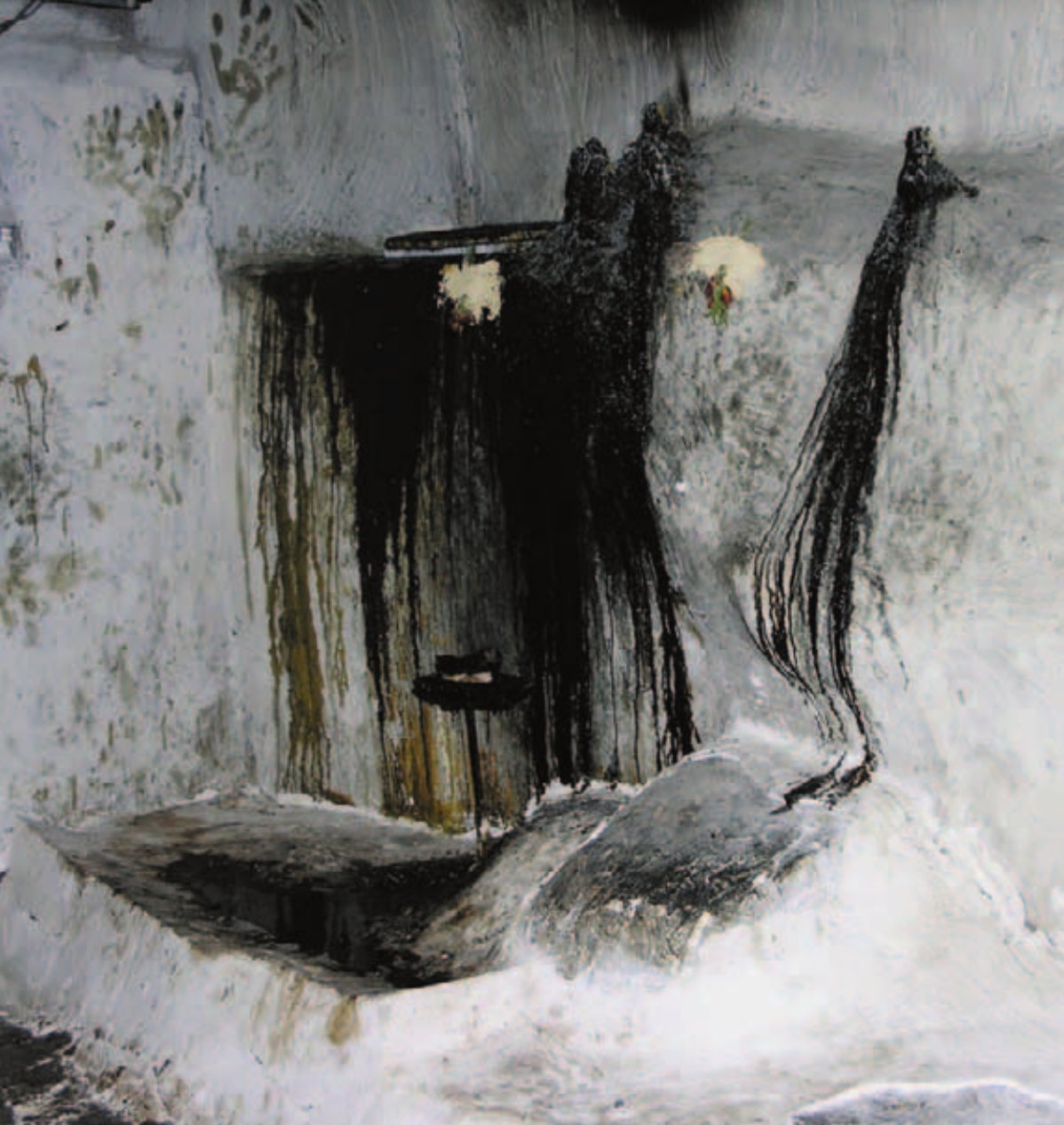
A manuscript of a P’îr family in Armenia, the Mişûra Reş Belek, shows seven large figures; the head of the household called them "Heft Mêrê Dîwanê" – the seven angels (Omarkhali 2023, p. 54). The number seven also recurs in ritual: in Lalîş there are seven Sema, solemn performances with music (Omarkhali, article, p. 185).
The hidden and the visible council
According to Pirbari, the seven angels form a hidden council (dîwana batinî). On earth it appears as the visible council (dîwana dahirî) of the seven saints: Şêx Adî, Şêxsin, Şêxûbekir, Fexredîn, Şêşims, Sicadîn and Nasirdîn – each an earthly manifestation of an angel (Pirbari 2016, p-052–053).
Four of them – Şemsedîn, Fexredîn, Sicadîn and Nasirdîn – are regarded as sons of Êzdîna Mîr, whom Şêx Adî met on his arrival in Lalîş. They often form a group of their own, the "four friends" or "four mysteries", and are each connected with one of the four elements (Kreyenbroek/Rashow 2005, pp. 9, 13, 27).
Who leads the Seven? A legend
Hesenê Şêx Kelaşê relates: the seven holy men wanted to show their power. At the suggestion of Şîxadî (Şêx Adî) they baked a cake (kiloç) into which a pearl was placed. In the morning the pearl fell to Şîxadî, and from under his mark a red beetle with black spots came forth. Thereupon the others recognized him as their head (Hesenyan 1995, pp. 35–37). According to Şêx Mak’sîm, the New Year cake Kiloça Serê Salê is still divided today into seven pieces for the seven archangels (Şêx Mak’sîm 2017, PDF pp. 193–195).
Differing traditions
Who the Seven are is handed down in very different ways. Kreyenbroek stresses: the sources do not always name the same beings (Kreyenbroek/Rashow 2005, p. 13).
Names of the angels
| Source | The seven angels |
|---|---|
| Pirbari 2016, p-041 | Ezraîl, Cibraîl, Mîkaîl, Derdaîl, Şemqaîl, Ezazîl, Ezrafîl – one on each day of creation, from Saturday to Friday; Tawûsî Melek is God's manifestation as their head |
| Şêx Mak’sîm 2017, PDF pp. 11–14, 46 | Nûraîl, Dirdaîl, Mik’aîl, Ferxaîl, Ximşaîl, Ezraîl, Cibraîl; Tawûsî Melek (= Amîn Cibraîl) stands above the Seven |
Assignment to the saints
| Source | Assignment |
|---|---|
| Kreyenbroek/Rashow 2005, pp. 13, 26 | usually Tawûsî Melek, Şemsedîn, Fexredîn, Sicadîn, Nasirdîn, sometimes also Şêx Hesen and Şêx Adî; instead of Şêx Adî sometimes Şêxûbekir |
| Meshefa Reş according to Omarkhali 2023, pp. 40–41 | Dardael = Şêx Hesen, Israel = Şêx Şemsedîn, Michael = Şêx Ebû Bekir, Azrael = Sicadîn, Nurael = Fexredîn |
| Meshefa Reş according to Tagay/Ortaç 2016, p. 55 | Derdaîl = Şêx Hesen, Cibraîl = Şêx Abû Bekir, Israfîl = Şêx Şems, Nuraîl = Fexredîn, Ezraîl = Sicadîn, Şemnaîl = Nasirdîn |
| Pirbari 2016, p-052–053 | Şêx Adî, Şêxsin, Şêxûbekir, Fexredîn, Şêşims, Sicadîn, Nasirdîn |
| Şêx Mak’sîm 2017, PDF pp. 12, 46 | Nûraîl = Şîxadî (Sunday), Dirdaîl = Şîxsin (Monday), Mik’aîl = Şêxûbekir (Tuesday), Ferxaîl = Ferxedîn (Wednesday), Ximşaîl = Şemsedîn (Thursday), Ezraîl = Nasirdîn (Friday), Cibraîl = Sicadîn (Saturday) |
| Perminov 2016, pp. 83–84 | Şêxadî, Şêxsin (writing), Şêxûbekir (earth), Fexredîn (moon), Şemsedîn (sun), Nasirdîn (death), Sicadîn (soul) |
| Informants in Lescot (1936) | Elî Wûso: Tawûsî Melek, Siltan Êzî, Îsa, Ezraîl, Cebraîl, Şê Şims, Şê Ferxedîn; Şêx Eyyûbê Xelef: Tawûsî Melek, Memê Şivan, Amadîn, Sicadîn, Şê Evdelqadir, Siltan Êzî (Lescot 1938, pp. 45–46) |
The authenticity of the Meshefa Reş ("Black Book") is doubted almost unanimously by researchers (Omarkhali 2023, pp. 40–41); see Mishefa Reş and Kitêba Celwe.
Six or seven? - In the Qewlê Afirîna Dinyayê (stanza 19) God creates only six angels. Researchers conclude from this that the seventh is God himself (Omarkhali 2023, p. 102, n. 35; Kreyenbroek/Rashow 2005, p. 26). - According to Şêx Mak’sîm, there are seven "upper archangels", above whom Tawûsî Melek stands (Şêx Mak’sîm 2017, PDF pp. 11–14, 46).
The name Ezazîl - Pirbari expressly names Ezazîl as one of the seven highest angels (Pirbari 2016, p-041, p-246). - Şêx Mak’sîm rejects this name: some Ezidis, he says, name it when listing the archangels only out of ignorance of its meaning in other religions (Şêx Mak’sîm 2017, PDF p. 136). See Tawûsî Melek.
Angels, archangels and angels of the second rank - Pirbari calls the angels higher beings whom God created from light (Pirbari 2016, p-246). - Şêx Mak’sîm distinguishes Melek (archangels, "revealed" directly by God) and Milyak’et (angels, revealed by the archangels); the angels of an archangel are called his "Ps" (PDF pp. 40–41).
Where the Seven come from – a question for researchers - Kreyenbroek considers an ancient Iranian model possible: there too God created seven divine beings and left the world to them (Kreyenbroek/Rashow 2005, p. 20). This is a research hypothesis.
See also
Sources
- Khanna Omarkhali: The religious textual tradition of the Ezidis – from the oral to the written. Saint Petersburg 2023 (Russian translation of the English original, Wiesbaden 2017), p. 23, 40–41, 54, 102 (n. 35), 116–119
- Khanna Omarkhali: Yezidi Religious Oral Poetic Literature: Status, Formal Characteristics, and Genre Analysis. With some examples of Yezidi religious texts. In: Scrinium VII–VIII.2 (2011–2012): Ars Christiana, Leiden: Brill, pp. 144–195, p. 145, 185
- Philip G. Kreyenbroek, Khalil Jindy Rashow: God and Sheikh Adi Are Perfect. Sacred Poems and Religious Narratives from the Yezidi Tradition. Wiesbaden: Harrassowitz 2005, p. pp. 9, 12–13, 16, 20, 26–27, 36
- Dimitri Pirbari (P’îr Dîma), A. Ščedrovickij: Тайна жемчужины (The secret of the pearl). Moscow/Tbilisi 2016, p. p-041, p-052–053, p-246–249, p-255
- Şêx Mak’sîm (Maksim Ezdi): Grundpfeiler der Religion ScherfeDin, 2017 (on EZDIKI.COM in the Religion section and in the library), p. PDF pp. 11–14, 40–41, 46, 136, 193–195
- S. A. Grigoriev, L. V. Ivasko, D. V. Pirbari (P’îr Dîma): Lalişa Nûranî / Святой Лалыш / Holy Lalish. Yekaterinburg: Basko 2008, p. pp. 77, 203
- Һ'әсәне Шех К'әләше (Hesenê Şêx Kelaşê, Hesen Hesenyan): Р'е-р'ьзма мьләте Эзди ангори qьраре дин (Rê-rizma mileta Êzdî angorî qirarê dîn). Şamîran 1995 (scan and new text edition in the EZDIKI.COM library), p. pp. 35–37
- Şefik Tagay, Serhat Ortaç: Die Eziden und das Ezidentum. Geschichte und Gegenwart einer vom Untergang bedrohten Religion. Hamburg (Landeszentrale für politische Bildung) 2016, p. pp. 54–55
- Roger Lescot: Enquête sur les Yezidis de Syrie et du Djebel Sindjār (Study of the Ezidis of Syria and of the Şengal mountains). Beirut 1938, p. pp. 45–46
- A. V. Perminov: Езиды – древний народ Адаби (The Ezidis – the ancient people Adabi). Sharya 2016, p. pp. 83–84
Found a mistake?
Is something wrong – a fact, a spelling, a source, an image? Let us know: we check every report and correct the article.
Other spellings: Heft Mere Diwane · Diwana batini · Tawuse Melek · Melek Taus · Taus-i Melek · Malak Tawus · Sheikh · Scheich · Shex · Lalish · Lalisch · Lalesh · Sultan Êzîd · Pîr · Sheikh Adi · Scheich Adi · Shaikh Adi · Shikhadi · Emir · Qewl