
Şêx Hesen – usually called Şêx Sin, Şêxsin or Melek Şêx Sin ("angel Şêx Sin") – is one of the great holy figures. From him descend the Şêx families of the Adanî (Kreyenbroek/Rashow 2005, p. 9; Omarkhali 2023, p. 24). He is regarded as the lord of the pen, who writes about the creatures. His dome in Lalîş stands directly next to that of Şêx Adî.
The historical Şêx Hesen
According to research, Şêx Hesen is Hasan ibn Adî, a descendant of the family of Şêx Adî from the 13th century. Under him the order in Lalîş revived (Omarkhali 2023, p. 21). Kreyenbroek writes that under him older local ideas returned. Badr ad-Dīn Luʾluʾ, the ruler of Mosul, had him executed in 1254 together with 200 followers and had the bones of Şêx Adî burned (Kreyenbroek/Rashow 2005, p. 4). The community did not believe in his death and still awaited his return a hundred years later (p. 20). His tomb lies in the sanctuary of Şêx Adî (p. 14).
In the faith
In the hymns Şêx Hesen is a being before creation. According to the Qewlê Be Elif, God created from his light the Pearl and Şêx Hesen (Kreyenbroek/Rashow 2005, p. 71). In one narrative Melek Şêxisin teaches the angel Cibrayîl to know God (Omarkhali 2023, pp. 105–106).
He holds the "pen of the faith" and writes about the creatures (Kreyenbroek/Rashow 2005, p. 206). In the declaration of faith he is called Xudanê Qelemê, "lord of the pen"; according to one tradition, the book Cilwe was revealed to him after six years in a cave (Omarkhali, article, p. 191, n. 108). Pirbari calls him the guardian of the pen and author of many texts; the Pêşîmam from his lineage is the guardian of the knowledge of writing (Pirbari 2016, p-024).
According to tradition, Şêx Hesen was the brother of the hereafter and the Şêx of Şêx Adî (Kreyenbroek/Rashow 2005, p. 121, n. 9). According to Omarkhali (2005), Şêxisin helps the soul of the righteous across the bridge into the hereafter (Omarkhali 2005, pp. 105–106). The Şêx of the Adanî are regarded as the "Şêx of the Şêx" because they are brothers of the hereafter of the two other Şêx groups (pp. 109–110).
The Qewl of the dispute between earth and heaven names the scholars who glorify the name of Şîxadî and Melek Şixsin (Celîl 1997, p. 321). At the grave, the Ezidis of Armenia and Georgia perform the Qewlê Şêxê Hesenî Siltan e (Omarkhali 2023, pp. 145, 481–482).
The legend of the hiding place
A narrative by Şêx Osman relates (Kreyenbroek/Rashow 2005, pp. 112–126): Şêx Hesen raised the son of the hostile sultan. Later this son, Badr ad-Dīn, demanded that Şêx Hesen should not deny the Ezidis the pilgrimage to Mecca. Şêx Hesen replied: "Our pilgrimage is to the Zemzem, to the cave, to the grotto and to the White Spring." He fled and hid under cabbage leaves, but a whirlwind betrayed him – hence the prohibition on eating cabbage. For seven years he lay in prison, but did not give up the tradition. He fled into the house of an old woman, whose seven sons defended him and fell. Finally Şêx Mend freed him.
The Lalîş photo book also tells of Bedredîn Lûlû, who took Şêx Hesen prisoner and burned Lalîş, and of the seven sons of the old woman (Grigoriev et al. 2008, pp. 8, 83). They are remembered in Lalîş by wick places at the foot of a wall (p. 83).
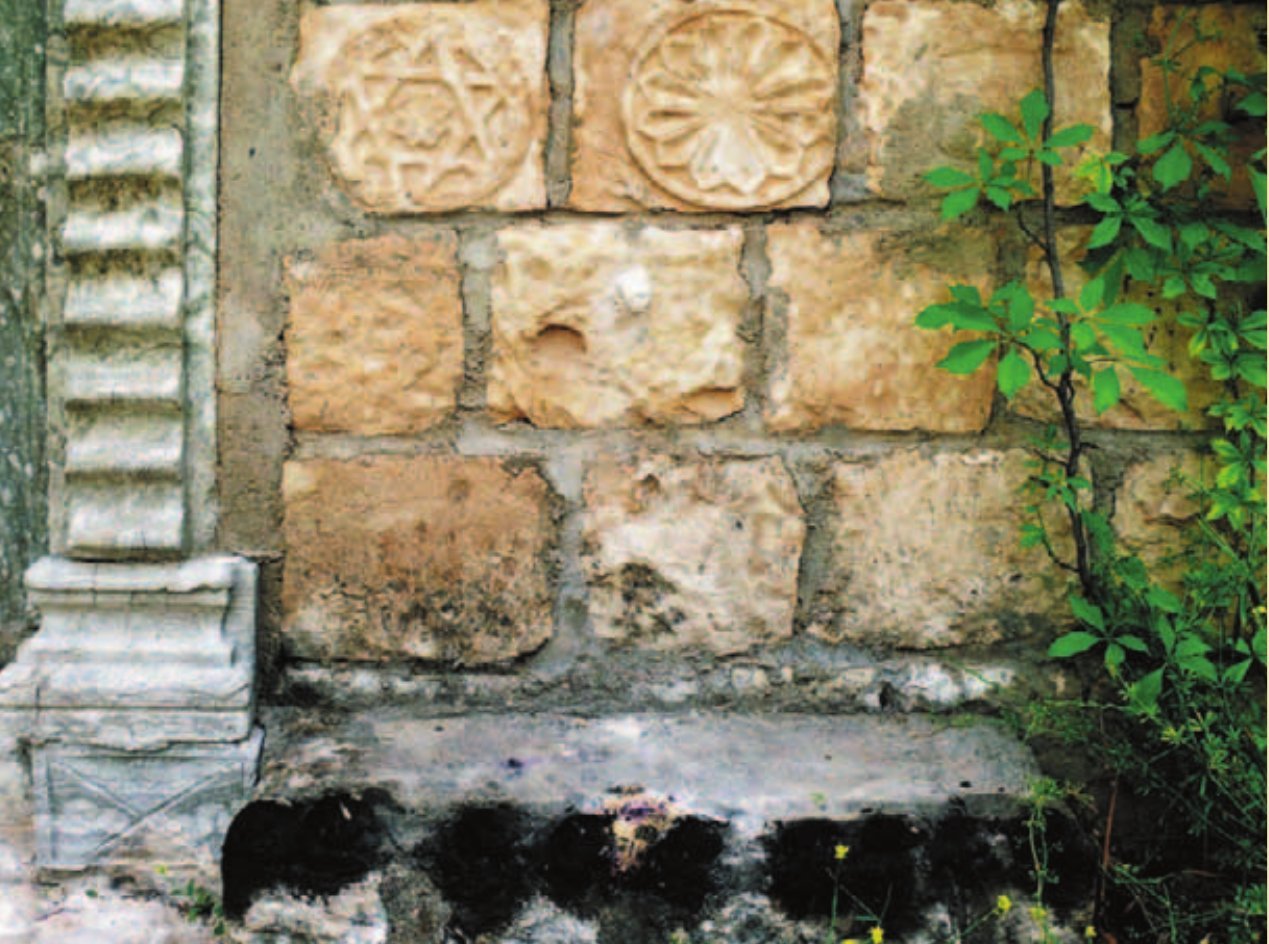
The Adanî and the dome
The Şêx group of the Adanî traces itself back to Şêx Hesen; to it belong families such as Şerfedîn and Şêx Birayîm Xitmî (Grigoriev et al. 2008, p. 14). From it come the Pêşîmam of Lalîş (p. 205). According to Guest, a branch of the family in Bahzanê trained the Qewal and was for a long time the only one permitted to read and write (Guest 1987, p. 51).
Above the main building of Lalîş, to the right of the highest dome (Şîxadî), stands the dome of Melek Şêx Sin (Grigoriev et al. 2008, pp. 33, 45).
Differing traditions
Who is Şêx Hesen? - Kreyenbroek: historically Hasan ibn Adî; in the community often seen as identical in essence with Hasan of Basra (7th century) – explicable through the belief in rebirth (Kreyenbroek/Rashow 2005, pp. 13, 22). According to Guest, he has been venerated under this name since the rule of the Çol family (Guest 1987, p. 50). - Pirbari: an angel who came in human form as a follower of Şêx Adî; his earthly name is Şêx Hesen (Pirbari 2016, p-252, p-260). With his father, the second Şêx Adî, he laid the foundations of the community (p-030). - Şêx Mak’sîm: Şîxsin is the archangel Dirdaîl, responsible for writings; he was the first to hear God's voice; his day is Monday (Şêx Mak’sîm 2017, PDF pp. 12–14). The Adanî, he says, are servants of Şîxsin (PDF p. 56). Only a Şêx from the house of Şîxsin can be the Yal who performs circumcision and religious marriage (PDF pp. 72–75).
Which angel does he correspond to? - According to the Meshefa Reş in the reading of Omarkhali and Tagay/Ortaç, Şêx Hesen is the angel Dardael/Derdaîl (see The seven angels). This agrees with Şêx Mak’sîm's assignment (Dirdaîl).
See also
Sources
- Philip G. Kreyenbroek, Khalil Jindy Rashow: God and Sheikh Adi Are Perfect. Sacred Poems and Religious Narratives from the Yezidi Tradition. Wiesbaden: Harrassowitz 2005, p. pp. 4, 9, 13–14, 20, 22, 71, 112–126, 121 (n. 9), 206, 355
- Khanna Omarkhali: The religious textual tradition of the Ezidis – from the oral to the written. Saint Petersburg 2023 (Russian translation of the English original, Wiesbaden 2017), p. 21, 24, 40–41, 105–106, 145, 481–482
- Khanna Omarkhali: Yezidi Religious Oral Poetic Literature: Status, Formal Characteristics, and Genre Analysis. With some examples of Yezidi religious texts. In: Scrinium VII–VIII.2 (2011–2012): Ars Christiana, Leiden: Brill, pp. 144–195, p. 191 (n. 108)
- Dimitri Pirbari (P’îr Dîma), A. Ščedrovickij: Тайна жемчужины (The secret of the pearl). Moscow/Tbilisi 2016, p. p-024, p-030, p-052, p-252, p-260
- S. A. Grigoriev, L. V. Ivasko, D. V. Pirbari (P’îr Dîma): Lalişa Nûranî / Святой Лалыш / Holy Lalish. Yekaterinburg: Basko 2008, p. pp. 8, 14, 33, 45, 83, 205
- Khanna Omarkhali (Ханна Омархали): Йезидизм. Из глубины тысячелетий (From the depths of the millennia). Saint Petersburg 2005, p. pp. 105–106, 109–110
- Şêx Mak’sîm (Maksim Ezdi): Grundpfeiler der Religion ScherfeDin, 2017 (on EZDIKI.COM in the Religion section and in the library), p. PDF pp. 12–14, 56, 72–75
- John S. Guest: The Yezidis. A Study in Survival. London/New York 1987, p. pp. 50–51
- Celîlê Celîl: Езидское сказание о споре Земли и Неба (The Ezidi tradition of the dispute between Earth and Heaven). In: Петербургское востоковедение 9, Saint Petersburg 1997, pp. 314–324, p. p. 321
- Şefik Tagay, Serhat Ortaç: Die Eziden und das Ezidentum. Geschichte und Gegenwart einer vom Untergang bedrohten Religion. Hamburg (Landeszentrale für politische Bildung) 2016, p. p. 55
Found a mistake?
Is something wrong – a fact, a spelling, a source, an image? Let us know: we check every report and correct the article.
Other spellings: Melik Şêx · Sheikh Hesen · Scheich Hesen · Sex Hesen · Sheikh Sin · Scheich Sin · Sex Sin · Sexsin · Schechsin · Shekhsin · Sixsin · Schichsin · Shikhsin · Melek Sexisin · Melek Schechisin · Melek Shekhisin · Sheikh · Scheich · Shex · Lalish