
The Ezidi teaching of creation tells how the world came out of nothing. At its center stands the White Pearl (dur): God created it from himself, dwelt in it, and from it the world emerged. At the end stands Lalîş, the first solid place on earth. The teaching is not set down in a book but handed down in the sacred hymns (Qewl) and in explanatory narratives (çîrok). The hymns render it only in allusions; the narratives are more detailed (Omarkhali 2023, pp. 99–100).
In the beginning: emptiness and the Pearl
In the beginning there was emptiness: no earth, no heaven, no throne of God, no order (Omarkhali 2023, p. 100). The primordial world was darkness, and God brought light into it (p. 101).
God created from himself a White Pearl, which did not yet have a material form, and dwelt alone and hidden in it (Omarkhali 2023, p. 101; Kreyenbroek/Rashow 2005, p. 25). "White" here means: it contains all colors (Kreyenbroek/Rashow 2005, p. 25). A Qewl raises the question whether the Pearl is from God or God from the Pearl – and answers: God was first and created the Pearl from his own essence (Omarkhali 2023, p. 101, n. 23; Pirbari 2016, p-064–065).
Then God separated the Pearl from himself. In the hymns the Pearl breaks; the world becomes visible, the colors emerge from the white, and water flows out of the Pearl and becomes the boundless primordial sea (Kreyenbroek/Rashow 2005, pp. 26–27; Pirbari 2016, p-041, p-066–067). According to Pirbari, love was the reason the Pearl trembled and poured itself out (p-066).
First a hidden, non-material world came into being, after that the outer one. Things came "down", as it were, and appeared on earth (Omarkhali 2023, pp. 23, 102). Creation is regarded not as a single moment but as a process over a long time (p. 103).
The seven days and the seven angels
According to the oral tradition, creation lasted from Saturday to Friday (Omarkhali 2023, pp. 40–41). God created the seven angels and 18,000 creatures; he separated day and night and created days, months and years (p. 103). The Qewlê Meha ("hymn of the months") tells of this; in it Wednesday is a special day (p. 476). According to Pirbari, God created an angel from his light on each of the seven days; when God appeared to the angels as their head, they called him Tawûsî Melek (Pirbari 2016, p-041). More on this under The seven angels.
Sun and moon were assigned to two saints: Şemsedîn became the sun, Fexredîn the moon (Kreyenbroek/Rashow 2005, p. 27; Pirbari 2016, p-077).
The primordial sea, the tree and the birds
In the middle of the primordial sea grew a tree. All Ezidis know the narrative of the "tree without end" (Dara Herherê). In the hymns it is called Xew or Xewar; it grows upside down, with its roots above in the higher worlds and its crown below (Omarkhali 2023, pp. 104, 106–107). Pirbari also calls it Zencîltop, the tree of life and of knowledge (Pirbari 2016, p-061–063, p-249).
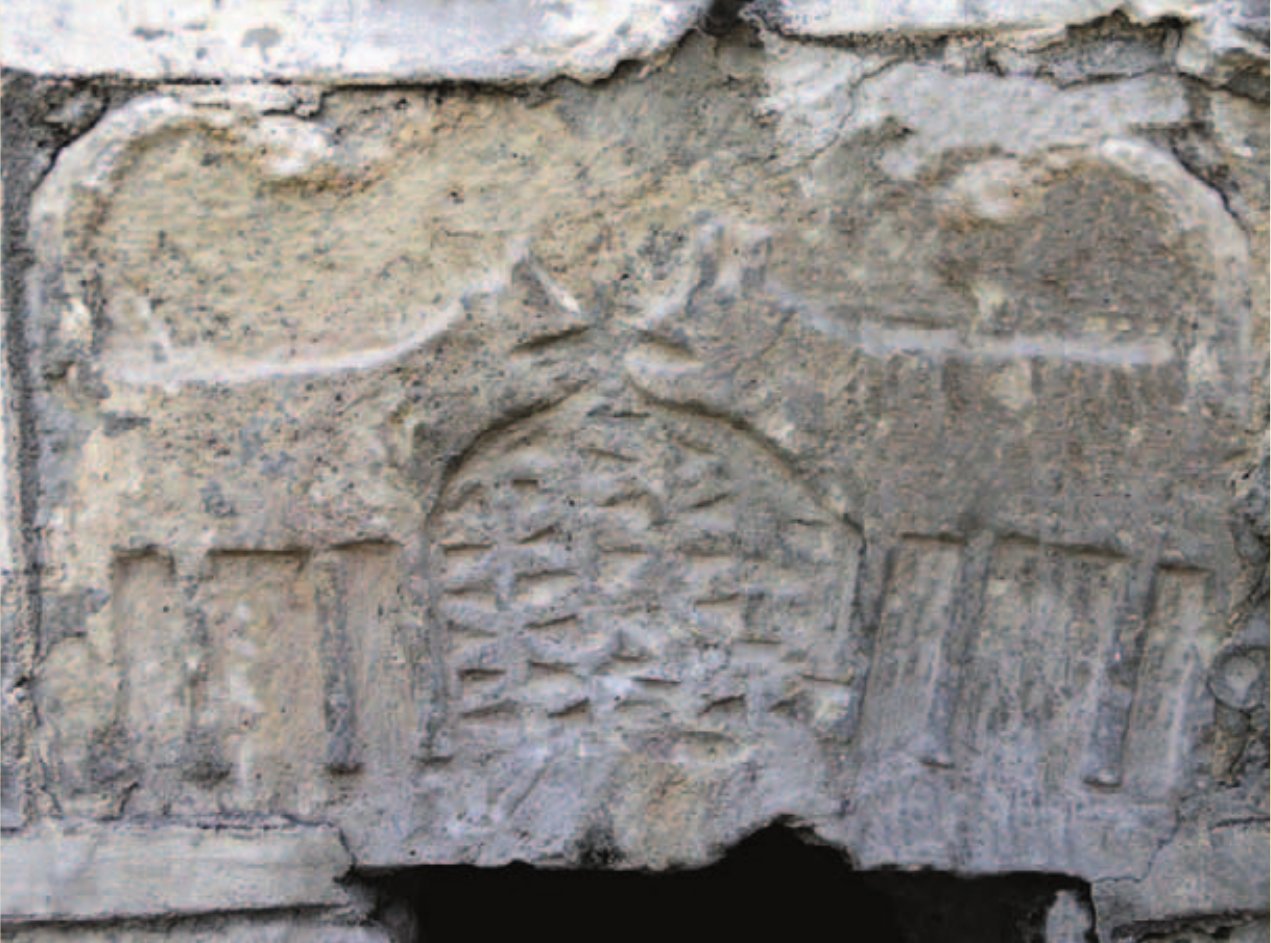
On the tree sat God as a great, light-white bird (Omarkhali 2023, p. 105). One narrative knows two birds: God and Tawûsî Melek. God allowed the second bird to sit on the tree only when it recognized him as Creator (Kreyenbroek/Rashow 2005, p. 29).
How the sea became land
God traveled with four companions (angels) in a boat over the primordial water until they came to the right place (Omarkhali 2023, p. 108). There they threw leaven or "rennet" (havên, heven) into the sea; the water curdled, and land came into being. This spot is today the Kaniya Sipî, the White Spring in Lalîş (Grigoriev et al. 2008, pp. 20–21; Pirbari 2016, p-041, p-247; Kreyenbroek/Rashow 2005, pp. 27–30).
Smoke rose from the sea; from it heaven and earth were made, each with seven layers (Kreyenbroek/Rashow 2005, pp. 29–30; Omarkhali 2023, p. 102). But the earth did not want to become solid. In one narrative the earth asks what it is being created for; the angels answer: for human beings, who will have good and bad sides. The earth demands a promise: when the sins of human beings become too great, God is to purify it. God gives his promise, and the earth becomes solid (Omarkhali 2023, pp. 108–109).
According to the Qewlê Zebûnî Meksûr, the earth remained restless even after forty years. Only when God sent Lalîş down from heaven did it come to rest and turn green (Omarkhali 2023, pp. 109–110; Pirbari 2016, p-041; Grigoriev et al. 2008, pp. 20–23). Lalîş is therefore regarded as the first place on earth, as the earthly image of a heavenly Lalîş (Kreyenbroek/Rashow 2005, pp. 27–30).
After that the world was divided into heaven, earth and underworld (Omarkhali 2023, p. 108).
What carries the world
The tradition knows several images side by side (Omarkhali 2023, pp. 103–104):
- Bull and fish: the world – in the hymns the Pearl – rests on a bull that stands on a gigantic fish. In the Qewlê Gay û Masî the bull stands for the earth, the fish for the water (Omarkhali 2023, pp. 85–87, 104; Kreyenbroek/Rashow 2005, p. 25).
- Turtle and winged serpent: only among the Ezidis of the Caucasus (Omarkhali 2023, pp. 103–104, 110–111).
- The sky stands without pillars – carried by the power of prayer (Kreyenbroek/Rashow 2005, p. 30; Pirbari 2016, p-083–084). The Qewlê Erd û Ezman, the dispute between earth and heaven, also tells of this. In it the earth says that both come from the same pure Pearl (Celîl 1997, pp. 315–316, 320).
Soviet Ezidis separated faith and science and interpreted, for example, the Big Bang as the breaking of the White Pearl (Omarkhali 2023, p. 43, n. 88).
The lamp and the light
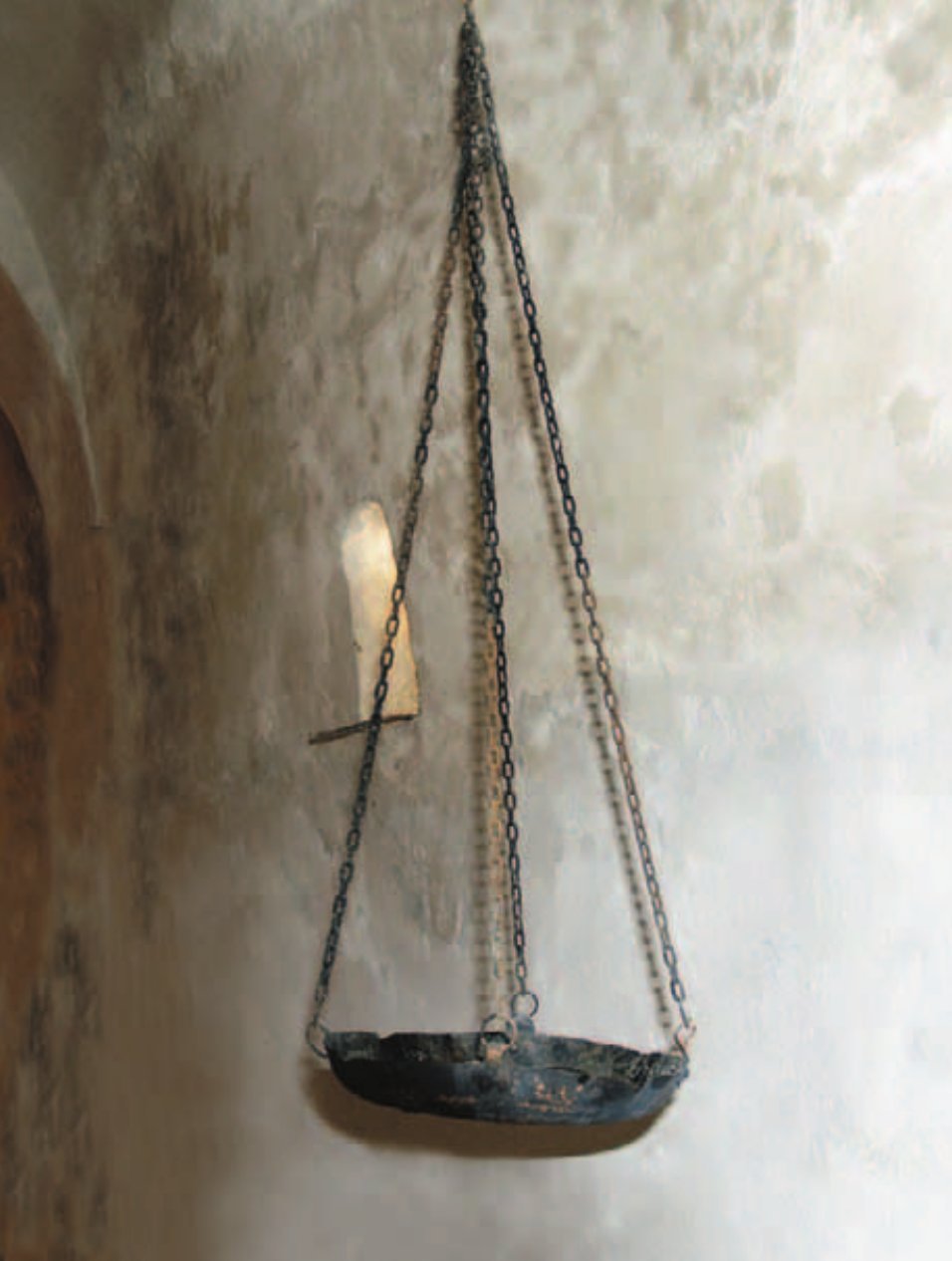
An important image is the lamp (qendîl), the source of light. According to the hymns, the souls dwelt in it for a very long time before they received bodies (Kreyenbroek/Rashow 2005, pp. 28–29). According to Pirbari, the lamp is the "source of souls" (Pirbari 2016, p-070–071).
Differing traditions
What is dur – a pearl or the universe? - Omarkhali, Kreyenbroek and Pirbari translate dur as pearl; it is the central image of creation (Omarkhali 2023, p. 101; Kreyenbroek/Rashow 2005, p. 25; Pirbari 2016, p-041, p-063–067). - According to Şêx Mak’sîm, Dûr in the creation texts means "universe", a dark, boundless sea; the interpretation as "pearl" is "partly wrong" (Şêx Mak’sîm 2017, PDF pp. 4–6, 139–142). God, he says, first created faith (Bawerî) and thereby separated the universe from himself (PDF pp. 5–6).
How did creation proceed? - According to the oral tradition, from Saturday to Friday; according to the "Black Book" (Meshefa Reş), whose authenticity researchers doubt, it began on Sunday (Omarkhali 2023, pp. 40–41). - The order of things – angels, throne, Pearl, light, tree, Xerqe, sea, heaven, earth – differs from hymn to hymn (Pirbari 2016, p-077). - Popular narratives put Tawûsî Melek, Adam and Eve in the foreground and hardly mention the Pearl; the learned versions are more complex (Kreyenbroek/Rashow 2005, p. 49, n. 31).
How did Lalîş come to earth? - According to Omarkhali and Grigoriev et al., God lowered Lalîş down from heaven when the earth did not come to rest (Omarkhali 2023, pp. 109–110; Grigoriev et al. 2008, pp. 20–23). - Pirbari names two versions: Lalîş was the landing place of the ship – or it came from heaven 40 years later (Pirbari 2016, p-086–087). - According to Şêx Mak’sîm, Melekî Tawus first created Lalişa Nûranî on the morning star (Steira Sibê), where paradise also lies; after 40 years Lalîş came down, and the land separated from the water (Şêx Mak’sîm 2017, PDF pp. 15–23). That the morning star is a planet outside the solar system is his own interpretation (PDF pp. 15–16).
Seven layers or 14 planets? - According to the hymns, heaven and earth each have seven layers (Kreyenbroek/Rashow 2005, pp. 29–30). Pirbari speaks of seven heavens and 14 levels of being (Pirbari 2016, p-055); the Qewl of earth and heaven names fourteen layers of heaven (Celîl 1997, p. 320). - Şêx Mak’sîm interprets this as 14 planets – seven before and seven after the earth (Şêx Mak’sîm 2017, PDF pp. 31–33). This is his own astronomical interpretation.
How many angels – six or seven? - In the Qewlê Afirîna Dinyayê (stanza 19) only six angels are mentioned; researchers conclude from this that the seventh is God himself (Omarkhali 2023, p. 102, n. 35; Kreyenbroek/Rashow 2005, p. 26). See The seven angels.
Where the teaching comes from – a question for researchers
Omarkhali suspects that many images of the hymns already existed as myths before Şêx Adî; similarities with the tradition of the Yārsān and with ancient Iranian ideas lead her to suspect a common, very old origin (Omarkhali 2023, p. 119). This is a research hypothesis, not an established fact. Pirbari considers the cosmogony still little researched (Pirbari 2016, p-047–048).
See also
Sources
- Khanna Omarkhali: The religious textual tradition of the Ezidis – from the oral to the written. Saint Petersburg 2023 (Russian translation of the English original, Wiesbaden 2017), p. 21–23, 40–41, 43 (n. 88), 85–87, 99–112, 119, 476
- Khanna Omarkhali: Yezidi Religious Oral Poetic Literature: Status, Formal Characteristics, and Genre Analysis. With some examples of Yezidi religious texts. In: Scrinium VII–VIII.2 (2011–2012): Ars Christiana, Leiden: Brill, pp. 144–195, p. 145, 150 (n. 31)
- Philip G. Kreyenbroek, Khalil Jindy Rashow: God and Sheikh Adi Are Perfect. Sacred Poems and Religious Narratives from the Yezidi Tradition. Wiesbaden: Harrassowitz 2005, p. pp. 25–30, 49 (n. 31)
- Dimitri Pirbari (P’îr Dîma), A. Ščedrovickij: Тайна жемчужины (The secret of the pearl). Moscow/Tbilisi 2016, p. p-041, p-047–048, p-055, p-059–087, p-247, p-249
- Şêx Mak’sîm (Maksim Ezdi): Grundpfeiler der Religion ScherfeDin, 2017 (on EZDIKI.COM in the Religion section and in the library), p. PDF pp. 4–8, 12, 15–25, 31–33, 139–142
- S. A. Grigoriev, L. V. Ivasko, D. V. Pirbari (P’îr Dîma): Lalişa Nûranî / Святой Лалыш / Holy Lalish. Yekaterinburg: Basko 2008, p. pp. 20–23, 52, 154
- Celîlê Celîl: Езидское сказание о споре Земли и Неба (The Ezidi tradition of the dispute between Earth and Heaven). In: Петербургское востоковедение 9, Saint Petersburg 1997, pp. 314–324, p. pp. 314–316, 320
Found a mistake?
Is something wrong – a fact, a spelling, a source, an image? Let us know: we check every report and correct the article.
Other spellings: Weiß Perle · Dara Herhere · Chewar · Khewar · Zenciltop · Zendschiltop · Zenjiltop · Haven · Qendil · Gay u Masi · Lalish · Lalisch · Lalesh · Qawl · Qaul · Kewl · Tawuse Melek · Melek Taus · Taus-i Melek · Malak Tawus