
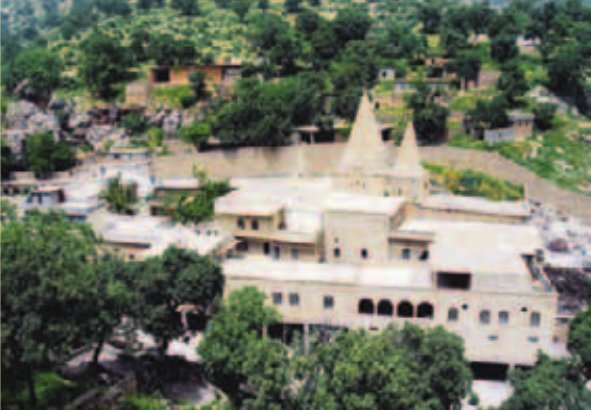
Among the Ezidis a religious festival is called Eyd (also e’yd, ayd) or Cejn. Many festivals begin with a fast, the Rojî. The festivals are dedicated to God, to the angels and to holy figures – Tawûsî Melek, Sultan Êzîd, Şêşims, Xidir Nebî – or commemorate Şêx Adî. According to the photo book Lalişa Nûranî, almost all festivals are connected with the sanctuary of Lalîş.
The dates for the current year are in the calendar of EZDIKI.COM. Customs, dishes and celebrations among the people are described in the article Festivals and fast days in the section People & Culture; the names of the months and weekdays in The Ezidi calendar.
What an Eyd is
According to Şêx Mak’sîm, an Eyd is a holy festival with a fixed order: date, course and number of festivals in the year are connected with the course of the stars and with the rules of the religion Şerfedîn. He counts about 13 Eyd in the year and sees in this an indication of an old lunar calendar with 13 months; this is his interpretation. For him an Eyd is also a "system of time reckoning" (Şêx Mak’sîm, pp. 186–188).
Philip Kreyenbroek divides the festivals into general and local as well as into movable and immovable ones (p. 15):
- Immovable festivals follow the solar year: New Year, the Festival of the Assembly, the winter and summer fasts, Êzîd, Xidir Nebî.
- Movable festivals follow the Islamic lunar calendar and therefore move through the year, e.g. the festival of Erefat (Festival of Sacrifice) and the night of Şeva Berat (p. 16).
- Local festivals are the festivals of the village sanctuaries, called Tiwaf in Şêxan and Cema in Şengal (p. 15).
Fasting before the festival
According to Şêx Mak’sîm, before the great festivals in winter one usually fasts for three days, from Tuesday to Thursday; the festival follows on Friday (Şêx Mak’sîm, p. 200). Other sources partly name other weekdays and numbers of fast days (see below). One fasts from sunrise to sunset. Before daybreak one eats the Paşîv, in the evening one breaks the fast with the Fitar (Lalişa Nûranî, p. 28; Şêx Mak’sîm, p. 200). Devout clergy – Baba Şêx, Feqîr, Koçek – also fast twice a year for 40 days, in summer and in winter (Çilê havînê, Çilê zivistanê) (Kreyenbroek, p. 17; Açıkyıldız, p. 116). More on this in the article Fasting.
Holy days of the week
- Wednesday (çarşem) is regarded as a holy day (Pirbari, glossary p. 258). According to Şêx Mak’sîm, one should behave on Wednesday as on a fast day; some fast every Wednesday (p. 190).
- On Wednesday and Friday evenings wicks are lit at all holy spots in Lalîş; on the evenings of all festivals this is done at every Nîşangeh (Lalişa Nûranî, pp. 22, 32; Açıkyıldız, p. 110). The English version of the photo book names Tuesday and Thursday evenings for this (p. 25) – presumably the same custom, only counted from the eve.
The calendar
The Ezidis reckon their festivals according to the "eastern" calendar, that is, the Julian calendar ("old style"). Today it is 13 days behind the generally used Gregorian calendar. A festival on the "first Wednesday in April" according to the eastern calendar therefore falls on the first Wednesday from 14 April according to today's calendar.
Şêx Mak’sîm explains the differing dates as follows: through the many persecutions the Ezidis lost their own reckoning of time; in addition there is the difference between the Julian and Gregorian calendars. Some families of clergy, he says, still calculate the festivals today according to the phases of the moon (p. 187). He considers some festivals to be bound to the solstices and equinoxes – for example the festival of Şemsedîn to the winter solstice (pp. 187, 197–200).
The festivals at a glance
| Festival | To whom it is dedicated | Time (eastern calendar, unless stated otherwise) | Article |
|---|---|---|---|
| Çarşema Sor / Serê Sal | Tawûsî Melek; New Year | first Wednesday in April | Çarşema Sor |
| Cejna Cimaiyê | Şêx Adî; assembly of the angels | 23 September to 1 October (= 6–14 October) | Festival of the Assembly |
| Rojiyên Êzîd and Eyda Êzîd | Êzîd | December, festival on Friday | Rojî and festival of Êzîd |
| Festival of Şêşims | Şêşims (Şemsedîn), the sun | December, around the winter solstice | Fast and festival of Şêşims |
| Xidir Nebî û Xidir Eylas | Xidir Nebî and Xidir Eylas | February | Festival of Xidir Nebî |
| Cejna Qurbanê / festival of Erefat | sacrifice; pilgrims' festival | moves with the Islamic lunar calendar | Festival of Sacrifice |
| Çilê havînê, Çilê zivistanê, Bêlinda, Batizmî, Tiwaf etc. | various | various | Other festivals |
Why the dates are not the same everywhere
The Ezidis in Iraq and Syria and the Ezidis of the Caucasus lived apart for a long time. Each community has preserved festivals that the other does not know or knows differently (Omarkhali 2023, p. 25; Şêx Mak’sîm, p. 201):
- Common to all communities, according to Khanna Omarkhali, are the festival of Êzîd and the festival of Xidir Nebî (p. 25).
- Only in Iraq are celebrated, among others, the Festival of the Assembly in Lalîş, the summer Çile and Bêlinda (p. 25).
- The New Year is celebrated by the Ezidis of Iraq on the first Wednesday in April; in the Caucasus it is called Kloça Serê Salê, and the information on the date differs there (see Çarşema Sor).
The number of fast days, the weekday and the week in the month are also given differently. The individual articles set the information of the sources side by side.
Sources
- Şêx Mak’sîm (Maksim Ezdi): Grundpfeiler der Religion ScherfeDin, 2017 (on EZDIKI.COM in the Religion section and in the library), p. pp. 186–188, 190, 197–201
- S. A. Grigoriev, L. V. Ivasko, D. V. Pirbari (P’îr Dîma): Lalişa Nûranî / Святой Лалыш / Holy Lalish. Yekaterinburg: Basko 2008, p. pp. 4, 22, 24–31, 89, 202
- Philip G. Kreyenbroek, Khalil Jindy Rashow: God and Sheikh Adi Are Perfect. Sacred Poems and Religious Narratives from the Yezidi Tradition. Wiesbaden: Harrassowitz 2005, p. pp. 15–18
- Khanna Omarkhali: The religious textual tradition of the Ezidis – from the oral to the written. Saint Petersburg 2023 (Russian translation of the English original, Wiesbaden 2017), p. p. 25
- Khanna Omarkhali (Ханна Омархали): Йезидизм. Из глубины тысячелетий (From the depths of the millennia). Saint Petersburg 2005, p. pp. 70–77
- Dimitri Pirbari (P’îr Dîma), A. Ščedrovickij: Тайна жемчужины (The secret of the pearl). Moscow/Tbilisi 2016, p. pp. 258–259 (glossary)
- Birgül Açıkyıldız: The Yezidis. The History of a Community, Culture and Religion. London 2010, p. pp. 110, 116
- Şefik Tagay, Serhat Ortaç: Die Eziden und das Ezidentum. Geschichte und Gegenwart einer vom Untergang bedrohten Religion. Hamburg (Landeszentrale für politische Bildung) 2016, p. pp. 84–89
Found a mistake?
Is something wrong – a fact, a spelling, a source, an image? Let us know: we check every report and correct the article.
Other spellings: Dschejn · Jejn · Roji · Fest der Eziden · Tawuse Melek · Melek Taus · Taus-i Melek · Malak Tawus · Siltan Êzîd · Sheikh Adi · Scheich Adi · Shaikh Adi · Şêxadî · Shikhadi · Lalish · Lalisch · Lalesh · Sheikh · Scheich · Shex