
Historical warrior, defender of his homeland and symbol of Ezidi bravery
Historical Ezidi warrior and leader from the Şerqiyan tribe in the Wêranşar region. With a small band of companions he faced an overwhelming force of Ottoman and Arab troops to save his homeland from destruction. His courage and tragic fate form the most famous heroic epic of Ezidi history and musical tradition.
Historical background and origins
Dewrêşê E’vdî lived in the late 18th century in northern Mesopotamia (on the plain between Wêranşar, Mêrdîn and Urfa). He was the son of Evdo (Evdî), the respected head of the Ezidi Şerqiyan (Şerqî) tribe, and had a younger brother named Sadûn.
Politically and militarily, the Ezidi Şerqiyan were at that time part of the great Millan tribal confederation, led by the historically documented prince Zor Temir Paşa (Temir Pasha of Millan, ruled c. 1775–1800). Within this alliance Ezidi and Muslim tribes lived together under a common defence pact, and the Ezidi horsemen of the Şerqiyan under the leadership of Evdo and his sons were regarded as the most powerful and fearless unit of the confederation.
At the same time, the life of Dewrêşê E’vdî is bound up with a profound personal story: between the Ezidi warrior Dewrêş and Edûlê, the daughter of the Muslim prince Zor Temir Paşa, there was a deep mutual affection, which, however, remained unfulfillable because of the strict religious and social boundaries of the time.
The great offensive of the enemies and the oath in the council tent
Towards the end of the 18th century (around 1790), several hostile Arab tribal federations (among them the Gês / Qays and Tey / Tayy tribes) joined forces with Ottoman-Turkmen units and regional governors in order to break the power of the Millan confederation, conquer its pastures and subjugate the Ezidis living there.
When the huge enemy army – the historical traditions speak of some 1,700 up to tens of thousands of horsemen – marched up to the borders of the tribal territory and issued an ultimatum, Zor Temir Paşa called all the tribal leaders together in his great council tent:
- The test of the coffee cup: according to traditional custom, Temir Paşa had a cup of coffee (Fîncana Qehweyê) passed round – whoever accepted this cup from Edûlê’s hand and drank it took over the supreme command in the coming battle of life and death. In view of the enemy’s crushing superiority, all the tribal chiefs present silently lowered their eyes.
- The decision of Dewrêşê E’vdî: when nobody dared to step forward, the Ezidi warrior Dewrêşê E’vdî rose, accepted the cup and swore to defend the families, the tents and the honour of the community to his last breath.
The battle at the hill Girê Edrê and the hero’s death
Dewrêşê E’vdî did not go into battle with a large army, but chose a small, hand-picked band of eleven loyal companions – mostly Ezidi warriors from his tribe and his brother Sadûn. On his famous white war horse Hedbî he rode out to meet the enemy army as far as the strategically located hill Girê Edrê (near Wêranşar) in order to halt the advance on the unprotected settlements.
- Repelling the attacks: for several days Dewrêşê E’vdî, his brother Sadûn and their few companions withstood the assaults of the enemy vanguard, defeated the enemy leaders in single combat and inflicted such heavy losses on the superior force that its offensive faltered.
- Encirclement and death: when the main enemy force completely surrounded the hill and the small group was gradually worn down, Dewrêşê E’vdî continued the fight alone. During a last sally his horse Hedbî, at full gallop, stepped into a burrow (molehill) and broke its leg. Thrown from his horse and badly wounded, Dewrêşê E’vdî fell fighting the superior force at Girê Edrê. Through his desperate resistance, however, the advance of the attackers was decisively weakened, so that the civilian population could be saved.
Significance in Ezidi culture, literature and music
For the Ezidis, Dewrêşê E’vdî is far more than a historical warrior of the 18th century: he embodies the ideal of Mêrxasî (heroic self-sacrifice), Bext (unbreakable loyalty to one’s given word) and the courage of a small minority in the face of a crushing superior force.
- Oral historical tradition (music): the lament and heroic epic “Dewrêşê E’vdî” (and Edûlê’s famous lament “Delal”) was preserved over generations by the Ezidi master singers (Dengbêj). In the 20th century, legendary singers such as Şeroyê Biro, Efoyê Esed and Resîdê Baso (as well as Karapetê Xaço) made the epic immortal throughout the Caucasus and the Middle East via the radio in Yerevan.
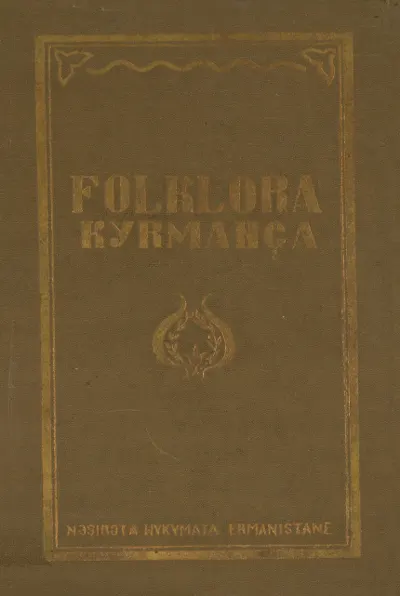
- Written records in the Soviet era: from the 1930s Ezidi scholars in Armenia – among them H’eciyê Cindî, Emînê Evdal and Ordîxan and Celîlê Celîl – travelled through the villages of the survivors of the genocide of 1915 and recorded the various historical versions of the epic in the Cyrillic alphabet, so that this important tradition is preserved in print today in archives and libraries.
Books in our library
More on EZDIKI.COM
More notable figures
Sources
- Christine Allison: The Yezidi Oral Tradition in Iraqi Kurdistan. Curzon/Routledge, London 2001
- Roger Lescot: Textes kurdes, Bd. 1. Paul Geuthner, Paris 1940
- Ordîxanê Celîl & Celîlê Celîl: Zargotina Kurda, 2 Bände. Nauka, Moskau 1978
- Khanna Omarkhali: The Yezidi Religious Textual Tradition. From Oral to Written. Harrassowitz, Wiesbaden 2017
- Rûdaw (Kurmancî): Neuauflage von „Folklora Kurmanca“ mit Fassungen von Dewrêşê Evdî (2025)
Compiled from the sources listed. We welcome additions and corrections via the contact page. Contact
Other spellings: Dewrese Evdi · Dewresche Evdi · Dewreshe Evdi · Dewres Evdi · Dewresch Evdi · Dewresh Evdi · Dewrêş E’vdî · Derwese Evdi · Derwesche Evdi · Derweshe Evdi · Derwes Evdi
Found a mistake?
Is something wrong – a fact, a spelling, a source, an image? Let us know: we check every report and correct the article.