
Whoever comes to Lalîş enters, in Ezidi understanding, holy ground. For this there are fixed rules handed down for generations. Every Ezidi should if possible undertake the pilgrimage (ziyaret) to Lalîş once in his life (Lalişa Nûranî, Engl. version); whoever has made it is called Hecî according to Pirbari. The religious side of the pilgrimage is treated in the article Pilgrimage.
Arrival: the greeting
Whoever in former times came from the plain on the mountain path first reached a greeting place (Silavgeh). From there one sees the valley and the domes, and one is obliged to greet them. According to the English version of Lalişa Nûranî, the pilgrims fell down at the sight of the tips of the domes and kissed the earth; according to Kreyenbroek, they fired guns there and kissed a stone. More on this: Mountains and greeting places.
Barefoot from the bridge on
Before the bridge Pira Selatê one takes off one's shoes and enters the holy ground barefoot (Lalişa Nûranî). Pilgrims run across the bridge three times. In 1944 Edmonds describes how arrivals ran across the bridge, back and across once more, kissed a capstone and then washed in the stream. According to Drower (1940), going barefoot began at a whitewashed rock on the pilgrims' path. → Pira Selatê
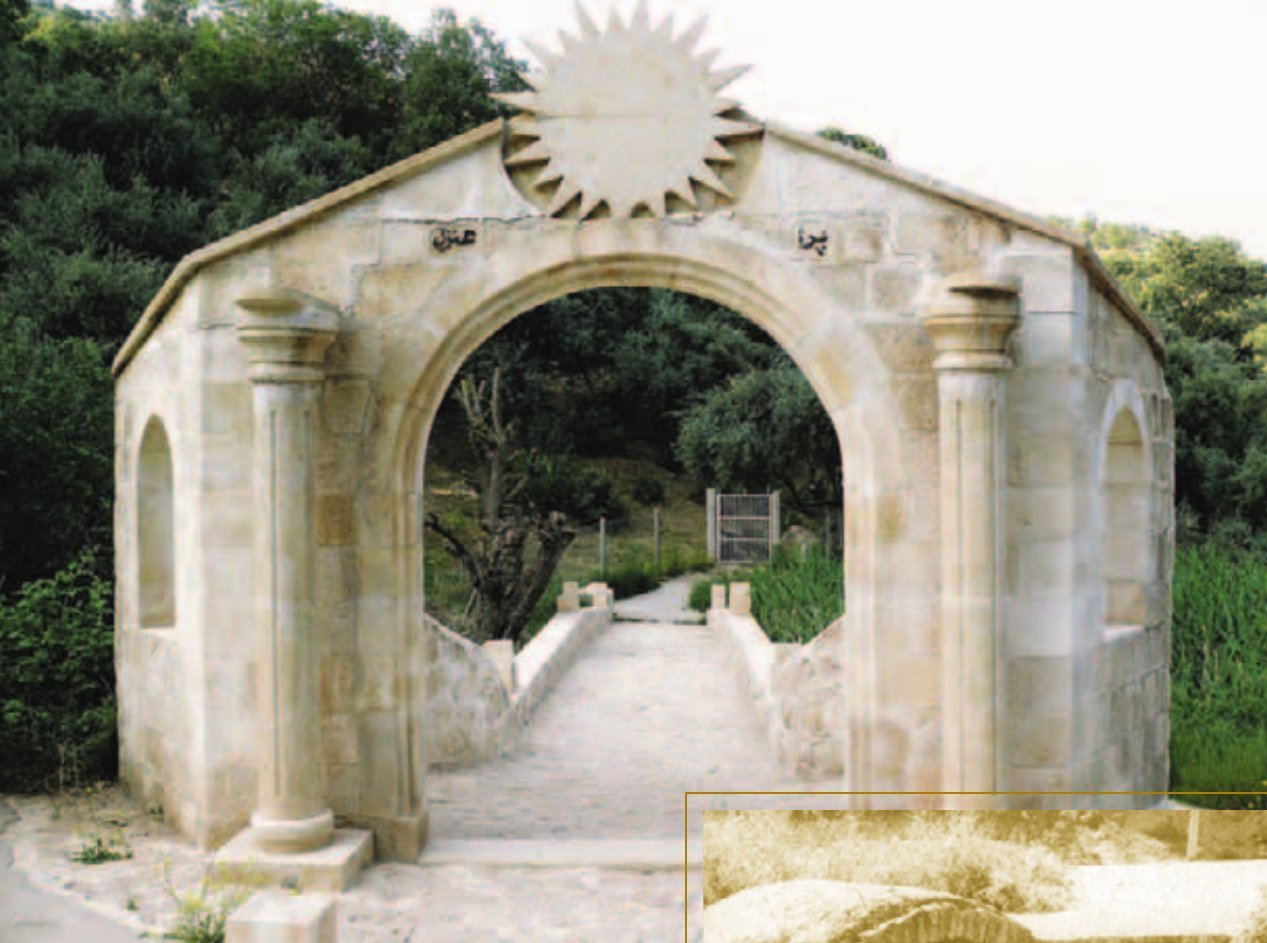
Head covered, threshold kissed
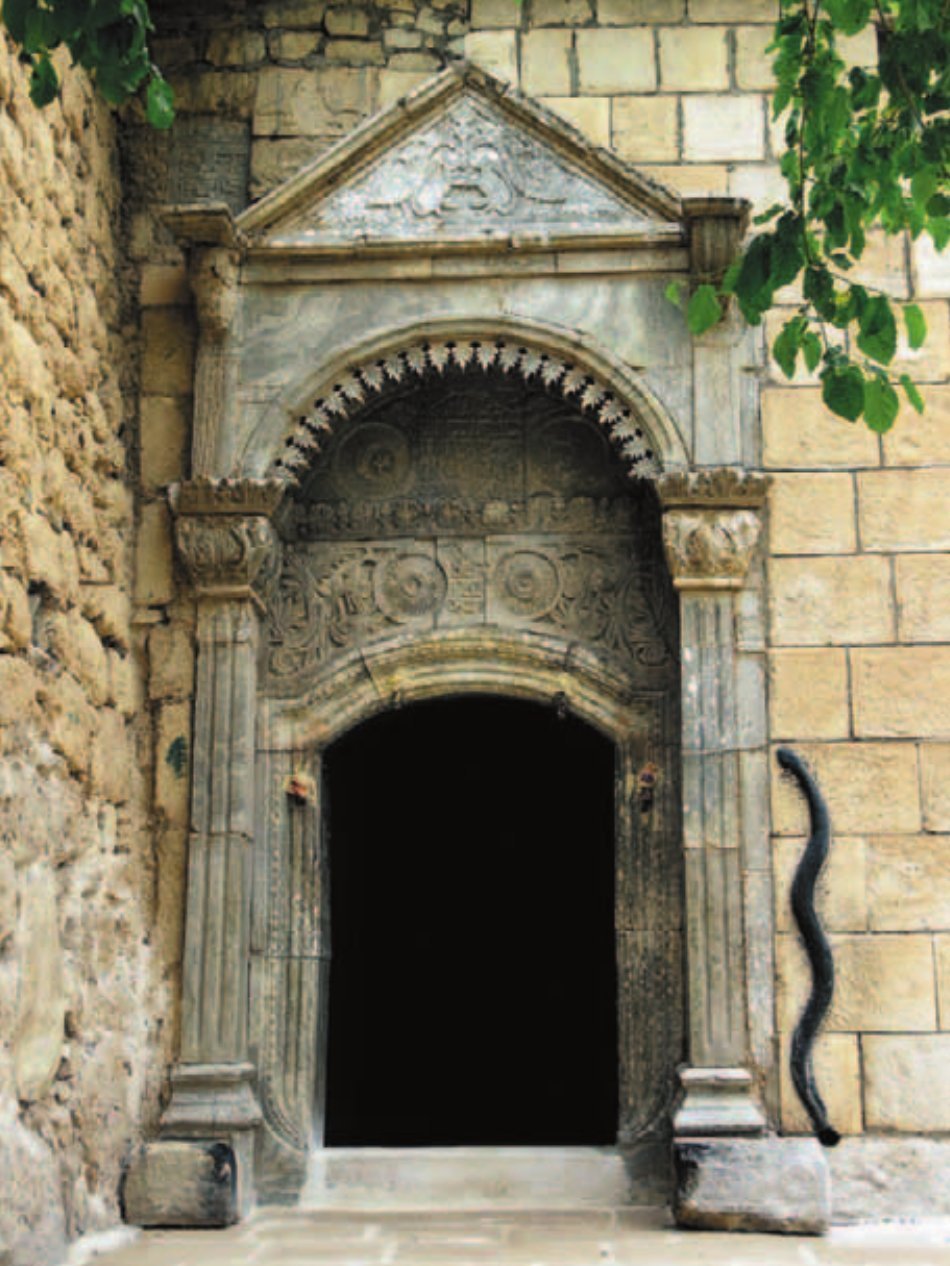
- One does not enter the sanctuary bareheaded (Lalişa Nûranî).
- One does not step on the threshold (derezûng, derçik or şêmîk) but steps over it and kisses threshold and door wall (Lalişa Nûranî).
- At the wick places (Nîşangeh) one kisses the soot-blackened spots (Nîşangeh and wicks).
Trees, animals and purity
- In the valley no trees may be felled and no branches cut; the servants fetch firewood from outside (Lalişa Nûranî). According to the English version, eating the olives is also forbidden, for their oil belongs to the lamps (Holy trees).
- According to Açıkyıldız, pilgrims take berries, leaves and fruits from the valley with them as having healing power.
- Drower observed in 1940: in the valley no one relieved himself, dogs were chased away, and no animal could be killed – a scorpion was carried out.
At the springs
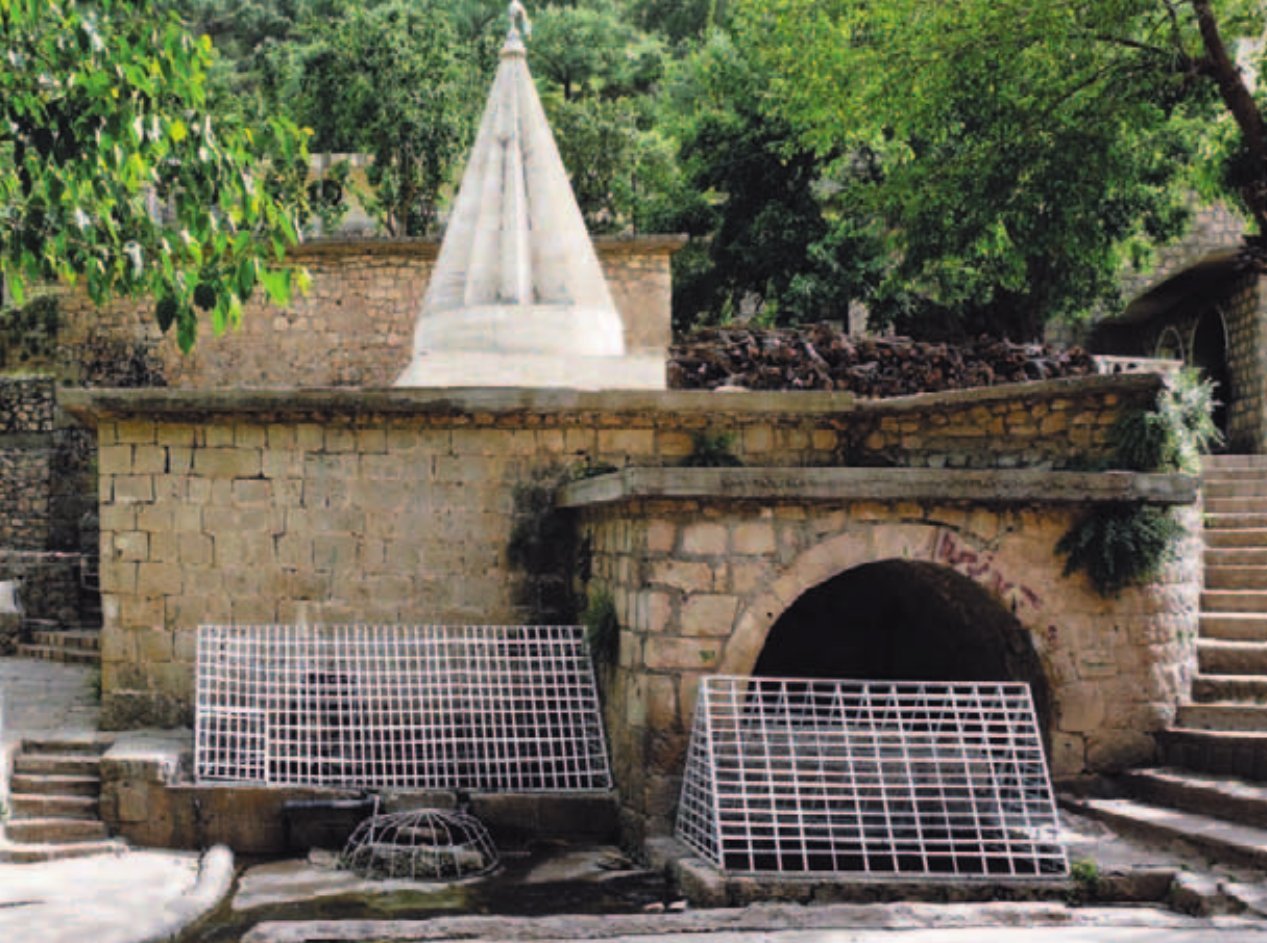
- The duty of every pilgrim is the Sela: one consecrates oneself in the water of the Kaniya Sipî and the Kaniya Zimzim, sprinkles oneself and speaks petitions for relatives (Lalişa Nûranî).
- In the Zimzim one rolls up one's trouser legs, steps into the water and moistens the eyes.
- Married couples do not go together to the Kaniya Sipî and the Zimzim, for there all men and women become brother and sister; men and women have separate entrances (Lalişa Nûranî).
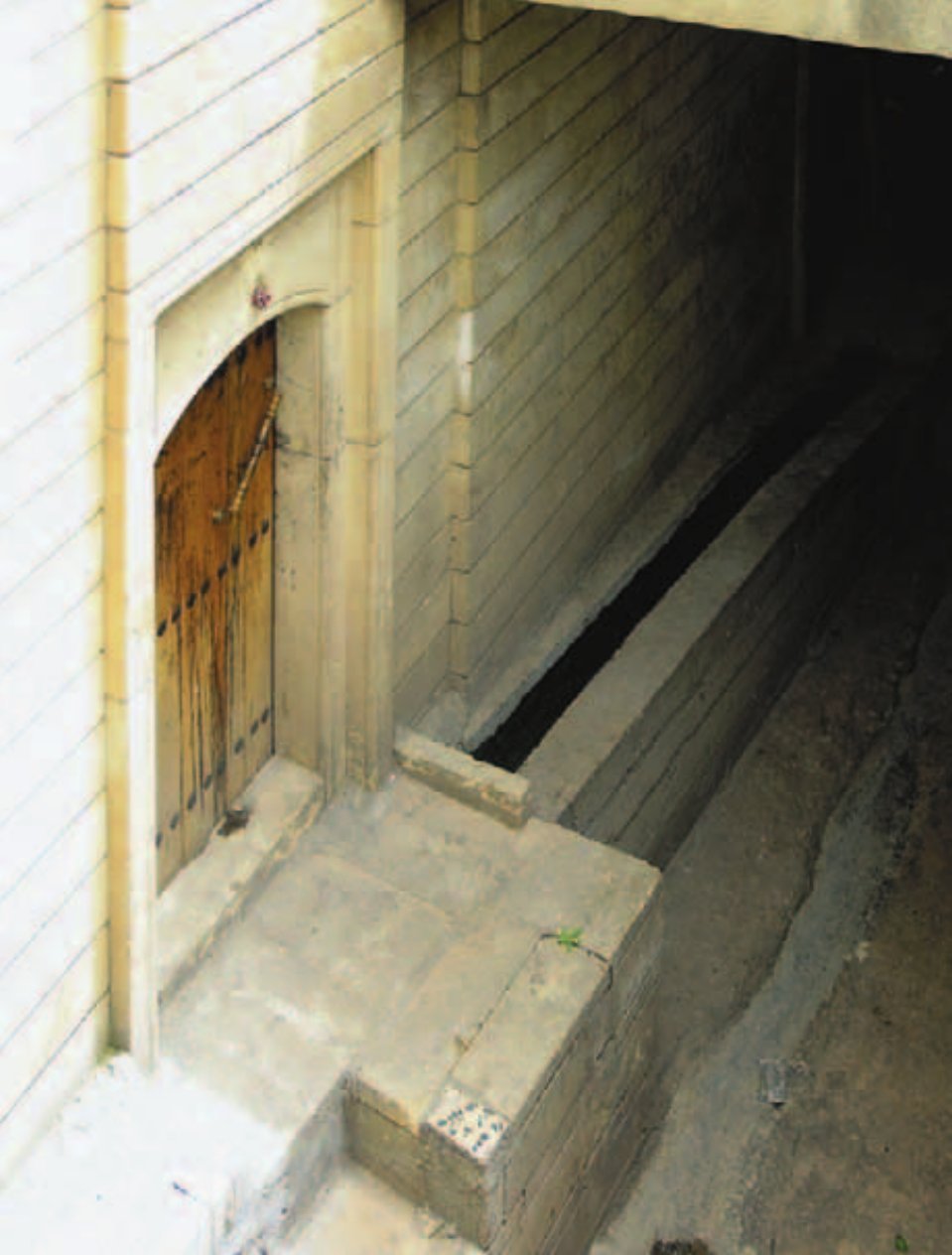
- Washing oneself and laundry are allowed only at the Kaniya Şivana, not at the holy springs (Other springs).
- In 1944 Edmonds saw many men with a white band over their turban: it is handed out for the visit to the two springs, dipped in the water and kept at home with the family treasures.
Gifts
Pilgrims bring oil, bread, sheep and cattle and things for the use of the servants (Lalişa Nûranî). The olive oil feeds the lamps (Hesin Dena), the animals are slaughtered as sacrifices and for the holy food (Gaykuj).
What one takes along
As a sign of the visit the Feqîr give the pilgrims a Berat, a small ball made from the earth of Lalîş, kneaded with the water of the Kaniya Sipî (Berat).
Sources
- S. A. Grigoriev, L. V. Ivasko, D. V. Pirbari (P’îr Dîma): Lalişa Nûranî / Святой Лалыш / Holy Lalish. Yekaterinburg: Basko 2008, p. pp. 17, 20–25, 30–37
- Philip G. Kreyenbroek, Khalil Jindy Rashow: God and Sheikh Adi Are Perfect. Sacred Poems and Religious Narratives from the Yezidi Tradition. Wiesbaden: Harrassowitz 2005, p. pp. 14–15, 38–39
- C. J. Edmonds: A Pilgrimage to Lalish. London (Royal Asiatic Society) 1967, p. p-022–023
- E. S. Drower: Peacock Angel. Being some Account of Votaries of a Secret Cult and their Sanctuaries. London 1941, p. pp. 150, 155, 174 (PDF 183, 190, 213)
- Birgül Açıkyıldız: The Yezidis. The History of a Community, Culture and Religion. London 2010, p. p. 129
- Dimitri Pirbari (P’îr Dîma), A. Ščedrovickij: Тайна жемчужины (The secret of the pearl). Moscow/Tbilisi 2016, p. p. 258
Found a mistake?
Is something wrong – a fact, a spelling, a source, an image? Let us know: we check every report and correct the article.
Other spellings: Ziyareti · Heci · Hedschi · Heji · Verhalten in Lalis · Verhalten in Lalisch · Verhalten in Lalish · Lalish · Lalisch · Lalesh · Sheikh Adi · Scheich Adi · Shaikh Adi · Şêxadî · Shikhadi · Faqir · Fakir · Barat · Eziden · Ezidis