
Ziyaret means both the holy site and the pilgrimage to it (Omarkhali 2023). The most important destination is Lalîş, the sanctuary with the tomb of Şêx Adî in northern Iraq. Every Ezidi should if possible make the pilgrimage there once in his life (Lalişa Nûranî; Şêx Mak’sîm). Whoever has been there is called Hecî (Pirbari). How a pilgrimage proceeds in practice – journey, accommodation, festival times – is described in Pilgrimage to Lalîş. Here the subject is the religious meaning.
Why Lalîş?
According to tradition, Lalîş is not just any temple, but a place where the whole history of salvation converges:
- Place of creation: here the leaven was thrown into the primordial sea so that the earth became solid. According to the hymns, the earth came to rest only when Lalîş came down from heaven; it is the "place of truth" (Lalişa Nûranî; Kreyenbroek). According to Şêx Mak’sîm, Lalîş is the first building on earth, a "house for the worship of the one God".
- Place of paradise: the garden of paradise lay in the valley of Lalîş; Adam lived there (Lalişa Nûranî; Pirbari).
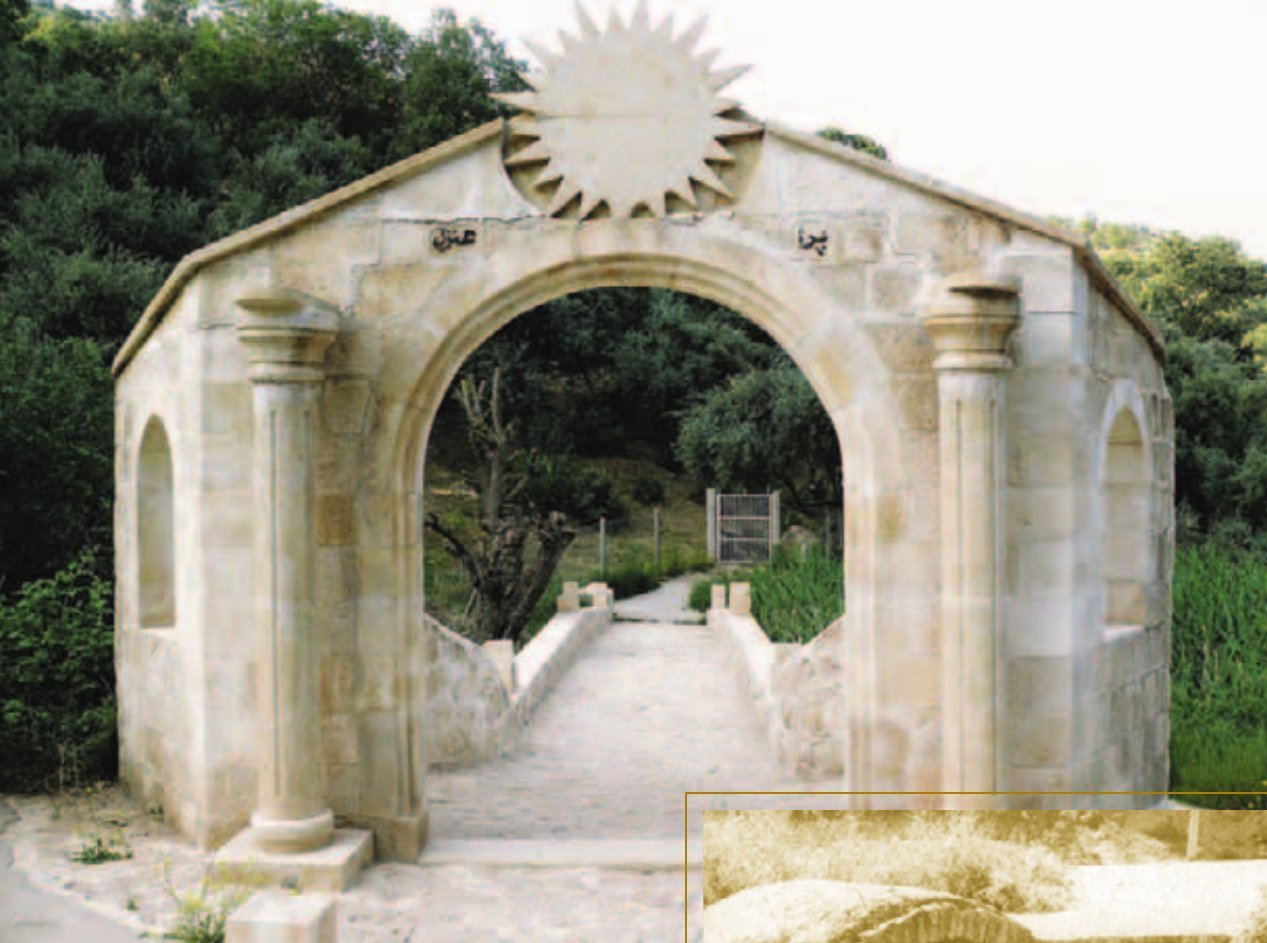
- Place of judgment: the souls of the Ezidis come to Lalîş after death. In front of the gate Dergê Mîr they are judged, then they cross the bridge Pira Selatê (Lalişa Nûranî; Pirbari). See The path of the soul.
- Image of heaven: the earthly Lalîş is regarded as the image of a heavenly Lalîş (Kreyenbroek).
More on the place: Lalîş – overview.
Lalîş and Mecca
Some places in Lalîş bear the names of holy places near Mecca: the spring Zimzim and the mountain Erefat. According to Kreyenbroek, this shows that Lalîş was formerly regarded as "identical in essence" with Mecca; the festivals Erefat and Şeva Berat also have Islamic counterparts. According to legend, Şêx Adî brought forth the Zimzim water from the rock with his staff (Kreyenbroek; Lalişa Nûranî). In the Qewlê Şêxadî û Mêra Lalîş is regarded as equal to Mecca (Pirbari).
At the same time the hymns draw a distinction: a good Ezidi, they say, has no business in the holy places of Islam (Kreyenbroek). In one narrative Şêx Hesen answers the demand to make the pilgrimage to Mecca: "Our pilgrimage goes to the Zimzim, to the cave, to the grotto and to the White Spring." Pirbari reports that besides Lalîş the Ezidis also respect Jerusalem and the Kaaba as the "old house of Abraham".
What the pilgrim does
The pilgrimage has fixed acts (Lalişa Nûranî; Kreyenbroek; Guest):
- Greeting from afar: whoever comes to Lalîş on the mountain path and reaches one of the greeting places (Silavgeh) sees the domes and must greet them. Formerly pilgrims fell down there and kissed the earth; according to Kreyenbroek, they fired guns and kissed a stone.
- Barefoot: before the bridge Pira Selatê one takes off one's shoes and enters the holy ground barefoot. According to Lalişa Nûranî, pilgrims cross the bridge three times running.
- Reverence: one does not enter the sanctuary bareheaded. One does not step on the threshold, but kisses threshold and wall. In the valley one cuts no branch and fells no tree.
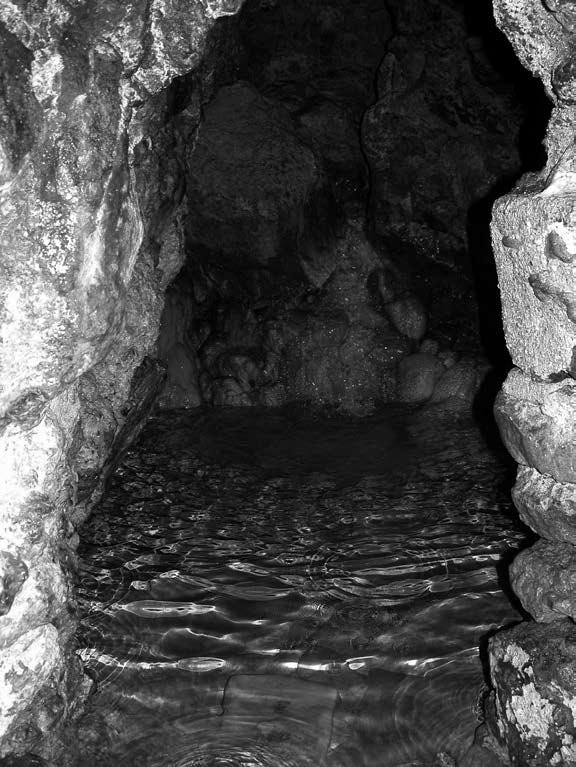
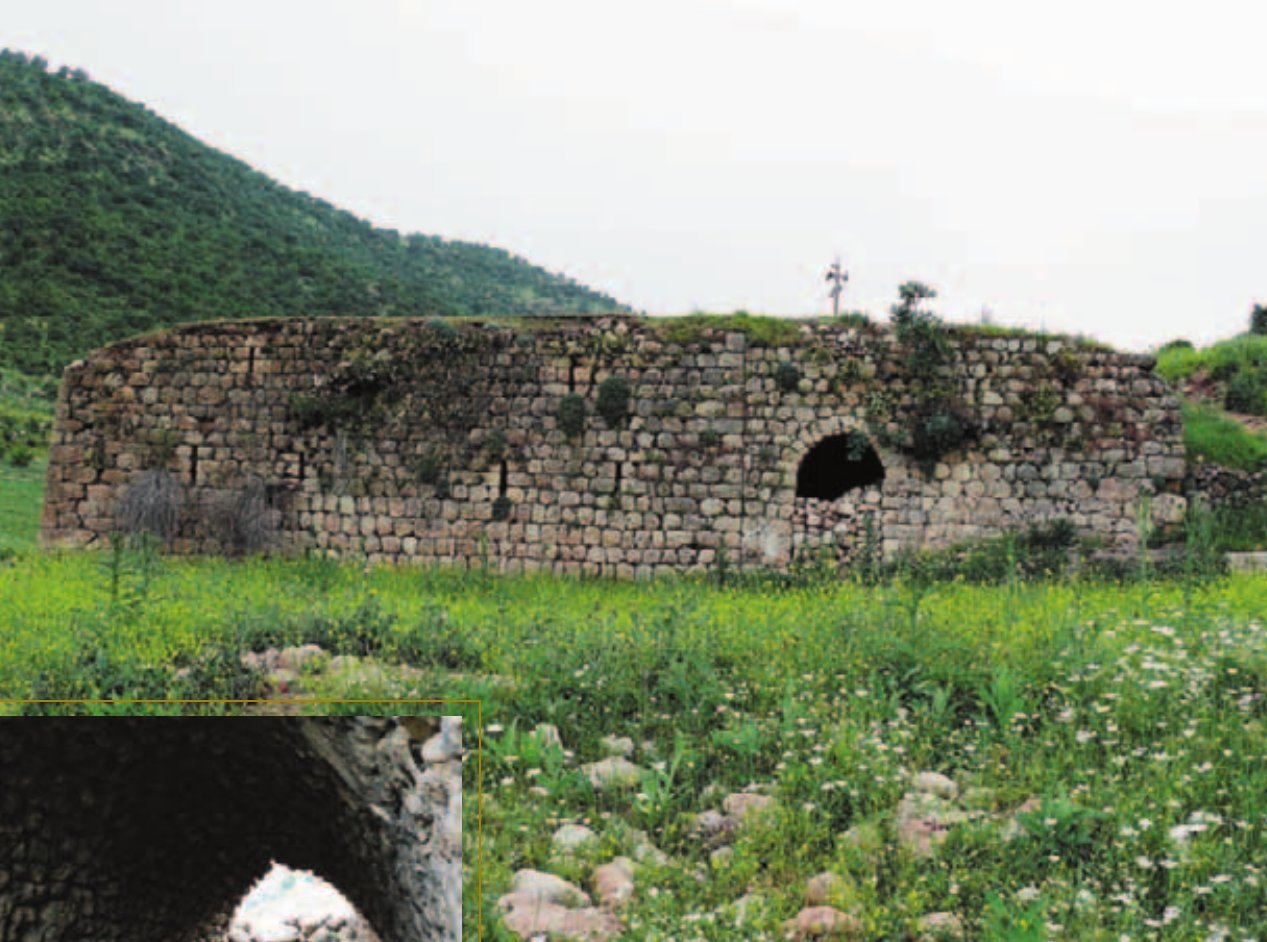
- Consecration with water: the duty of every pilgrim is the consecration in the water of the Kaniya Sipî and the Kaniya Zimzim. One sprinkles oneself and at the same time speaks requests for one's relatives, the Sela (see Mor kirin). In the Zimzim cave beneath the sanctuary one leans one's back against the rock wall – according to legend, Şêx Adî widened the cave in this way for forty doubting scholars.
- Lights and gifts: pilgrims bring oil, bread, sheep and cattle with them. In the evening wicks are lit at the holy spots.
- Holy earth: on departure a Feqîr gives the pilgrims the Berat, small balls of the earth of Lalîş, as a sign of their visit (see Berat and holy earth).
The pilgrimage has a prayer of its own, the Du’a ziyaretbûnê (Omarkhali 2023). According to Kreyenbroek, it says that God himself made the pilgrimage to the primordial Xerqe. According to Pirbari, the Qewlê Sibeyka Edewiya also deals with the pilgrimage to Lalîş.
When one makes the pilgrimage
The main time is the seven-day Festival of the Assembly (Cejna Cimayê) in autumn; Kreyenbroek names the annual pilgrimage to it. According to Lalişa Nûranî, it recalls the seven days of mourning after the death of Şêx Adî. Further pilgrimage times are the New Year festival, the end of the summer fast and the festival of Erefat (Omarkhali 2023; Kreyenbroek). On the festivals see Festival calendar.
Other pilgrimage destinations
Pilgrimages are also made to other sanctuaries: to that of the line of one's own Şêx, to sanctuaries with healing power and to the local festivals (Tiwaf) of the villages (Kreyenbroek; see Tiwaf). Şengal is regarded as the "seat of Şerfedîn" and a place of pilgrimage; a Beyt says that pilgrims should go only to Lalîş and to the seat of Şerfedîn (Kreyenbroek). People also make pilgrimages to the manuscripts of the P’îr families and to the graves of well-known experts (Omarkhali 2023).
Whoever cannot reach Lalîş finds a substitute today in new sanctuaries: in Armenia there is the pilgrimage day (roja ziyaretê) to the sanctuary in Şamiram, in Tbilisi since 2015 the Quba Siltan Êzîd. The clergy of Lalîş have blessed these buildings (Omarkhali 2023).
See also
- Rules for pilgrims · Ziyaret – visit and rules
- Pilgrimage to Lalîş (People & Culture)
Sources
- S. A. Grigoriev, L. V. Ivasko, D. V. Pirbari (P’îr Dîma): Lalişa Nûranî / Святой Лалыш / Holy Lalish. Yekaterinburg: Basko 2008, p. pp. 17, 20–25, 31–37, 85, 106–107, 160
- Philip G. Kreyenbroek, Khalil Jindy Rashow: God and Sheikh Adi Are Perfect. Sacred Poems and Religious Narratives from the Yezidi Tradition. Wiesbaden: Harrassowitz 2005, p. pp. 14–17, 21, 27, 33, 35, 38–39, 118–126, 178, 337
- Khanna Omarkhali: The religious textual tradition of the Ezidis – from the oral to the written. Saint Petersburg 2023 (Russian translation of the English original, Wiesbaden 2017), p. pp. 14, 21, 45, 91, 133, 248
- Dimitri Pirbari (P’îr Dîma), A. Ščedrovickij: Тайна жемчужины (The secret of the pearl). Moscow/Tbilisi 2016, p. pp. 16, 87, 183–193, 224, 258 (PDF)
- Şêx Mak’sîm (Maksim Ezdi): Grundpfeiler der Religion ScherfeDin, 2017 (on EZDIKI.COM in the Religion section and in the library), p. pp. 21–23, 36, 175 (PDF)
- John S. Guest: The Yezidis. A Study in Survival. London/New York 1987, p. p. 55
- Birgül Açıkyıldız: The Yezidis. The History of a Community, Culture and Religion. London 2010, p. p. 147
Found a mistake?
Is something wrong – a fact, a spelling, a source, an image? Let us know: we check every report and correct the article.
Other spellings: Ziyareti · Heci · Hedschi · Heji · Hedsch · Hej · Pilgerfahrt nach Lalis · Pilgerfahrt nadschh Lalisch · Pilgerfahrt najh Lalish · Dua ziyaretbune · Lalish · Lalisch · Lalesh · Sheikh Adi · Scheich Adi · Shaikh Adi · Shikhadi · Sheikh · Scheich · Shex