
The pilgrimage to Lalîş is one of the most important customs for the Ezidis. Lalîş in the Şêxan area north of Mosul is the only traditional religious center of the Ezidis and the burial place of Şêx Adî. According to Dmitrij Pirbari (2016), the Ezidis call the journey to Lalîş hec; every year Ezidis from various countries come there. A holy place to which one makes a pilgrimage is generally called ziyaret. This article describes the custom, not its religious significance.
Once in a lifetime
According to S. M. Polatov (2011), every Ezidi should, if possible, make the pilgrimage to Lalîş once in his life. Khanna Omarkhali (2005) writes that the pilgrimage should be made when it is possible; for many it is not possible today because of the distance. For the Ezidis in Armenia, Georgia and Russia it was hardly possible for a long time: under the Soviet Union there was no contact with Iraq, and the festivals in Lalîş were not celebrated there. Guest already reports that in the 19th century four clans in Transcaucasia were denied the pilgrimage and nomads were not allowed to cross the border.
When one makes the pilgrimage
| Time (eastern calendar) | Occasion |
|---|---|
| July 18–21 | Visit to the sanctuary of Şêx Adî, around the time of Çilê Havînê |
| September 23–30 or September 23 to October 1 | Cejna Cimayê (“festival of the assembly”), also Cejna Hecîyan (“festival of the pilgrims”) |
| first Wednesday in April | New Year in Lalîş |
The dates follow Omarkhali (2005 and 2023); on the calendar see Ezidi calendar. The Cejna Cimayê is the great seven-day pilgrimage festival. But pilgrims also come outside the festivals, for example for the healing of illnesses.
Arrival and stay
John S. Guest reproduces A. H. Layard's account of the festival of 1846:
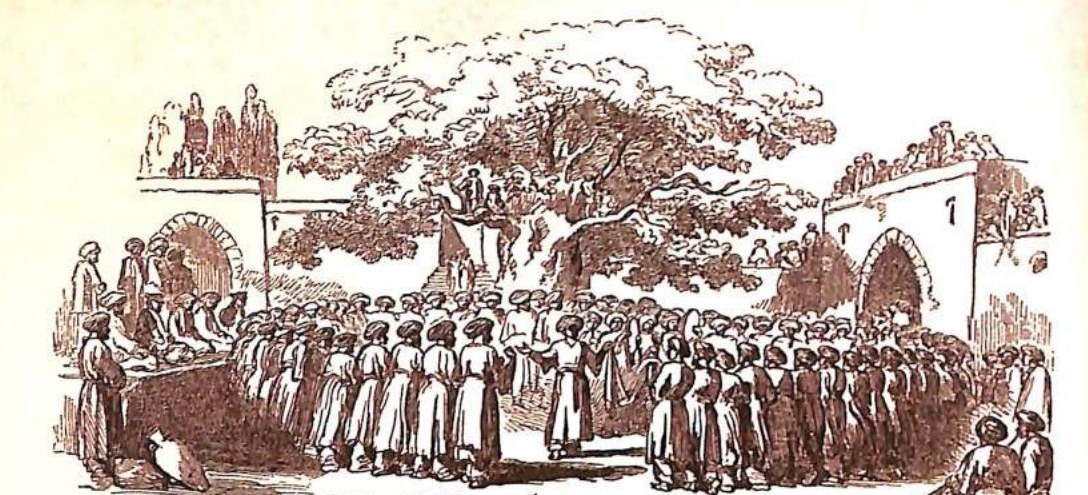
- The pilgrims went in a procession from Bacidrê to Lalîş. At the first sight of the domes there were celebratory shots and answering volleys, and each group called out the cry of its tribe.
- Before entering, every pilgrim washed himself and his clothes in the brook.
- About 5,000 people were assembled in the valley: mountain people from Şengal dressed in white, peasants of the plain of Mosul and colorfully dressed nomads.
- There was dancing to flute and tambourine.
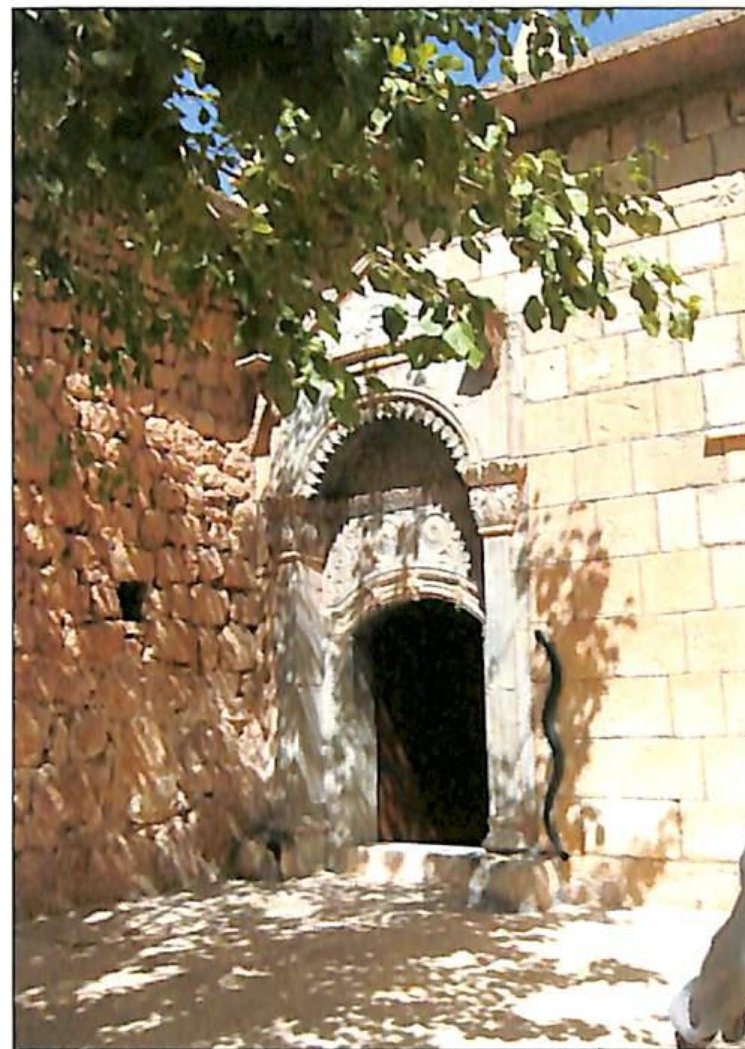
In 1894, too, according to a report in Guest, pilgrims kissed the door frames and the spring water. Before the inner courtyard one takes off one's shoes.
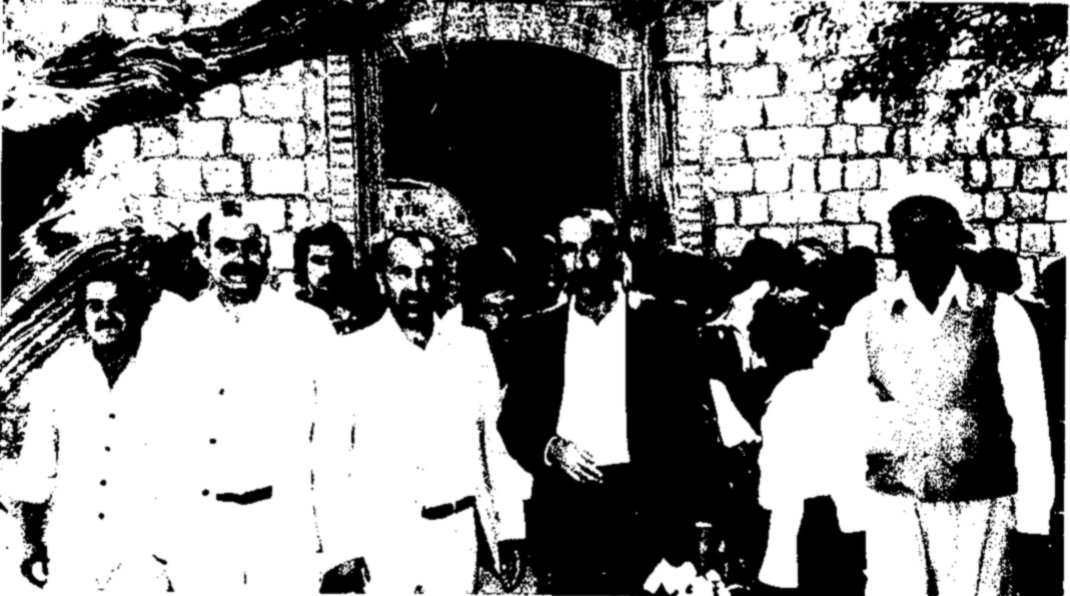
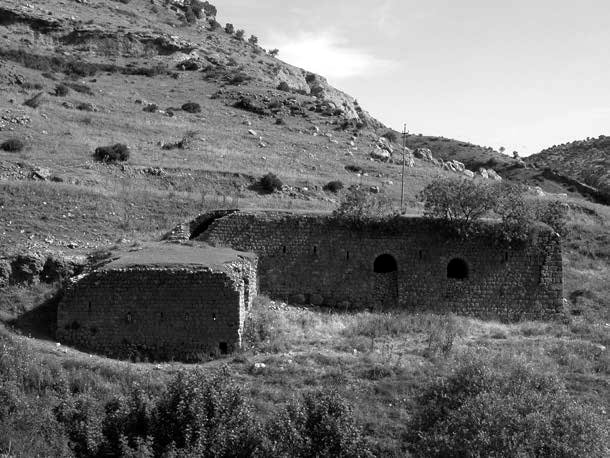
Small lodgings stand in the valley for the pilgrims: according to Guest, each tribe maintains houses of its own, and at great festivals there are also tents on the slopes. Polatov describes small mud houses on the slopes in which the pilgrims live on the feast days. In the outer courtyard traders offer haberdashery, jewelry, dried fruit and nuts.
Lamps and sacrifices
- Lamps: In the evening, according to Layard, Feqîr light lamps in walls, rock crevices and tree trunks; the pilgrims pass their right hand through the flame and then touch their eyebrow and lips.
- Sacrifices: At great festivals white bulls are slaughtered; according to Guest the meat is given to the poor. At the festival of Cejna Cimayê, according to Omarkhali (2005), a white bull is sacrificed at the sanctuary of Şêx Şems.
What pilgrims take with them
The Berat (also Glok Şêx Adî, “ball of Şêx Adî”) are small white or light green balls made from the light clay of the White Spring (Kaniya Sipî). Female servants of the sanctuary form them in Lalîş; the pilgrims take them home. Every Ezidi house should have one, and they are kept at the holy place of the house. Layard already saw in 1846 a box with such clay balls in the inner courtyard.
At the White Spring children are also consecrated (mor kirin). According to Omarkhali, a P’îr family from E’yn Sifni today brings its old manuscript scroll to Lalîş once a year, where it is “sealed” in the water of the spring.
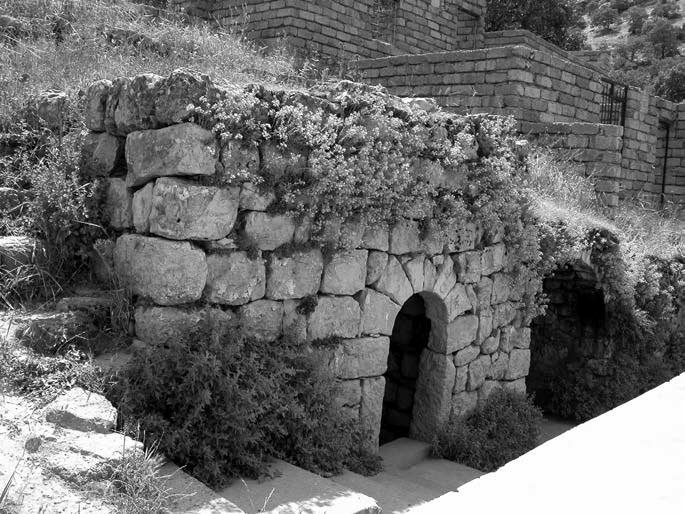
Endangered festivals
The festivals in Lalîş were repeatedly threatened by violence. In 1849 the assembly festival was less well attended because of raids; only a few armed pilgrims came from Şengal. After the attacks of 2007 the festivals of 2008, 2009 and later were reduced or canceled for security reasons (see Şengal 2007 and 2014).
Lalîş far away
Where the way to Lalîş is too far, new places of pilgrimage arose on its model: the sanctuary of Aknalich and the sanctuary in Şamiram in Armenia, as well as the sanctuary Quba Siltan Êzîd in Tiflis (2015, see Ezidis in Georgia). The clergy of Lalîş blessed the buildings in Armenia. Omarkhali expects that new customs will arise there on the model of Lalîş, such as the lighting of wicks; that is her assessment.
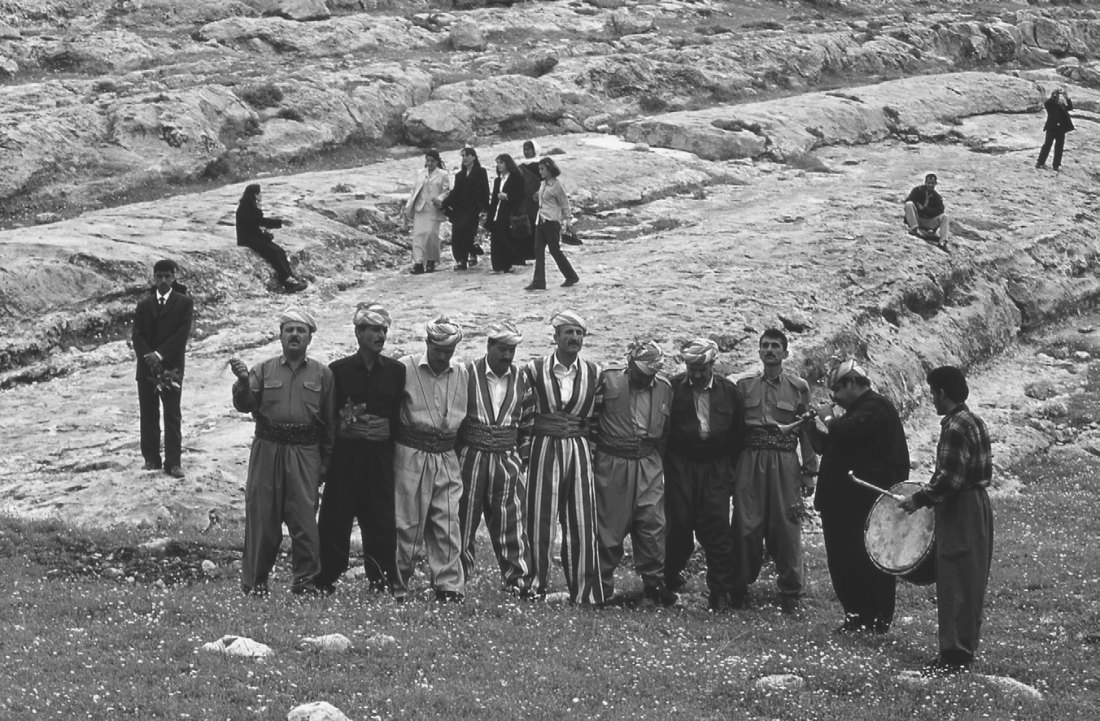
Conversely, Mîr Tahsîn Beg himself understood his journey to Armenia in 2012 as a pilgrimage in the footsteps of his predecessor.
Additions according to Layard (1846) and Drower (1940)
- Purification: According to Layard, no one may enter the valley without having cleansed body and clothes. In 1846 the pilgrims from Bacidrê washed in the village brook the day before, women and men separately; all others washed themselves and their clothes in the brook that comes out of the valley. Most wore white.
- Barefoot: The inner courtyard was entered barefoot; in 1846 many pilgrims went barefoot the whole time in the valley. According to Drower (1940), shoes were taken off at a whitewashed boulder on the pilgrims' path.
- Camp in the valley: Each group camped under a tree or on a roof, in the buildings of its district or tribe, and cooked for itself. Traders offered goods from Şengal, Amêdî, Basra and the mountains.
- The way: From Başîqa, pilgrims with a mule formerly needed two days to Lalîş (Drower).
- Gifts: Whoever had acquired at auction the office of servant (Kannas) of the sanctuary for a year lived on the gifts of the pilgrims – above all at the autumn festival (Drower).
- The course of the festival of 1846 is described in The festival in Lalîş 1846.
Berat according to the Ezidi school textbooks of Armenia
The textbooks by E’zîz T’amoyan and his co-authors describe the Berat in more detail and in part differently:
- Origin: According to the 2nd-grade textbook, Berat are formed from the earth of Lalîş with the water of the Kanîya Sipî; they are regarded as a “sign of the Ezidis” and a sacred object. According to a text by Bedelê Feqîr H’ecî in the 8th-grade textbook, the earth comes from a cave (Şikevta axa berat’a) between the buildings of Şêşims and Xatûna Ferxa: one goes in with candles or lamps through a narrow entrance, digs the earth, sifts it, forms it with water into little balls, salts it, and in the Feqîr families the Berat are shaped to the size of an olive. They are kept in the building Sitya Ês.
- Reconciliation: In a quarrel a Şêx or P’îr places a Berat between the parties; they pass it to one another on the Xerqe of a Feqîr.
- Illness: For the sick one prays with a Berat in the direction of Lalîş.
- Distribution: During the procession with the Tawis (see Sencaq and Tawûs-geran), Bavê Şêx, Bavê Pêşîmam and Bavê Gavan distribute Berat; Feqîr families give them to pilgrims as a sign of the pilgrimage.
- Everyday life: The fast is broken with Berat; they are also used to start yogurt.
The statement of the textbooks (earth from a cave, shaping in Feqîr families) and that of other sources (clay of the White Spring, female servants of the sanctuary; see above) perhaps describe different stages of the work; the sources do not clarify this.
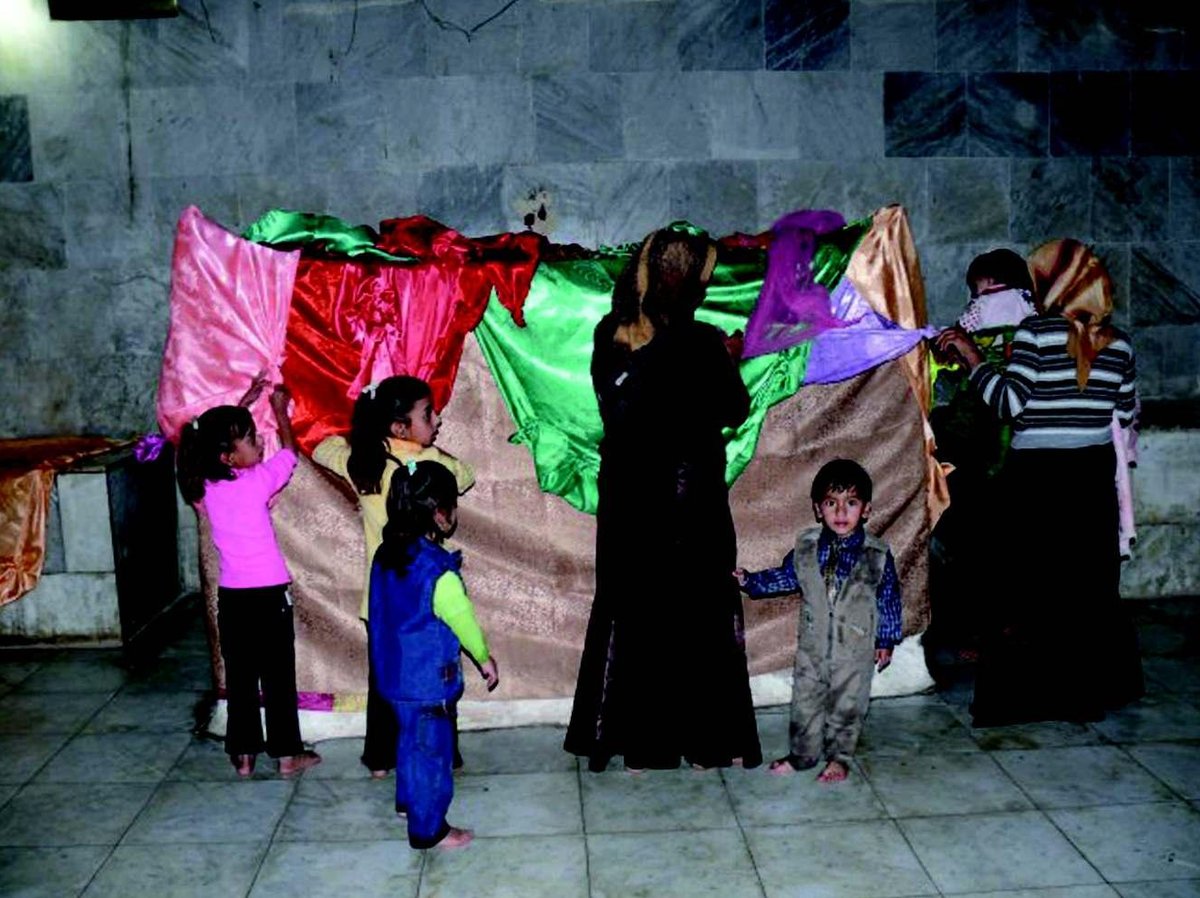
Sources
- Birgül Açıkyıldız: The Yezidis. The History of a Community, Culture and Religion. London 2010, p. illustrations
- Dimitri Pirbari (P’îr Dîma), A. Ščedrovickij: Тайна жемчужины (The secret of the pearl). Moscow/Tbilisi 2016, p. p-040, p-183
- Khanna Omarkhali: The religious textual tradition of the Ezidis – from the oral to the written. Saint Petersburg 2023 (Russian translation of the English original, Wiesbaden 2017), p. 14, 25, 48, 145–146, 247–248, 494–495, 519
- Khanna Omarkhali (Ханна Омархали): Йезидизм. Из глубины тысячелетий (From the depths of the millennia). Saint Petersburg 2005, p. 49, 63, 72, 98, 133–136
- John S. Guest: The Yezidis. A Study in Survival. London/New York 1987, p. 52, 58–59, 108, 112–115, 119–120, 185–186
- S. M. Polatov: Дети Солнца (Children of the Sun). Rybinsk 2011, p. 26, 34
- Austen Henry Layard: Nineveh and Its Remains, Vol. 1. London 1849, p. p. 279–286, 293 (PDF 332–339, 346)
- E. S. Drower: Peacock Angel. Being some Account of Votaries of a Secret Cult and their Sanctuaries. London 1941, p. p. 88, 146, 174 (PDF 111, 179, 213)
- E’zîzê E’mer, H’esenê Şêx-Me’mûdê: E’debyet û zimanê êzdîkî, grade 2. Yerevan: Spîka 2011, p. p-012
- E’zîzê E’mer, H’esenê Şêx-Me’mûdê: E’debyet û zimanê êzdîkî, grade 4. Yerevan: Spîka 2013, p. p-001 (ill.)
- E’zîzê E’mer, H’esenê Şêx-Me’mûdê: E’debyet û zimanê êzdîkî, grade 8. Yerevan: Spîka 2011, p. p-019–021
Found a mistake?
Is something wrong – a fact, a spelling, a source, an image? Let us know: we check every report and correct the article.
Other spellings: Glok Şêx · Hedsch · Hej · Cejna Cimaye · Dschejna Dschimaye · Jejna Jimaye · Cejna Heciyan · Dschejna Hedschiyan · Jejna Hejiyan · Glok Sex Adi · Glok Sheikh Adi · Glok Scheich Adi · Glok Sheikh Adî · Glok Sheikh · Glok Scheich · Glok Sex · Lalish · Lalisch · Lalesh · Shekhan