
The history of the sanctuary of Lalîş is closely connected with Şêx Adî, who lived here in the 12th century and is buried here. Since then Lalîş has been destroyed and rebuilt several times. Where the building originally comes from is disputed; the different traditions are set side by side below. A detailed building history with dates is in the article Lalîş (People & Culture).
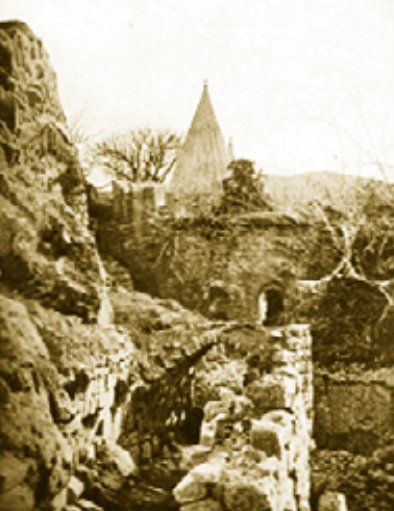
Şêx Adî in Lalîş
According to the photo book Lalişa Nûranî, Şêx Adî bin Misafir was born in 1073 (according to another statement 1078) and died in 1162 at about 90 years of age. He gathered the scattered Ezidis and gave them back their old sanctuary Lalîş, which had fallen into foreign hands. He lived with his companions in the valley; many of them are buried here. His sarcophagus stands under the highest dome (The main building and the tomb of Şêx Adî).
Arab historians of the Middle Ages already mention Lalîş in connection with Şêx Adî; the photo book names among others Ibn al-Athîr, Ibn Khallikân, Abû l-Fidâ, adh-Dhahabî, Ibn al-Wardî and al-Maqrîzî. According to al-Maqrîzî (d. 1442), the tomb of Şêx Adî was the direction of prayer of his early followers (Kreyenbroek). On his person see Şêx Adî.
Where does the building come from? – versions side by side
| Version | Content | Source |
|---|---|---|
| Ezidi tradition | Christians had taken Lalîş from the Ezidis and made it a church. Şêx Adî took it back in the 12th century. He found a monk Mar Hena there, who agreed – on the condition that he could stay in Lalîş with the Ezidis. | Lalişa Nûranî, pp. 24/27 |
| Christian tradition | According to a text by the Assyrian-Chaldean priest Ram Îşo, Lalîş was a Christian monastery (according to the English version built in the 7th century) that the Ezidis under Şêx Adî supposedly took over by force. | Lalişa Nûranî, pp. 24/27 |
| Sun temple | The historian George Habib considers the Christian version wrong: Lalîş was never a church but a temple of the sun worshippers or of Mithras. | Lalişa Nûranî, pp. 24/27 |
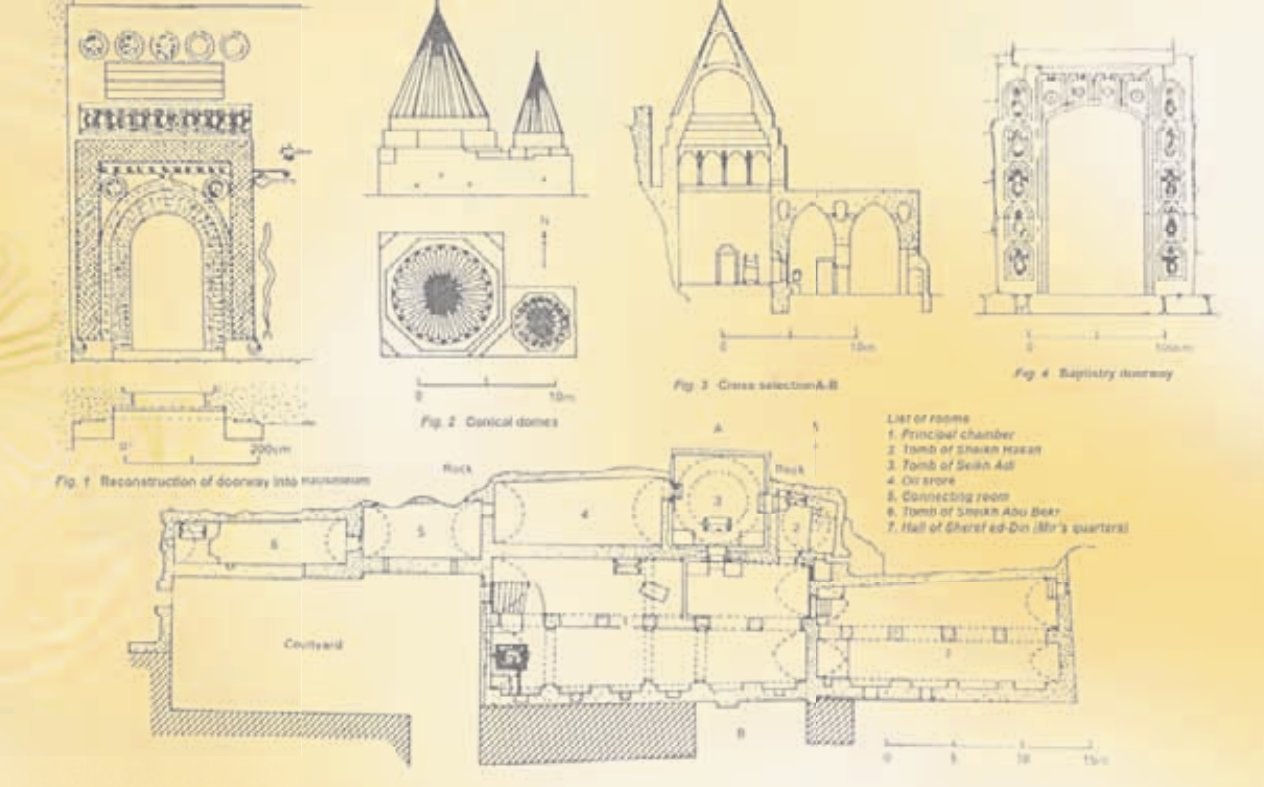
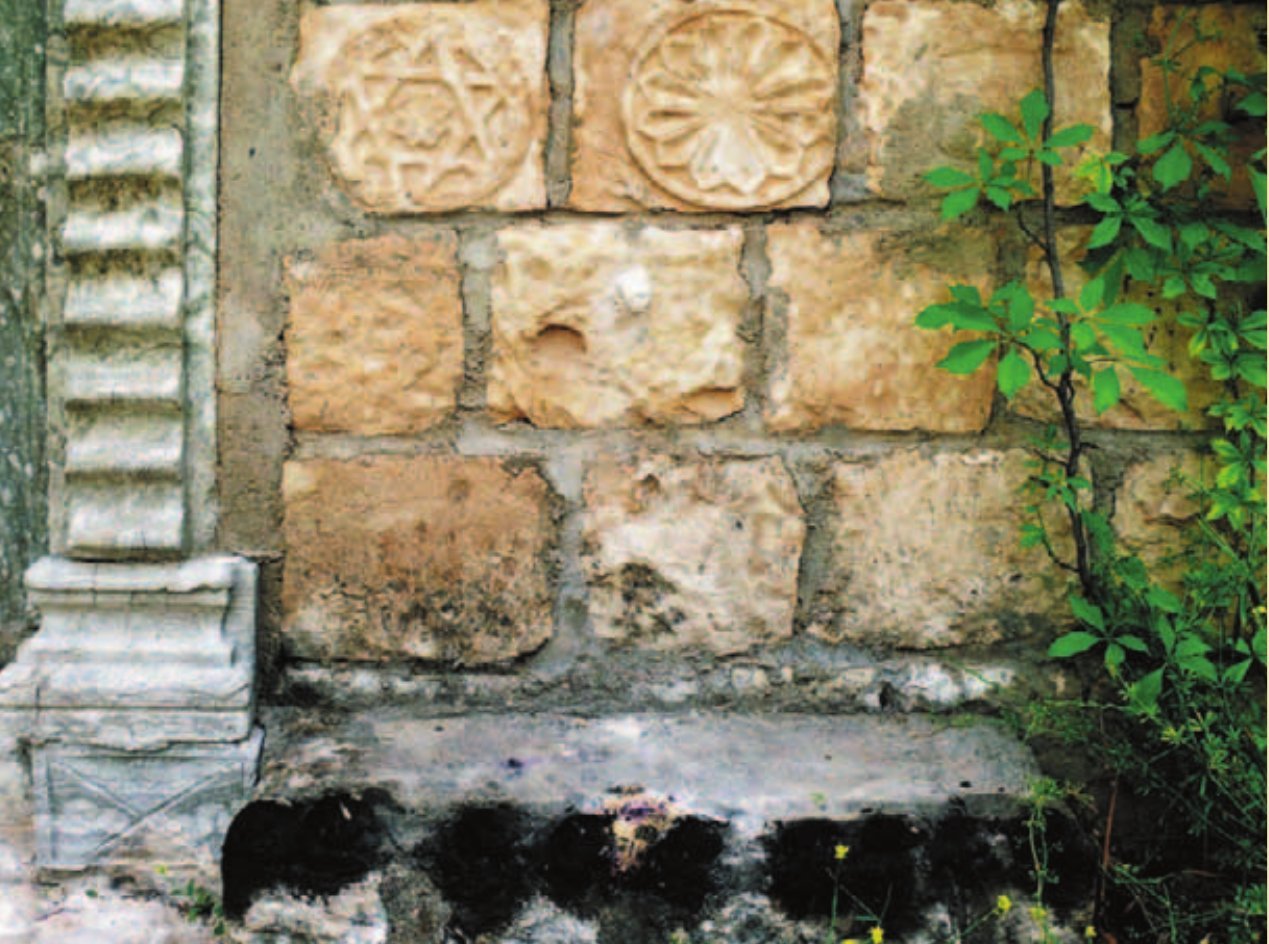
| Distinct Ezidi building style | W. A. Wigram emphasized the peculiarity of the domes; the signs on the walls were very old and not Christian. | Lalişa Nûranî, pp. 24/27 |
| Monastery before Şêx Adî | Kreyenbroek writes that Şêx Adî took over an originally Christian monastery (dêr); "Hena and Mar Hena" were Christian monks in Lalîş before him. | Kreyenbroek, pp. 32, 217, 283 |
| Hermitage | Açıkyıldız found no architectural traces of a church. According to her, the Christian texts mean a different Adī, the location does not fit, and scholars consider them forgeries. According to her, the complex grew out of the hermitage of Şêx Adî, today's cave Çilexane. | Açıkyıldız, pp. 153–156 |
In Lalîş a wick place with the name "Hena û Merhena" commemorates the monks (Lalişa Nûranî, list of wicks). According to Kreyenbroek, the Bavê Çawîş, the permanent keeper of the sanctuary, by tradition represents Mar Hena.
Destructions
- Abbasids: according to the photo book, the Abbasids led punitive campaigns against the Ezidis; Lalîş was repeatedly destroyed by Muslims.
- 13th century – Bedredîn Lûlû: the Atabeg of Mosul attacked the Ezidis, captured their leader Şêx Hesen, burned Lalîş and set fire to the sarcophagus of Şêx Adî (Lalişa Nûranî). Kreyenbroek dates the execution of Şêx Hesen with 200 followers and the burning of the bones of Şêx Adî to 1254.
- 19th century – Medrese: the Ottomans turned Lalîş into a Quran school (Medrese) for some years. Under pressure from European missions and – according to the English version – an Ezidi uprising, it was given back (Lalişa Nûranî). The exact years (1890 or 1892 to 1904, 1907 or 1908) differ in the sources; see the article in People & Culture.
The seven sons of the old woman
One tradition recalls the persecution by Bedredîn Lûlû: Şêx Hesen hid in the house of an old woman. Her seven sons fought against the soldiers and were all killed. At the Dergê Mîr wick places commemorate them (Lalişa Nûranî, pp. 83, 203).
Lalîş in old depictions
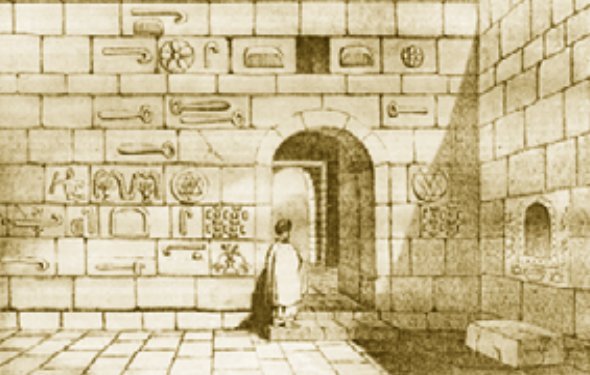
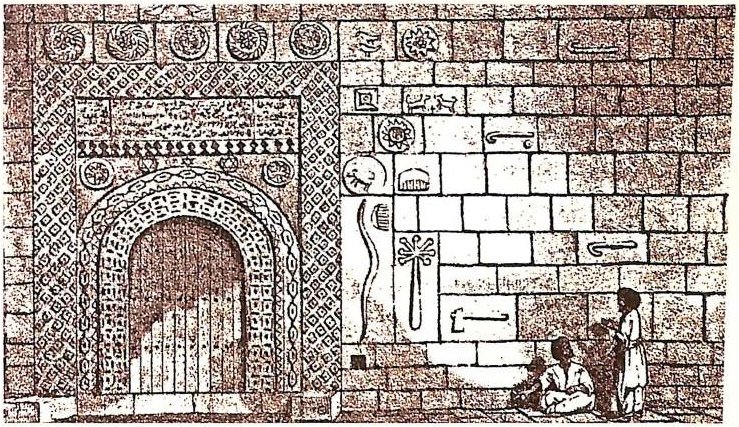
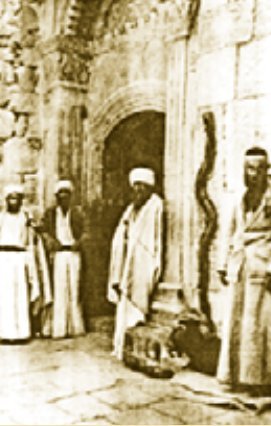
European travelers of the 19th century drew the sanctuary. The drawings by George Percy Badger show the two gates as they looked before the renovation in the 20th century.

Recent times
According to the photo book, the Mîr is responsible for the renovation and construction of the holy places of Lalîş; he pays for them from the revenues of Lalîş and of the Tawis (Mîr). Many buildings have been renewed in recent decades: the Pira Selatê around 1980 and 2004 (Pira Selatê), and the Nîşangeh of Pîr Mend in front of the Dergê Mîr was newly erected "a few years ago" (Domes).
Sources
- S. A. Grigoriev, L. V. Ivasko, D. V. Pirbari (P’îr Dîma): Lalişa Nûranî / Святой Лалыш / Holy Lalish. Yekaterinburg: Basko 2008, p. pp. 4, 6–9, 22–27, 83, 202–203
- Philip G. Kreyenbroek, Khalil Jindy Rashow: God and Sheikh Adi Are Perfect. Sacred Poems and Religious Narratives from the Yezidi Tradition. Wiesbaden: Harrassowitz 2005, p. pp. 4, 11 (n. 23), 14, 32, 217 (n. 145), 283 (n. 44)
- Birgül Açıkyıldız: The Yezidis. The History of a Community, Culture and Religion. London 2010, p. pp. 153–157
- Dimitri Pirbari (P’îr Dîma), A. Ščedrovickij: Тайна жемчужины (The secret of the pearl). Moscow/Tbilisi 2016, p. pp. 25, 42 (ill.)
Found a mistake?
Is something wrong – a fact, a spelling, a source, an image? Let us know: we check every report and correct the article.
Other spellings: Baugeschichte Lalis · Baugesdschhidschhte Lalisch · Baugesjhijhte Lalish · Baugeschicht Lalis · Baugesdschhidschht Lalisch · Baugesjhijht Lalish · Baugeschicht Lalîş · Ram Iso · Ram Ischo · Ram Isho · Lalish · Lalisch · Lalesh · Sheikh Adi · Scheich Adi · Shaikh Adi · Şêxadî · Shikhadi · Mossul · Mûsil