
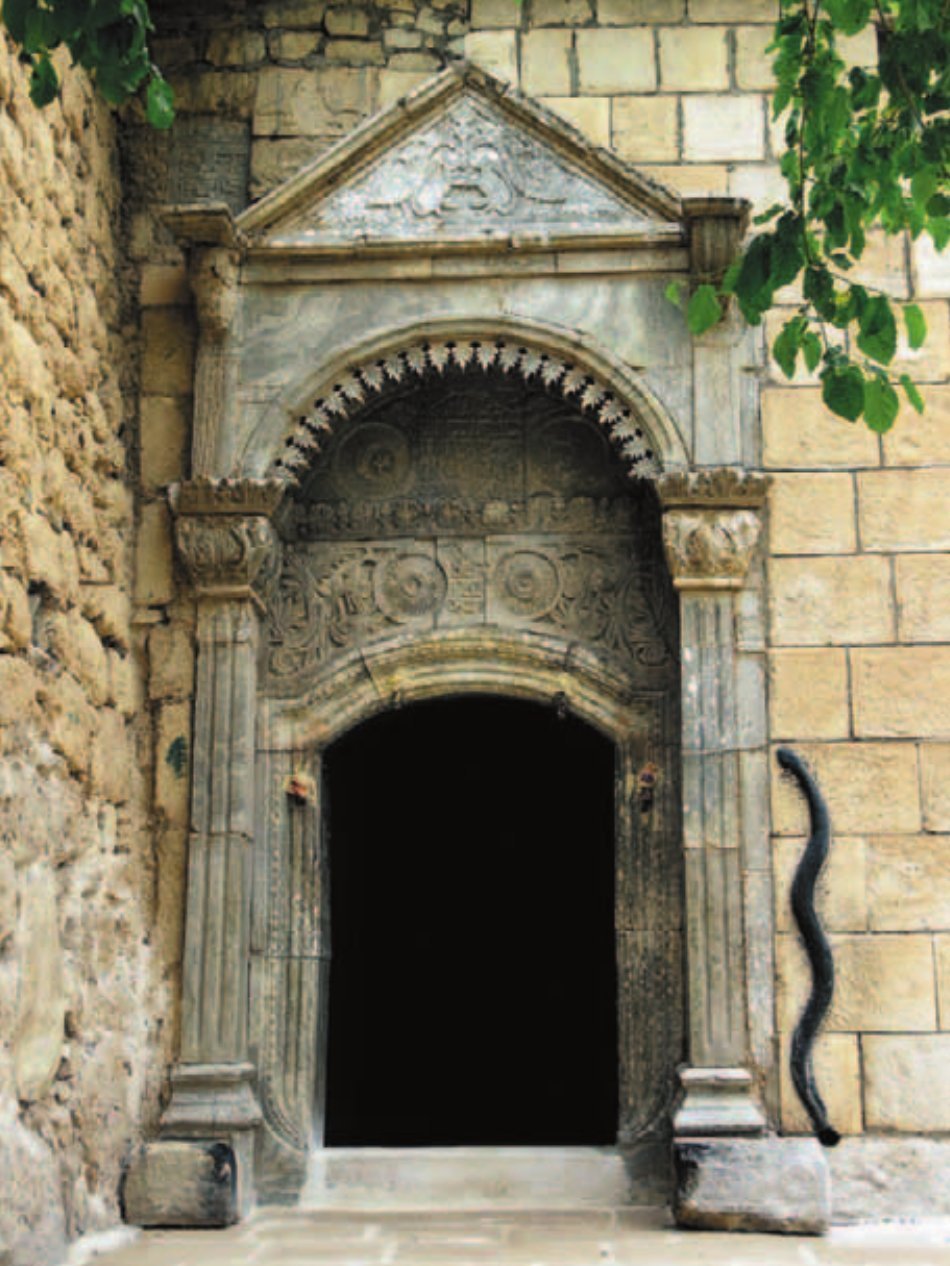
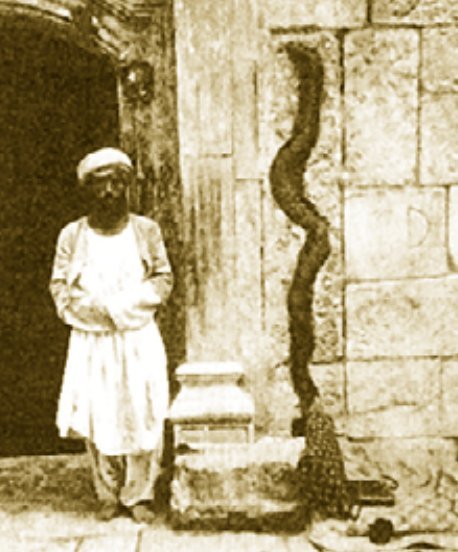
The Dergê Şîxadî ("gate of Şîxadî", i.e. of Şêx Adî), also called Derê Qapîyê, is the portal through which one steps from the courtyard Celsa Şîxadî into the hall of the main building. It is the most richly decorated gate of Lalîş. To its right on the wall stands the large black snake, probably the best-known sign of the sanctuary.
The portal
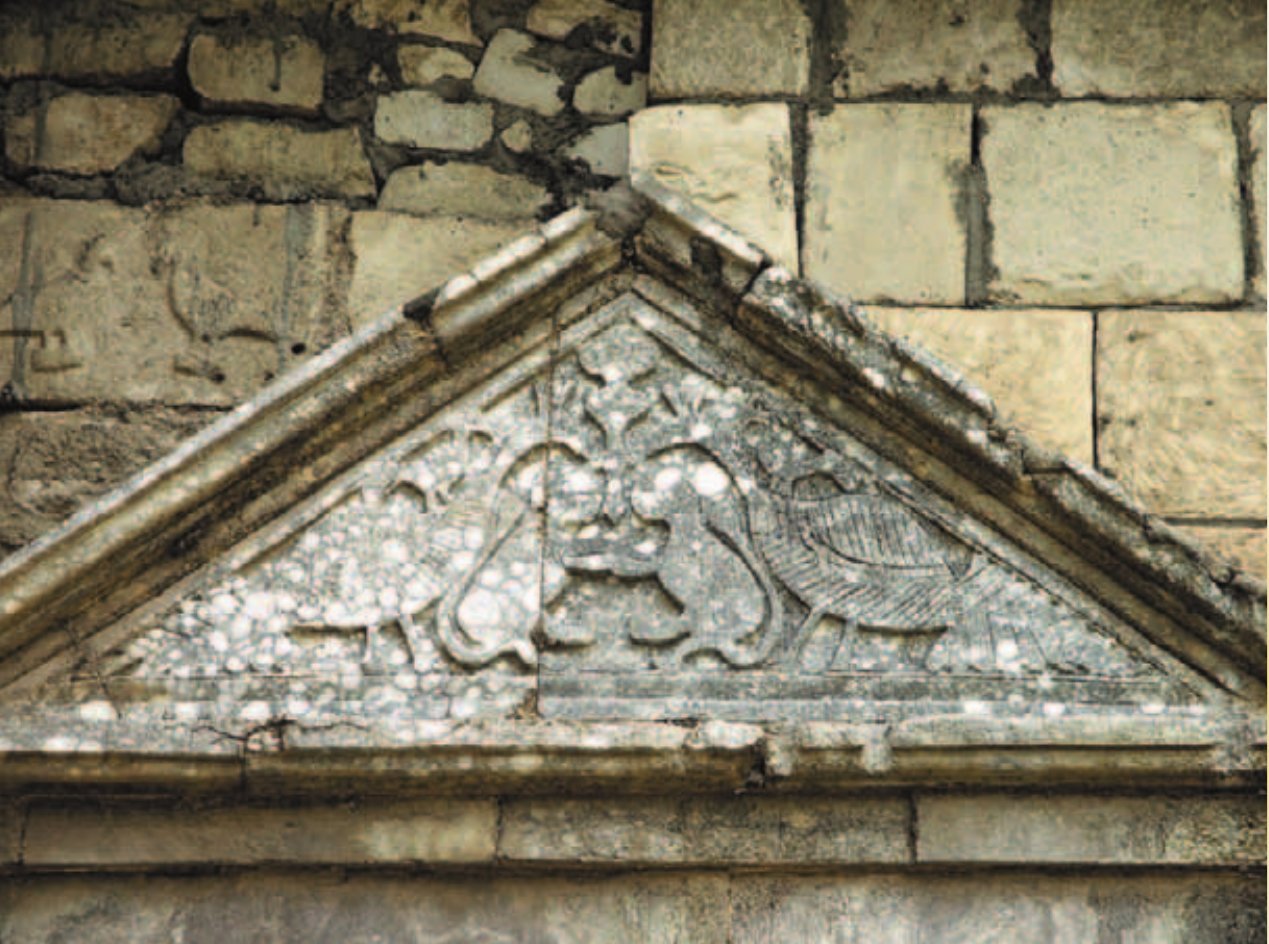
The gate has a round arch, above it a tympanum with a scalloped arch and rosettes in relief, and at the very top a triangular gable. According to Açıkyıldız, the gable shows two peacocks facing each other, in front of each a small lion with a smaller bird on its back. Two fluted columns with acanthus capitals frame the door.
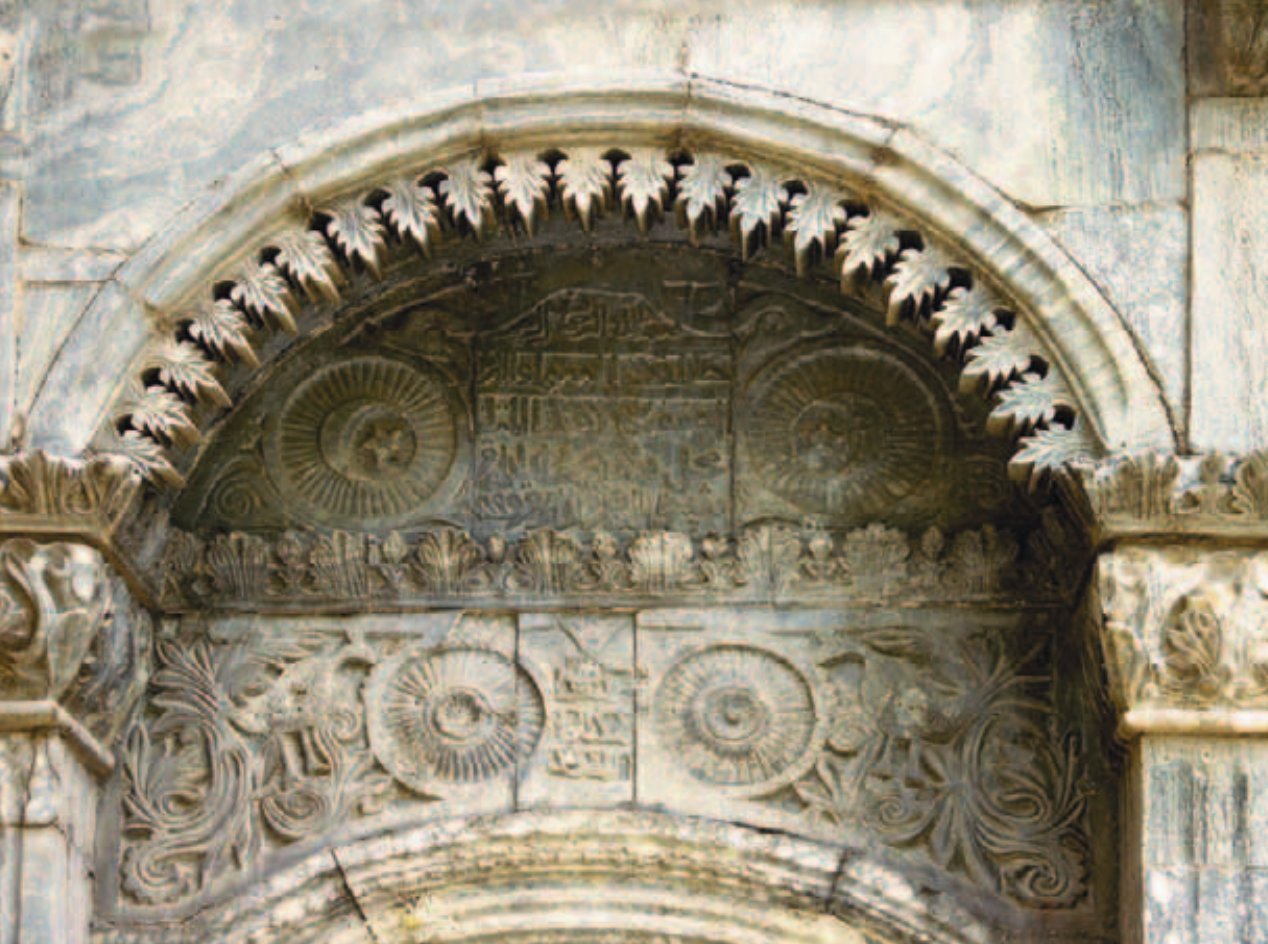
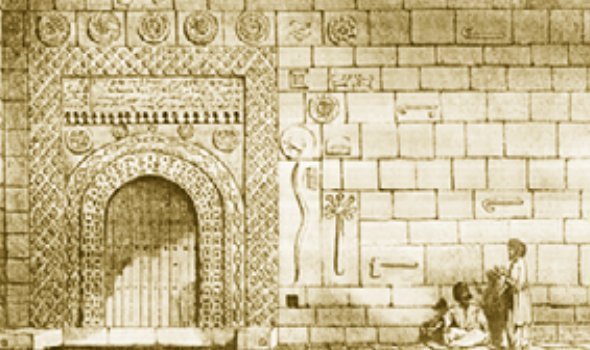
In the tympanum there is an Arabic inscription with a plea for protection for the place of Şêx Adî and the year 695 of the Hijra (1295/96). According to Açıkyıldız, however, it sits on a gate that was only renewed between 1911 and 1928. What the older portal looked like is shown by the drawing by G. P. Badger from the 19th century.
The black snake
On the right doorpost a large, vertical black snake runs up the wall. In 1944 Edmonds saw it freshly blackened with oil soot; it is therefore regularly recolored. Açıkyıldız considers it original, while other relief stones on the wall are probably reused.

What the snake means is explained in different ways:
- According to the tradition in the Qewls, as Kreyenbroek summarizes it, the King traveled with the archetypes of all creatures on a ship across the primordial sea. The ship sprang a leak, and a snake coiled itself into it and saved the ship. This is said to explain the special position of the snake.
- According to the photo book Lalişa Nûranî, the snake is a protector of the house and is therefore depicted on doors and gates; it is also considered the guardian of the world tree. The authors base this interpretation on general symbol research (A. Golan).
- According to Açıkyıldız, the snake is considered the sign of Şêx Mend, who protects against snakebites; that is why his sanctuaries, too, bear a vertical black snake (cf. the sanctuary of Şêx Mend in Êsivn, Surroundings).
More on the signs on the walls: Symbols on the walls.
Threshold and service
The threshold is not stepped on but kissed (Rules for pilgrims). According to the English version of Lalişa Nûranî, a Feqîr serves at the main gate.
The gate in the Sema
At the Sema on the evening of the great festivals, a Feqîr in a black Xerqe goes into the sanctuary, puts on the garment of Şîxadî – Tac û hil, cap and hair shirt – and steps out through the Derê Qapîyê; everyone stands up. At the end he returns to the gate and kisses the threshold, and the crowd kisses the garment of Şîxadî (Lalişa Nûranî). → Sema, Lalîş in the festival year
Sources
- S. A. Grigoriev, L. V. Ivasko, D. V. Pirbari (P’îr Dîma): Lalişa Nûranî / Святой Лалыш / Holy Lalish. Yekaterinburg: Basko 2008, p. pp. 16, 20–31, 64–66, 182–183
- Birgül Açıkyıldız: The Yezidis. The History of a Community, Culture and Religion. London 2010, p. pp. 148–149, 153, 157–158
- Philip G. Kreyenbroek, Khalil Jindy Rashow: God and Sheikh Adi Are Perfect. Sacred Poems and Religious Narratives from the Yezidi Tradition. Wiesbaden: Harrassowitz 2005, p. pp. 29–30
- C. J. Edmonds: A Pilgrimage to Lalish. London (Royal Asiatic Society) 1967, p. p-025
Found a mistake?
Is something wrong – a fact, a spelling, a source, an image? Let us know: we check every report and correct the article.
Other spellings: Qapiya Şêx · Tor Şêx · Dere Qapiye · Der Qapiye · Der Qapîyê · Deriye Kapi · Deriy Kapi · Derîy Kapî · Dar Kapi · Qapiya Sex Adi · Qapiya Sheikh Adi · Qapiya Scheich Adi · Qapiya Sheikh Adî · Tor Sex Adis · Tor Sheikh Adis · Tor Scheich Adis · Sheikh Adi · Scheich Adi · Shaikh Adi · Şêxadî