
The valley of Lalîş is rich in water. Among the springs of Lalîş (Kaniyên Lalişê), the photo book Lalişa Nûranî lists further ones besides the two great ones – Kaniya Sipî and Kaniya Zimzim. Each has its own task.
Kaniya Kulava
A spring in the courtyard at which, according to the English version of the photo book, the holy objects are washed. It has its own wick place in the list of wicks.
Kaniya Şivana – the shepherds' spring
A small spring near the tree Dara Zergûz and – according to the English version – the Pira Selatê. Here one may wash laundry and bathe, because the holy water of the Kaniya Sipî and the Zimzim must not be used for this (Lalişa Nûranî).
Kaniya Berbaykê
It flows clear down from the mountain Mişrûgîya to near the old hostel Xana Êzîd. People go to it for êşa bê, rheumatic ailments; the English version says more generally "for some illnesses" (Lalişa Nûranî). → Mountains and greeting places
Birka Kawetir
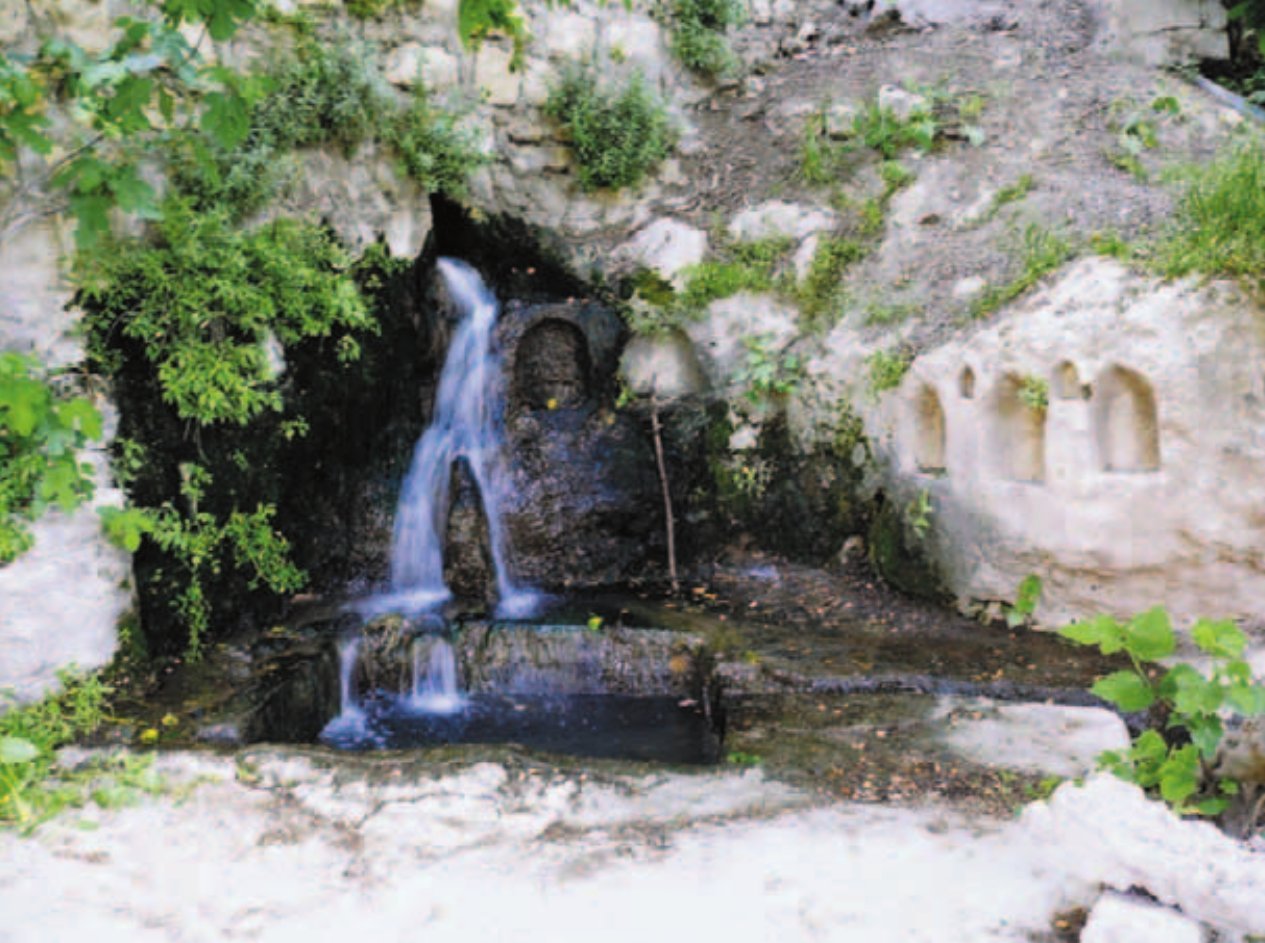
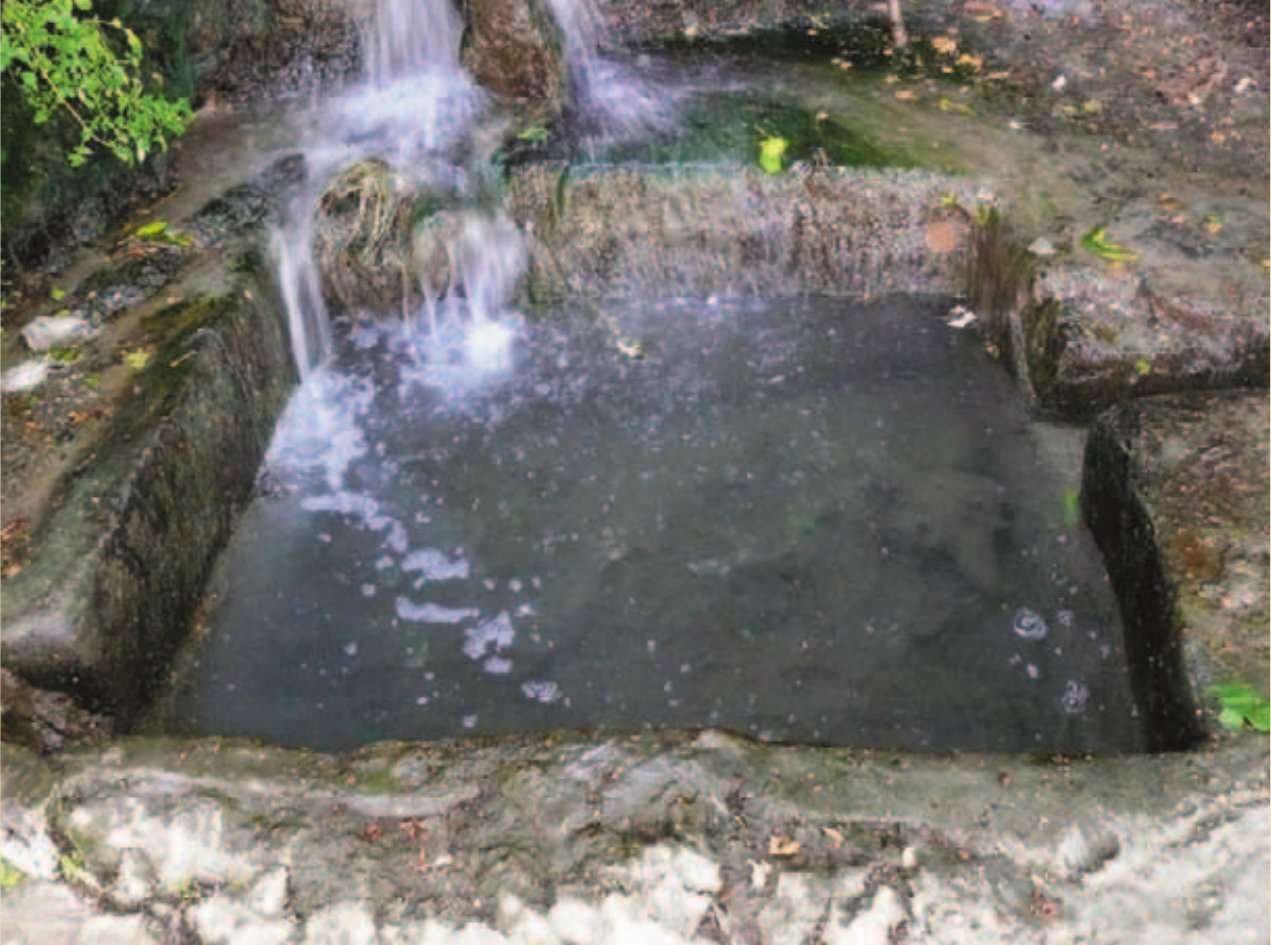
A waterfall over mossy rocks and a stone basin: the Birka Kawetir (also Wersikê Kawetir). According to the photo book, Kawetir was a Feqîr in Lalîş who often sat here.
Kanîzerk – the golden spring
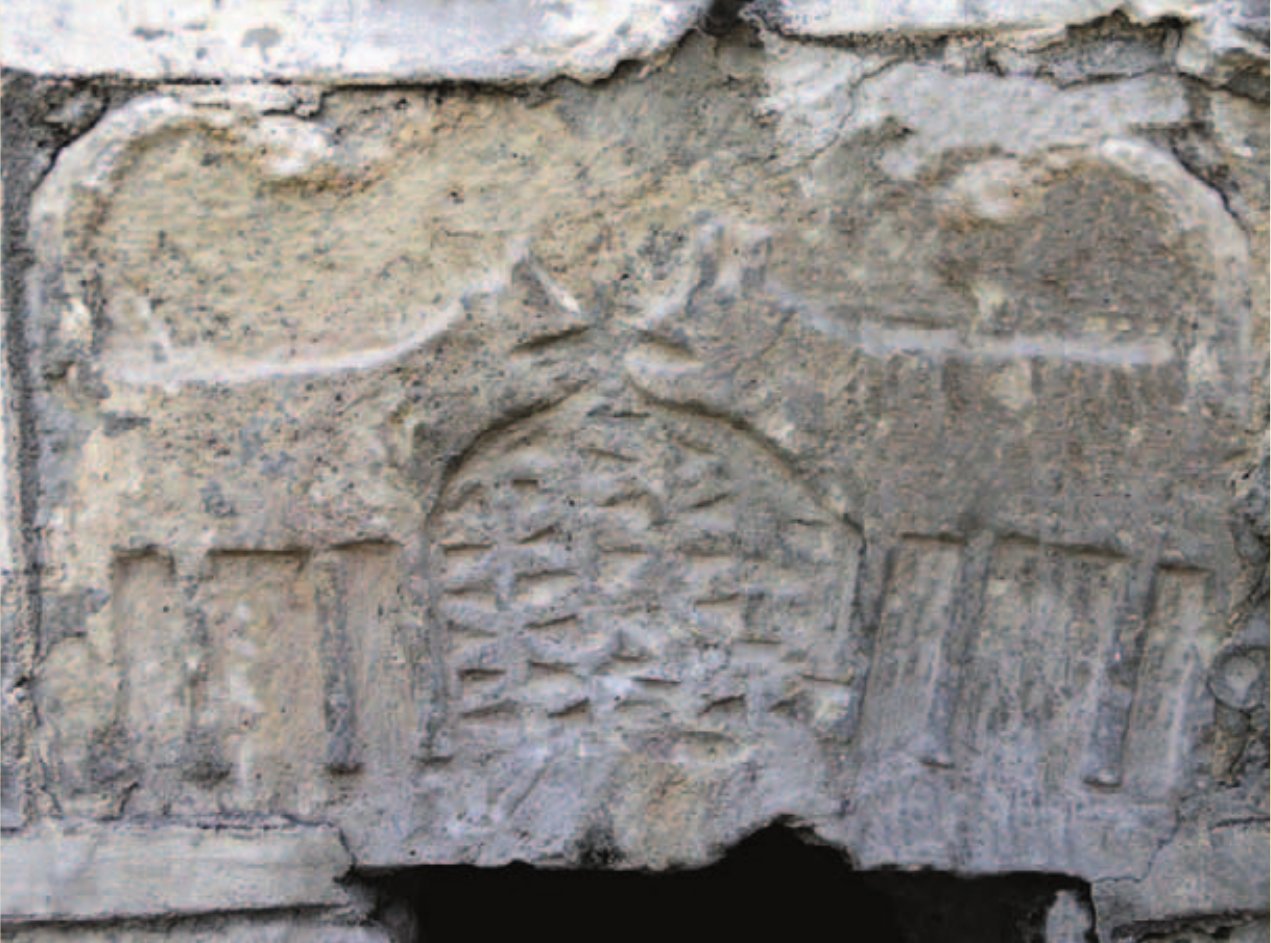
In the courtyard lies the Kanîzerk li Celsê, the "golden spring in the courtyard". Above it a relief stone is set into the wall: two birds, probably peacocks, on either side of a tree motif, with columns below (Lalişa Nûranî). The authors interpret two peacocks with the world tree between them as a sign of the holy trinity (Symbols on the walls).
Basins in the sanctuary
- Birka Nasirdîn – the basin of Nasirdîn in the hall of the main building (Main building).
- Merzêd Behrê – the small basins in the courtyard Gaykuj (Gaykuj).
- Hewda Melek Fexredîn – a stone trough at which sacrificial lambs are slaughtered; near the trough burns the wick of Hesen Ferdos (Lalişa Nûranî, pp. 99, 203).
A well in the 19th century
Layard describes in 1846, at the end of the avenue of trees leading to the sanctuary, a well whose stone slabs were considered holy; the water was kept pure and was drunk. At the festivals people danced by it.
Where the holiness ends
The holiness of the spring water ends after the Pira Selatê. After that the water may be used for everyday purposes (Lalişa Nûranî, p. 36). → Pira Selatê
Sources
- S. A. Grigoriev, L. V. Ivasko, D. V. Pirbari (P’îr Dîma): Lalişa Nûranî / Святой Лалыш / Holy Lalish. Yekaterinburg: Basko 2008, p. pp. 34–37, 152–154, 202
- Austen Henry Layard: Nineveh and Its Remains, Vol. 1. London 1849, p. pp. 283–290 (PDF 336–343)
Found a mistake?
Is something wrong – a fact, a spelling, a source, an image? Let us know: we check every report and correct the article.
Other spellings: Kaniyen Lalise · Kaniyen Lalische · Kaniyen Lalishe · Kaniya Sivana · Kaniya Schivana · Kaniya Shivana · Kaniya Berbayke · Wersike Kawetir · Wersik Kawetir · Kanizerk · Lalish · Lalisch · Lalesh · Faqir · Fakir