
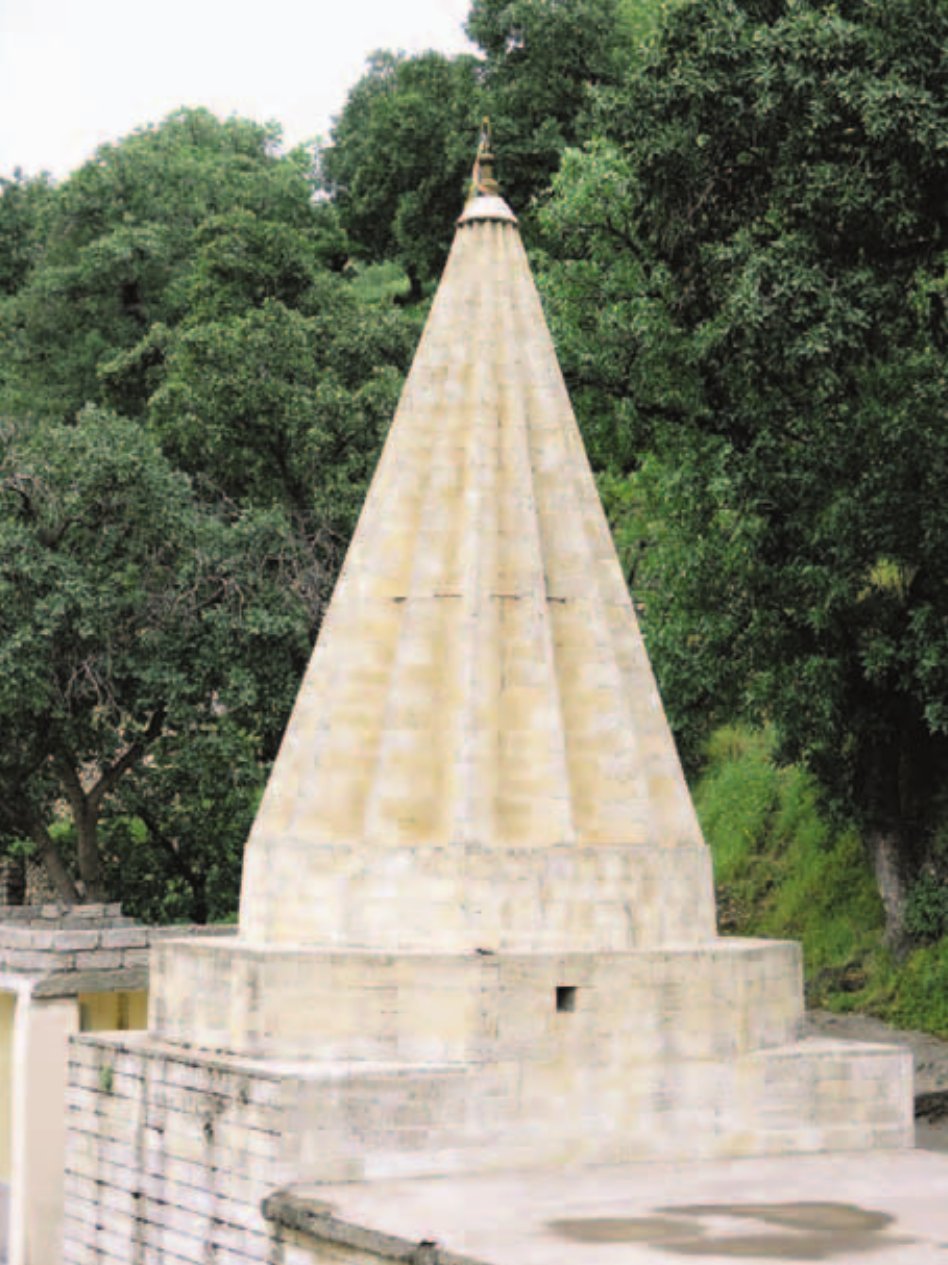
The domes (qub, qube, plural qubên Lalişê) are the hallmark of Lalîş and of Ezidi sanctuaries in general. They are long, pointed, many-faceted cones on stepped bases, whitewashed and with deep ribs. According to the photo book Lalişa Nûranî, they represent the sun and its rays falling from heaven onto the earth; the building form is said to be unique.
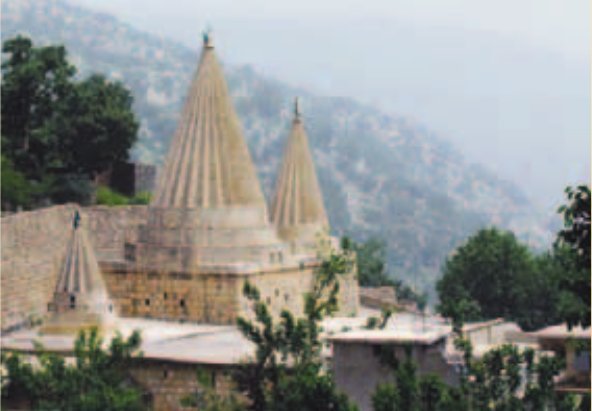
The six domes
The text in Êzdîkî of Lalişa Nûranî counts six Qube in Lalîş:
| No. | Dome | Where |
|---|---|---|
| 1 | Quba Şîxadî | above the tomb of Şêx Adî, the highest |
| 2 | Quba Melek Şêx Sin (Şêx Hesen) | to the right of the Şîxadî dome |
| 3 | Quba Şêx Mûsê Enzelî | to the left of the Şîxadî dome |
| 4 | Quba Kaniya Sipî | above the White Spring |
| 5 | Quba Şêx Mişeleh (Xefûrê rêyan) | the first dome at the entrance |
| 6 | Quba Şêşims | on the slope above the Kaniya Sipî |
Bedelê Feqîr Hecî names the same six in a text printed in the Ezidi schoolbook for the 8th grade (see Lalîş in People & Culture).
The three domes above the main building
Above the main building stand three domes: the highest belongs to Şêx Adî, beneath it lie his bones. On the right stands the dome of Şêx Hesen – called Melek Şêx Sin in the text in Êzdîkî, it is the same person –, on the left the smaller one of Şêx Mûsê Enzelî (Lalişa Nûranî).
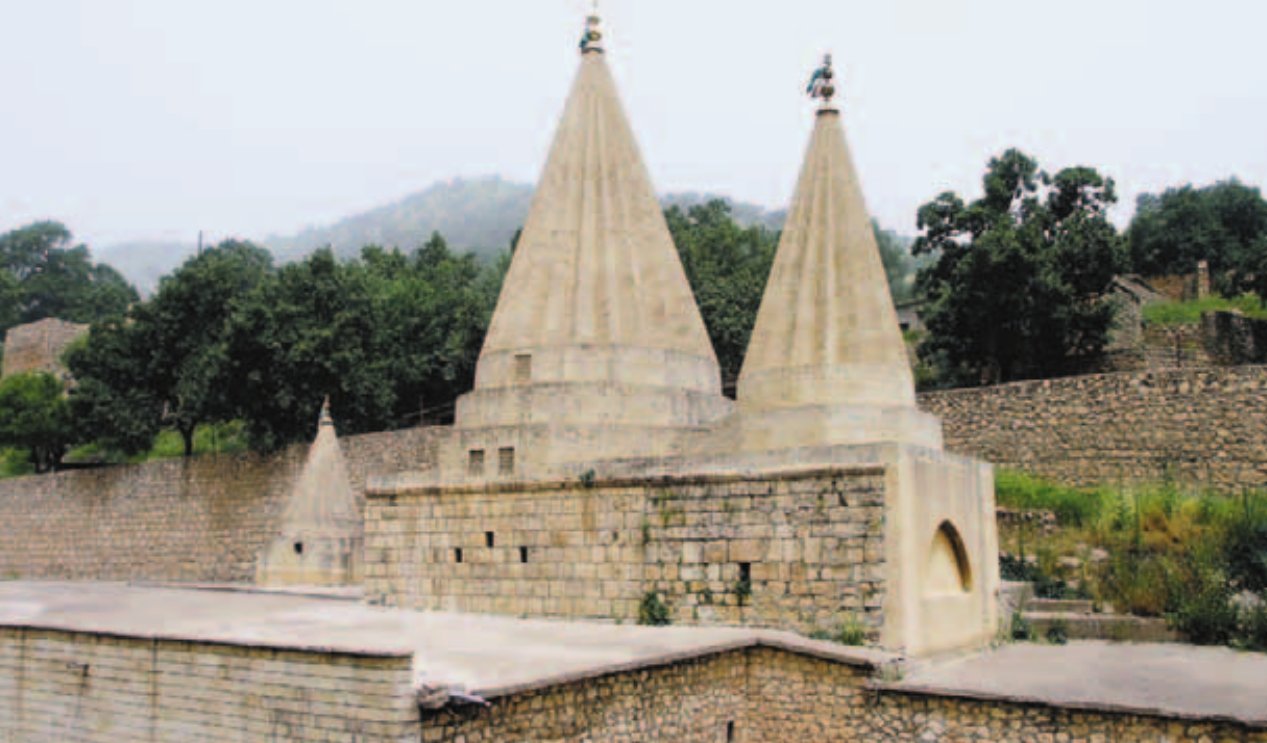
Other descriptions speak of two towers above the sanctuary, the "twin towers" (cotê qubba) of Şêx Adî and Şêx Hesen (Kreyenbroek, Açıkyıldız). In 1944 Edmonds calls the smaller third tower the tower of Ebû Bekr. The sources thus name the small dome differently.
Şêx Mişeleh – guardian of travelers
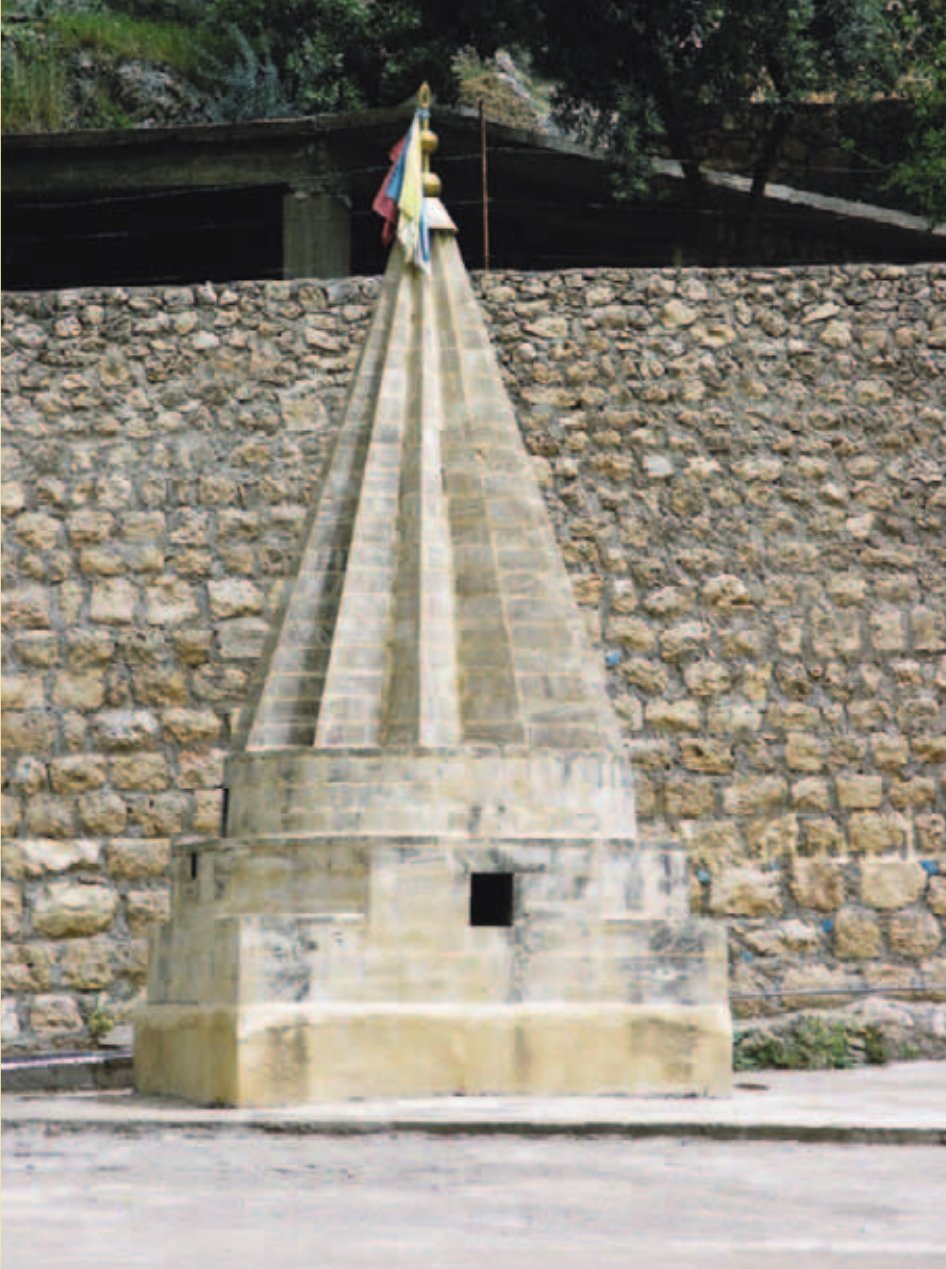
The first dome one passes on entering is that of Şêx Mişeleh. He is called Xefûrê rêyan (or Xefûrê riya), "guardian of the roads", and is considered the patron saint of travelers (Lalişa Nûranî). Another Xefûrê Riya exists in Bozan (Surroundings). Açıkyıldız describes the mausoleum of Şêx Mişelleh west of the main building as a "guardian", separated from the sanctuary only by a narrow lane.
Kaniya Sipî and Şêşims
The dome above the Kaniya Sipî stands over the spring house (Kaniya Sipî). On the slope above it stands the dome of Şêşims, the "lord of the sun"; according to Açıkyıldız, in Ezidi belief the first rays of the sun fall on this roof (Sanctuary of Şêşims).

Not a Qub: the Nîşangeh of Pîr Mend
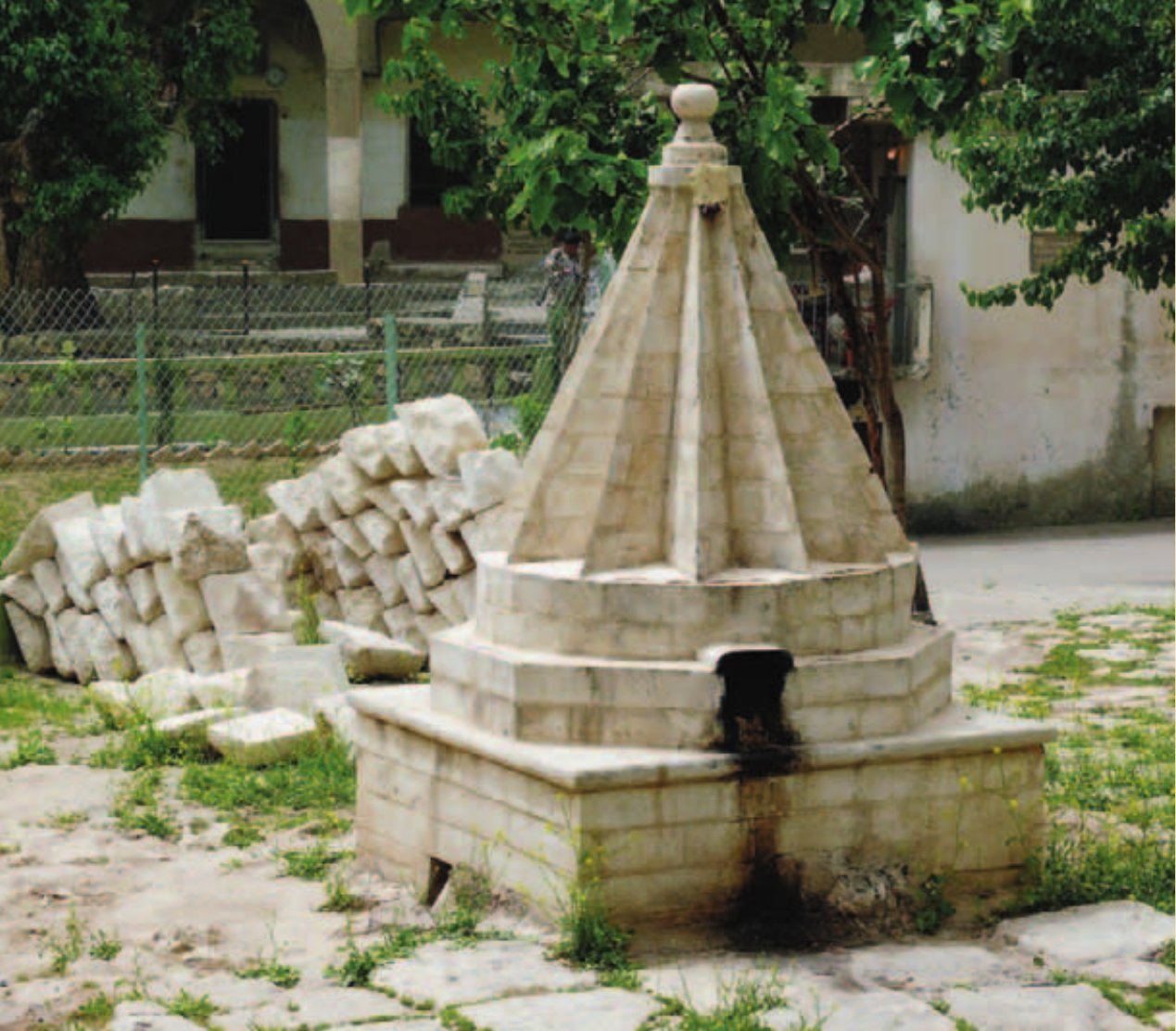
In front of the Dergê Mîr, in the Sûka Merîfetê, stands a small dome-shaped building. According to Lalişa Nûranî it is not a Qub but a Nîşangeh (wick place) of Pîr Mend, erected "a few years ago".
Construction and number of ribs
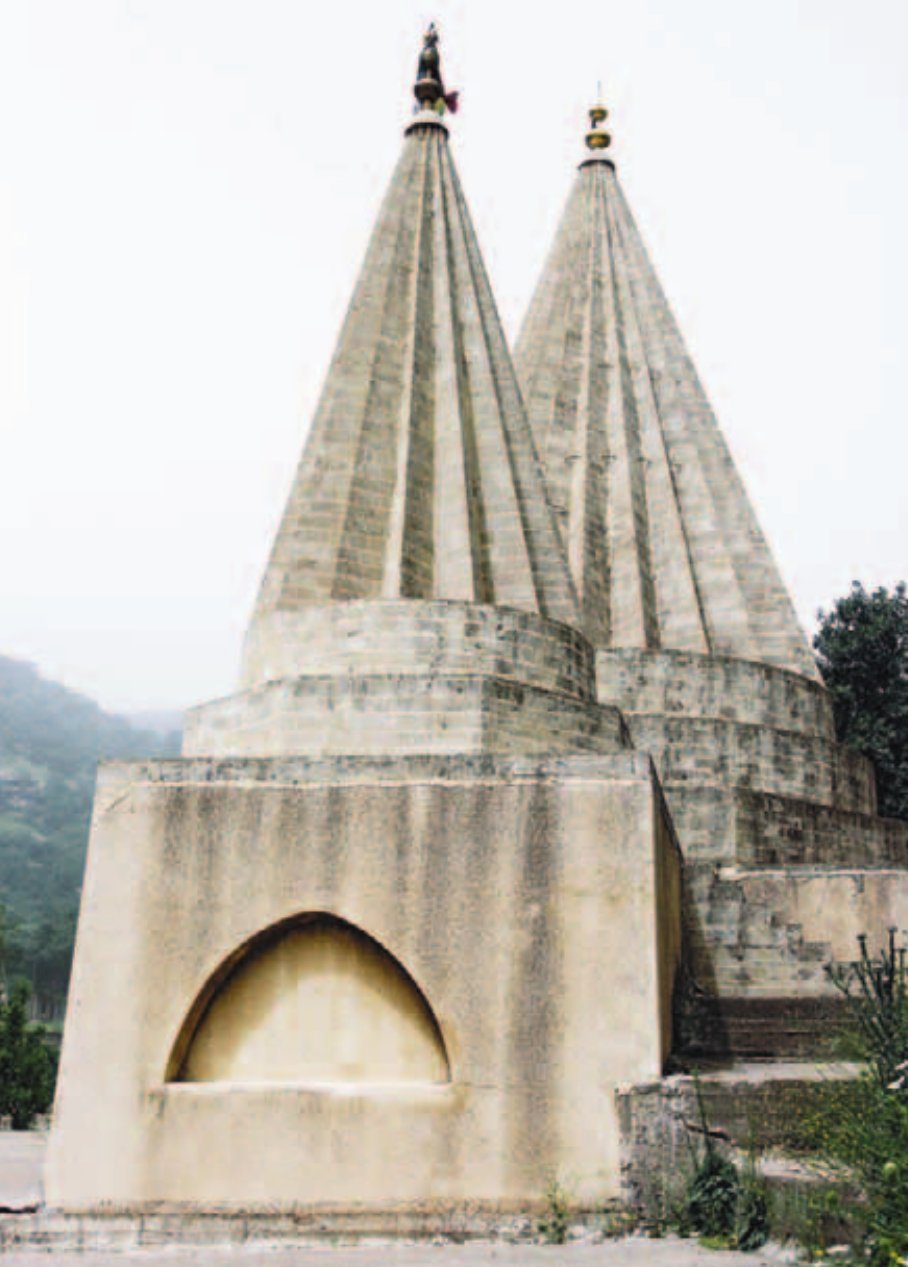
According to Açıkyıldız, the conical roofs are built of undressed stone in soft gypsum mortar (cus). The number of ribs depends on the importance of the saint: the dome of Şêx Adî has 48 ribs, the highest number of all Ezidi buildings, that of Şêx Hesen 32, that of Şêşims likewise 32. Açıkyıldız, too, reports that the Ezidis interpret the ribs as rays of the sun.
The tip: Helel
On the tip sits a gilded ball to which colorful cloths are tied (Açıkyıldız: hilêl). According to Şêx Mak’sîm, the Helel is a holy sign sent down from paradise; therefore no flags may fly over temples. Kreyenbroek mentions the balls on the tops of the spires; a Beyt translated by him says that the towers of Lalîş reach up to the highest heaven and their roots down to the bottom of the sea.
On the last day of the Cejna Cimaiyê colored cloths (perî) are carried onto the dome and fastened at the tip (Lalîş in the festival year).
Whitewashing the domes
The domes are regularly whitewashed with lime. This is a task of the Xilmetkar (servants) (Lalişa Nûranî, p. 206). In former times there was a festival of its own for this every two years, the cemaya sipîkirina quba ("assembly for whitening the domes") (Lalişa Nûranî, p. 32). In 1944 Edmonds witnessed how the gilded balls for the tip were carried in procession to the tomb of Şêşims and auctioned: in the name of whoever offered the most they were hauled up; the first application of the gypsum was also auctioned.
Sources
- S. A. Grigoriev, L. V. Ivasko, D. V. Pirbari (P’îr Dîma): Lalişa Nûranî / Святой Лалыш / Holy Lalish. Yekaterinburg: Basko 2008, p. pp. 21, 30–33, 41–55, 206
- Birgül Açıkyıldız: The Yezidis. The History of a Community, Culture and Religion. London 2010, p. pp. 129–130, 143–144, 151, 153, 163, 166, 175–177
- Philip G. Kreyenbroek, Khalil Jindy Rashow: God and Sheikh Adi Are Perfect. Sacred Poems and Religious Narratives from the Yezidi Tradition. Wiesbaden: Harrassowitz 2005, p. pp. 37–38, 217 (n. 143)
- C. J. Edmonds: A Pilgrimage to Lalish. London (Royal Asiatic Society) 1967, p. p-028, p-031
- Şêx Mak’sîm (Maksim Ezdi): Grundpfeiler der Religion ScherfeDin, 2017 (on EZDIKI.COM in the Religion section and in the library), p. p. 24
- E’zîzê E’mer, H’esenê Şêx-Me’mûdê: E’debyet û zimanê êzdîkî, grade 8. Yerevan: Spîka 2011, p. p-019–024
Found a mistake?
Is something wrong – a fact, a spelling, a source, an image? Let us know: we check every report and correct the article.
Other spellings: Kegeldadschh · Kegeldajh · Bane qube Lalise · Bane qube Lalische · Bane qube Lalishe · Ban qube Lalise · Hilel · Lalish · Lalisch · Lalesh · Ezidiki · Ezdeki · Sheikh Adi · Scheich Adi · Shaikh Adi · Şêxadî · Shikhadi · Sheikh · Scheich · Shex