
On the slope above the Kaniya Sipî stands the sanctuary of Şêşims (Şêx Şems, Şemsedîn). In the religion Şêşims is considered the "lord of the sun" (xudanê rojê) and is called the "angel of the sun" (Lalişa Nûranî). A Qewl cited by the photo book says: "Şêşims is the light of God". Who Şêşims is, the article Şêşims describes; here the subject is his sanctuary in Lalîş.

Location and dome
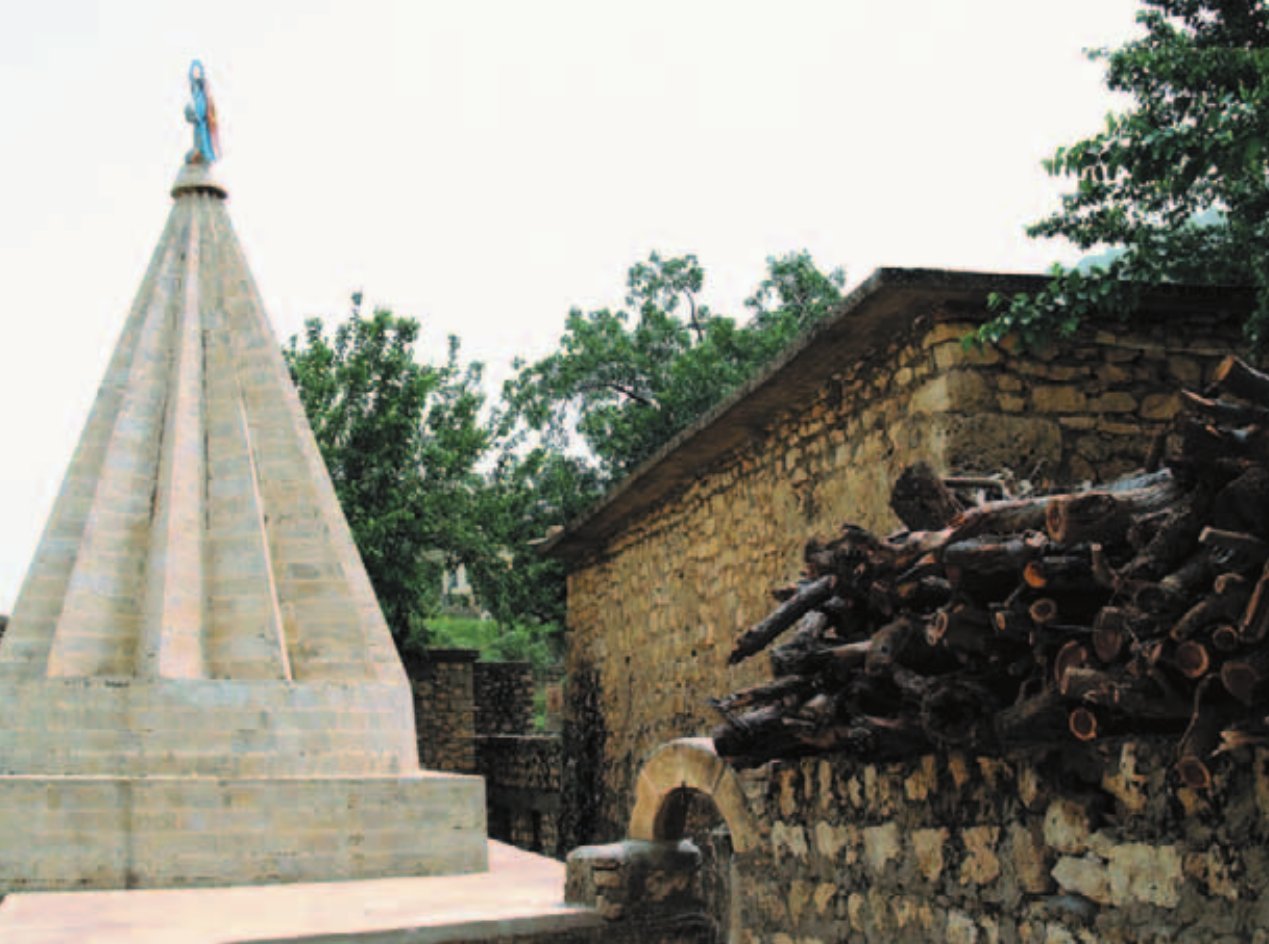
The dome of Şêşims is one of the six Qube of Lalîş (Domes). According to Açıkyıldız, in Ezidi belief the first rays of the sun of the day fall on its ribbed conical roof; that is why it was built at this spot. Layard, too, heard in 1846 that the sanctuary was built so that the first rays of the sun fall on it. According to Açıkyıldız, the conical roof has 32 ribs on a three-stepped base. According to the English version of the photo book, a saint of this name is considered the embodiment of the angel.

Inside
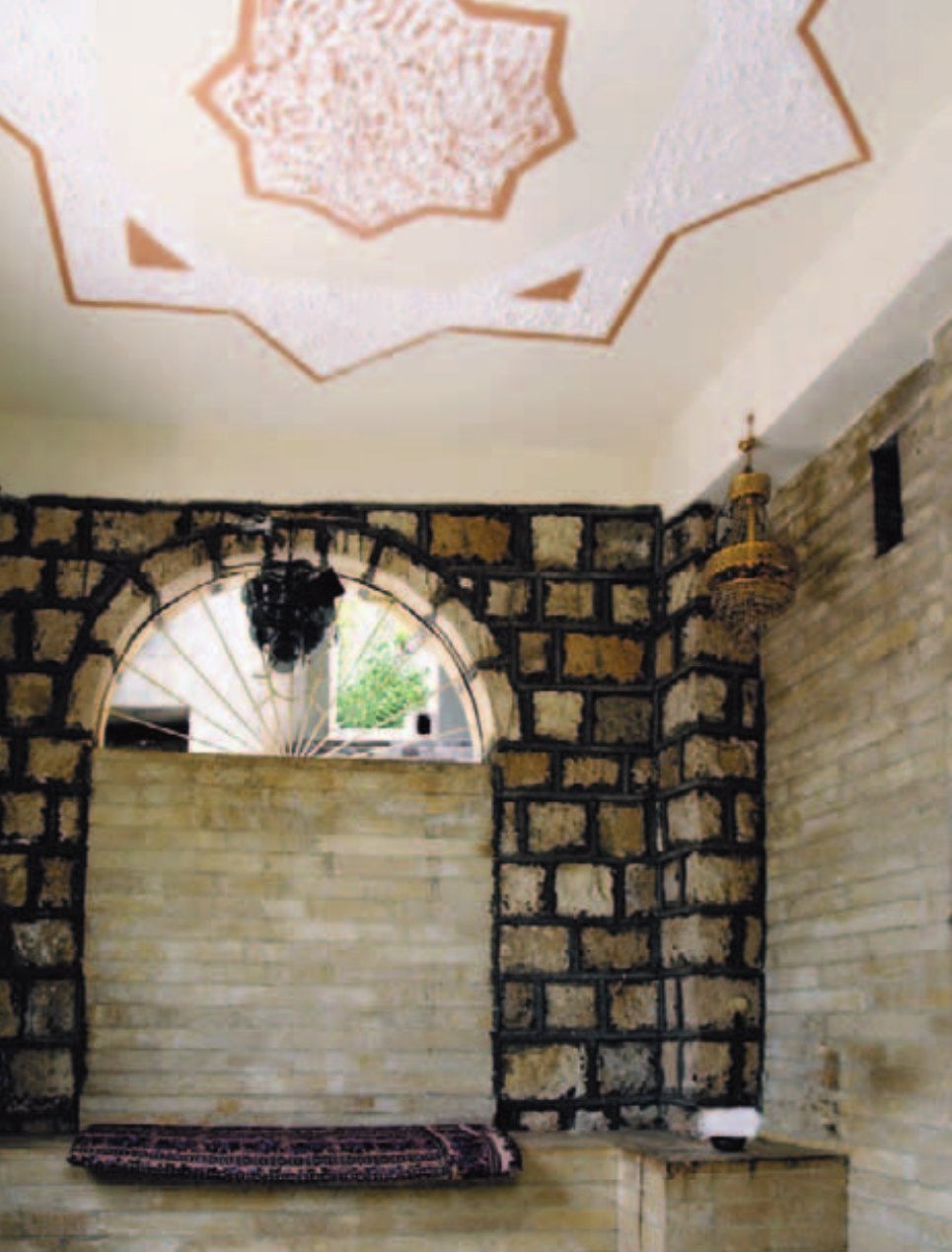
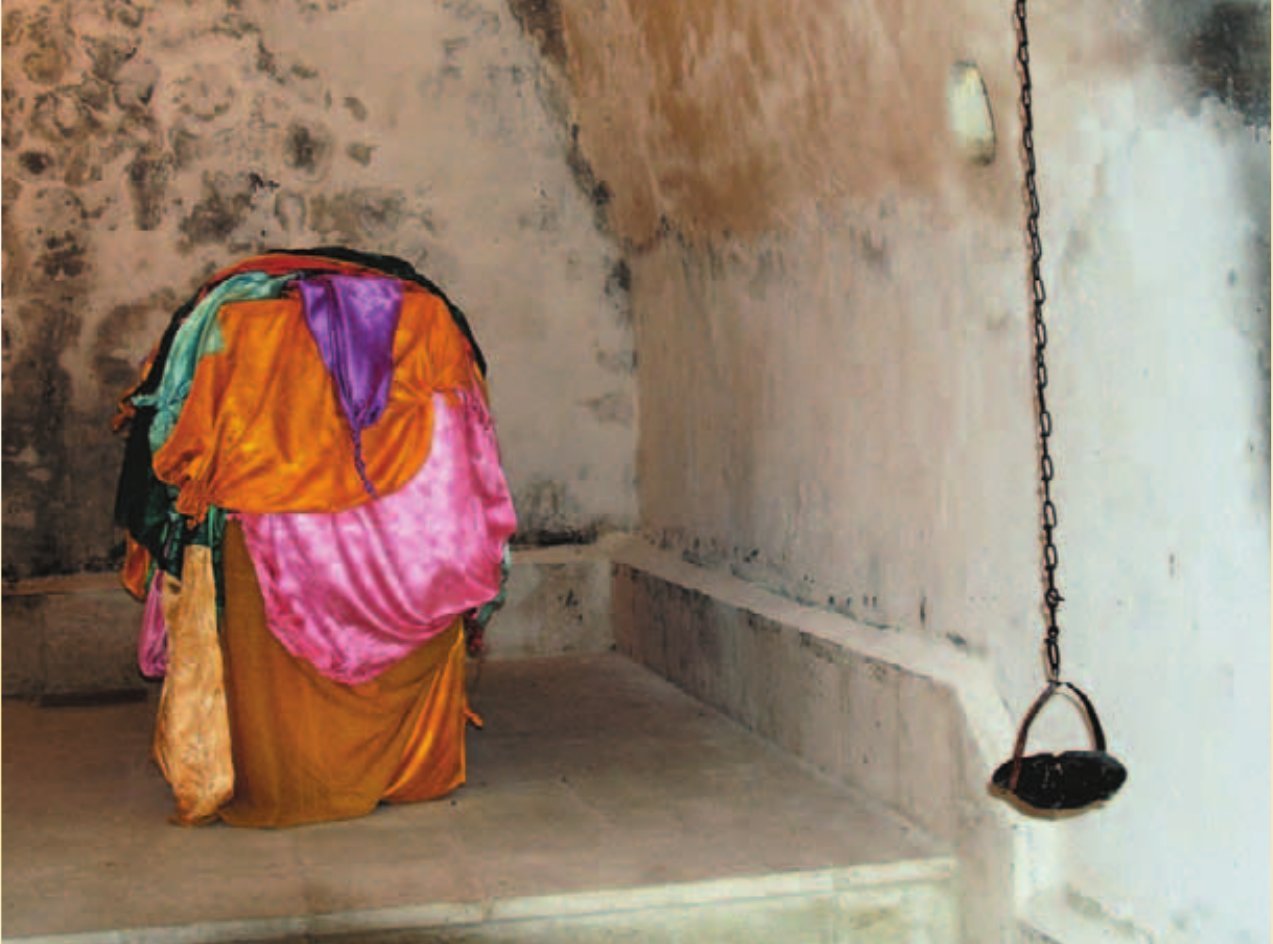
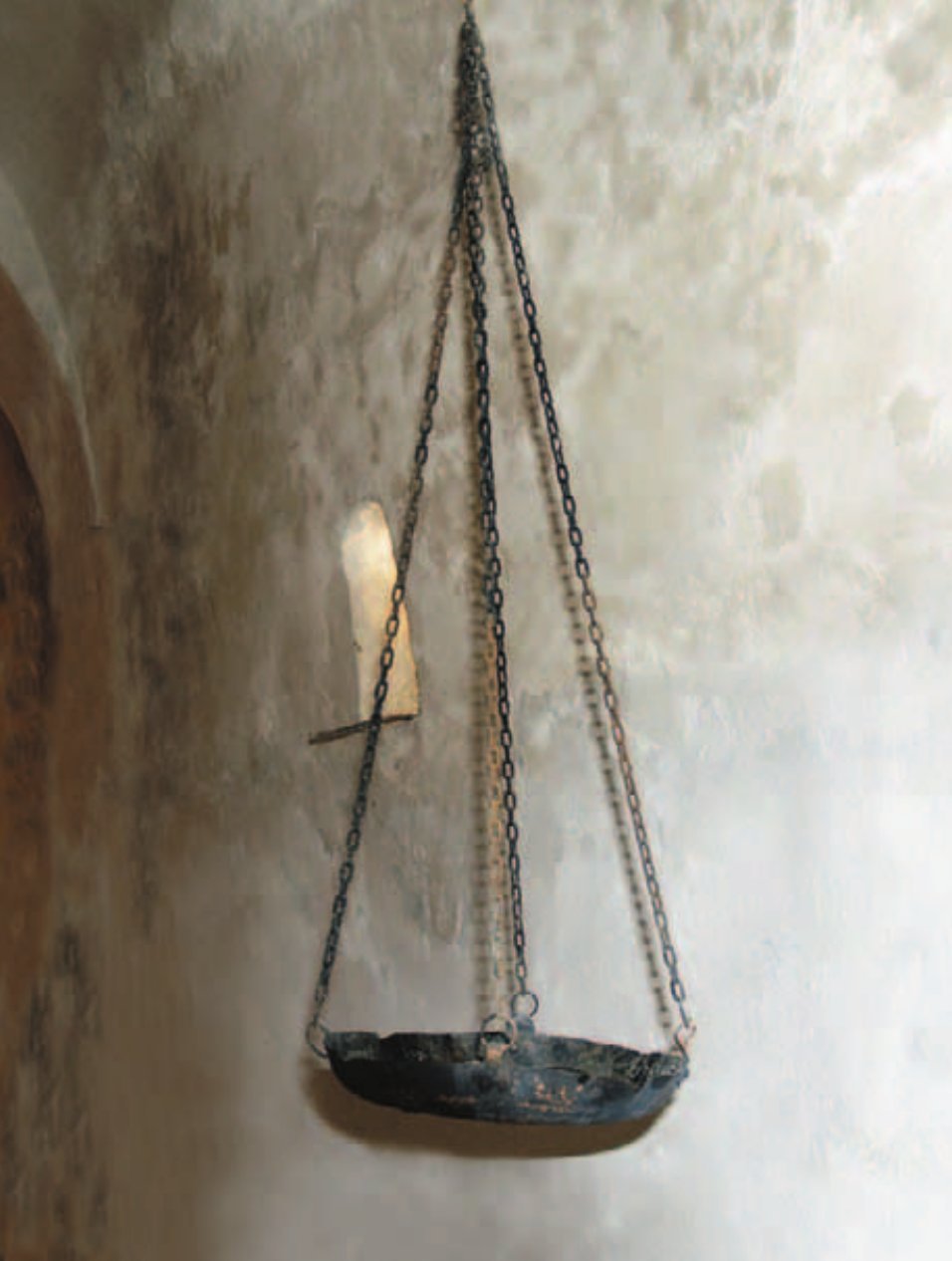
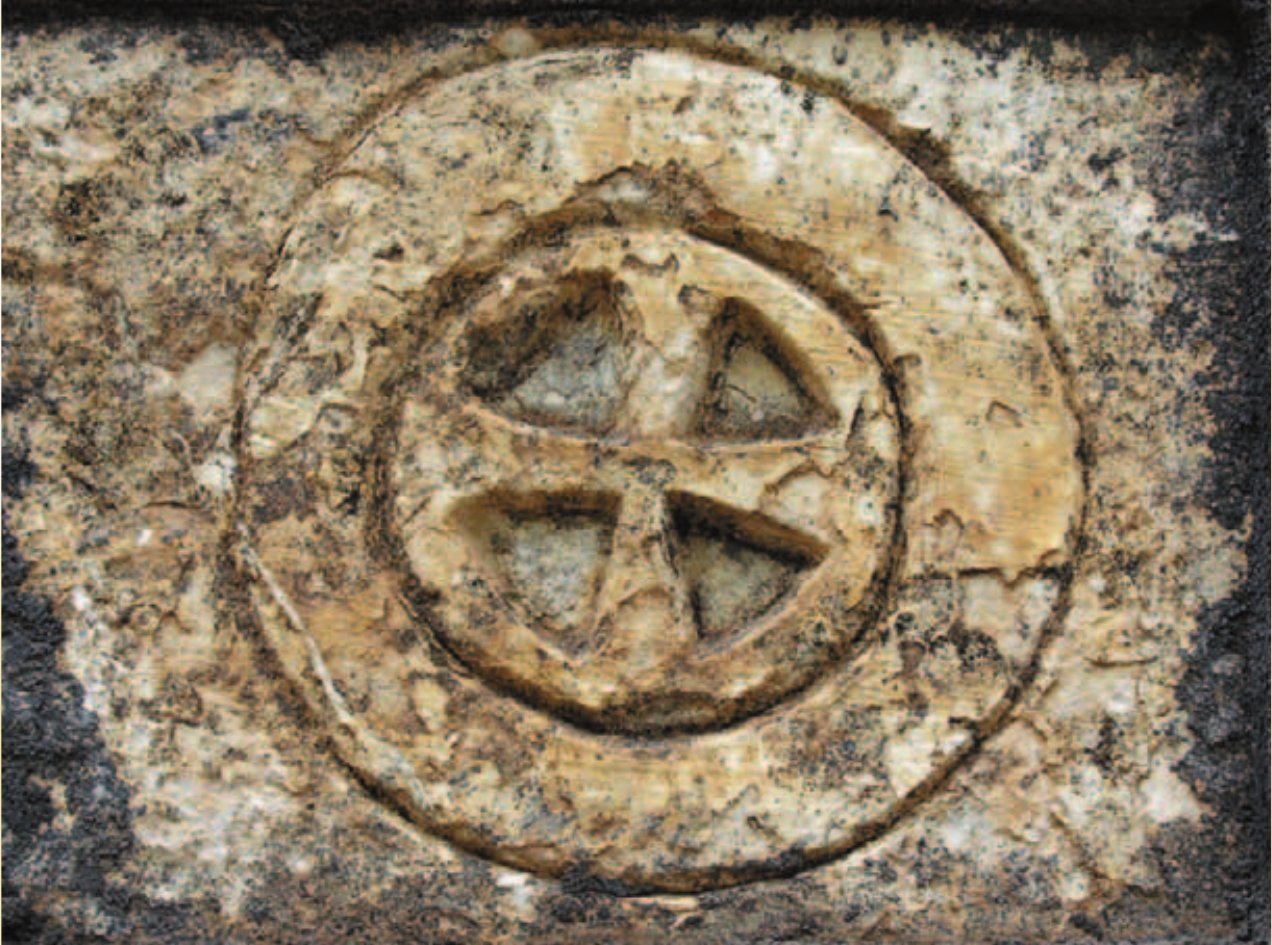
The photo book shows the parts of the sanctuary:
- the Sêdera Şêşims, a passage with an arch and a painted ceiling with a star pattern;
- the Sindrûka Şêşims, the sarcophagus under colorful cloths;
- a soot-blackened lamp niche and a hanging oil lamp (Qendîl) under the dome;
- the wooden door with iron fittings;
- on the wall a relief stone with a sun sign, a circle with a cross.
According to Edmonds, a ribbed tower is roughly carved in the stone above the entrance; inside, in 1944, a small flame was burning. According to the list of wicks, the wick of Melekê Mêra also burns in the building; in addition there are wicks of the "kitchen of Şêşims" (Metbexa Şêşims) and of the "Teterê Şêşims".
The bull sacrifice
At the dome of Şêşims a bull is sacrificed at the autumn festival Cejna Cimaiyê. From the meat the holy food Simat (Şîlan) is cooked and distributed to the guests of the House of Şîxadî (Şêx Adî) (Lalişa Nûranî). The bull – called gayê Qebaxê in the photo book – is led through the courtyard Gaykuj to the Sêdera Şêşims and slaughtered there (Gaykuj).
About the day the sources say different things: according to Lalişa Nûranî it is the fourth day, according to Kreyenbroek the fifth. In 1940 Drower heard that the bull – of whatever color – was adorned with flowers and led around the sanctuary of Şêx Şems. → Cejna Cimaiyê
Wood for the Simat
Next to the sanctuary lies the wood store Gizrê Şêşims. The Xilmetkar (servants) bring the firewood with which the Simat is cooked (Lalişa Nûranî, p. 144).
Sema and festival balls
At the dome of Şêşims, in the Celsa Şêşims, the Sema is also danced by day at the Cejna Cimaiyê (Lalişa Nûranî). In 1944 Edmonds saw how the gilded balls for the tops of the spires were carried in procession to the tomb of Şêşims and auctioned there (Domes).
Who administers the sanctuary
According to Kreyenbroek, a Şêx el-Wezîr from the group of the Şemsanî is responsible for the great sanctuary of Şêşims in Lalîş. The photo book shows Şêx Berekat from the Şêx family Şêşims.

Sources
- S. A. Grigoriev, L. V. Ivasko, D. V. Pirbari (P’îr Dîma): Lalişa Nûranî / Святой Лалыш / Holy Lalish. Yekaterinburg: Basko 2008, p. pp. 26–30, 42, 50–51, 120–126, 144, 202
- Philip G. Kreyenbroek, Khalil Jindy Rashow: God and Sheikh Adi Are Perfect. Sacred Poems and Religious Narratives from the Yezidi Tradition. Wiesbaden: Harrassowitz 2005, p. pp. 11, 16–17, 22, 38
- Birgül Açıkyıldız: The Yezidis. The History of a Community, Culture and Religion. London 2010, p. pp. 130, 175–177
- C. J. Edmonds: A Pilgrimage to Lalish. London (Royal Asiatic Society) 1967, p. p-031–032
- E. S. Drower: Peacock Angel. Being some Account of Votaries of a Secret Cult and their Sanctuaries. London 1941, p. pp. 157, 181 (PDF 192, 220)
- Austen Henry Layard: Nineveh and Its Remains, Vol. 1. London 1849, p. pp. 283–290 (PDF 336–343)
Found a mistake?
Is something wrong – a fact, a spelling, a source, an image? Let us know: we check every report and correct the article.
Other spellings: Quba Sesims · Quba Scheschims · Quba Sheshims · Sindruka Sesims · Sindruka Scheschims · Sindruka Sheshims · Sedera Sesims · Sedera Scheschims · Sedera Sheshims · Celsa Sesims · Dschelsa Scheschims · Jelsa Sheshims · Gizre Sesims · Gizre Scheschims · Gizre Sheshims · Gizr Sesims · Lalish · Lalisch · Lalesh · Sheikh