
In Lalîş there are several places at which Ezidis silently make a wish: a stone, a column, the columns of the hall. The best known lies in the room of Hesin Dena behind the domes of the main building, between the large jars with the oil for the lamps.
Hesin Dena
According to Lalişa Nûranî, Hesin Dena was a saint (xas) from the P’îr family Hesen Pîrk. His Nîşangeh lies beneath the domes of Şîxadî (Şêx Adî) and Şêx Mûsê Enzelî; the English version says: behind them. Açıkyıldız names a separate room Hesin Dîna in the religious part of the sanctuary. In the list of wicks "Hesindena" appears.
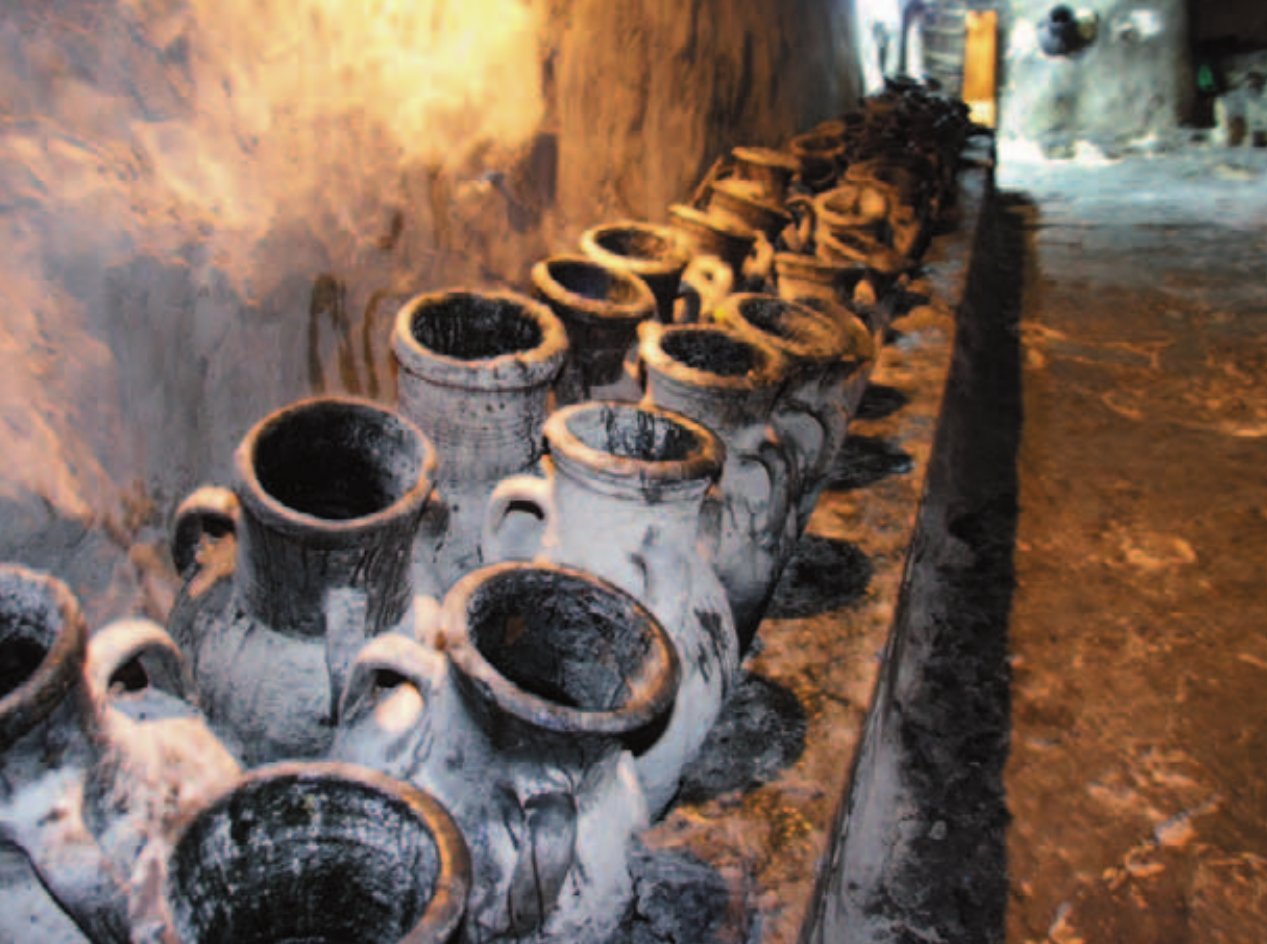
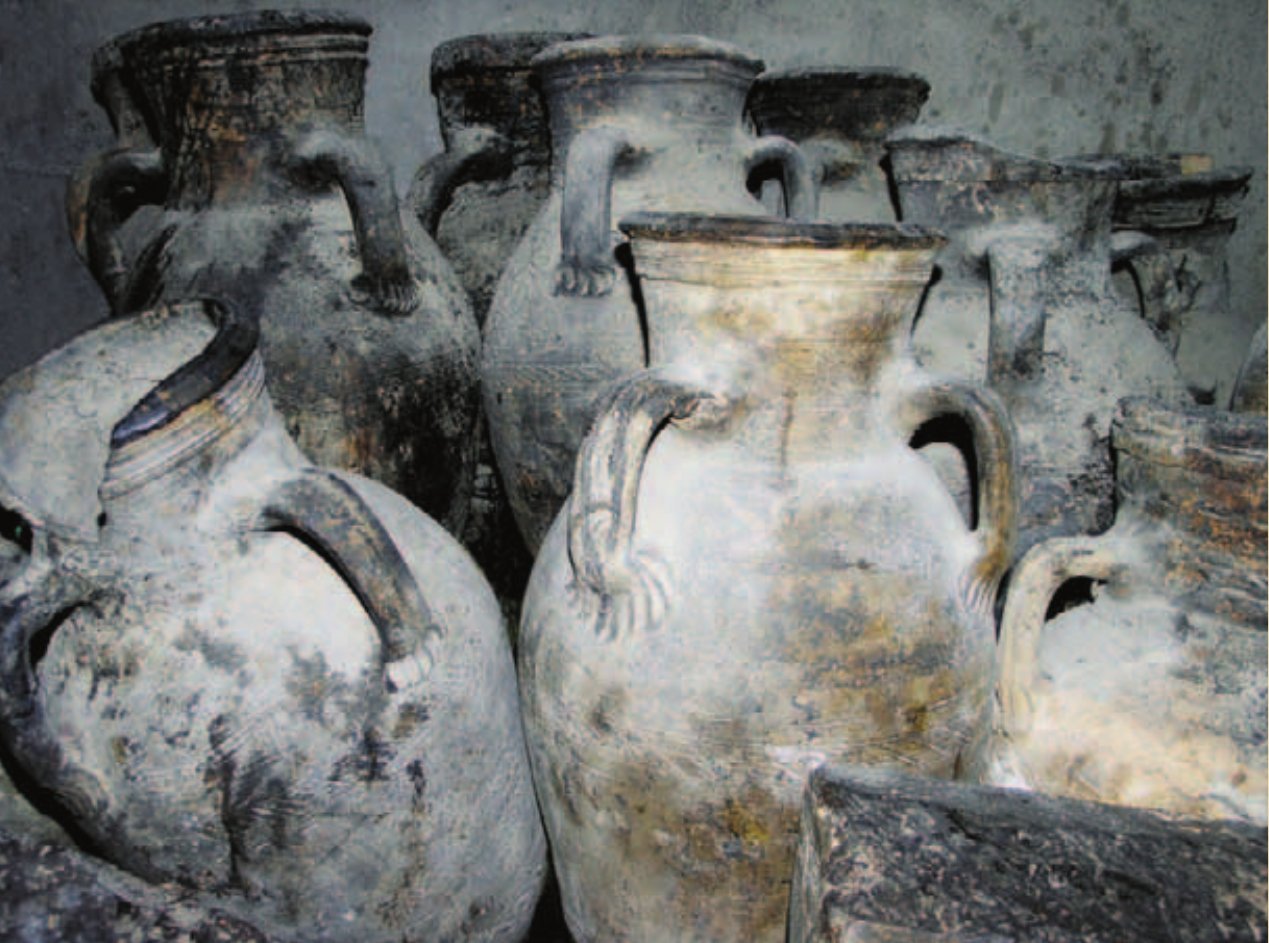
The oil jars
In the room stand rows of large, whitewashed clay jars for olive oil (denên zeytê). From them the lamps and wicks of Lalîş are fed (Nîşangeh and wicks). According to Açıkyıldız, the oil for the wicks is stored in jars in the room of Şêx Ebû Bekir behind the tomb of Şêx Adî. The oil comes from the olive grove of Lalîş and from gifts of the pilgrims (Holy trees).
Berê Miraza – the stone of wishes
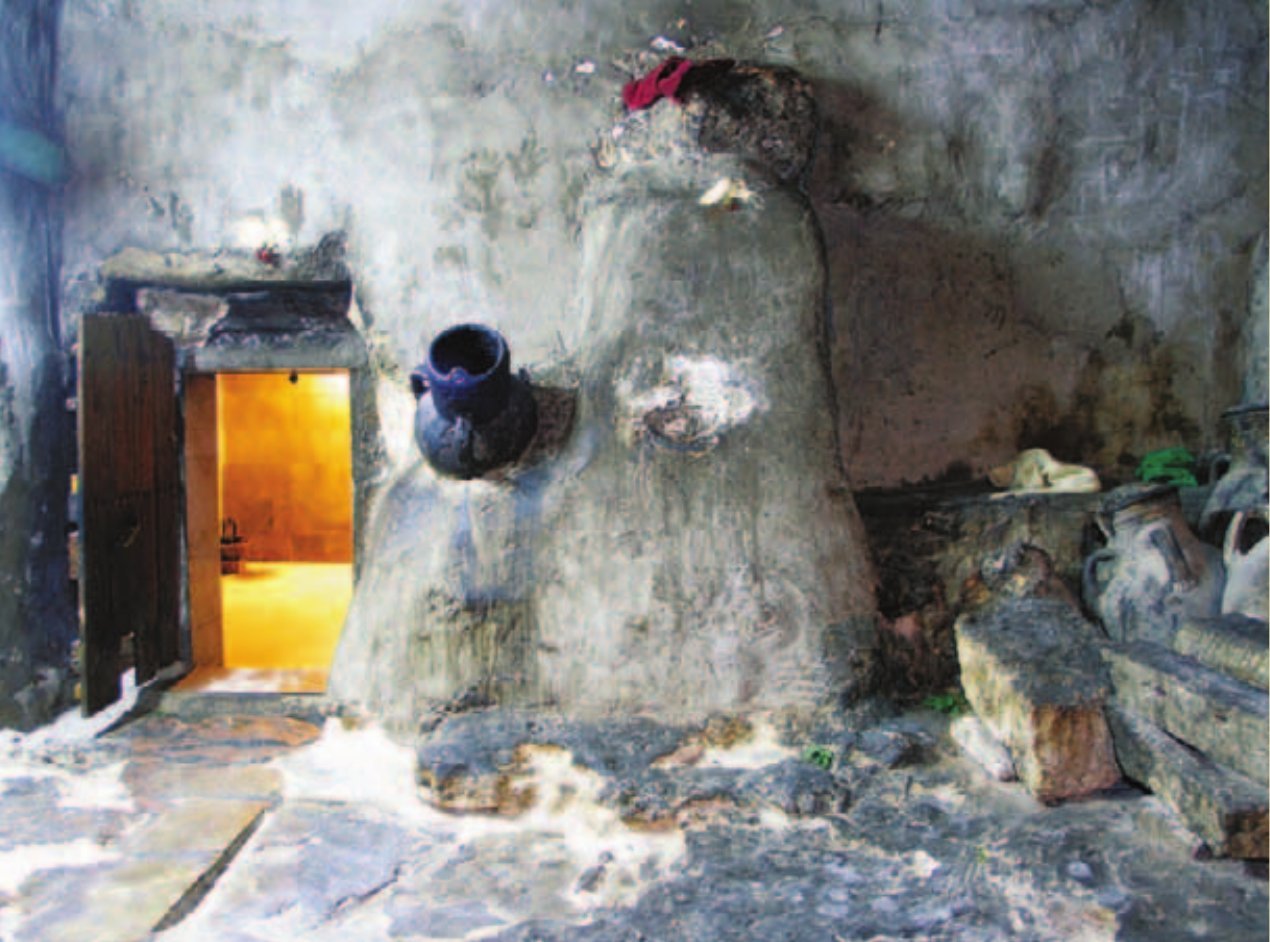
In the room of Hesin Dena stands the Berê miraza ("stone of wishes"), also called Berê muelleq ("hanging stone"); the English version describes it as a column hewn from the rock. Ezidis throw a cloth onto it with their eyes closed – according to the English version three times, with a silent wish. If the cloth stays on it, that is a good sign (Lalişa Nûranî). A caption says that for "many thousands of years" people have come here with their sorrows.
Stûna Miraza – the wishing column
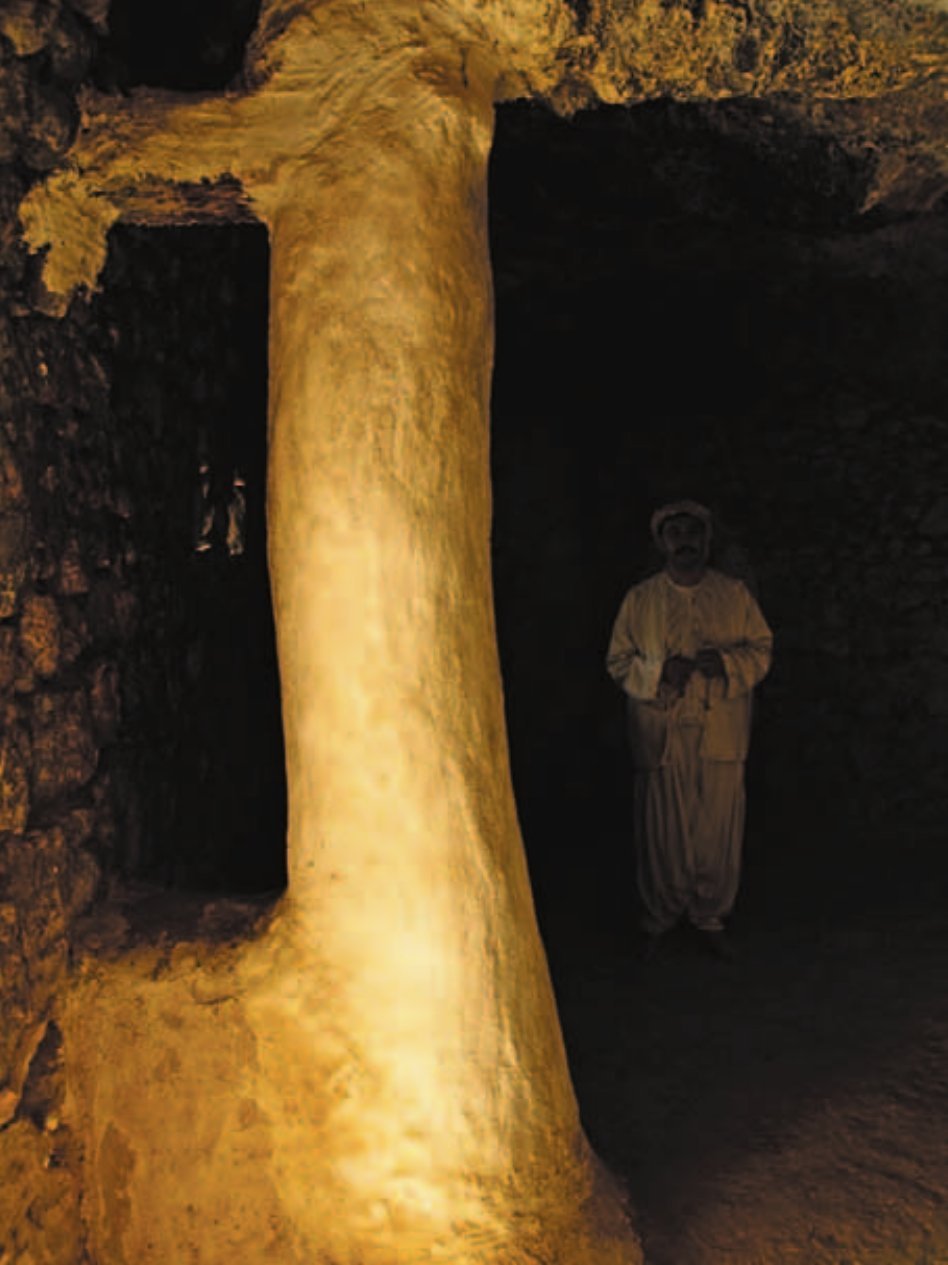
Below Mount Erefat, after the "stone of Xecîca" (Berê Xecîcayê), at the "stone of Qebax" (Berê Qebaxê), an old column stands in a cave: the Stûna Miraza, the "column of wishes" (Lalişa Nûranî, p. 32). Whoever touches it with his hand will have his wish fulfilled – especially the wish for a marriage. According to the photo book's glossary, one embraces it with both arms and silently wishes for something. Bedelê Feqîr Hecî writes in the Ezidi schoolbook for the 8th grade: whoever embraces it and can close his hands will, according to popular belief, have his wish fulfilled.
A caption in the photo book shows the Stûna Miraza in the cave of Memê Şivan (Caves). Drower, too, names in 1940 an Ustuna Miraza and a "wishing hole" in a wall.
Wishing columns exist not only in Lalîş: according to Açıkyıldız, in Şengal almost every sanctuary has a stûna miraza. In Şêxan their place is taken by the holy stone (kevir), on which wicks are lit for wishes.
The columns of the hall
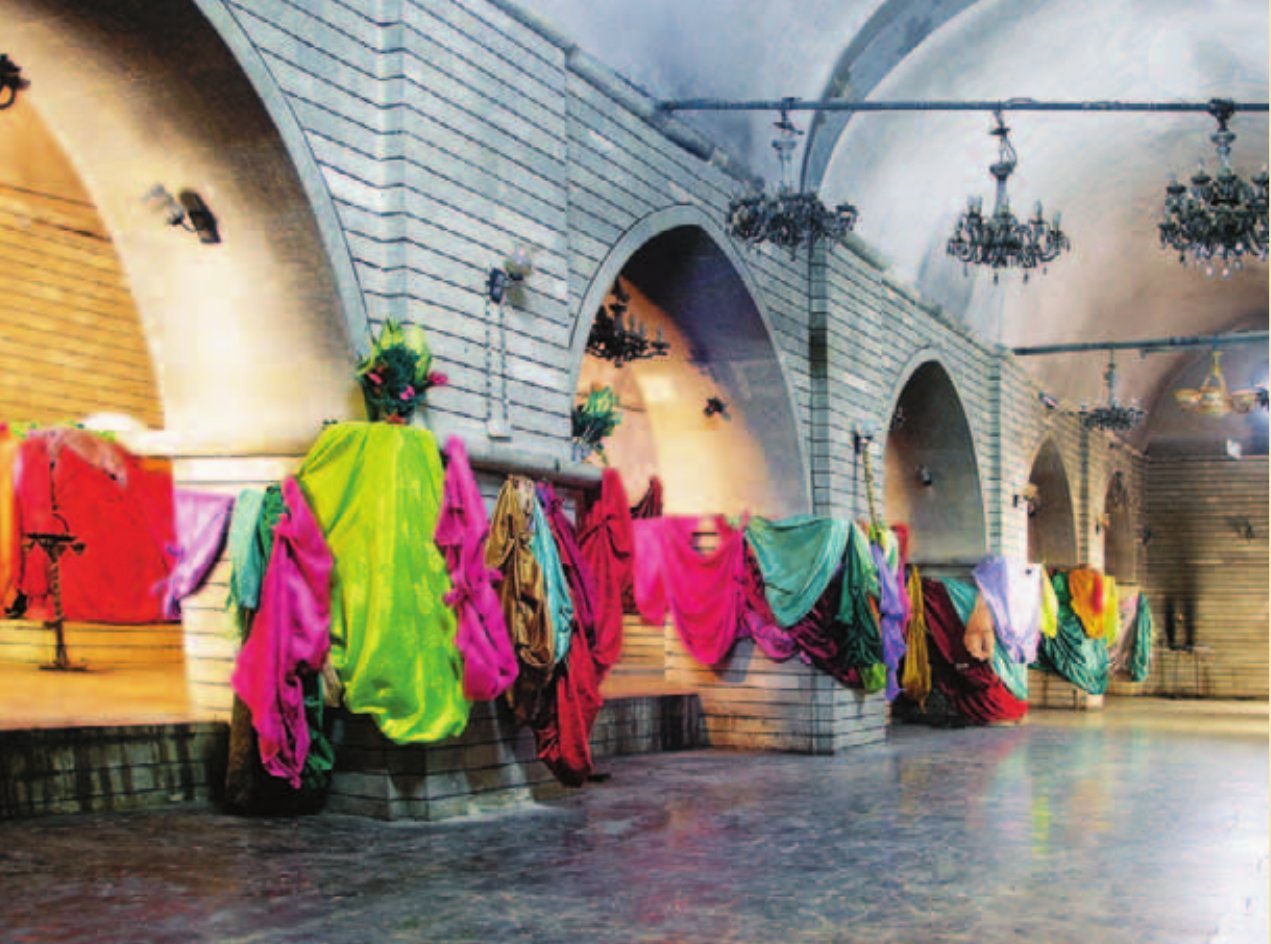
At the five columns of the main hall, too, which are assigned to Melek Nasirdîn, Siltan Êzdî, Melek Fexredîn, Şêşims and Melek Şêx Sin, one makes a wish: one ties a knot in the colorful cloths and unties it again (Lalişa Nûranî). → Main building
Other places of petition
On trees one ties ribbons and asks for healing or children (Holy trees); at the Zimzim one leans one's back against the wall against back pain (Kaniya Zimzim).
Sources
- S. A. Grigoriev, L. V. Ivasko, D. V. Pirbari (P’îr Dîma): Lalişa Nûranî / Святой Лалыш / Holy Lalish. Yekaterinburg: Basko 2008, p. pp. 26–29, 32, 36–37, 73–75, 131, 195, 206
- Birgül Açıkyıldız: The Yezidis. The History of a Community, Culture and Religion. London 2010, p. pp. 143, 147
- E’zîzê E’mer, H’esenê Şêx-Me’mûdê: E’debyet û zimanê êzdîkî, grade 8. Yerevan: Spîka 2011, p. p-019–024
- E. S. Drower: Peacock Angel. Being some Account of Votaries of a Secret Cult and their Sanctuaries. London 1941, p. pp. 151–201 (PDF 184–242)
Found a mistake?
Is something wrong – a fact, a spelling, a source, an image? Let us know: we check every report and correct the article.
Other spellings: Bere Miraza · Ber Miraza · Bere Muelleq · Ber Muelleq · Bar Muallak · Stuna Miraza · Ustuna Miraza · Wunsdschhsäule · Wunsjhsäule · Denen zeyte · Lalish · Lalisch · Lalesh · Pîr · Sheikh Adi · Scheich Adi · Shaikh Adi · Şêxadî · Shikhadi · Sheikh