
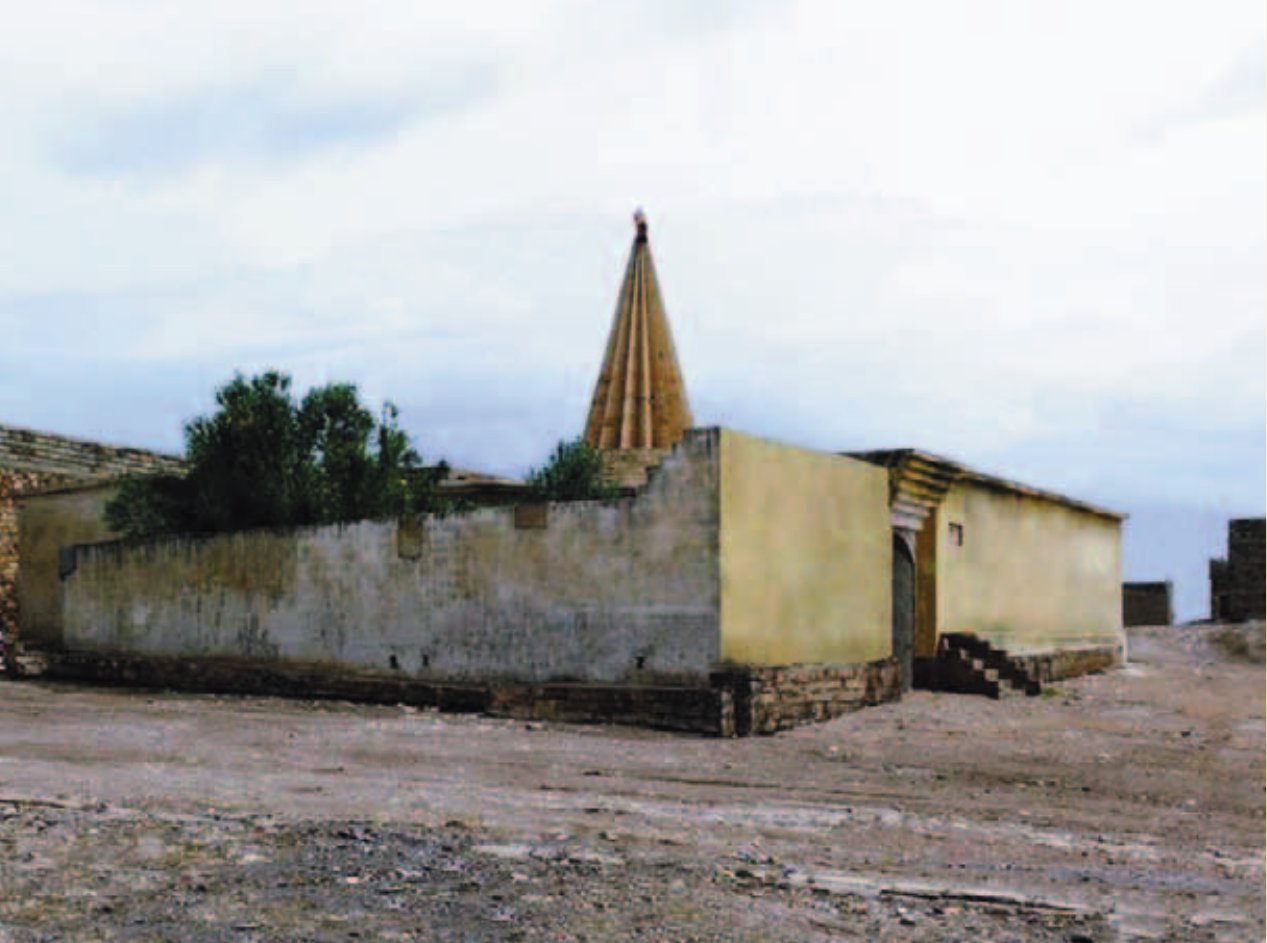
Besides the great sanctuary of Lalîş, many Ezidi villages have a sanctuary of their own: the tomb or memorial building of a holy man, often with a whitewashed conical dome. Once a year the village celebrates a festival there in honor of this saint. In the area of Şêxan and in Başîqe-Behzanê it is called Tiwaf, in Şengal Cema (Omarkhali 2023). The festival calendar and the customs are also described in Festivals and fast days; here the subject is the religious meaning.
To whom the festival is dedicated
The local festivals honor the holy men and intercessors – called in the texts xas ("special ones"), babçak ("good father") or mêr ("men") (Omarkhali 2023). Many of them are ancestors of the Şêx and P’îr lineages. According to Kreyenbroek, the village sanctuary is usually the center of village life; many sanctuaries heal particular illnesses with rituals of their own. On the holy figures see Xas and Mêr.
When and where
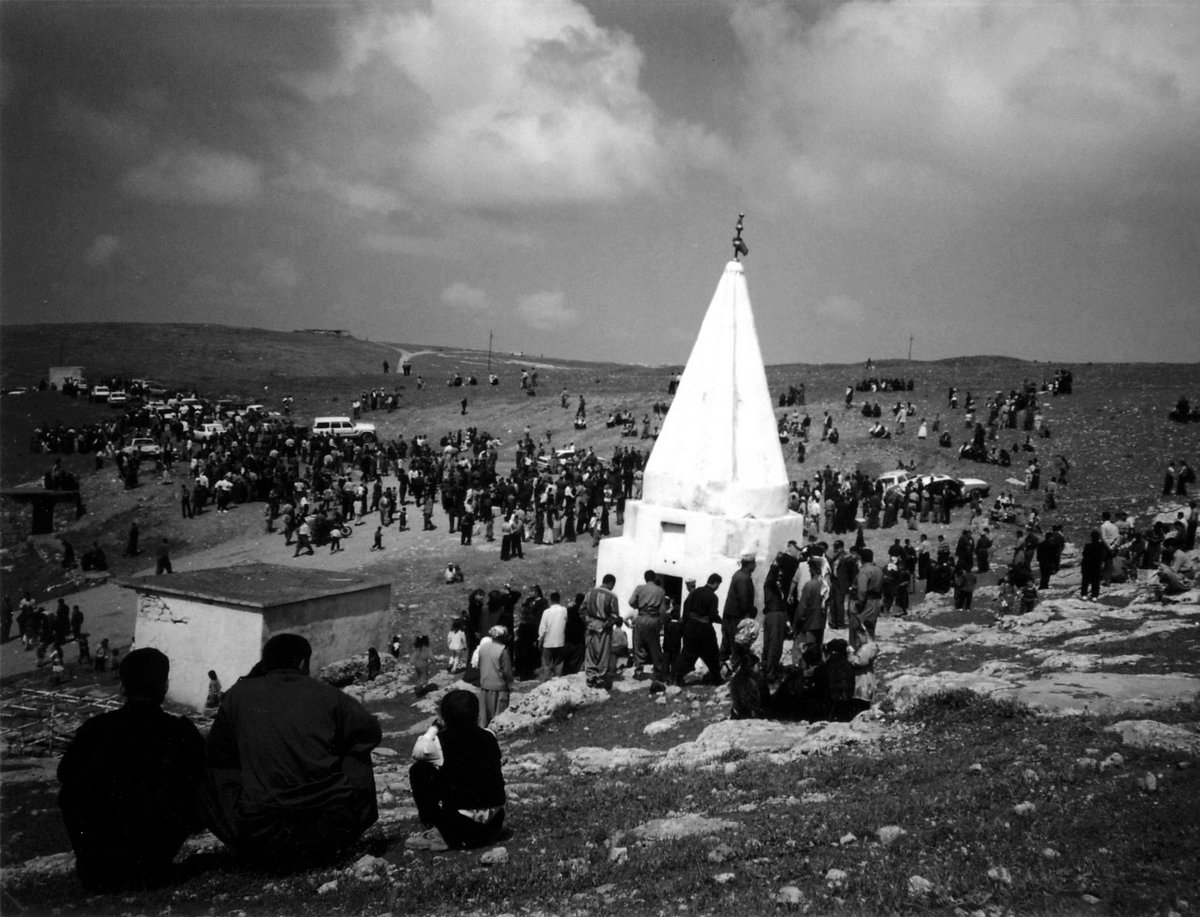
The local festivals take place on fixed days between April and the end of June; the first Tiwaf begins in Başîqe and Behzanê (Omarkhali 2023). Açıkyıldız describes the Tiwaf in Şêxan and Başîqe-Behzanê in April and May, in Şengal from June: every Wednesday people visit the tomb of a different saint, usually on a hill near a cave and a spring.
Omarkhali (2023) names, among others, these local festivals:
| Village | Saint of the Tiwaf |
|---|---|
| Cerahî | Pîr Mend |
| Baedrê | Hecî Elî |
| Êsiyan | Memê Êsiyan |
| Êsivn (E’yn Sifni) | Şêx Mend |
| Cerwan | Pîr Cerwan |
| Sîna | Kerecal |
| Bêban | Şehsiwar |
| Mehet | Êzî and Pîr Afat |
| Xetara | Hagî Fêris (Hekîm Fêris) |
| Duxata, Başîqe, Behzanê | Şêx Mihemed |
| Mem Şivan | Memê Şivan |
In Şengal the festivals are called Cema, for example the Cema Şerfedîn, the Cema Şebil Qasim in Kolka and Simê Hêstir and the Cema Şêşims in Cefriyê, Bara and Xana Sor. For the sanctuary of Hekîm Ferîs in Xetarê a three-day Tiwaf is reported (IJYS 1).
What happens at the Tiwaf
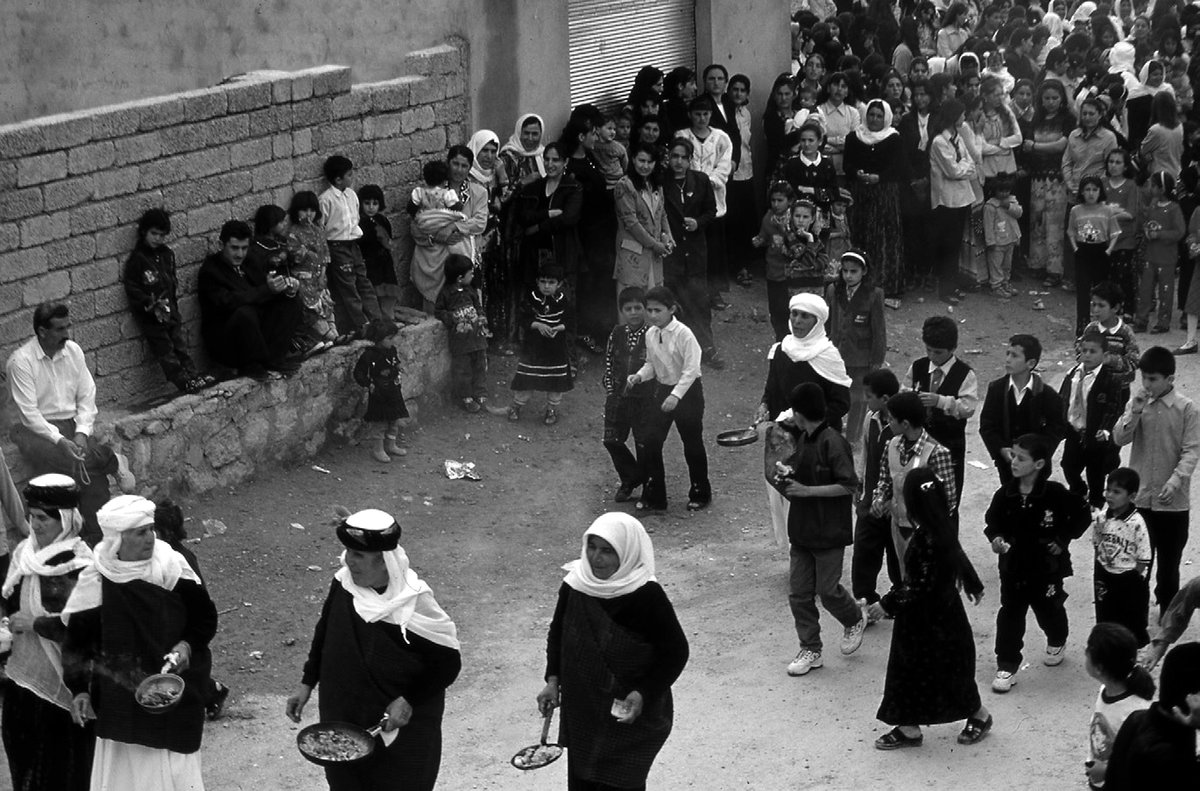
- Qewl and sermon: at the Tiwaf hymns are sung, in the village with frame drum and flute; a Qewal or expert gives a sermon (mişabet) (Kreyenbroek; Omarkhali 2023).
- Ascent and round dance: Açıkyıldız describes the Tiwaf of the inhabitants of Sîna: people climb up to the tomb, dance the round dance (govend) to drum and zurna and return with green branches; older women carry incense in pans; at the end there is the holy dish Simat in the house of the Micêwir, the guardian of the sanctuary.
- The Micêwir: according to Kreyenbroek, he holds the local festival and the burials at his sanctuary – a kind of local priest (see Offices in Lalîş).

Whitening the dome
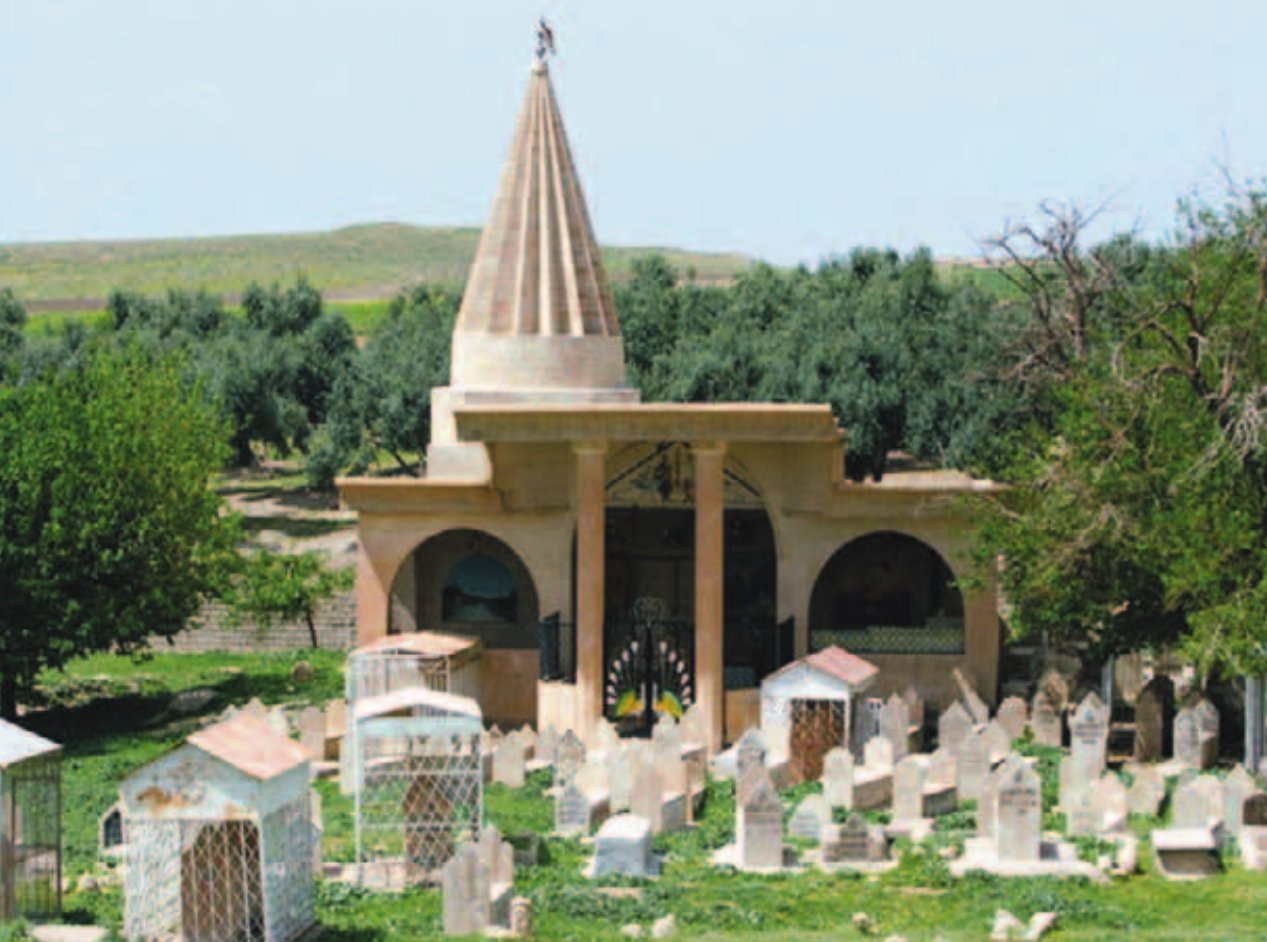
Kreyenbroek also describes the Tiwaf as a festival at the whitening of the dome of the village sanctuary. The domes are regularly freshly limed; in Lalîş this is done by the servants (Xilmetkar). In Lalîş too there was a festival of its own for the liming of the domes (cemaya sipîkirina quba): according to Lalişa Nûranî, the greeting place of Şêx Adî was formerly also whitened every two years on this occasion. The bright white of the domes is a sign of purity; the photo book interprets the pointed cones as an image of the sun and its rays.
Cloths on the dome
A rite of its own is perî siwar kirin: a piece of cloth (perî) is tied to the tip of the dome; at this the Qewlê Êzîd û Medehê is performed (Omarkhali 2023). In Lalîş this happens on the seventh day of the Festival of the Assembly: the servants consecrate the cloths in the spring water and carry them into the sanctuary to drums, flutes and incense; the people place the cloths on their heads and make donations; then they are fastened to the tip of the dome. Bedelê Feqîr Hecî (2002) calls this day "Roja siwarkirina perya" and speaks of seven cloths that are consecrated in the Kaniya Sipî. Usually they are of three colors – green, red, yellow; the English version interprets them as life, fire and sun (Lalişa Nûranî).
Threat and new forms
IS destroyed many village sanctuaries in Şengal, Başîqe and Behzanê in 2014–2015 (Omarkhali 2023). Omarkhali expects that Tiwaf and Cema will take on new forms in the dispersion or be forgotten. In the Iraqi school textbook for Ezidi religion the Tiwaf is part of the material of the second grade.
See also
Sources
- Philip G. Kreyenbroek, Khalil Jindy Rashow: God and Sheikh Adi Are Perfect. Sacred Poems and Religious Narratives from the Yezidi Tradition. Wiesbaden: Harrassowitz 2005, p. pp. 11, 13–15, 47
- Khanna Omarkhali: The religious textual tradition of the Ezidis – from the oral to the written. Saint Petersburg 2023 (Russian translation of the English original, Wiesbaden 2017), p. pp. 25, 145–147, 237, 471–472, 493–496
- Birgül Açıkyıldız: The Yezidis. The History of a Community, Culture and Religion. London 2010, p. pp. 117–122
- Bedelê Feqîr Hecî (Bedilê Feqîr Heci): Bawerî û Mîtologiya Êzidiyan. Çendeha Têkist û Vekolîn [Faith and mythology of the Ezidis. Some texts and studies]. Dihok 2002, p. p. 30
- S. A. Grigoriev, L. V. Ivasko, D. V. Pirbari (P’îr Dîma): Lalişa Nûranî / Святой Лалыш / Holy Lalish. Yekaterinburg: Basko 2008, p. pp. 26, 29, 32, 162, 178, 180, 206
- International Journal of Yezidi Studies, Vol. 1. Tbilisi 2024, p. p. 94
Found a mistake?
Is something wrong – a fact, a spelling, a source, an image? Let us know: we check every report and correct the article.
Other spellings: Dschema · Jema · Peri siwar kirin · Sipikirina quba · Lalish · Lalisch · Lalesh · Shekhan · Scheichan · Shaikhan · Bahzani · Bahzane · Sinjar · Sindschar · Shingal · Shengal · Singal · Sheikh · Scheich · Shex