
Since the 19th century Armenia has been one of the most important areas of settlement of the Ezidis outside their old homeland. For the Ezidis of the Soviet Union it was regarded as a cultural center.
Areas of settlement
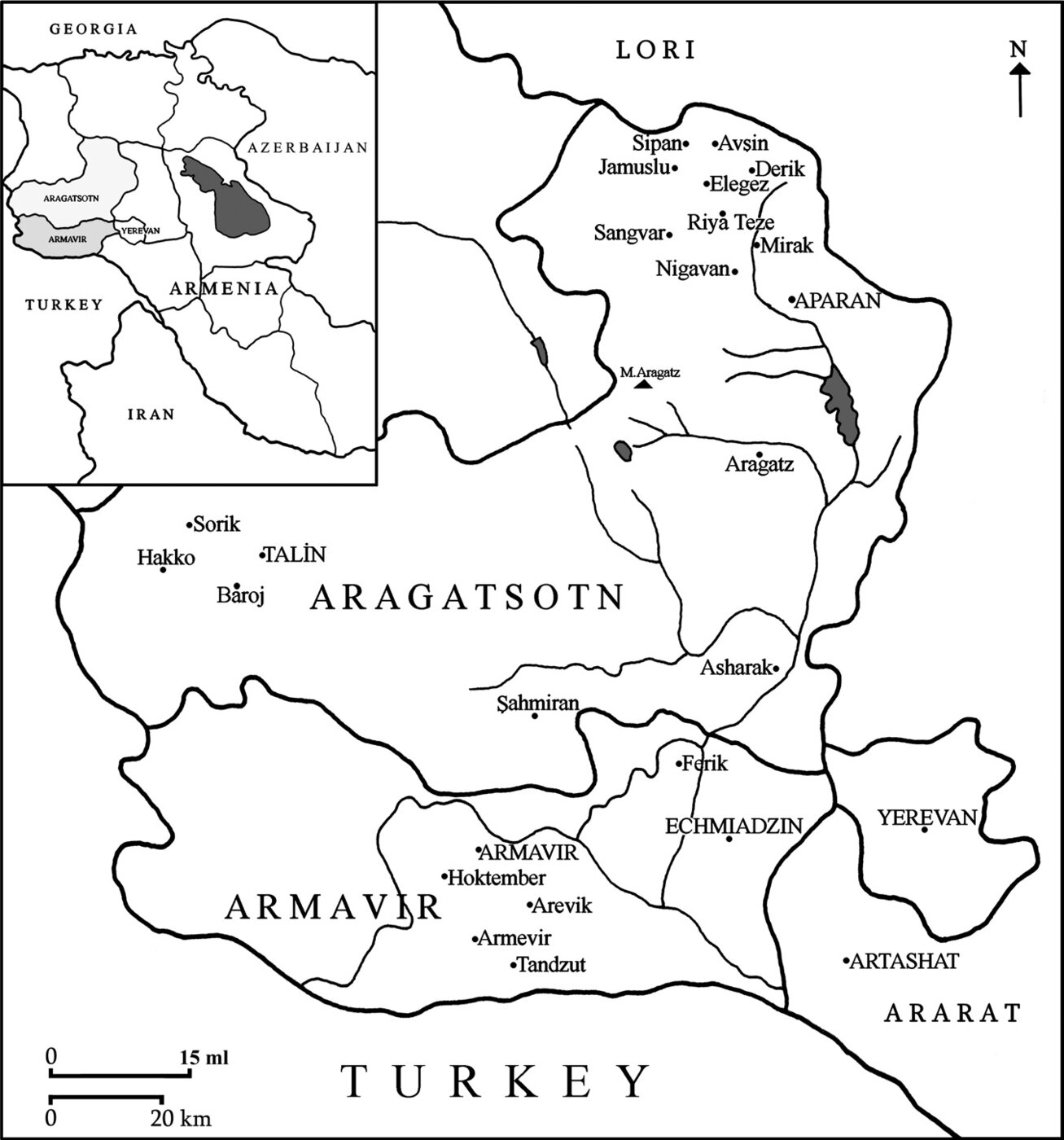
- On Mount Elegez (Aragaz) and in Aparan: 13 purely Ezidi mountain villages, founded 1820–1835, among them Elegez, Rîya Teze, Mîrek, Sîpan, Dêrik and Şênkanî.
- Talin district: villages settled in 1920 by refugees from Kars.
- Ararat plain: winter villages and mixed villages, e.g. Şamîram, Qamişlû, Zovûnî (formerly Gundê Emo).
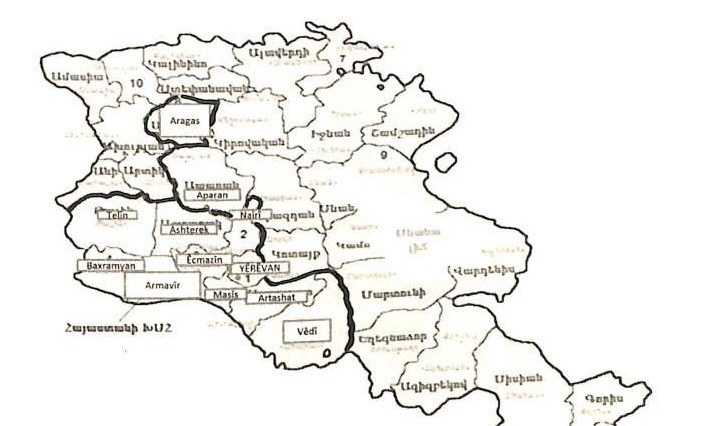
An overview with population figures is offered by Ezidi villages of Armenia.
Way of life
The Ezidis were livestock breeders. Until recently many lived semi-nomadically: at the end of spring they moved to the summer pastures (zozan), in autumn back again, and in winter they grazed the livestock in the Ararat plain. In the mountain villages winter lasted six to seven months; only barley, wheat and fodder grass were grown.
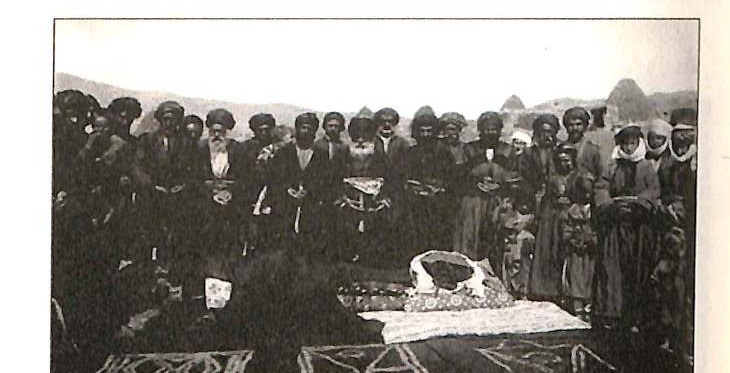
Characteristic of the community were their own villages, marriage within the community and their own customs. From the 1950s schooling took place in Armenian or Russian; many family names received the Armenian ending -yan.
Population
| Year | Information |
|---|---|
| 1919 | 14 purely Ezidi villages |
| 1921 | 8500 Ezidis |
| 1922 | 27 purely Ezidi villages; agricultural statistics: 7,945 Ezidis (according to the T’amoyan schoolbook, grades 6 and 9) |
| 1931 | 43 purely Ezidi villages with approx. 14,000–14,500 people |
| 1926 | 6,056 Ezidis (for comparison: Kurds 1,590) (census, according to Amirkhan/demoscope.ru); Guest gives 12,237 Ezidis; the T’amoyan schoolbook (grade 7) likewise 12,237, of whom 6,056 men and 6,181 women |
| 1989 | 51,900 Ezidis (census, according to T’amoyan; Polatov: about 50,000; Amirkhan: about 60,000); T’amoyan schoolbook grade 9: 51,976 |
| before 1991 | about 80,000 (estimate according to Omarkhali) |
| 2001 | 40,620 Ezidis, the largest national minority (census, according to the T’amoyan schoolbook grade 7) |
| around 2005 | “almost halved” since 1991 (according to Omarkhali) |
| 2011 | 35,272 Ezidis (for comparison: Kurds 2,162) (census, according to Amirkhan; “2012” in the book) |
| 2022 | 31,077 Ezidis (census, according to Amirkhan/armstat.am) |
After 1988
After the earthquake of 1988, the conflict over Nagorno-Karabakh and the end of the Soviet Union, the economic situation deteriorated. At the same time Ezidi associations, a radio program in Êzdîkî and the newspaper “Dengê Êzdiyan” came into being. The economic crisis forced many, Armenians and Ezidis alike, to emigrate – above all to Russia.
Settlement in the 1970s
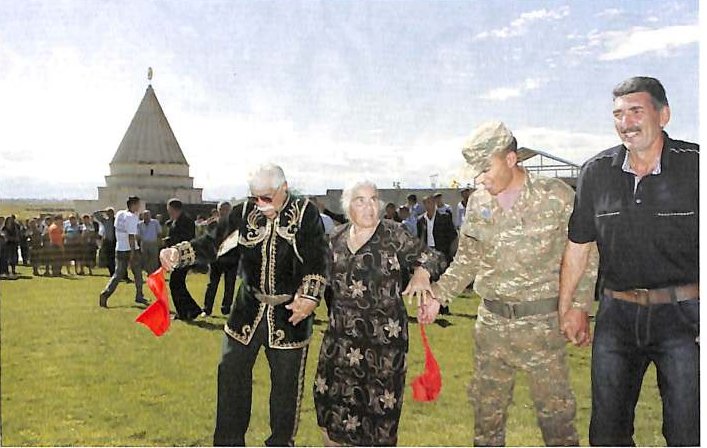
According to the brothers Ordîxanê and Celîlê Celîl, who collected folk poetry in Armenia from 1954 to 1975, in the 1970s the Ezidis lived compactly in eleven villages of the Aparan district (later Aragaz) – Mîrek, Gundaxsaz, Qorbulax, Elegez, Camûşvan, Cercerîs, Qurîboğaz, P’ampa, Çobanmaz, Sengyar and K’arvansera – and in eight villages of the Talin district: Heko, Gyelt’o, T’ilik, Sorik, Qibixtepe, Siçanlû, Beroj and Baysiz. Many also lived in the state farms of Getap, Arteni and Aragaz (Talin district) and mixed with Armenians in the Oktemberyan, Etchmiadzin, Abovyan, Ararat, Masis and Artashat districts. Their main livelihood was livestock breeding and agriculture.
Settlement around 2005
For the period around 2005 Khanna Omarkhali names Ezidis in the raions of Abovyan, Aparan, Aragaz, Ararat, Artashat, Ashtarak, Vedi, Masis, Nairi, Oktemberyan, Talin and Etchmiadzin as well as in the towns of Artik, Gyumri (formerly Leninakan), Yerevan and Tashir (formerly Kalinino). Villages with an Ezidi majority are, according to her, among others (number of houses in brackets):
| Village | Houses |
|---|---|
| Akko | 120 |
| Arteni | 120 |
| Baghramyan | 200 |
| Gyalto | 100 |
| Zvartnots | 200 |
| Kamyshlu (Qamişlû) | 200 |
| Kybykhtapa (Qibixtepe) | 150 |
| Sabunchi | 60 |
| Chatkran | 150 |
| Şamîram | 200 |
Without a number of houses she also names Alagyaz, Koranli and Kurakand. The spellings follow the Russian original.
E’zîz T’amoyan’s memorial volume on the Ezidi volunteers in the Karabakh War names as places of origin, among others, Yerevan, Tashir, Alagyaz, Zovûnî (Kotayk), Jrashen, Mrganush and Baghramyan (Artashat), Kharberd and Ranchpar (Masis), Arshaluys (Etchmiadzin), Shamiram and Agarak (Ashtarak) as well as Nalbandyan, Shenavan and Argavand (Armavir).
Figures and self-understanding
- The census of 1989 was the first in decades in which the Ezidis could again register as Ezidis; according to T’amoyan 51,900 were counted in Armenia, according to S. M. Polatov about 50,000 (see Recognition as a nationality of their own).
- Omarkhali estimates the number before the end of the Soviet Union at about 80,000. This estimate is considerably higher than the result of the census; the sources contradict each other here. According to Omarkhali, by around 2005 the number had almost halved through emigration; according to Polatov, more than half of the Ezidis have left Armenia.
- In the passports of the Ezidis in Armenia “Ezidi” was entered as nationality (according to Omarkhali).
Social life after 1988
According to T’amoyan, after the Spitak earthquake (1988) Ezidi young people took part in the rescue work in Spitak and Gyumri, and Ezidi families donated money and material aid. He also names a cultural center of the Ezidis, an Ezidi department at the Academy of Sciences (Oriental Studies), an Ezidi section in the Writers’ Union of Armenia and Ezidi programs on Armenian Public Radio. At the same time, he says, there were no longer any Ezidi school classes in Armenia; textbooks and teachers were lacking.
Ezidi organizations around 2012–2015
The book by Mirza Sloyan on the sanctuary of Aknalich names the following organizations and media for the years 2012–2015:
| Organization / medium | Leadership (as of 2014/15) |
|---|---|
| National Union of the Ezidis (in the book also “National Union of the Ezidis of the World”) | E’zîz T’amoyan, president |
| National Association of the Ezidis “Midiya-Şengal” | Amo Şaroyan, chairman of the council |
| Association of Young Ezidis of Armenia | Saîd Avdalyan |
| Youth organization “Association of the Ezidis Sincar” | named with Boris Tamoyan and Mamê Emiryan |
| Newspaper “Ezdîxana” | Xidir Hacoyan, editor |
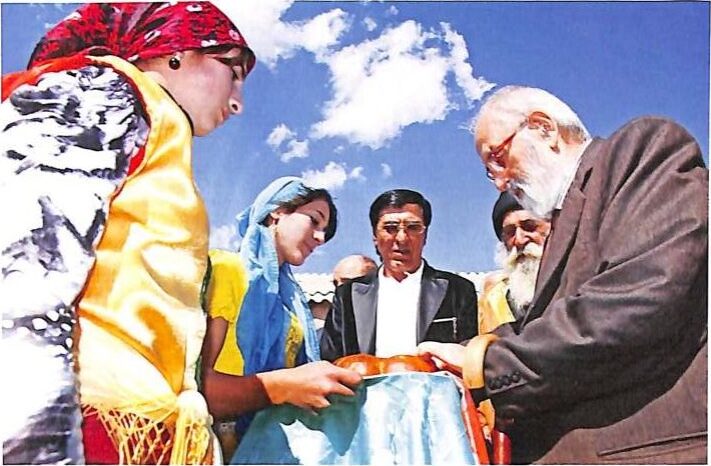
An Ezidi visitor from Noravan said in 2012 that the Ezidis in Armenia had their own language, culture, newspaper and radio. Representatives of the Armenian government described the Ezidi community as one of the largest and most active minorities of the country; in the book it is also called the largest national minority.
Political participation after 1991
- Parliament: between 2012 and 2015 the Ezidis had no deputy of their own in the National Assembly. This was frequently lamented in the book; Mîr Tahsîn Beg, too, publicly wished for more Ezidi representatives in parliament and the authorities in 2012 and 2015.
- Yerevan: Armen Amoyan is named as the first Ezidi in the Council of Elders (city council) of Yerevan. The city administration was positive about the plan for an Ezidi cultural and educational center in Yerevan.
- Army: Ezidis served in the Armenian army and fought in the Karabakh War. According to a statement in the book, over 30 Ezidi fighters fell there.
- Education: the number of Ezidi students at Armenian universities was considered low; teachers for the mother tongue were lacking. A new generation of textbooks was available but, according to Sloyan, in need of improvement.
- Economy: according to Sloyan, Ezidis work mainly as livestock and sheep breeders, milk producers and farmers; he called for better access to pasture land.
- Emigration: many Ezidis emigrated after 1991; in 2014 houses stood empty in Ezidi villages. Diaspora entrepreneurs are in some cases building houses in their places of origin, for example near Aparan.
Censuses 1989–2022 according to Amirkhan
- 1989: according to Amirkhan, after the census the authorities gave about 60,000 Ezidis. This is higher than the figures of T’amoyan (51,900) and Polatov (about 50,000); the sources contradict each other, and none explains the difference. Against N. Mosaki, Amirkhan emphasizes that the Ezidis in Armenia were counted separately already in 1989 and not only in 2001.
- 1926: the table cited by Amirkhan (6,056) gives only half as many Ezidis as Guest (12,237); see Recognition as a nationality of their own.
- 2011 and 2022: in 2011 35,272 and in 2022 31,077 Ezidis were counted – a decline of almost 12%. The Ezidis are the largest national minority of the country; about 80% live in rural areas.
- Religion 2022: 13,255 Ezidis stated Şerfedîn as their religion – less than half; in 2011, according to Amirkhan, it was about 70%. 17,822 named another religion, almost 10,000 of them a Christian one; 2,057 gave no information. Armenian statistics list the religion under the name “Şerfedîn”. Conversely, 903 adherents of Şerfedîn stated a nationality other than “Ezidi”.
- Education 2022: only just over 4.7% of Ezidis with an educational qualification (just over 1,000 of almost 26,000) had higher education.
North and center
Amirkhan distinguishes two groups of the Ezidis of Armenia:
| North | Center | |
|---|---|---|
| Area | Aragatsotn province (formerly Elegez, Aparan districts) | Ararat plain |
| Livelihood (traditional) | agriculture | livestock breeding |
| Day of remembrance of the dead | in June | in September, after the return from the summer pastures on the Aragaz |
According to Amirkhan, marriages between the two groups were rare. The Ezidis of Georgia come almost entirely from the north. At the end of the 1980s it was mainly the Ezidis of the Ararat plain who demanded recognition as a people of their own at rallies; in the north some held on to another designation (see Recognition as a nationality of their own). Compare the dates of the day of remembrance of the dead in Days of remembrance for the deceased.
Elegez in the Soviet era
According to Amirkhan, Elegez was a district center from 1937 and was merged with the Aparan district in 1951; other sources give 1947 or 1949 (see Elegez district). When the Aparan district was divided at the beginning of the 1970s and not Elegez but the Armenian village of Zaghkahovit became the center of the new Aragaz district, road blockades and protests by the Ezidis ensued (details in Recognition as a nationality of their own).
Temples
According to Amirkhan, two temples were opened in Aknalich in 2012 and 2019, both built by Mirza Sloyan; later another was built in the north, in Rîya Teze. They are the destination of annual pilgrimages, also by Ezidis from Russia (see Sanctuary and temple in Aknalich). In autumn 2023 the Armenian police arrested Ezidi demonstrators who were protesting against the visit of the new Mîr to the temple of Aknalich (see Succession of the Mîr and Baba Şêx 2019/2020).
On the legal situation (constitution, language charter, minority representation) see Legal situation in Armenia.
Distribution in 1922 and 1989 according to T’amoyan’s schoolbooks
The Ezidi schoolbooks by E’zîz T’amoyan and his co-authors reproduce two tables by administrative area (spelling of the places simplified).
1922 (according to the agricultural statistics of 1922, schoolbook grade 6):
| District | Ezidis | of which |
|---|---|---|
| Leninakan | 5,299 | H’ecîxelîl 4,526, Talin 574, Dûzk’end 115, town of Leninakan 22 |
| Etchmiadzin | 2,310 | Qurduqulî 1,409, Semeqer 765, Zangîbasar 72, town of Ashtarak 47 |
| Yerevan | 259 | Exte 248, town of Yerevan 5 |
| Nor Bayazet | 39 | town of Nor Bayazet 27 |
| Lori | 38 | Stepanavan 22, town of Stepanavan 11 |
| Dilijan, Karakilisa, Zangezur, Meghri | 0 | – |
| Armenia | 7,945 | rural 7,827, urban 118 |
The individual items together give the totals of the book.
1989 (table in the schoolbook grade 4; the source of the figures is not given there, probably the census of 1989). The largest figures:
| Area | Ezidis |
|---|---|
| Armavir district | 9,952 |
| Etchmiadzin district | 7,303 |
| City of Yerevan | 7,086 |
| Talin district | 4,193 |
| Aragaz district | 4,036 |
| Masis district | 3,231 |
| Artashat district | 2,651 |
| Nairi district | 2,388 |
| Ashtarak district | 2,169 |
| Ararat district | 2,142 |
| Abovyan district | 1,840 |
| Town of Etchmiadzin | 1,007 |
| Town of Armavir | 928 |
The book gives smaller figures for many other towns and districts, for example Tashir 567, Vardenis 339, Gyumri 325, Ani 285. The table gives no overall total. The book also names the villages with an Ezidi population by district (see Ezidi villages of Armenia).
Sources
- Eskerê Boyîk: Bi Kurtayî Dîroka Êzidiyên Ermenistanê (A short history of the Ezidis of Armenia). Diyarbakır 2016, p. 11–16, 170–175, 203–206
- Birgül Açıkyıldız: The Yezidis. The History of a Community, Culture and Religion. London 2010, p. 26 (ill.)
- International Journal of Yezidi Studies, Vol. 1. Tbilisi 2024, p. 105 (ill.)
- Khanna Omarkhali (Ханна Омархали): Йезидизм. Из глубины тысячелетий (From the depths of the millennia). Saint Petersburg 2005, p. 28, 80
- Ordîxanê Celîl, Celîlê Celîl: Zargotina K’urda, Part 1. Moscow 1978, p. 14, 35
- E’zîz T’amoyan: The heroic deed of the Ezidi people – Ezidis in the Karabakh war (Armenian, memorial publication, Yerevan, c. 2000–2007), p. 8, 15–50, 55, 57–58
- E’zîzê E’mer, H’esenê Şêx-Me’mûdê: E’debyet û zimanê êzdîkî, grade 4. Yerevan: Spîka 2013, p. p-083–087
- E’zîzê E’mer, H’esenê Şêx-Me’mûdê: E’debyet û zimanê êzdîkî, grade 6. Yerevan: Spîka 2014, p. p-048–049
- E’zîzê E’mer, H’esenê Şêx-Me’mûdê: E’debyet û zimanê êzdîkî, grade 7. Yerevan: Spîka 2014, p. p-061–062, p-073
- H’esenê Şêx-Me’mûdê, E’zîzê E’mer: E’debyet û zimanê êzdîkî, grade 9. Yerevan: Spîka 2012, p. p-024–025
- S. M. Polatov: Дети Солнца (Children of the Sun). Rybinsk 2011, p. 175
- Mirza Sloyan (Mirzoyê Çolo Siloyan): Дорога, ведущая в храм. Три года спустя (The road leading to the temple. Three years later). Yerevan 2015, p. 45, 53, 59–60, 70, 91, 95, 318, 331, 340, 437, 459–465, 474–477
- S. Amirkhan: Народ езидов: право на идентичность (The people of the Ezidis: the right to identity). Moscow 2025, p. 5, 29, 33–35, 45, 80–89
Found a mistake?
Is something wrong – a fact, a spelling, a source, an image? Let us know: we check every report and correct the article.
Other spellings: Alagjas · Aragats · Abaran · Bash-Aparan · Qers · Schamiram · Jerewan · Eriwan · Erivan · Ezidiki · Ezdeki · Sanjaq · Sandschak · Sancak · Sinjar · Sindschar · Shingal · Shengal · Singal · Emir