
For centuries many Ezidis lived in the territory of present-day Turkey: in the Tur Abdin around Midyat, around Viranşehir, Batman and Siirt, in the valleys around Redwan and in the borderland of the Serhed in the northeast. Through persecution, emigration to the South Caucasus and above all through flight to Europe in the 1980s, these communities have almost completely disappeared. Most Ezidis from Turkey live today in Germany. The article follows mainly Şefik Tagay and Serhat Ortaç (2016), supplemented by information from Birgül Açıkyıldız (2010) and John S. Guest (1987).
Areas of settlement
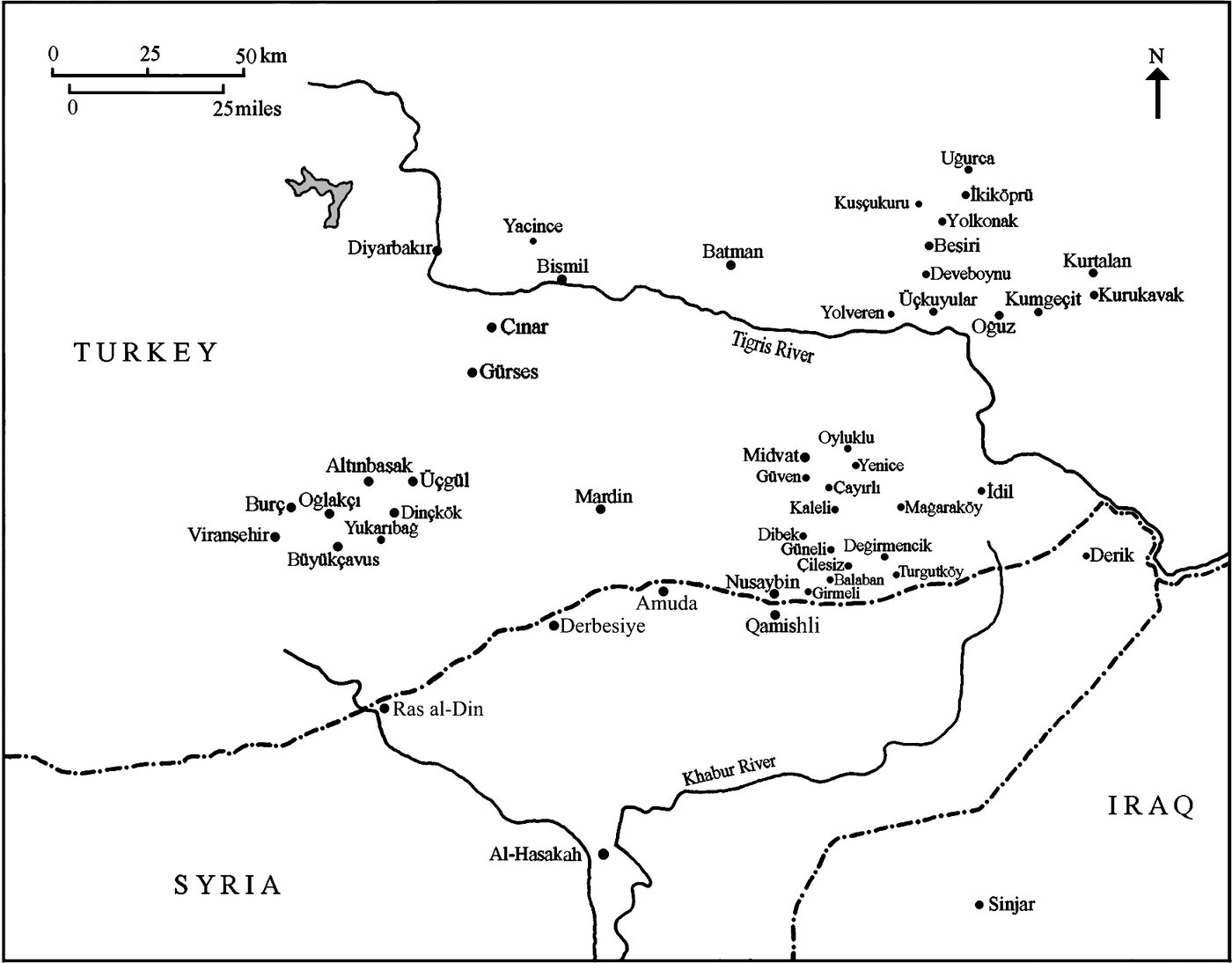
- Tur Abdin: the hill country around Midyat in southeastern Turkey. Here also lie the places of pilgrimage Merava Şêx Adî (village of Güven) and Meri Harab (village of Çayırlı) – see Sanctuaries in Armenia, Turkey and Syria. The Ezidis of the Tur Abdin celebrate a feast of their own, Batizmî.
- Other places: according to Açıkyıldız, in the 1980s Ezidis lived in Beşiri, Kurtalan, Bismil, Midyat, İdil, Cizre, Nusaybin, Viranşehir, Suruç and Bozova (p. 75).
- Redwan and Xerzan: east of Diyarbakır; described by A. H. Layard in 1849 – see Redwan and Xerzan around 1849.
- Serhed: the former Ottoman-Persian borderland around Bazîd, Wan and Kars. From here many Ezidi tribes moved to present-day Armenia in the 19th century – see The immigration into the South Caucasus and Tribes of the Serhed. According to Tagay and Ortaç, from the 1830s several tens of thousands of Ezidis fled to Armenia and Georgia (p. 49). According to Açıkyıldız, at the end of the 19th and beginning of the 20th century many Ezidis – together with Armenians and above all under the pressure of the Hamidiye regiments – left cities such as Van, Bitlis, Doğubayazıt, Kars and Erzurum (p. 40). In 2005 she found no Ezidis left in Van (p. 44).
Persecution in the 19th century
From the 16th century onward, the Ottoman governors of Diyarbakır, Baghdad and Mosul and powerful Muslim local princes repeatedly undertook punitive expeditions against the Ezidis (Tagay/Ortaç, p. 49).
In 1844 Bedirxan Beg, the Kurdish emir of Botan, attacked the Ezidis in the Tur Abdin in order to force them to convert to Islam. Many were captured or killed; seven villages submitted and adopted Islam (Tagay/Ortaç after the eyewitness G. P. Badger, p. 50). Further details – children were captured and sold in the cities of the region – are in the article Campaigns against Şengal and Şêxan 1836–1847.
In the Turkish state since 1923
- No recognition: since 1923, because of laicism, there has been no religiously motivated state policy of persecution. However, the Ezidis are not recognized as a religious community in their own right; legally they are treated as a group that split off from Islam and have hardly any collective rights (Tagay/Ortaç after Kartal 2007, p. 52).
- Pressure from neighbors: when Ezidis were oppressed by their Muslim neighbors – according to the authors mostly Kurdish –, the state did not intervene; authorities and courts offered hardly any protection. Many converted to Islam under pressure or fled (p. 52).
- Everyday life: girls were often not sent to school, out of fear of harassment or abduction by Muslim neighbors; most women of the older generation could therefore neither read nor write. Most families lived from agriculture (p. 96).
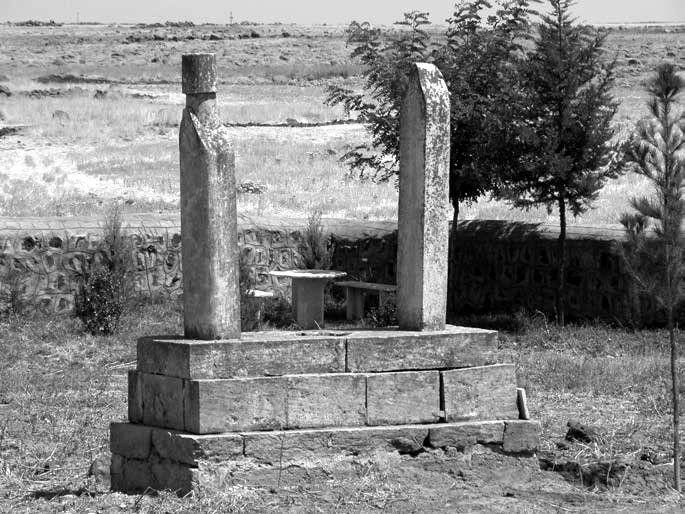
- Graves: unlike in Germany today, graves were not decorated in Turkey, because they were often desecrated by non-Ezidis (p. 84).
Herbert Schnoor’s report (1989)
The Interior Minister of North Rhine-Westphalia, Herbert Schnoor, traveled to Turkey in 1989. According to Tagay and Ortaç, he found (pp. 93–94):
- The Ezidis were denied political rights and social participation; many lived in poverty.
- In many villages their landholdings were deliberately destroyed or transferred to Muslim neighbors without their consent.
- The administration and courts hardly protected them; jobs were denied to them because of their religion.
- They had to hide their religion in public and practice it in secret.
The emigration
- Guest workers: the first Ezidis from Turkey came to Germany as guest workers at the end of the 1960s; the basis was the German-Turkish recruitment agreement of 1961 (Tagay/Ortaç, pp. 7, 92). In the mid-1980s Guest knew inhabitants of the village of Kurukavak in eastern Turkey who worked in West Germany (p. 11).
- Flight after 1980: after the military coup of 1980 and the beginning of the fighting between the Turkish state and the PKK, almost all Ezidis fled from Turkey to Europe in the 1980s. Most received asylum in the Federal Republic after German courts had established a religiously motivated and state-tolerated group persecution in Turkey (Tagay/Ortaç, pp. 52–53). On the asylum procedure, the deportation ban and the expert opinions see Ezidis in Germany.
- At the end of the 1990s, according to Tagay and Ortaç, only a few hundred, mostly older Ezidis still lived in Turkey (p. 92).
The situation today
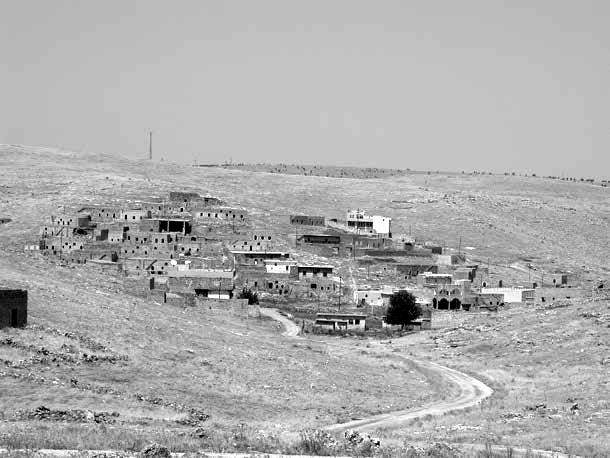
In 2005 Açıkyıldız visited the Ezidi villages around Viranşehir and Midyat. She found them largely abandoned and dilapidated, some resettled by Muslim families (p. 41):
- In the village of Burç 15 families of the Sîpkan tribe still lived (pp. 41–42).
- In Oğlakçı near Viranşehir (Şerqiyan tribe) there were still five Ezidi families; the others had emigrated to Germany (p. 43).
- In the village of Çayırlı near Midyat she met a family that lives in Germany and spends the summer in its newly built house in the village; the children spoke Êzdîkî and German (pp. 43–44).
Figures
| Period | Number | Source |
|---|---|---|
| mid-1980s | about 10,000, some of them in West Germany | Guest (p. 247) |
| 1980s | 60,000 | Açıkyıldız (p. 75), without further origin |
| late 1990s | a few hundred, mostly elderly | Tagay/Ortaç (p. 92) |
| 2000 | 423 | census, according to Açıkyıldız (p. 46) |
| 2016 | a few hundred; in the table about 500 | Tagay/Ortaç (pp. 30–31) |
The figures for the 1980s are far apart (10,000 and 60,000 respectively). Which is correct cannot be decided from the sources. For further figures see Worldwide distribution of the Ezidis.
Feasts of the Ezidis from Turkey
According to Tagay and Ortaç, for the Ezidis from Turkey Îda Êzî in December is the most important feast, with three weeks of three fasting days each (pp. 87–88; see Feasts and fasting days). The Ezidis from the Tur Abdin also celebrate Batizmî (pp. 88–89).
Sources
- Şefik Tagay, Serhat Ortaç: Die Eziden und das Ezidentum. Geschichte und Gegenwart einer vom Untergang bedrohten Religion. Hamburg (Landeszentrale für politische Bildung) 2016, p. 7, 30–31, 49–50, 52–53, 84, 87–89, 92–94, 96
- Birgül Açıkyıldız: The Yezidis. The History of a Community, Culture and Religion. London 2010, p. 40–46, 75
- John S. Guest: The Yezidis. A Study in Survival. London/New York 1987, p. 11, 247
Found a mistake?
Is something wrong – a fact, a spelling, a source, an image? Let us know: we check every report and correct the article.
Other spellings: Viransehir · Viranschehir · Viranshehir · Serhad · Sheikh Adi · Scheich Adi · Shaikh Adi · Şêxadî · Shikhadi · Qers · Mossul · Mûsil · Sinjar · Sindschar · Shingal · Shengal · Singal · Shekhan · Scheichan · Shaikhan