
The Ezidis of the Serhed were divided into tribes (eşîr), which in turn were divided into clans (bere). At the head of a tribe stood an Axa or Beg from a leading family. The tribes were livestock breeders and had fixed summer pastures (zozan) and winter villages (qişle).
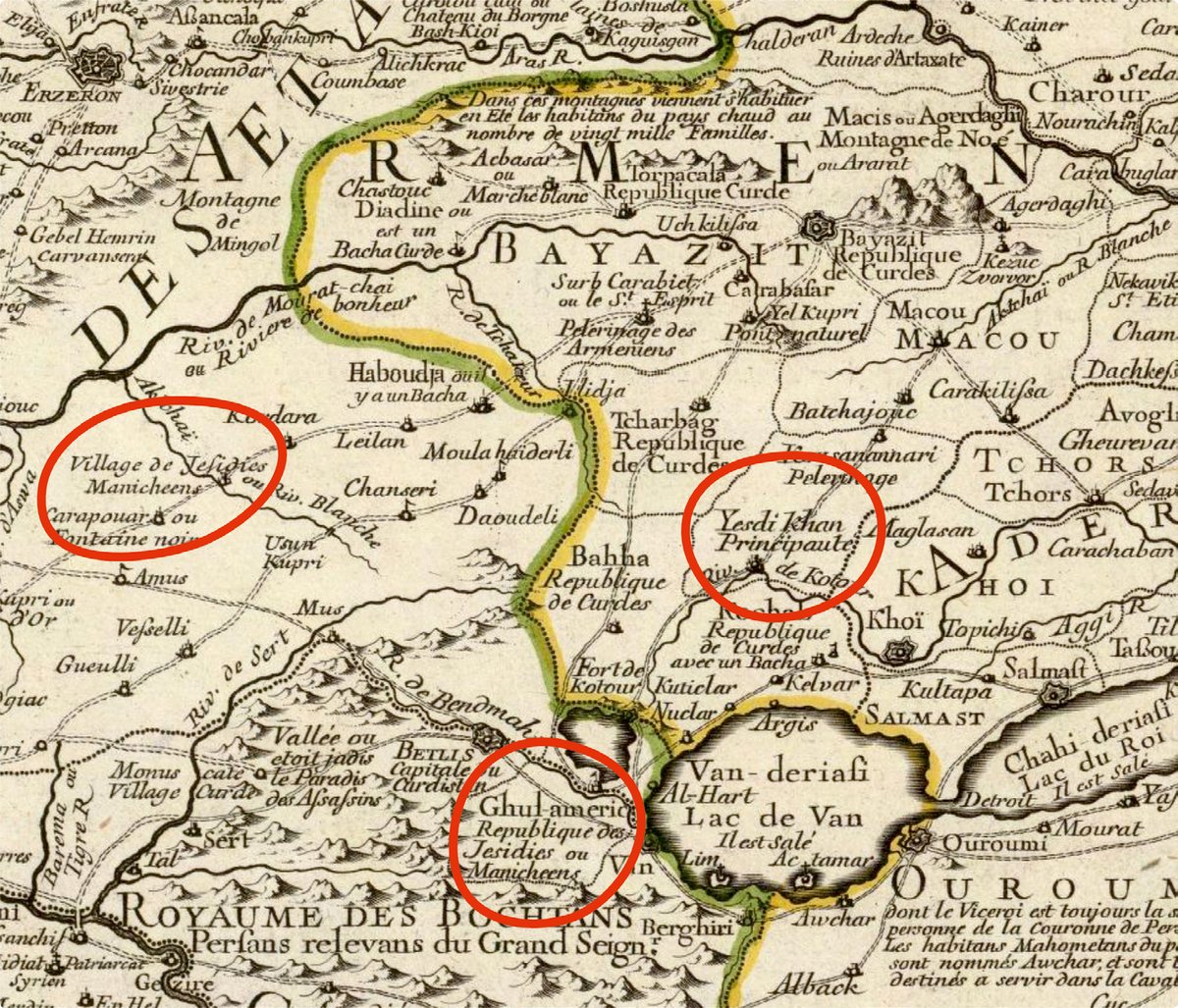
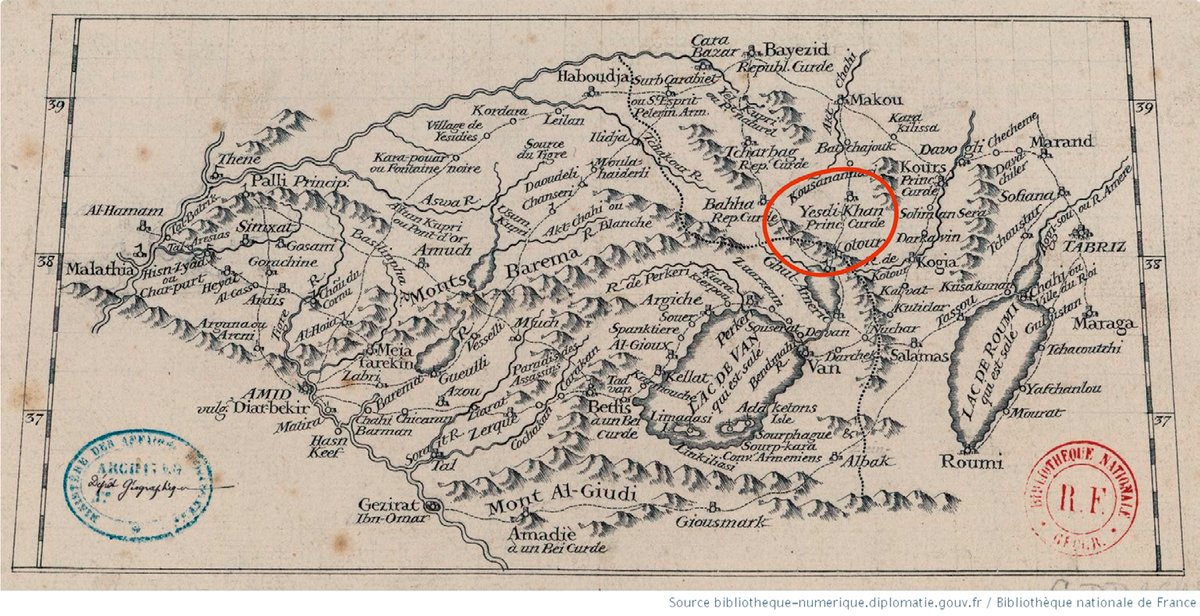
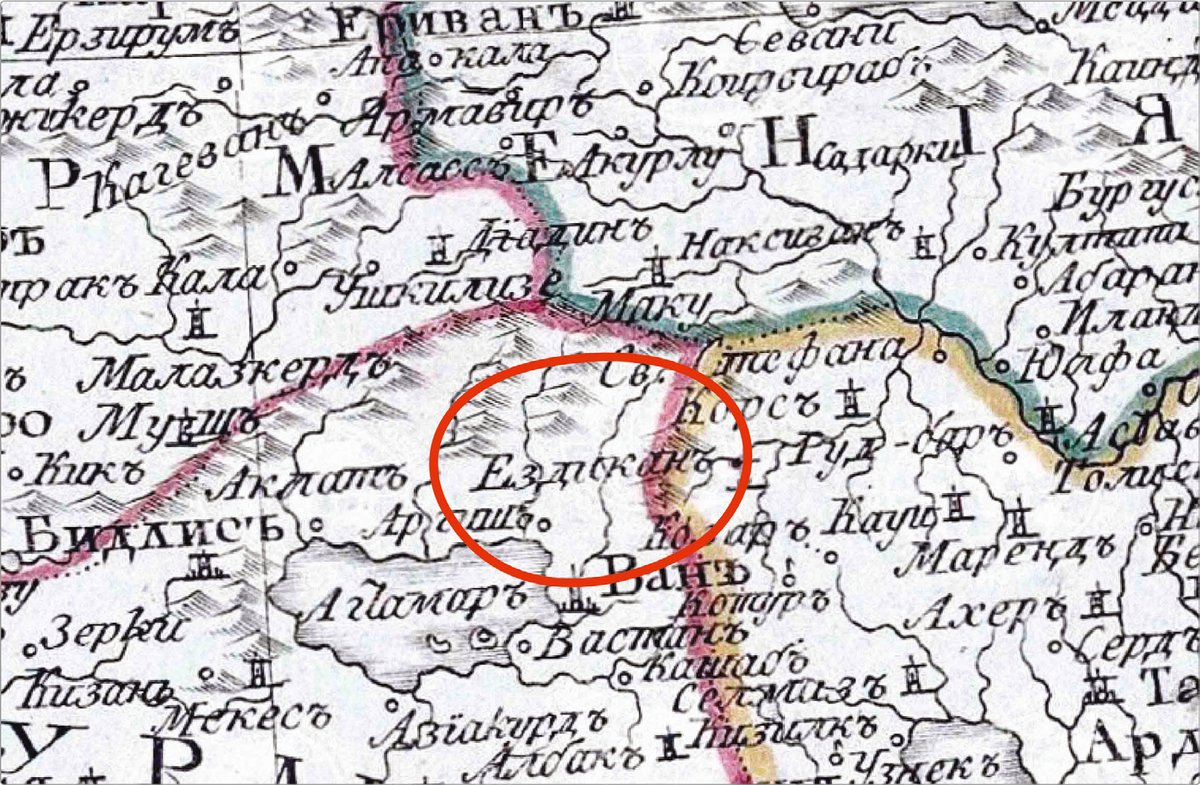
On European and Russian maps of the 18th century, a region “Yezdi Khan” (Ezdîxan) is marked in the Serhed:
The great tribes
| Tribe | Origin | Settlement in the South Caucasus |
|---|---|---|
| Hesinî | Entab, then Bazîd | Surmelî (Mount Sinek), after 1918 Ararat plain, Şamîram |
| Sîpkî | Entab, Eleşkirt | Aparan, Kars (Digor), after 1918 Talin and Elegez |
| Zuqurî | northwest of Wan | Çuxur plain, after 1918 Ararat plain |
| Mehmûdî | Wan | Tribe of the Kok Axa family |
The four tribal confederations (Êl)
According to Khanna Omarkhali (2005), the Ezidis of the former Soviet Union – regardless of their caste – belong to one of four tribal confederations. Such a confederation is called êl among them (from the word îl, “tribe, clan”):
| Tribal confederation | Article | Notes in Omarkhali |
|---|---|---|
| Zukrî | Zuqurî | historically well-known confederation; it includes, among others, the Mirîd clans Mamreşî, Mendasorî, Mendikî, Reşî and Reşkî, the P’îr clans Omerxalî and Xanî, and Şêx of the Şêx Mend line |
| Ortilî | Ortlî | – |
| Sîpkî | Sîpkî | – |
| Hesenî | Hesinî | – |
The leader of the Zukrî confederation was Cangîr Axa, son of Xetîb Axa, from the Mirîd clan Mendikî. Omarkhali gives his dates as 1872–1943; Perminov gives 1874 as the year of birth.
It is noteworthy that a confederation includes not only Mirîd clans but also families of the clergy (Şêx and P’îr). Other sources describe the confederations somewhat differently: Karam Ankosi divides the Ezidis of Armenia and Georgia into two large parts, the Zuqurî or Van Ezidis and the Aparan or Kars Ezidis (see Tribes in the South Caucasus).
Terms according to Omarkhali
- For the clans of the Mirîd, the Ezidis use berek, qebîl, mal (“house”) and, less often, ber; for the clans of the clergy only mal.
- Ber means rather “house, branch”: thus the Reşî clan is divided into three ber or mal: Gurkî, Sêvoyî and Kopoyî.
- According to Omarkhali, the word eşîret (tribe) is not used among the Ezidis in Armenia, Georgia and Russia, but it is in Iraq and Syria. Ankosi also remarks that eşîr is hardly used in the South Caucasus (see Terms of the tribal order).
- Ocax (“hearth”) formerly designated a group with a common forefather, today rather house and family.
Number and names of the clans
Omarkhali counts about 80 to 90 Mirîd clans; she collected their list among Ezidis in Armenia, Georgia and Russia. The names go back partly to a forefather or leader (e.g. Mixaylî), partly to places, partly to figures of tradition or saints. Knowledge of the names and history of one’s own tribe is very important for every Ezidi; tribes have split and reunited over the course of time.
Clans
The clans of the Ezidis in Armenia are well documented because they are named in the village tables. Examples: Mixayîlî, Şemsikî, Dasinî, Çuxreşî, Belî, Korkotî, Stûrkî, Recebî, Beravî, Mendikî, Mendesorî, Rojkî, Angosî, Şanî, Bûtikî, Qazanî. Many villages were inhabited jointly by several clans – see Ezidi villages of Armenia.
The Mendika, Mendesora and Berava also belonged to the confederation of the Zuqurî; in the Çuxur plain lived the clans Rega, Budika, Mendika, Kurtika, Desiniya, Divana, Mamereşa, Çuxreşa, Receba, Mendesora and Qazana.
Changes in the Soviet era
From 1924, leadership by tribal heads was abolished and replaced by village soviets. Belonging to tribe and clan, however, remained alive in the families.
Further articles on tribes
- Tribes of the Ezidis in the South Caucasus (index) – alphabetical table of all tribes according to Karam Ankosi
- Tribes of the Ezidis in Germany – tribes from Turkey, Şerqî and Xaltî confederations
- Tribes in Şengal, Iraq, Syria and Turkey
- Terms of the tribal order – el, berek, eşîr, mal, malmezin, rîspî, Axa
Individual tribes and clans: Anqosî · Bayindurî · Belekarî · Belî · Beravî · Bûtikî · Çuxreşî · Dasinî · Dawudî · Dodkî · Îsadizî · Kaşaxî · Kilêrî · Korkitî · Kurtikî · Mamreşî · Mehemdî · Mendesorî · Mendikî · Mixaylî · Mûsesanî · Ortlî · Pîvazî · Qizilî · Recebî · Reşî · Rojkî · Şamî · Şemsikî · Şerqî · Stûrkî · Ûtî · Xaltî
Sources
- Eskerê Boyîk: Bi Kurtayî Dîroka Êzidiyên Ermenistanê (A short history of the Ezidis of Armenia). Diyarbakır 2016, p. 19–20, 117–123, 166, 171–173
- Karam Ankosi: Племена езидов на Южном Кавказе и в Германии (The tribes of the Ezidis in the South Caucasus and in Germany). Tbilisi 2004, p. 24–47
- Khanna Omarkhali (Ханна Омархали): Йезидизм. Из глубины тысячелетий (From the depths of the millennia). Saint Petersburg 2005, p. 59, 162–165
- A. V. Perminov: Езиды – древний народ Адаби (The Ezidis – the ancient people Adabi). Sharya 2016, p. 67
- International Journal of Yezidi Studies, Vol. 1. Tbilisi 2024, p. 130–132 (maps)
Found a mistake?
Is something wrong – a fact, a spelling, a source, an image? Let us know: we check every report and correct the article.
Other spellings: esir · eschir · eshir · Serhat · Serhad · Shamiram · Schamiram · Abaran · Bash-Aparan · Qers · Alagyaz · Alagjas · Aragats · Murid · Pîr · Sheikh · Scheich · Shex · Sinjar · Sindschar