
Koço (also Kocho, Kojo) is an Ezidi village on the southern edge of the Şengal district in northwestern Iraq. It became known worldwide through the massacre of 15 August 2014, in which the “Islamic State” (IS) shot the men of the village and abducted the women and children. The Nobel Peace Prize laureate Nadia Murad and the author Farida Khalaf, whose books are the most important testimonies about the village, come from Koço.
This article relies mainly on these two memoirs and on the investigative report by Patrick Desbois and Costel Nastasie (2018). Memoirs are personal testimonies; figures and dates partly differ between the sources and are given side by side. Names of victims, relatives and helpers are not given.
Location
- Koço lies in the plain south of the Şengal mountains, according to Farida Khalaf about 20 km from the mountains. According to Nadia Murad, it was far from the old villages on the mountain range and already close to the non-Ezidi areas of Iraq.
- The road out of the village led only north (to the town of Şengal and the mountains) or south into Arab territory (Farida Khalaf).
- According to Murad, there was an asphalt road to the mountains only from 2013; before that the drive via the town of Şengal took almost an hour.
- Neighboring Ezidi villages included Siba Şêx Xidir, Til Ezer, Til Banat and Hatimiya; the other neighboring villages were predominantly Sunni Arab.
Foundation and development
- According to Nadia Murad, the first Ezidis came to Koço in the mid-1950s. The land belonged to owners from Mosul and was farmed by Sunni Arabs. A Muslim lawyer helped the Ezidis with the purchase and was remembered gratefully in the village.
- At Murad’s birth (1993) about 200 families lived in the village, most of them closely related to one another. Farida Khalaf gives about 1,700 inhabitants for 2014.
- In the 1970s, according to Murad, Saddam Hussein’s government forcibly resettled Ezidis and other minorities from their villages on the Şengal mountains into planned settlements (in the course of the “Arabization” of the north). The sources do not say whether Koço itself was affected; the village lay outside the old mountain settlements. See Iraq in the 20th century.
- According to Murad, Koço got a school in the 1970s, at first only up to the fifth grade and only in Arabic; Farida Khalaf connects its founding with the compulsory schooling of 1970. Until 2014 the teachers came from outside.
Life in the village
- The houses were built of mud bricks, with a courtyard and the tandur (bread oven) as the center; in summer people slept on the roof. The families kept sheep and grew onions and vegetables; ponds served for irrigation, and mulberry, almond and apricot trees stood in the gardens (Murad; Khalaf).
- The village took important decisions in the assembly house under the chairmanship of the Muxtar (village headman).
- There was trade and friendship with the neighboring villages. Many Ezidi boys had a Muslim Kirîv, who held them at circumcision and thereby became a kind of godfather and protector of the family. At the same time mistrust remained: some Muslim visitors would not eat with Ezidis.
- Many men served in the Iraqi army and police.
- Wandering Qewal visited the village with flute and drum; every year in autumn the village went on pilgrimage to Lalîş (Murad; Khalaf).
After 2003
- According to Murad, after 2003 the KDP took over the most important posts in Şengal and opened party offices, also in Koço.
- After the attacks of 14 August 2007 on Til Ezer and Siba Şêx Xidir (see Şengal 2007 and 2014), the men of Koço built an earth wall and later a ditch around the village, with their own guard posts.
- In early summer 2014 farmers and a shepherd from Koço were abducted to a Sunni neighboring village; the perpetrators demanded ransom or conversion to Islam (Murad).
- After the fall of Mosul in June 2014, the regional government sent Peshmerga to protect the village – according to Murad a unit that slept in the school, according to Khalaf four Peshmerga, for whom the Muxtar provided a house. According to Murad, the request to be allowed to set up a separate Ezidi unit was refused.
The siege, 3–15 August 2014
| Date | Event | Source |
|---|---|---|
| night of 2–3 August | The Peshmerga withdraw from Koço without warning the inhabitants. | Khalaf; Desbois (witness); Murad |
| 3 August | IS appears at the village; an attempt to flee north in a convoy fails – a local Arab strongman orders them to turn back, cars driving ahead are fired upon. According to Desbois’ witnesses, about 15 cars were able to escape. | Khalaf; Desbois |
| first days of August | IS fighters and Arab neighbors surround the village. Men from the neighboring villages collect all weapons from house to house. The neighboring village of Siba Şêx Xidir is attacked at night. | Khalaf; Murad |
| 5 August | Ultimatum: conversion or death; the deadline is extended. | Shammo |
| 12 August | Ultimatum in the assembly house with a three-day deadline; at first there was also talk of a fine. | Murad |
| – | The Muxtar refuses conversion in the name of the village; the inhabitants of Hatimiya escape in the night. | Khalaf; Desbois |
| 15 August | Massacre (see below). | all |
- Discrepancies: Murad dates the ultimatum to 12 August, Shammo to 5 August; Khalaf and Desbois’ witness give a three-day deadline without a date. Murad speaks of a siege of “almost two weeks”.
- According to Khalaf, the number of inhabitants fell through flight from 1,700 to about 1,300. The Muxtar’s calls for help to Baghdad and to aid organizations, and pleas by Ezidi emigrants in the USA to Washington, Erbil and Baghdad, remained without success (Khalaf; Murad).
- During the siege the electricity failed. According to Murad, some families secretly celebrated the feast of Batizmî and burned photos and white clothing so that they would not fall into the hands of the perpetrators.
The massacre of 15 August 2014
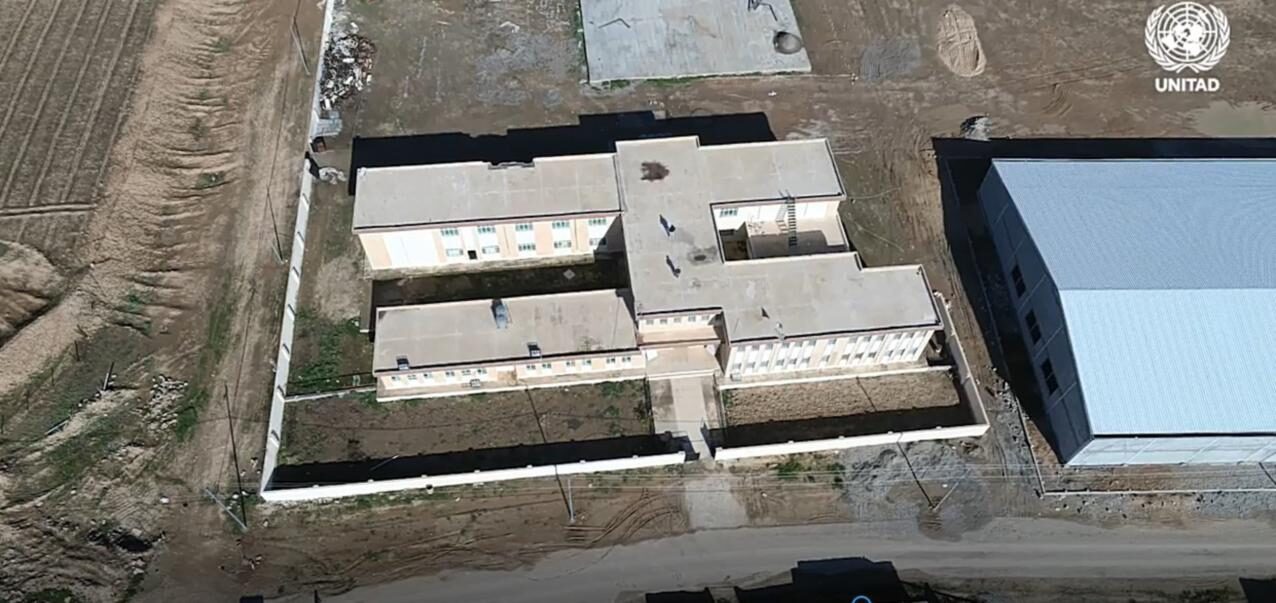
- In the morning IS vehicles came into the village – according to Khalaf 13 white vehicles, according to Desbois’ witnesses about 80. All inhabitants had to gather in the two-story school at the entrance to the village. Money, gold, telephones and identity papers were collected in sacks.
- Women and children were taken to the upper floor, the men remained below. Conversion to Islam was demanded again; no one converted.
- The men and older boys were taken in groups on trucks and in cars to several places at the edge of the village and shot. According to Desbois’ witnesses, this happened among other places at a nearby farmstead with water basins dug into the ground; afterwards the dead were covered over with a bulldozer. A few men survived beneath the dead and fled to the mountains at night.
- Perpetrators: according to the survivor in Desbois, almost all the shooters were Sunni neighbors from the area who had joined IS. Khalaf and Murad also report that men from the Arab neighboring villages helped. Likewise, Tezcür, Kaya and Sevdeen (2021) write that the IS fighters in Koço came from neighboring Arab villages and had kept the village surrounded until 15 August (kurds-yezidis-me pp. 85–86). According to Krimmer (2020, after the UN Human Rights Council), Koço was an exception: IS captured the other Ezidis who had stayed behind within 72 hours, while Koço was only attacked on 15 August (krimmer p. 12).
- Women and children were taken to the institute of Solax. There the young women and girls were separated from their mothers and abducted to Mosul and on to Raqqa; mothers and children were taken to Tel Afar. The older women were murdered in Solax. On their further fate see Abduction and enslavement, on the boys Forced recruitment of Ezidi boys.
Number of victims
| Item | Number | Source |
|---|---|---|
| men and boys killed | “several hundred” | Murad |
| men and boys killed | over 500 | Shammo (2026) |
| men and boys killed | at least 700 | UN, according to Tagay/Ortaç (2016) |
| men executed | 500–700 | Eziden Weltweit (2018), according to Krimmer (2020) |
| executed / missing | at least a hundred, probably several hundred / about 400 | Tagay/Ortaç (2016) |
| murdered in Koço | 400 | Nechirvan Barzani, 3 August 2023 (according to Shammo) |
| older women, murdered in Solax | over 80 | OHCHR/UNAMI 2016 (according to Shammo) |
| older women in a mass grave | 80 | Amal Clooney (foreword to Murad) |
| older people, killed near Solax | 84 | Desbois’ Ezidi companions (2016) |
| older women, separated and killed | 67 | second-hand witness in Mikhail |
| remains exhumed in Solax | about 75 women over 40 years of age | exhumation from October 2020 (according to Shammo) |
The figures are based on different points in time and counting methods; the sources evaluated do not give a final figure.
After the massacre
- In December 2014, according to UNAMI, IS destroyed houses in Koço (according to Shammo).
- According to Murad, a mass grave near Solax was found in December 2015, when Peshmerga liberated the area.
- According to Nadia Murad, she learned of the liberation of Koço in June 2017; among the liberators was an Ezidi unit of the Hashd al-Shaabi (Iraqi Popular Mobilization Forces). On her visit she found the village plundered, houses burned and booby-trapped; human remains lay in the school. The sources evaluated do not give an exact date of the liberation.
Commemoration
- On 15 March 2019, after Ezidi prayers, UN forensic experts opened the first mass graves in Koço; by June 2019, 16 grave sites with 141 dead had been examined (according to Shammo).
- On 6 February 2021, 104 identified men were buried in a cemetery of their own in Koço. At this ceremony Nechirvan Barzani, President of the Kurdistan Region, had it declared that Şengal should become a governorate of its own (see Ezidis in Iraq since 2014).
- Nadia Murad has publicly expressed the wish to give her mother and her brothers a dignified burial (according to Mikhail).
- 3 August is a day of remembrance for the genocide of the Ezidis in Iraq and in the Kurdistan Region (see Coming to terms with the genocide).
Sources
- Nadia Murad (with Jenna Krajeski): Последняя девушка. История моего плена и моё сражение с «Исламским государством». Moscow (Eksmo) 2018 (Russian translation by Oleg Perfil’ev from the English: The Last Girl. My Story of Captivity, and My Fight Against the Islamic State, 2017; foreword by Amal Clooney), p. foreword; Part I ch. 1–10; Part II ch. 1–3; Part III ch. 10; epilogue
- Farida Khalaf, Andrea C. Hoffmann: The Girl Who Escaped ISIS. This Is My Story. New York (Atria Books) 2016 (English translation by Jamie Bulloch; original: Das Mädchen, das den IS besiegte. Farida erzählt ihre Geschichte. Bergisch Gladbach: Bastei Lübbe 2016), p. ch. 1–4
- Patrick Desbois, Costel Nastasie: The Terrorist Factory. ISIS, the Yazidi Genocide, and Exporting Terror. New York (Arcade Publishing) 2018 (translated by Shelley Temchin from the French: La Fabrique des terroristes. Paris: Fayard 2016), p. chapters “The Mass Graves”, “Not Pretty Enough”, “Sinjar Liberated”
- Dunya Mikhail: The Beekeeper. Rescuing the Stolen Women of Iraq. New York (New Directions) 2018 (translated by Dunya Mikhail and Max Weiss from the Arabic: Fī Sūq as-Sabāyā), p. pp. approx. 120, approx. 172
- Qader Saleem Shammo: From Fatwā to Genocide. Historic and Contemporary Manifestations of the Islamic Genocide against the Yezidis (Yezidi Studies 5). Berlin 2026, p. 101–220
- Şefik Tagay, Serhat Ortaç: Die Eziden und das Ezidentum. Geschichte und Gegenwart einer vom Untergang bedrohten Religion. Hamburg (Landeszentrale für politische Bildung) 2016, p. 155–156, 174–175
- Qader Saleem Shammo: The Yezidis in Kurdish Nationalist and Islamic Discourses after the 2014 Genocide (Yezidi Studies 4). Berlin 2026, p. speeches of 6 February 2021 and 3 August 2023
- Güneş Murat Tezcür (ed.): Kurds and Yezidis in the Middle East. Shifting Identities, Borders, and the Experience of Minority Communities. London: I.B. Tauris 2021, p. pp. 85–86, 93 n. 45–46
- Anna Maria Ute Krimmer: Sequenzielle Traumatisierung von Êzîd_innen infolge des Genozids. Eine qualitative Studie. Master’s thesis, University of Innsbruck 2020, p. pp. 12–13
Found a mistake?
Is something wrong – a fact, a spelling, a source, an image? Let us know: we check every report and correct the article.
Other spellings: Koco · Kotscho · Kodschho · Kojho · Kodsdschho · Kodsjho · Sinjar · Sindschar · Shingal · Shengal · Singal · Sheikh · Scheich · Shex · Mossul · Mûsil · Qawwal · Kawal · Kewal · Lalish