
On August 3, 1923, representatives of the Ezidis of Armenia assembled on Mount Aragats (Elegez). The Ezidi grade 6 school textbook calls it the first assembly of the Ezidis of Armenia and reproduces a report of the Armenian party newspaper “Khorhrdayin Hayastan” (“Soviet Armenia”) of August 23, 1923 (p. 3). The overview Ezidi organizations 1919–1931 mentions the assembly briefly.
Place and participants
- The assembly took place on a meadow at the camp (ov) of Cangîr Axa high up on Aragats.
- Over 50 representatives of all Ezidi tribes came: both of the Hesinî, who had already lived under Russian rule before, and of the Zuqurî, who had come as refugees from the Ottoman part of Armenia.
- It was opened by Karo Hamtelyan, head of the agitation department of the party committee of the Etchmiadzin district. In the name of the Soviet government he promised help for education and the economy.
Agenda
- Marriage and family,
- the relationship of the tribal leadership to the government,
- school and education.
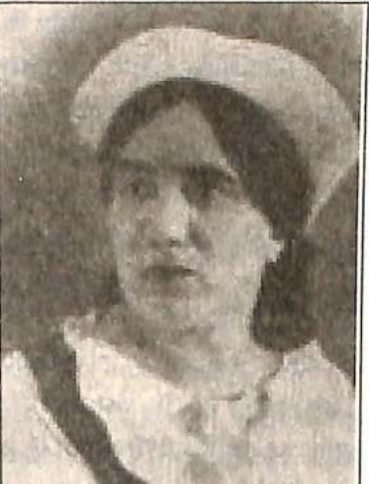
On points 1 and 3 Lazo spoke, who had come specially from Tiflis. A female speaker, “Comrade Nûrê”, spoke about the situation of women. From the assembly, among others T’êmûr, Elîxan and the representative Seh’îd asked questions about marriage, divorce, polygamy and the maintenance of children.
Resolutions and proposals
Lazo proposed:
- a marriage age of at least 15 years for girls, 18 years for boys;
- to abolish the bride price (qelin), since it amounted to a purchase, and to replace it with a voluntary gift from the groom’s family for the trousseau;
- to treat bride abduction as a criminal offense;
- to enable couples who want to marry against the will of their families to register at the civil registry office (ZAGS), which is then protected by law.
According to the report, it was unanimously resolved:
- to introduce civil registration among the Ezidis, with a separate representative of the registry office for the district;
- the minimum marriage age of 15 years for girls and 18 years for boys;
- the request to the government representatives present to implement these matters.
On the family see Family and the position of women and Wedding.
The assembly of April 20, 1926
The grade 7 textbook reports, according to “Khorhrdayin Hayastan” of April 21, 1926, on a further assembly of the Ezidis on April 20, 1926 in Yerevan. In the tone of the time, the newspaper wrote that the Ezidis, formerly oppressed by Begs, pashas and Dashnaks, were now fighting against the old customs. The topics were the improvement of agriculture, cooperatives, education, and writing and literature. According to the textbook, the next such assembly took place only 63 years later, on September 30, 1989 (see The Ezidi movement in Armenia since 1988).
Classification
The report of 1923 comes from a party newspaper and shows the assembly from the point of view of the Soviet government, which wanted to change the way of life of the nomadic Ezidis. Assessments such as “uncivilized” belong to the language of that time and are not adopted. The textbook (2014), by contrast, calls the assembly evidence that the Ezidis already then appeared under their own name. The count “first assembly” follows the textbook; already in 1920 an Ezidi conference had taken place in Alexandropol (see Ezidi organizations 1919–1931).
Sources
- Eskerê Boyîk: Bi Kurtayî Dîroka Êzidiyên Ermenistanê (A short history of the Ezidis of Armenia). Diyarbakır 2016, p. 176 (ill.)
- E’zîzê E’mer, H’esenê Şêx-Me’mûdê: E’debyet û zimanê êzdîkî, grade 6. Yerevan: Spîka 2014, p. p-041–045
- E’zîzê E’mer, H’esenê Şêx-Me’mûdê: E’debyet û zimanê êzdîkî, grade 7. Yerevan: Spîka 2014, p. p-089–090
Found a mistake?
Is something wrong – a fact, a spelling, a source, an image? Let us know: we check every report and correct the article.
Other spellings: Hemcivata ezdie Ermenistaneye pesin · Alagyaz · Alagjas · Tbilisi · Tbilissi · Jerewan · Eriwan · Erivan