
The immigration of the Ezidis into the South Caucasus and their history in Soviet Armenia are described in separate articles (see The immigration into the South Caucasus, The settlement in Soviet Armenia and Collectivization). This article supplements them with the information of John S. Guest: population figures, reports by early observers and above all the connection of the Transcaucasian Ezidis with Şêxan and Lalîş, which was broken off only in the Soviet period.
Population figures
| Year | Figure | Details |
|---|---|---|
| 1840 | 67 families, 324 people | Hesinî tribe in the Erivan province (Russian Ministry of Finance) |
| 1855 | approx. 340 | second community under Xelîl Axa in the Sardarabad district |
| 1877 | approx. 8,000 | Erivan province after the immigration of 1877 |
| 1879–1882 | 1,733 in 14 villages | Sîpkî tribe in the Kağızman district (Kars region) |
| 1897 | 14,726 | census of the Russian Empire |
| 1909 | 72 villages, 3,500 households | petition of Îsmayîl Beg |
| 1912 | 24,508 | over 17,000 in the Erivan province, 2,000 in and around Tiflis, over 5,000 in the territories gained by Russia in 1877/78 |
| 1916 | 40,882 | of whom 4,697 in Tiflis |
| 1926 | 14,523 | census of the USSR: 12,237 in Armenia, 2,262 in Georgia |
| 1980s | perhaps 40,000 | Guest’s estimate for the Soviet Union |
The sharp decline between 1916 and 1926 reflects the genocide of 1918 and the cession of Kars and Surmelî to Turkey in 1921.
In the Russian Empire (1828–1914)
- In 1829 the poet Alexander Pushkin saw the Ezidi leader Hesen Axa in the Russian army before Erzurum. According to Guest, his scarlet coat lined with fox fur was a gift from General Chavchavadze for the capture of Eleşkirt.
- In 1835 an Ezidi horseman from Surmelî from the bodyguard of Field Marshal Paskevich distinguished himself at the Russo-Prussian maneuvers in Kalisz before Tsar Nicholas I and King Frederick William III and was afterwards a guest of the Prussian army in Berlin – according to Guest the first Ezidi in Western Europe.
- In the 1830s Ezidis fled to Russia from the Ottoman commander Reşid Pasha.
- In 1843 the writer Khachatur Abovyan and the German traveler August von Haxthausen visited the camp of the Hesinî at Temir Axa’s. In 1844 Temir Axa appeared with a fiery red turban at the banquet of the viceroy Vorontsov in Tiflis. Abovyan described, among other things, the visits of the Sencaq bearers from Lalîş. Moritz Wagner (1852) and Haxthausen (1856) also wrote about the Ezidis.
- In 1843 a Şêx in Şêxan told the Russian scholar Ilya Berezin of four Ezidi clans in Transcaucasia who were denied the pilgrimage to Lalîş, and of nomads who were not allowed to cross the border.
- In 1846, according to the eyewitness A. H. Layard, two horsemen returned from a long journey to the Ezidis “in Russian territory” and brought a large donation; an earlier delegation had fallen into the hands of the chief of Bitlis on the way and been murdered (nineveh1 p. 278–279; see The festival in Lalîş 1846). Guest calls the two returnees Qewal and has them report that the Ezidis there were doing well; Layard has only “two horsemen” (see Campaigns 1836–1847).
- In 1855, in the Crimean War, an Ezidi cavalry troop served in the Alexandropol division.
- In 1874 the governor of Erivan refused Muslim clergy the tithe from the population when he learned that most of those liable were Ezidis. As a result the “ethnographic-juridical” study of the Armenian jurist Solomon A. Yeghiazarov came into being (printed Tiflis 1884, so the copy at hand; Guest gives 1891 as the year of publication).
- In 1877, after the withdrawal of Russian troops from Bazîd, about 3,000 Ezidis under Elî Beg, a nephew of Mîr Mîrza Beg, followed across the border; they were settled in the Alexandropol district. In 1879–1882 the Sîpkî tribe under Omar Axa came to the Kars region. According to Tezcür, Kaya and Sevdeen, with the Russo-Turkish War of 1877/78 thousands of Ezidis became Russian subjects (kurds-yezidis-me p. 81–82).
- Around 1900 Ezidis in Tiflis lived in huts outside the city and worked above all as porters. Swedish women missionaries carried out social work among them until 1921 (see The Swedish “Ezidi mission” in Tiflis).
- Around 1880, of the five Sencaq of Lalîş, one served the areas of Muş, Van, Bazîd and the communities under Russian rule. In the sanctuary people also remembered Sencaq for “Tabriz” and “Muscovy”.
The journey of Îsmayîl Beg (1908/09)
In 1908/09 Îsmayîl Beg of the Mîr family traveled through the Ezidi villages around Alexandropol, Iğdır and Tiflis. In December 1908 he assembled the elders in Iğdır and dictated a code of conduct: the bride price was limited to at most 100 rubles for a girl and 45–50 rubles for a widow, and each community was to found schools. According to Guest this code was evidently followed. With the Armenian Catholicos Matthew II he agreed on seven schools in Ezidi villages. On March 3, 1909 the viceroy Count Vorontsov-Dashkov received him in Tiflis.
The last Qewal from Lalîş (1914–1929)
In 1914 seven Qewal came to the Caucasus with the Sencaq of “Muscovy”. The war and the revolution cut them off from Lalîş. Their leader Qewal Huseyn lived with the Sencaq in a village of the Alexandropol province and kept religious life going. Letters to Bacidrê were intercepted; only in 1926 did a message get through. With the help of Norway, which represented British interests in the Soviet Union, the Qewal were allowed to leave and in 1929, after 15 years and about 11,000 miles, reached Iraq again via London. After that, according to Guest, there was no more contact between the Soviet Ezidis and Lalîş.
War and republic (1918–1921)
- In May 1918 at Sardarapat, 4,000 Armenians, among them 700 Ezidi horsemen, held up the Ottoman southern column; a few days later Armenians and Ezidis repelled the northern column at Bash Aparan.
- In the elections to the Armenian parliament in 1919 an Ezidi won a seat: Ûsivê Beg (Yûsif Beg Timurian) from Surmelî.
- In October 1920 the army of the Republic of Armenia included an Ezidi squadron (3 officers, 200 horsemen) in Etchmiadzin.
- In 1921 Iğdır and Surmelî went to Turkey. The Ezidis of Surmelî were settled in abandoned villages on the southern slope of Aragats.
In the Soviet period
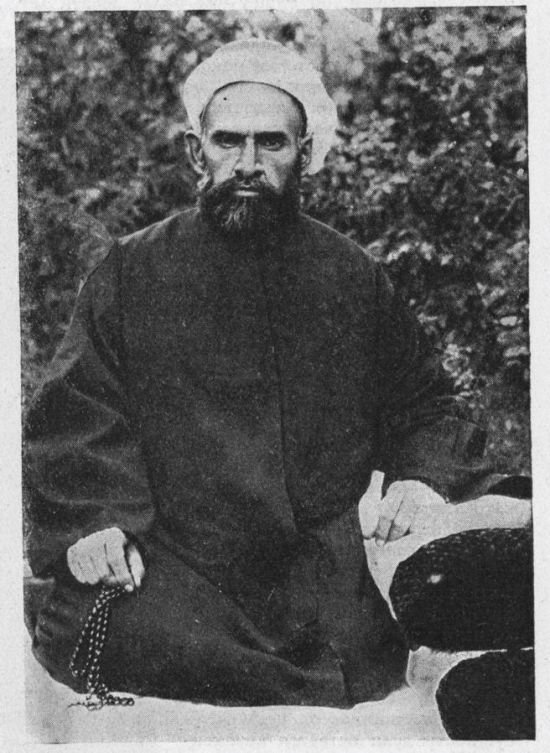
- With the nationalization of land in 1920 the authorities promoted sedentarization at the expense of the tribal chiefs. In 1928 the first Ezidi collective farm was established; by 1940 the farms on Aragats were essentially collectivized.
- Around 1930 the Ezidis in the Soviet Union lost the status of a distinct ethnic group, which they had had until then – for instance in the census of 1926. The religious levies were abolished; Şêx and P’îr fell into hardship.
- The script of the school textbooks was changed in 1928 from Arabic to Latin and in 1945 to Cyrillic – see Schools and alphabets.
- In 1934 the American anthropologist Henry Field measured 51 Ezidi porters in Tiflis.
- A Soviet ethnographer observed in 1966 that the religion still had adherents and that the elders respected the Şêx caste.
- In the Second World War Ezidis from Aragats fought as far as Berlin, among them Semendê Siyabendov, Hero of the Soviet Union – see Second World War.
- In 1972 Bayezîd Beg, a son of Îsmayîl Beg, visited Transcaucasia and was received by Catholicos Vazgen I in Etchmiadzin.
Traditions and monuments
- According to a tradition recorded in the 1920s, an ancestor of the Hesinî, Mîr Çoban Axa Beg, led the tribe in the 18th century from the area of Van to Aragats; after harassment in Georgia under King Erekle II he returned there. This is a tradition.
- In the cemetery of Hondaghsag on the western slope of Aragats stand about half a dozen painted stone horses with bridle, saddle and stirrups. The villagers see in them grave guardians erected by their ancestors; Soviet experts estimated their age at about 300 years and considered Armenian workmanship possible. Their Ezidi origin is not confirmed.
- The writer Abovyan regarded the Ezidi religion as a 10th-century offshoot of the Armenian Church. This is a thesis that has not prevailed.
Sources
- Angelika O. Pobedonostseva-Kaya: „Советская власть одобряет нашу религию“: езидизм в советском кино. In: Vostočnyj kur'er / Oriental Courier 2022, No. 3, pp. 159–178 (page references = PDF pages and paragraphs), p. p10 (ill.)
- John S. Guest: The Yezidis. A Study in Survival. London/New York 1987, p. 80, 108, 113, 171, 211–214, 237–246
- S. A. Yegiazarov (Егиазаров): Краткий этнографический очерк курдов Эриванской губернии – containing the ethnographic-legal outline on the Ezidis. Tbilisi 1884, p. title page (PDF p-002)
- Dimitri Pirbari, Mamuka Komakhia: ქურთები საქართველოში [Kurds in Georgia]. Tbilisi: CIPDD 2008 (Georgian), p. 23–30
- Austen Henry Layard: Nineveh and Its Remains, Vol. 1. London 1849, p. p. 278–279
- Güneş Murat Tezcür (ed.): Kurds and Yezidis in the Middle East. Shifting Identities, Borders, and the Experience of Minority Communities. London: I.B. Tauris 2021, p. p. 81–82
Found a mistake?
Is something wrong – a fact, a spelling, a source, an image? Let us know: we check every report and correct the article.
Other spellings: Hachthausen · Hakhthausen · Lalish · Lalisch · Lalesh · Shekhan · Scheichan · Shaikhan · Jerewan · Eriwan · Yerevan · Qers · Tbilisi · Tbilissi · Sanjaq · Sandschak · Sancak · Sheikh · Scheich · Shex