
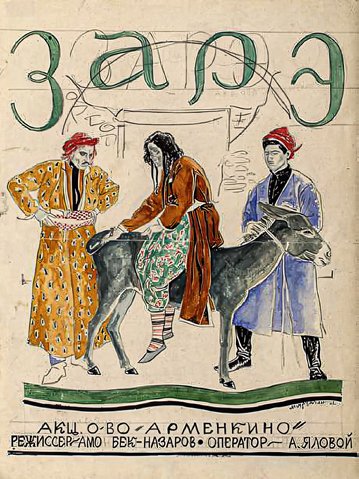
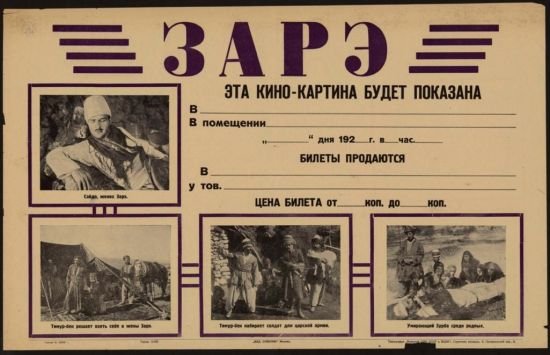
“Zerê” is a feature film by the Armenian director Hamo Bek-Nazarov from 1926, based on a story by Lazo. It shows the life of the Ezidi nomads, their customs and the story of the girl Zerê. It was shot on the summer pastures of Elegez with well-known Armenian actors. Originally a silent film, it was later given a soundtrack; it is regarded as part of the “golden fund” of Armenian cinema.
Documentaries
- 1933: a documentary about the Ezidis of Armenia
- 1948: screenplay by Hraçya Koçar and Hecîyê Cindî
- 1959: screenplay by Erebê Şemo
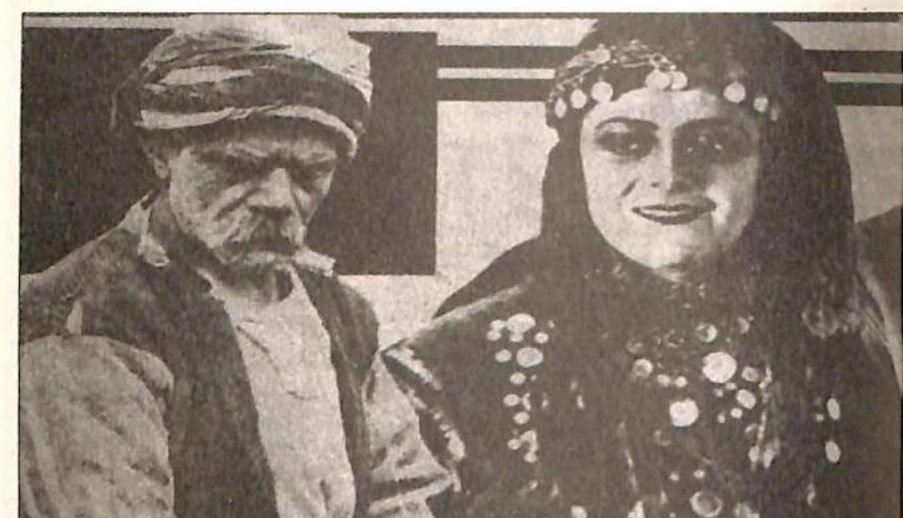
Films as a means of Soviet propaganda (according to Broian)
Isabel Broian (2025) describes the early films as part of Soviet propaganda among the Ezidis of Armenia.
- “Zerê” (1926): In Broian the director is called Hamo Beknazarov and the film “Zare”. It tells of the love of Zerê and Seydo in a village at Elegez; the villains are Temir Beg and a Şêx. Stalin is said to have said that only Armenians should make films about the life of the peoples of the East.
- Film of 1932: The Soviet title was “Kurds-Ezidis” (historical title). It was directed by Amasi Martirosyan. The main villain is a Şêx; a doctor and a female teacher come to the village, and a kolkhoz is formed in which women have equal rights. Whether this film is connected with the 1933 documentary named above is not clear from the sources (but see below: the film premiered in January 1933).
Additions according to Pobedonostseva-Kaya (2022)
In 2022 the St. Petersburg orientalist Angelika Pobedonostseva-Kaya examined the two Armenian films on the basis of archival files, the press of the 1920s and 1930s and film histories. She reads them as instruments of Soviet nationalities policy and anti-religious policy. Her ethnic classification of the Ezidis is not adopted here; the data on the films are well documented.
“Zerê” (1926)
- Premiere: on November 9, 1926 in Yerevan, in Moscow on January 31, 1927. It was the second film of Hamo (Hambartsum) Bek-Nazarov (1892–1965) at the Armenkino studio after “Namus”; in 1966 the “Armenfilm” studio was named after him.
- Basis: Bek-Nazarov wrote the screenplay based on a manuscript by Lazo (Hakob Ghazaryan) about the life of the girl Zerê before the revolution.
- Preparation: For two months Bek-Nazarov studied the life of the nomads at Elegez and read literature about their tribes. Costumes and props were made with the help of the ethnographer Stepan Lisitsian (1865–1947), who later headed the ethnographic department of the State Historical Museum of Armenia. Before shooting, villagers were questioned with a questionnaire about faith, family and customs. According to Bek-Nazarov, they deliberately gave false information about their faith; he was then helped by party members, among them the Ezidi Şêx Erebê Şemo.
- Cast: The leading roles were played by Armenian actors; members of the nomadic tribes took part as extras. For the Ezidi audience the mountain was called “Alagöz” (Elegez) in the film, not Aragats.
- Designation: In the intertitles the characters are not called Ezidis. According to the author, that the film is about Ezidis is shown by the costumes, the rituals, the absence of Muslim symbols and a Şêx with the typical Ezidi headdress. Ezidis themselves regard “Zerê” as the first film about the Ezidis (thus Dimitri Pirbari 2011).
- Burial scene: The film shows a funeral: a man carries a bowl covered with a cloth in front, the dead man is carried on a bier to the cemetery, the Şêx prays, the relatives lament; afterwards flatbreads from the bowl are distributed to all present. In the film the Şêx receives the clothing and dagger of the dead man immediately after the death – according to Rudenko this actually happens only after the funeral meal. It is a cinematic depiction (see Burial and mourning).
- Later screenings: In 1931 “Zerê” was shown in the USA; the Armenian diaspora newspaper “Baikar” reported on it on February 13, 1931. Afterwards the film was hardly accessible for a long time. In 2006 the organizers of the 4th Kurdish Film Festival in London obtained the Armenian government's release of the film for screening.
The film of 1932/33
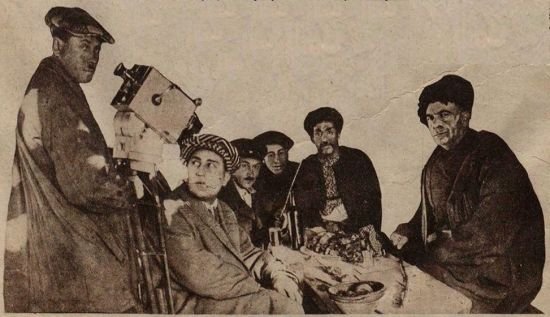
- Director: Amasi P. Martirosyan (1897–1971), actor, prop master and director at Armenkino; he himself had played a role in “Zerê”.
- Premiere: on January 3, 1933 in Yerevan. On September 29, 1934 a re-edited version of the silent film was released in Moscow.
- Content: The film begins with the morning prayer of a Şêx and with the claim that the people received a script only under Soviet power in 1928. It contrasts mechanized and traditional food production; a doctor from outside heals an old man, while the Şêx fails and a child dies – the blame is put on the female teacher from outside. Again Armenians played the leading roles, Ezidis only extras.
- Purpose: According to the author, the film served anti-religious propaganda and the support of collectivization against Begs and Şêx (see Collectivization). Artistically both films were regarded as weak.
- On the “documentary of 1933”: Since this film premiered in January 1933, the 1933 film named above after Boyîk is probably the same one. This is not documented.
According to the author, only these two feature films about the Ezidis were made in Armenia in total. Until 1939 no further contemporary films on the subject were made.
List of films
| Year | Film | Type | Director / screenplay | Source |
|---|---|---|---|---|
| 1926 | “Zerê” | Feature film (silent, later with soundtrack) | Director and screenplay Hamo Bek-Nazarov, after Lazo | Boyîk; Pobedonostseva-Kaya |
| 1932/33 | Feature film about an Ezidi village (Soviet title see above) | Feature film (silent) | Director Amasi Martirosyan | Broian; Pobedonostseva-Kaya |
| 1947 (according to Boyîk 1948) | Documentary about the Ezidis of Soviet Armenia, 12 min. | Documentary | Director Ja. Kočarjan; screenplay Hecîyê Cindî (according to Boyîk with Hraçya Koçar) | Pobedonostseva-Kaya; Boyîk |
| 1959 | Documentary about the Ezidis of Armenia, 22 min. | Documentary | Director Dž. Žamgarjan; screenplay Erebê Şemo | Pobedonostseva-Kaya; Boyîk |
| 1964 | “On the slopes of Aragats” | Short documentary | Screenplay A. Babajan | Pobedonostseva-Kaya |
| 1988 | “My old friend” | Short film, last Soviet film on the subject | Director and screenplay L. Grigorjan | Pobedonostseva-Kaya |
Discrepancies: For the first documentary Boyîk gives the year 1948 and Hraçya Koçar and Hecîyê Cindî as screenwriters; Pobedonostseva-Kaya gives 1947, director Ja. Kočarjan and only Cindî as screenwriter. Erebê Şemo had just returned from long exile in 1959. The author interprets the films of 1947 and 1959 as gestures of Soviet foreign policy toward Mustafa Barzani; that is her interpretation.
Sources
- Eskerê Boyîk: Bi Kurtayî Dîroka Êzidiyên Ermenistanê (A short history of the Ezidis of Armenia). Diyarbakır 2016, p. 198
- International Journal of Yezidi Studies, Vol. 2. Tbilisi 2025, p. p. 81–83
- Angelika O. Pobedonostseva-Kaya: „Советская власть одобряет нашу религию“: езидизм в советском кино. In: Vostočnyj kur'er / Oriental Courier 2022, No. 3, pp. 159–178 (page references = PDF pages and paragraphs), p. p2–13 (para. 9–73, notes 6–15)
Found a mistake?
Is something wrong – a fact, a spelling, a source, an image? Let us know: we check every report and correct the article.
Other spellings: Zere · Alagyaz · Alagjas · Sheikh · Scheich · Shex · Jerewan · Eriwan · Erivan · Eziden